10 Legendary Video Game Franchises No One Admits Are Out Of Ideas

How did we go from Blood Dragon to Far Cry 4?!
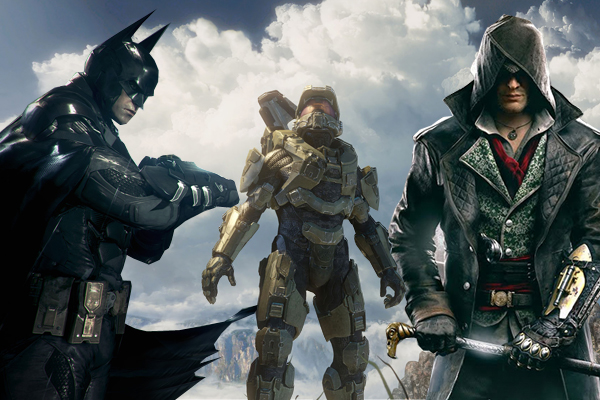
When you look at the lineup for this fall's video game releases it might be surprising to see just how similar it is to years gone by. Sure, there's potential in new franchises like Mad Max and Until Dawn hitting store shelves, but the bulk of the most anticipated games come from established properties we've had - in some cases - for decades now. In 2015 the big hitters are still the likes of Tomb Raider, Halo and Fallout, yet with such little forward momentum it inevitably raises the question: are they losing their touch? After years and years of development and so many instalments, the familiar releases we've come to expect have quite naturally lost the steam that once made them pioneers of the industry. Sure, they might not have really dipped in quality to disastrous levels just yet, but as the years go by there's a creeping sensation these franchises might have ran out the innovative and exciting ideas that once made you take notice in the first place. So while these household names won't be going anywhere any time soon, all we're left with are pretty decent releases from legendary series' that have long since brought anything new to the table.

10. God Of War

I think at this point, it doesn't matter how great the original three games in this iconic hack and slash series were, everyone is a bit sick of God of War. Being one of Sony's reliable big-hitters, the franchise has naturally been milked for years, with an abundance of re-releases, hand-held spin-offs and off-shoots coming out seemingly all the time. Which wouldn't be so bad, but the God of War gameplay doesn't really lend itself to fanciful or radical alterations. Although deep in itself, the combat of the series and the basic platforming has remained pretty similar for nearly a decade now, and with so many alterations of it hitting store shelves in the years since the innovative original, the series has hardly maintained the awe-factor that it once had. There are rumblings (and let's face it, it's probably inevitable) that Sony's flagship IP is about to make a comeback with God of War 4 for the Playstation 4, however the series truly needs a radical new direction if it wants remain relevant in the new generation of consoles.

9. The Lego Series

At one point the Lego series was unparalleled when it came to the best family-friendly games on console. With every new adaptation of a popular media franchise, be it Star Wars, Indiana Jones or the DC Universe, the colourful titles cemented themselves as brilliant action-adventure romps for both adults and children alike. However, at some point the Lego formula began to feel stale - even Lego Dimensions plays exactly the same as the preceding games. As adaptations of new properties lessened to focus more on sequels, the series simply ran out of aces to play. Part of the Lego novelty came with new characters and their respective abilities, but once you've created Jedis, superheroes and fedora-wearing archaeologists, there aren't really any unique set-ups for the franchise left to exploit. Unfortunately, it's meant that with so many of these games coming out on a yearly basis, it's kind of hard to get excited for them any more. Without any new ideas to spice up the releases, the Lego series has essentially devolved into embodying very same kid games that they originally provided such a respite from.

8. Far Cry

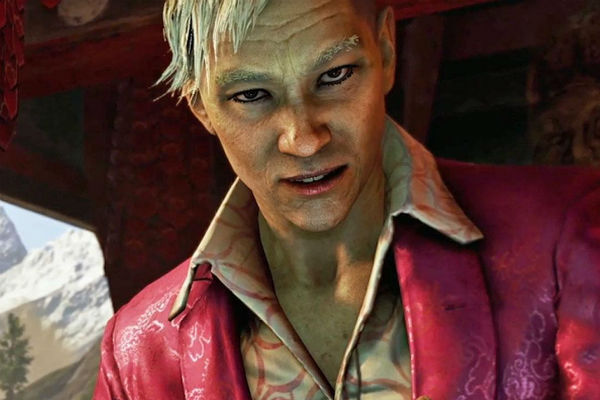
I can't have been the only one that was a little disappointed with the fact that Far Cry 4 followed the real-world formula of the third instalment rather the taking inspiration from the insane Blood Dragon expansion. Although the fourth game was bigger than the third release in almost every single way, something about it just felt... off. All the elements that people loved about the series were still there, yet somehow they no longer meshed together in the same way they did in the third game. Whether that was the fault of sheer over-saturation or because of worse level design, the fourth game felt more like Far Cry 3.5 than it did a full, new, expansive release. Let's hope that whatever Ubisoft has up its sleeve next is going to be more wacky and similar to Blood Dragon than yet another samey down-to-earth open-world affair.

7. The Arkham Series

Going forward, it's going to be interesting to see if any superhero game can match up to the sheer authenticity of Rocksteady's Arkham Series. Dripping with atmosphere, the games have been an absolute godsend for comic book lovers across the globe, with the original Arkham Asylum setting the bar not only for superhero titles, but all third person brawlers in general. But with the latest Arkham Knight, the cracks in the formula began to show more than ever before. Expanding on pre-existing features to the point where the amount of button prompts that were required to pull off every combo began to feel a little overwhelming, the once simple Arkham gameplay felt, for the the first time ever, a little by-the-numbers. And that's of course not mentioning Knight's biggest feature: the Batmobile. No matter what you thought of the divisive addition, there's no denying that the tank-like vehicle was overused during the course of the main story. Rocksteady had hoped the inclusion of the vehicle would shake-up the series' defining gameplay, but in the end its forced use was simply a distraction from what players actually wanted.

6. Gears Of War

Gears of War was never the deepest third person shooter on the market, but at the time of the first or the second game's release, it didn't really have to be. Epic Games' flagship shooter did one thing really well: making you feel like a gruff space-marine who was brilliant at brutally murdering enemy grubs. And with an increasing scale and technological advancements, the first two releases in the series offered amazing visceral gun-play, both in single-player and multiplayer. Unfortunately, by the time the third entry rolled around, franchise fatigue had begun to set in. Epic's finale didn't put a foot wrong per se, but it didn't exactly offer anything that the series hadn't seen before. Although the first game essentially re-invented third-person shooters, by the time the third title rolled around it didn't boast any features that couldn't be found in any other game in the genre. The series spin-off Judgement only cemented this fatigue, as apart from a weirdly-executed episodic narrative and a scoring system, the series' iconic shooting was essentially the only thing the game had going for it.

5. Battlefield

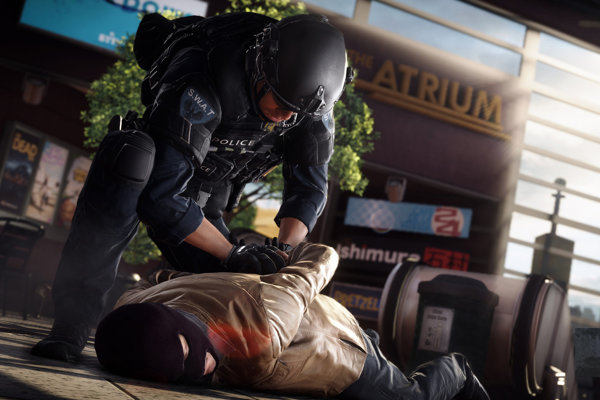
To be fair, if you're a fan of large-scale modern day military first-person shooters, the Battlefield series is probably the best example of the genre. Boasting ridiculous amounts of destruction, vehicular combat and a huge player-count, DICE's multiplayer shooters can provide some of the most intense virtual fire-fights you'll ever experience. But that still doesn't excuse the fact that the moment-to-moment combat has essentially been the same for four games now. Although the Bad Company sub-series gave the property a little bit of character and personality, introducing a brand new game mode in Rush, the Battlefield brand has only offered small iterations on the same formula for years now. The fourth game's much-hyped levolution feature was an interesting prospect and looked to shake the flow of the title up considerably, but even that was only used effectively in a few of the latest game's best maps. Hell, when the franchise did decide to branch out, creating a new spin-off based entirely on cops an robbers, it only proved how out of ideas the creatives really were. Instead of breaking away from Battlefield's regular gameplay to create something unique based on the new theme (aside from the half-baked option to arrest people), the eventual release felt like barely anything more than glorified Battlefield 4 DLC.

4. Resident Evil

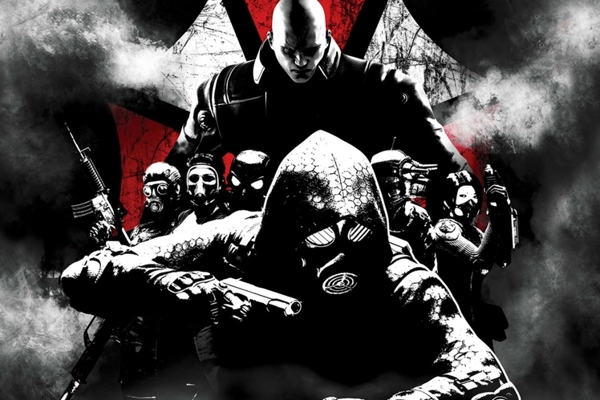
For once, this won't be an entry on Resident Evil that only focuses on bashing the much-maligned sixth entry in the series. Although yeah, that game was a pretty big indicator that the brand was out of ideas, it's what Capcom has done with the once-legendary survival horror franchise since that's raised the biggest red flags about the survival horror-turned-shooter's future. Keeping away from main canon instalments, the company has instead focused on spin-offs and cheaper re-releases in order to keep the Resi brand alive in the last few years. Although the episodic release of Revelations 2 hearkened back to the original games' atmospheric roots, it was obvious that the production value of that game was entirely sub-par, with unimaginative level design and run of the mill shooting bringing down what could have been an excellent instalment in the franchise. But the worst, scraping the barrel offender was definitely the recent announcement of spin-off Umbrella Corps, a co-op shooter that looks to be some kind of spiritual successor to the abysmal Operation Raccoon City that released a few years ago.

3. Assassin's Creed

To say the Assassin's Creed series has been rather hit-and-miss in the past few years would be a bit of an understatement. From the third numbered entry into Ubisoft's flagship trilogy being a huge disappointment, to the short lived "series revival" that was Black Flag, every time the open world title regains a little respect back from players, the developers rarely ever follow up on it. Initially, Ubisoft's time-jumping action games used to stay in one period for a while, allowing the developers to iterate on characters and features that were strong in the other games each year before a new numbered title completely changed the setting. Not only did this allow characters more freedom to grow and connect with gamers, but it put less pressure on the releases to be amazing every single time, as players' expectations for these sub-series continuations were much less than that of a brand new reinvention. But recently Assassin's Creed has been jumping around constantly every year, from Victorian England to Renaissance France, the series hasn't been given the opportunity to utilise its greatest strengths. Because the only innovative and novel ideas at this point come from the setting and characters, the erratic nature of every new release completely undermines the series' best asset - a genuinely engaging story.

2. Tomb Raider

The 2013 Tomb Raider, while successfully rebooting the franchise, didn't really provide players with gameplay that was entirely distinct to the brand. With exploration and combat baring similarities to the Uncharted series and a narrative that, while initially interesting, eventually succumbed to the series' classic conventions, the latest game didn't boast anything specific that you couldn't find anywhere else on the market. Which isn't terrible in itself, as using the best elements from other games allowed the ageing IP to dig itself out the grave. But in the long run, having no unique hook other than a story that appeals to Tomb Raider fans kind of makes announcement like Rise of The Tomb Raider being an Xbox One exclusive far less important to the average gamer. If they can find similar experiences on other consoles (like Uncharted, for example) why would they need to purchase Microsoft's Xbox for such a familiar, increasingly generic adventure game?

1. Halo

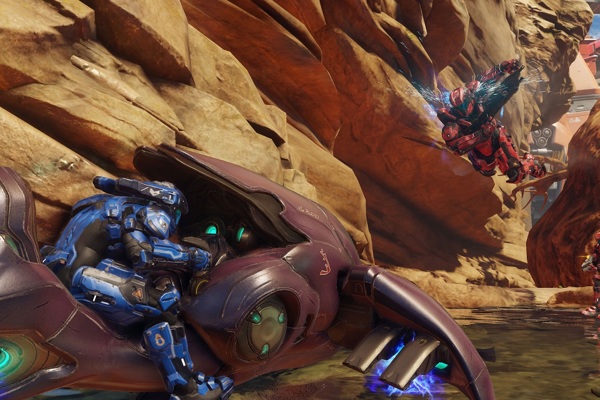
Still considered "the face of Xbox" over a decade after it first debuted, the Halo series has always been a sure bet for Microsoft to shift consoles. Under the helm of Bungie the series was cemented as a classic, with the Master Chief trilogy as well as Reach providing players with some of the most epic sci-shooters on the market. And, to be fair, 343 Studios did a pretty decent job of reviving the series after series creator Bungie left. By conjuring up a new story and setting the Master Chief on a new adventure with a new set of enemies, the development studio pulled off the impossible to stir up interest for the long-standing franchise. Unfortunately, although Halo 4 was solid in its own right, it didn't really bring anything new to the table. The new enemies, while interesting, were mostly underused, the new weapons didn't provide much variation from the guns players already knew and love, and the once-open levels were more linear than they ever were. It was still a rather enjoyable first person shooter, but with 4 and its upcoming sequel, it's clear the Halo franchise isn't quite the innovator it used to be. Which major trailblazing franchise is a total damp squib in 2015? Let us know in the comments!

Contributor

Josh has over 11 years of experience as a published writer, having worked nine of those years as a full-time content producer at WhatCulture. In that period he has created hundreds of articles, videos and podcast episodes for multiple WhatCulture channels, specialising in gaming, horror and film & TV. He now primarily works as a senior content producer and presenter on WhatCulture Gaming where he co-hosts the WhatCulture Gaming Podcast, a top 3 UK most listened to gaming podcast that he co-created in 2018. Over the years he has reviewed several high-profile gaming releases, covered industry events with on-site reporting, opined on breaking news, and even kicked off his interviewing career by chatting to childhood hero, Tommy Wiseau.