10 Intense Video Game Thrillers That Will Melt Your Brain
You'll never be the same again.

How important is a story to a video game?
It's a discussion born out of the late 90s, when - following the immaculate Metal Gear Solid and its utilisation of Hollywood-esque cutscenes - developers started expanding their horizons narratively. The 2000s became a golden age of experimentation; putting the focus on plot-spinning maestros like David Cage, Ken Levine and Drew Karpyshyn like never before.
Of course, Metal Gear's own Hideo Kojima didn't shy away from growing his own series into a cultural touchstone and entertainment behemoth. Everybody and their granny knew about Solid vs. Liquid Snake; the collective cultural consciousness eagerly awaiting the next instalment.
To be honest, that's something we've moved away from as the current industry favours game mechanics over narrative, though there are plenty examples of when a game's story was so engrossing, it completely bowled you over.
Figuring this lot out took a lot of brain power, and even then... there's always the internet.
10. Metal Gear Solid 2: Sons Of Liberty
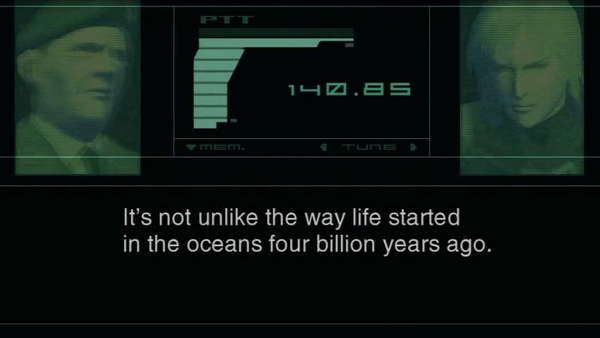
A game that's aged like a fine wine, back in 2001 when MGS2 tried to warn us about the dangers of influential figureheads being entirely digitised and manipulated, we didn't listen. In fact, we laughed.
Cut to today, and not only is the phrase "Fake news!" a thing, but Donald Trump got all the way to President.
Back to Sons of Liberty though, as it's closing cutscene is one of the most complex and intricately woven in gaming history. Sure, it's weighty and overwrought with Hideo Kojima essentially reading out some dissertation-esque thesis on American psychology, but the takeaways were manyfold:
The ramifications of blind patriotism, the machinations of a world teetering on faster access to the internet, and the removal of the individual in the face of larger group or nationwide mentalities that even themselves, could be massaged, mediated and controlled.
Watching Metal Gear Solid 2's closing cutscene now feels like a warning sign nobody heeded, but boy if it doesn't really hit home in hindsight.
9. The Swapper
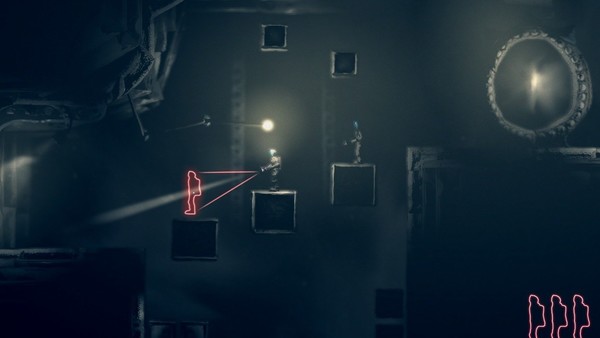
Now this is more of a mind-bender because of its puzzles - though the general atmosphere and cold, harsh environments within The Swapper help create a mood of isolation and disorientation.
Both of these elements are fundamental to why the game is so good, as the titular device can create multiple clones of your nameless hero. From here you need to solve puzzles by beaming copies of yourself to different parts of the environment - retaining the knowledge that 1. They will walk and act as you do, and 2. If they touch one another, they'll merge again.
You can even beam from yourself into a clone to traverse gaps, but all of that is the basics.
When The Swapper's puzzles kick in, you'll be unpicking the very cognitive process of understanding movement, because you sometimes need to split your actions to serve three purposes at once.
All of this feeds into an ending that I swear, is only designed to confuse even more - though I'll let you figure that one out if you actually make it there.
8. Call Of Duty: Black Ops
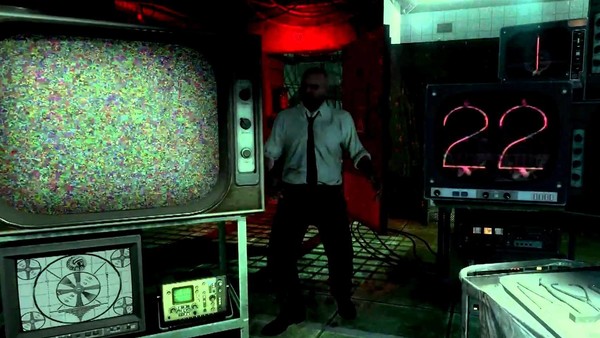
Pretty much the last Call of Duty that put stock in telling a genuinely well written story (Infinite Warfare will never get the due it deserves), Black Ops revolves around one Alex Mason, as he's grilled by mysterious figures in the shadows for information he can't remember.
Revolving around a set of numbers and past missions he's been a part of, what follows is an expertly-paced and presented spy thriller, slowly letting you put the pieces together as to which of Mason's memories is the target of your new frenemies.
Come the close of the game, the rug gets pulled out from beneath your feet entirely, as it's revealed not only was the target of this interrogation dead for five years, but all the appearances of Viktor Reznov in flashbacks were part of your imagination.
Treyarch hammer the point home by showing you multiple past scenes with Reznov now removed, as the game comes full circle by explaining that the numbers too, were all part of keeping your thoughts in check.
7. The Fall
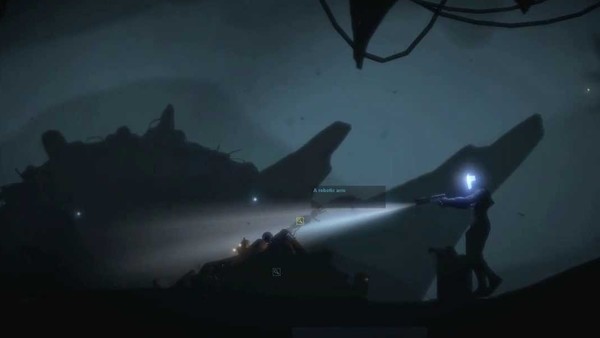
Speaking of heavy, The Fall is an ongoing trilogy of episodes comprising a full story, yet only the first two have been released at time of writing. Let's focus on the first for now, as it ends on a chillingly brilliant twist that - like many others here - force you to rethink the entire game.
Centred on character Colonel Josephs falling out the sky during an expedition, you actually play as the A.I. program ARID, as it starts to manually control Josephs' high-tech suit while he remains unconscious inside.
The Fall is then about getting the suit's various systems back online to save the host within - all as the ARID program learns to question her own purpose and limitations in reflection of the Administrator: An overseer A.I. that runs the locations you're exploring.
ARID's efforts climax after finally overcoming her programming, with a scene where she performs a scan of the suit - only to find that Josephs is not inside. She - and you - were a "soulless husk" the entire time, with all of her advancements towards sentience being discarded and deleted.
The Fall: Unbound takes this notion of freedom and runs with it, but the first episode's tonality is one of complete soul-searching and mind-breaking realisation.
6. Heavy Rain

How David Cage keeps getting funding after the travesty that was the end of Indigo Prophecy and all of Beyond: Two Souls, I'll never know, but at least there's the majority of Heavy Rain to enjoy instead.
Though there are multiple endings depending on how far along the "boy goes missing/stop the serial killer" storyline you got, there's only one Origami Killer: Scott Shelby.
Where it gets confusing and almost impossible to tie together, is how Shelby is one of the playable characters throughout the entire game. Cage wrote the revelation in a way that tags an additional scene onto an earlier meet up, showing Shelby take a life, but it's awkward at best.
Then factor in how family man Ethan was the one suffering from blackouts, wandering in his sleep and even waking with small origami models in his hands afterwards.
How does all of that fit in? Well, surprise, it doesn't!
Y... yay?
5. INSIDE

Sometimes you come across game so meticulously hand-crafted; so belaboured in time invested before being refined through copious coatings of pure passion, it's a masterpiece the second you start moving.
INSIDE is such a game, and though it can be boiled down to a physics-based puzzle platformer in a dystopian, industrial setting, its final sequence is the one that got everybody talking.
Following the infiltration of this no-name worker facility (nothing is remotely spelled out here), you eventually duck underwater and emerge next to a giant, amorphous mass of limbs. This being seems neither truly alive nor dead... until you merge with it, busting out of the tank its held in and going on a merry rampage through areas filled with screaming NPCs.
What does it all mean? Developer Playdead won't say, as clearly the game is designed to be interpretational, and therein lies the wonder. INSIDE and its flesh-ball could be anything from a manifestation of cancerous cells rampaging around a host, to a comment on working class uprising, as all it takes is one brave individual to lead the charge.
I'm more in-line with the latter, but feel free to offer some examples in the comments below.
4. Bioshock
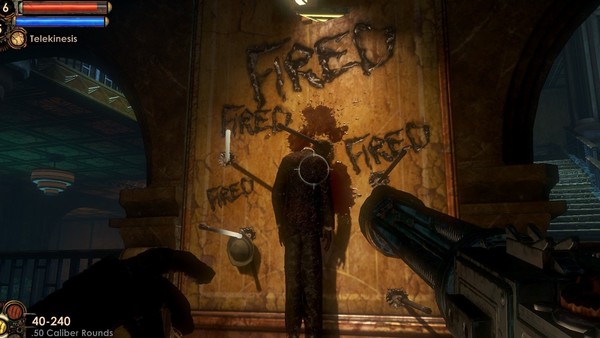
One of the most famous brain-breakers of all time, Bioshock's twist in the final third is positively legendary.
At this stage if you still don't know, please go do yourself a favour right now, but sufficed to say once Ken Levine's masterpiece was out in the wild, the entire industry shifted.
Bioshock's most memorable contribution to gaming (despite a bone-chilling revelation sequence) was introducing the concept of 'why'. Why do we blindly follow text prompts on screen? Why are we so trusting of NPCs and quest-givers? Why does Sonic like rings, Kirby eat so much and is Nathan Drake so okay with killing and quipping?
Bioshock's true mind-melter is forcing you to reevaluate your enter game collection and association with those storylines. Nothing would ever be the same again, and although its "Would you kindly?" scene has been everywhere at this point, it really is that damn good.
3. NieR: Automata
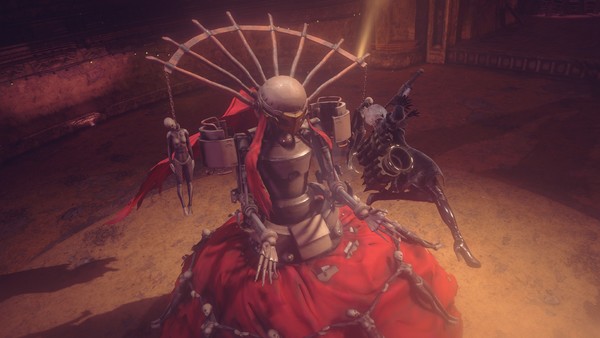
From one cortex-frazzling scene to an entire game that deals in metaphors, interpretations and segmented narratives designed to provoke conversation.
Annoyingly, NieR: Automata hides its best content behind two solid playthroughs, asking you to complete the game twice over before any sense of "what's really going on" kicks in.
The answer to that though, is exquisite. NieR (and you really need to play through it for this to make sense) is an exploration of what it means to be human. Not in just a "What does it mean to have a conscience or to think?" way, but what it means to mess up, to worry, to be vein, happy or sad.
NieR: Automata asks questions of wartime and human suffering just as much as the very purpose of emotion, style, social circles and belief.
It posits these questions through character, world design, side-quests and especially music. It's tragic, though in this stark dissection of the fragility of humanity, really quite beautiful.
There's nothing quite like us on this planet, and creator Yoko Taro plays that out like nobody else ever has.
2. Dark Souls

Everyone remembers their first time through a Souls game.
FromSoftware and creator Hidetaka Miyazaki might not be shooting for a more overt narrative, but instead they blend action, exploration and struggle with a longing for purpose that only really pays off at the very end.
I say "pays off", because no matter what you do, the world of Dark Souls will repeat, over and over, forever. Everything in these games is based on an all life-granting Flame, which once it goes out, ushers in an Age of Dark. During this, any wayward ember can light the fire again, restoring the Age of Light.
The twist is that the flame will always go out, and/or always be rekindled. There's no hope for anything other than the struggle to maintain life, and any instances of jolly cooperation with other players along the way.
Of course, the franchise has a reputation for being stupidly hard as a way to really make you value every reward, making all but the most determined individuals give up before they've even hit the halfway mark.
Dark Souls: The Game That's Actually About Living Life To The Fullest!
1. Spec-Ops: The Line

For the top spot, a game that remains one of the most underrated of them all. Overlooked thanks to 2K's art department marketing it like any other third-person shooter, whilst Spec-Ops does retain a Gears of War combat system, it's heart is something else entirely.
Written by Walt Williams, The Line is a gut-punchingly resonant dissection of a soldier's mind, both during and after combat. By virtue of being a game, you're put in one particularly gruesome situation that completely breaks main-man, Martin Walker.
From here, Spec-Ops explores the "role" of the soldier; where responsibility lies when things go wrong, and how that impacts those who fall back on duty to live with the consequences.
Its basic premise is the retrieval of an AWOL commander, John Konrad - a character we get shown in a number of different lights, mostly to service how Walker "needs" him to be, so he can retain his sanity.
All roads lead to a showdown that results in multiple endings, depending on your own opinions on all the aforementioned questions I've mentioned. Spec-Ops: The Line is one of the most important war games ever made, and an essential playthrough for any action fan who wants to look past the bullets.