10 Incredible Video Games You Didn't Realise Were Made By One Person
If you can dream it, you can do it!

Visionary minds have been solely responsible for all manner of masterful novels, plays, shows and albums over the years, and it's often considered that this would be the limit of what one person can produce. Given the perceived technical demands of video game development, very few gamers would consider that one of their favourite adventures could actually be the product of a single mind.
As it turns out, however, this is harsh folly. The power of one determined individual can be a wonderful thing, and you may be surprised to hear about some of the truly incredible games that were created by just one person.
From quaint side-scrolling adventures, to massive construction-based challenges, there are plenty of excellent video games that fall into this development category. Here are ten incredible games you probably didn't realise were made by one person...
--
10. Lone Survivor
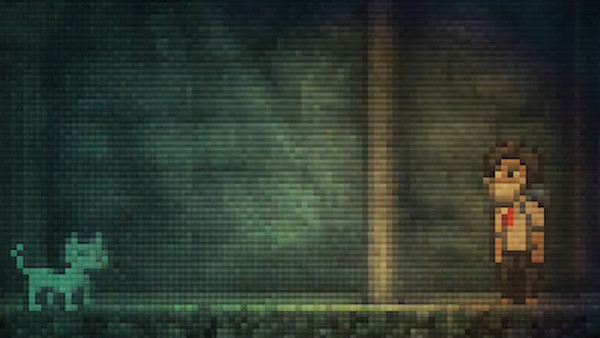
Lone Survivor is a survival horror game that puts players in control of a character following hallucinations through a post-apocalyptic world. The game combined intuitive collection methods and puzzle solving with a deeply engrossing story, thanks to the development 'team' at Superflat Games.
Said development team consisted only of the game's designer, Jasper Byrne, and it's a great place to kick off our list. Byrne came up with the concept for the game before producing what proved to be the 2012 finished article under the moniker of Superflat Games.
Lone Survivor received widespread critical acclaim upon release and it's a tale that's wonderfully told as players guide their nameless protagonist toward one of multiple potential endings. There are moments of true tension along the way, making this a lot more than a walk in a devastated park...
9. Banished
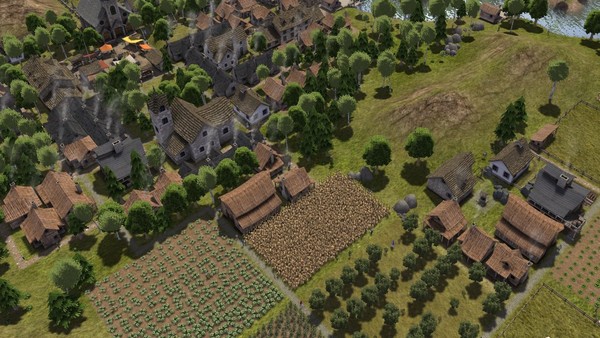
Putting you in charge of managing your own remote community, Banished asks its players to carefully maintain resources and monitor the survival of their growing, isolated society. The inclusion of its survival focus was widely praised for adding an extra dimension to a typically standard city-builder.
With such a detailed experience offered by the game, you may be surprised to hear that the development was run by one person. Shining Rock Software is the studio set up by Luke Hodorowicz, who had to plough more than 5,500 hours or work into the development to get the game finished.
Hodorowicz has said he was massively influenced by Anno during the development of his own game, and the finished article is resounding proof that your inspirations and ideas can bear fruit if you put the work in.
Maybe book a few days off work first, though; there's only so much you can do in one evening!
8. Love
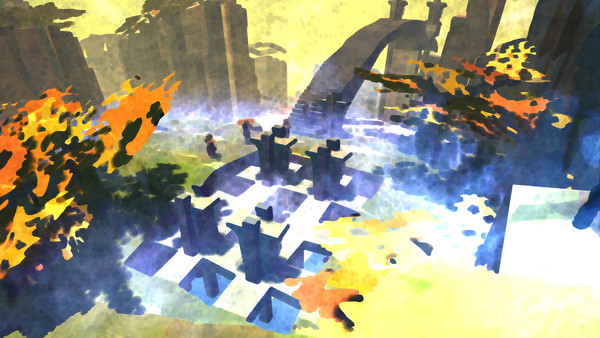
Before procedural generation became two words that gamers would associate with 2016's most divisive game, No Man's Sky, it was a major feature of the MMO known simply as Love. Gameplay is emergent from players' encounters with each other, with NPCs and the environment. Love uses skill-based progression and allows players from the same settlements to benefit from one another's successes.
This ambitious project was the work of Eskil Steenberg, a developer with a singularly focused goal. Love is the work of gorgeously rendered art and a passion for non-linear gameplay options and the result was an astonishingly beautiful game. The fact that it was made by just one person adds to this in spades.
Steenberg has been working on a new game titled Exo, expected to be a gruellingly difficult puzzle experience with level creation and customisation available for players to interact and compete with their friends.
7. Meridian: New World
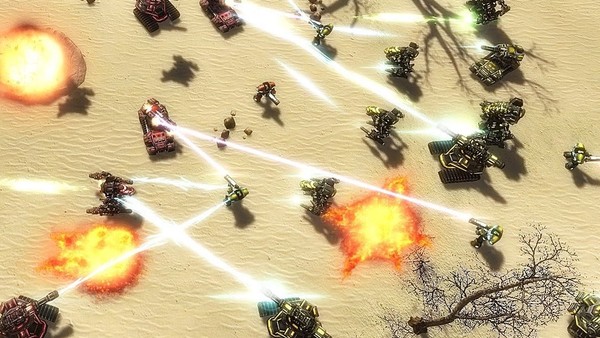
The supposedly uninhabited world of Meridian would've seemed an easy voyage for players taking to the shoes of Commander Daniel Hanson. A surface-based distress call breaks this, and the resulting RTS game is one driven by epic story. With detailed strategy and terrific graphics, you'd be forgiven for glancing at this title and thinking it came from a AAA studio.
Stand in awe, then, at the fact that the game was simply developed by Hungarian Ede Tarsoly. Using a graphics engine that handled a lot of the 3D modelling, he added his own map editors and scripting tools to bolster the mechanics and twist the core of the game into the impressive product that it is today.
You may argue that the freelancer help Tarsoly received in preparing cut-scenes undermines the game's case under singular development. However, given the scope and strength of the work that Tarsoly managed on his own and the fact that the game could've been completed without the scenes, you still have to hand it to him.
6. Braid

Before taking early 2016 by storm with his immersive puzzle explorer The Witness, Jonathan Blow had already found critical acclaim for his title Braid. But while The Witness leans heavily on spectacle and perspective, Braid is an experience that impresses with far subtler tact.
Braid is a puzzle platformer that takes players across six worlds and features all of the stereotypical platforming mechanics as well as giving players the ability to rewind time and rethink actions on occasion. The game centres around protagonist Tim as he attempts to rescue - what else - a princess.
The 2008 version of Braid may have come courtesy of Number None, Inc, but the original version was all Blow. Originally completed in 2005 but without the quaint artwork of the later version, Blow's initial project was self-funded and intended as a critique of contemporary gaming trends. This version even won the award for 'Innovation in Games Design' at the 2006 Independent Games Festival.
5. Dust: An Elysian Tail
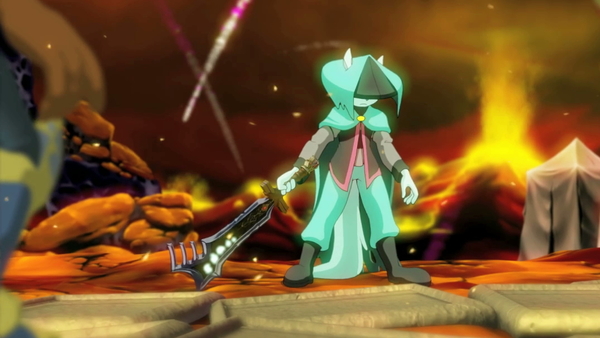
As action RPGs go, Dust: An Elysian Tail stands out very well in a seriously congested market. The cartoony style is a refreshing change again much darker traditions, and the anthropomorphised protagonist - know as Dust, of course - is an engaging and enjoyable hero.
But the biggest way this game stands out from its action RPG competitors is by virtue of the fact that this was the work of just one man. Dean Dodrill is the creative genius behind Dust and he completely designed and programmed the game himself.
What's even more impressive is that Dodrill is a self-taught illustrator and animator. He used previous experience animating for Epic Games in his project, though the game was originally conceived as an 8-bit style platformer and was actually planned to be an animated movie even before that.
In the end, however, it certainly seems like Dodrill made the right call!
4. Fez

The tumultuous development cycle of Fez is pretty well known throughout the gaming world, but the fact that a critically acclaimed game could stem from such turmoil is definitely cause for celebration. The basic premise involves players solving 3D puzzles by manipulating four 2D perspectives, collecting cubes and their requisite fragments to restore order to the universe.
Fez originally began its life as the work of Canadian duo, Phil Fish and Shawn McGrath. When the two fell out, Fish continued to work on the game despite the initial concept being McGrath's idea. Fish worked on the design in his spare time, and it was purely through his own determination that the game eventually saw the light of day.
The well-known beauty of this game means that the untimely death of the planned sequel - Fez 2 - came as even more of a blow to fans. In truth, however, Fez was never likely to be charmed enough to make it through two doomed production periods!
3. Undertale

Undertale eventually released in 2015 after a number of delays in its development, and it arrived on waves of critical acclaim and sterling reviews. Putting players in the shoes of a child who's fallen into a magically guarded Underground beneath earth's surface, the story leads you through encounters with all manner of monsters in the quest to return home.
Featuring a non-linear story where the player's choices impact dialogue options and choices later on in the story, combat comes in the form of a bullet hell-style control system that reintroduced the intriguing mechanic to a 21st Century audience. And all of this came from the mind of just one developer.
Toby Fox is the individual responsible for Undertale, utilising GameMaker: Studio to craft the finished article. Eventually being completed in a little over two and a half years, the development of the game began after Fox attempted to fit RPG elements around the niche battling system.
And thus Undertale was conceived...
2. RollerCoaster Tycoon

Before it became a multi game series, RollerCoaster Tycoon had humble origins that trace back to the ambitions of just one creator. The mechanics of the series are well known, with typical city simulation experiences being slimmed down and focused into smaller scale projects as players craft their own amusement parks.
The original game was the work of Scottish designer Chris Sawyer, despite the fact that he admittedly hated rollercoasters himself. Putting this prejudice aside, however, Sawyer started work on a rollercoaster version of a Transport Tycoon sequel in order to allow himself to research rollercoasters - he eventually even fell in love with them.
But that's not all the game did for Sawyer; with publishers Hasbro having earned over $180 million on the series, the man himself has pocketed some $30 million for his troubles.
As they say; life begins at the edge of your comfort zone!
1. Minecraft
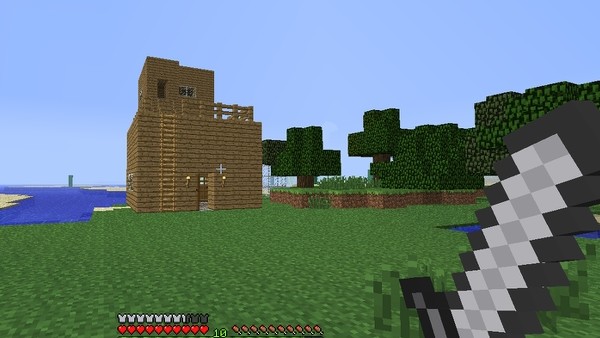
Before becoming Majong's all-encompassing behemoth of a franchise, the original Minecraft was incredibly just the work of just one person. We don't need to tell you what Minecraft is, of course; what gamer on this earth hasn't had some brush with the cubes and the creepers of this construction sandbox?
Swedish programmer Markus "Notch" Persson developed the original version of the game himself back in 2009, and the involvement of other aid didn't come until after he released the alpha version. Until that point the game had merely been a project or curiosity, with influences such as Dungeon Keeper and Infiniminer inspiring the creation.
It was as that point that Notch created Majong, with the intention of the studio solely existing to continue the game's development. Now the title has been bought out by Microsoft in a deal worth over $2 billion, leading us to think the lonely nights of arduous development were probably all worth it in the end...
--
Have you ever been surprised to find out one of your favourite games was developed by one person? Put your picks forward in the comments below!