10 Incredible Forgotten Games From Massive Studios
Turns out fans and big developers alike aren't always interested in supporting great games.

Developers are the beating heart of the video game industry, controlling not just what comes next, but what to focus on from the past; what aspects of graphics and gameplay to take forward with them, and how to align titles with tastes while advancing new stories, styles and technologies.
But with so many great games coming out of their doors, some companies forget to hit pause, take stock and bask in the glory of their own achievements. In fact, many of them just pass straight onto the next thing, not a care in the world. And while many of these games were popular at the time, some of them were not, failing to make a mark on the gaming landscape and sending a message to the people who made them.
For these and an array of other reasons, relating to developers going bust, gaming changing over time, and appetites for certain properties waning, some pretty excellent titles have been lost in time. Alas, no more! We are here to take you back through 10 incredible forgotten games that you just might want to pay attention to in the future.
10. Oni (Bungie)

As the developer responsible for perhaps the most acclaimed sci-fi shooter of all time - Halo - Bungie have proudly sat astride its few but major accomplishments for most of their life. But that doesn't mean they don't keep a few aces up their sleeve. Like, way, way up their sleeve.
The only game developed by Bungie West, cross-platform cyberpunk actioner Oni married its anime influences (most noticeably Ghost in the Shell and Akira) with a third-person, shooter/beat-'em-up format, putting us in the shoes of Konoko, an agent of the future Technological Crimes Task Force who turns against her employers to uncover the secrets of her past.
While its graphics and gameplay might not hold up today, at the time (2001, to be precise) it was up there with some of the better games. Sure, the shooting is nothing to write home about, but the fighting elevates it above similar titles, with a smooth, satisfying physics - reminiscent in many regards to Eurocom’s Buffy the Vampire Slayer: Chaos Bleeds, which came out a whole two years later.
Original copies are hard to come by, but Oni nurtured an underground following for years, leading dedicated fans to release the Anniversary Edition of the game, which expanded on the retail edition with a mod installer, patches for bugs and new features, and core fixes for glitches.
9. Justice League Task Force (Blizzard)
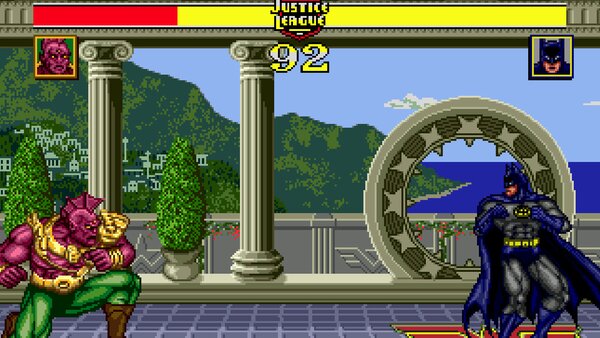
Released way back in 1995, long before Injustice was even a glint in NetherRealm’s eye, fighting game Justice League Task Force was far and away the first video game to capitalise on the IP.
Developed for the SNES and Sega Genesis by Blizzard and Condor (who would ironically later be absorbed into Blizzard) respectively, the game brings together all the iconic DC heroes you would expect, including Superman, Batman, Aquaman, Wonder Woman, Green Arrow and Flash. You play as the JL member of your choice and fight your way through android duplicates of the other team members, as well as baddies like Cheetah, in an effort to get to Darkseid and foil his attack on Earth.
Very much capitalising on the popularity of hot properties such as Mortal Kombat and Street Fighter, Justice League Task Force had a unique selling point in its use of established and much-loved characters, fighting against iconic location backdrops. Add to this a multiplayer mode and you’ve got a game that should have kept fans enthralled for generations. Unfortunately, despite its comic book appeal, it failed to break the MK/Street Fighter stranglehold and faded into the mist, leaving DC fans bereft until Injustice came along two decades later.
8. Azure Dreams (Konami)
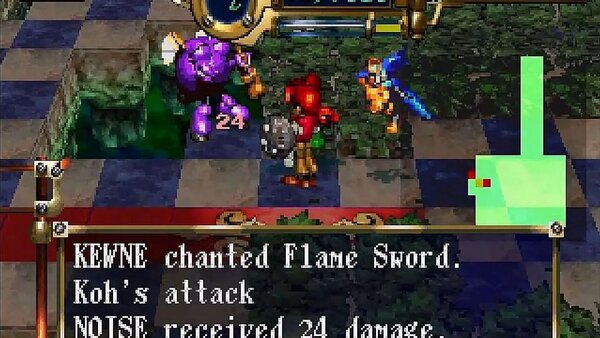
One of the biggest video games companies of all time, Konami has been plying us with quality gaming content since the ‘70s, and so understandably a lot of even its good games have gotten lost in its massive back catalogue. In the late-‘90s, right before the company entered a phase in which they put most of their weight behind party games, they were putting out a wild and weird mix of… well, everything.
One of those everythings is Azure Dreams, a roguelike monster breeding game for the PS1. Set in the desert town of Monsbaiya, you play as Koh, a young adventurer searching for his father who went missing inside the town’s Monster Tower, and who teams up with monster familiar Kewne to reach the top of the tower and uncover the truth.
The focus of the game is gaining experience in the tower, levelling up and hatching monsters whose abilities allow you to tackle the tower’s higher levels, while building up the town around it. Far from a one-dimensional dungeon crawl, the game balances the adventure aspects with Koh’s social life, including presenting the option to uncover and pursue love interests in town.
So what happened to it? Never prone to resting on their laurels, Konami released a Game Boy Color version of the game a year later, but then ploughed ahead with other games and never looked back.
7. Crash Bash (Eurocom/Cerny)

Eurocom may be no more, but they spent their two and a half decades in game development putting out a range of popular and big-name titles, scoring several entries in the Mortal Kombat, Crash Bandicoot, Harry Potter, Spyro and 007 franchises (including the GoldenEye remake). But not all of them hit; yes, we all remember Crash Bandicoot: The Wrath of Cortex for the GameCube, but what of the developer's other Crash title, landing just two years prior?
Crash Bash is the forgotten Crash Bandicoot game, as well as the game for offline multiplayer action (up to four players simultaneously with a PS1 multitap). It features battle mode, story mode, mini-games, bosses, and all the established characters from the franchise plus a few new ones, and is surprisingly well conceived for what could otherwise have been a rote or cheap cash-in on such a popular property (at the time) as Crash Bandicoot.
Despite the fact that it was co-developed by Cerny Games (yes, Cerny as in future PlayStation bigwig Mark Cerny), it was overshadowed by the main Crash series and other offshoots like Crash Team Racing, didn't get any direct sequels like CTR, and hasn't been revamped or re-released in the years since. And, unfortunately, Eurocom went under in 2012, so anyone born after the late-'90s may not have had the pleasure of games like this - and perhaps never will.
6. Kuon (FromSoftware)
Since their first game, King's Field in 1994, FromSoftware have been at the head of some of the most revered titles of the modern age, including Dark Souls, Bloodborne and Elden Ring. But that doesn't mean all of their games have received the acclaim or longevity they deserve.
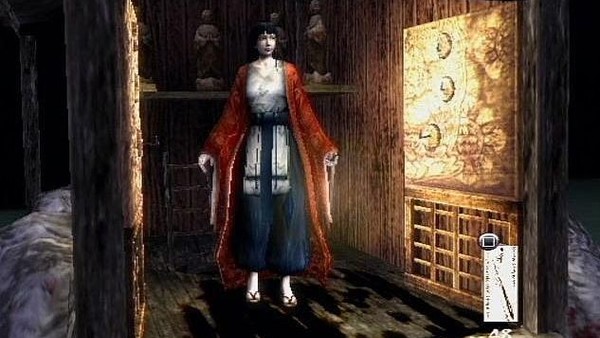
Before the Dark Souls era, FromSoftware were toiling away on releases that hit the shelves then hit the bargain bins the next year, barely stopping to catch a breath. Among these is survival horror game Kuon, which dropped on the PS2 in 2004 and 2006 (thanks to publisher-related difficulties), before it was all but forgotten.
And yet, the game has much to offer. It charts the mysterious events at Fujiwara Manor in Kyoto, back in Japan’s Heian period, following the trail of an exorcist who has gone missing. Despite sporting a fixed camera style, a format as divisive as it is now rare, Kuon makes the most of its limited perspective to supply genuine scares, while employing its setting and lore in crafting an immersive world.
But good luck getting hold of a copy, as, at least here in the UK the game has become an expensive and hard-to-find collectable, due to its limited release.
5. The Unfinished Swan (Giant Sparrow)

Independent games developer Giant Sparrow (which features just a three-person developing team) has enjoyed rampant success with its artistic first-person exploration video game What Remains of Edith Finch, but what of the company’s first effort?
The Unfinished Swan is an adventure maze game set within a blank world, where you must throw globs of paint in order to determine the landscape around you, and then to solve puzzles and progress through a mysterious kingdom. It may not sound like much on the surface, but it makes for a compelling and surprisingly affecting story, following a boy named Monroe, whose mother has recently died, and who pursues a swan that has escaped a painting, while learning the parallel story of a lonely king.
Its abstract approach to gameplay and environment meant it was always going to be an outsider, and it isn’t exactly the longest game of recent times, but given the popularity of its successor it seems there may be no better time to revisit The Unfinished Swan and revive it from its quiet console releases over a decade ago.
4. Disruptor (Insomniac)
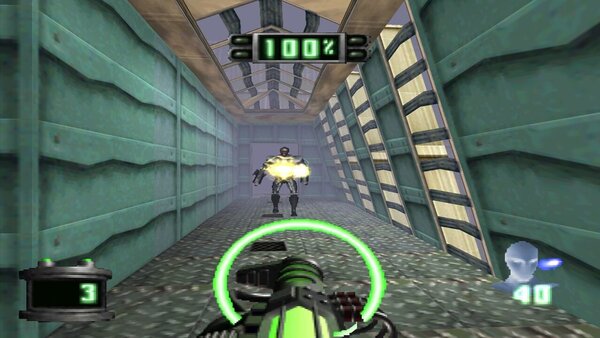
First person shooters in the '90s weren't what they are today, but they had their charm - just check out how many people still play Doom. Yet many have been lost in the mix, succumbing to an over-saturation of similar games in the market and endless progress in development.
Buried at the very beginning of Insomniac's catalogue (behind a solid block of seven Spyro and Ratchet & Clank games!) is Disruptor, a 1996 PlayStation FPS. The game features a crazy array of weapons, an involved future-set storyline about a couple of new LightStormer Corps recruits with psychic powers, and a strong balance of strategic gameplay and violence (setting it apart from royal rumble games or wave-based games like Doom).
There was never any good reason for Insomniac to revisit or in any other way acknowledge their first effort, given how quickly and successfully they pivoted into family-friendly platformers, and how they have had no trouble remaining current and relevant in the intervening years, including more recently helming Marvel's Spider-Man. But this is a true forgotten gem that deserves to be remembered.
3. Disaster: Day of Crisis (Monolith Soft)

Roundly viewed as the safe, family friendly console, the Nintendo Wii managed to capitalise on this image for all seven years it was in production. Most of us have fond memories of battering the air to Wii Sports, Mario and Sonic, yet a few edgier games managed to seep through.
Disaster: Day of Crisis offers players the opportunity to face natural disasters, terrorists and survival situations head-on, in typically immersive and interactive fashion, resulting in a panic-inducing game unlike pretty much anything else (and especially any non-horror) seen at the time. Despite it not being a natural fit for the console, that didn’t stop Monolith going hell for leather on this one, with shooting, driving, swimming, running, physical puzzles, minigames and more. And that’s without mentioning the Hitman-style stealth levels.
It feels and sounds like a straight-to-video action movie, but then that’s most of the fun - where else would you get the chance to actually be in one of these things?
And yet, because the game’s excellence is tied so closely to the Wii’s interactive system and mechanics, when the console went out, the game went with it. And, given its original North American release was cancelled due to poor sales in other territories, nobody currently in the market - least of all Monolith - is in any hurry to rediscover it.
2. Mercenaries: Playground of Destruction (Pandemic)
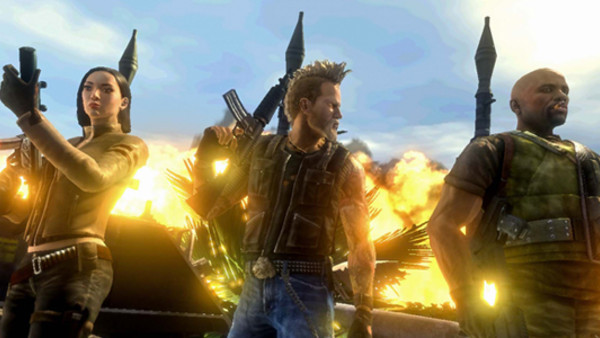
Pandemic Studios were big news in the 2000s, developing some truly iconic games, including Star Wars: Battlefront and Destroy All Humans!. With the scope, imagination and skill to deliver innovative and exciting games, their properties were usually big hits on release, but that didn't always translate to a long lifespan.
An oft-overlooked classic, Mercenaries: Playground of Destruction was one of Pandemic's greatest games. With war raging in North Korea, five factions - Allies, China, South Korea, North Korea and Russia - duke it out, and a band of mercenaries parachute in to help turn the tide in whatever direction they see fit. No points for guessing that you play as the mercenaries, and are treated to a vast sandbox open world environment - one to rival GTA - featuring an unparalleled level of destruction (seriously, you can raze skyscrapers) and the power to decide how you want to complete your missions.
And yet Mercenaries never achieved the status or permanence of its competitors.
While the sequel advanced the action into online play, and was loads of fun, it felt rushed, failed to wow critics and did a sloppy job of advancing features like co-op, all but leaving the franchise dead in the water. Even if Pandemic hadn't been bought and then killed by EA in 2009, the two further planned sequels may never have seen the light of day.
1. Godzilla: Destroy All Monsters Melee (Pipeworks)
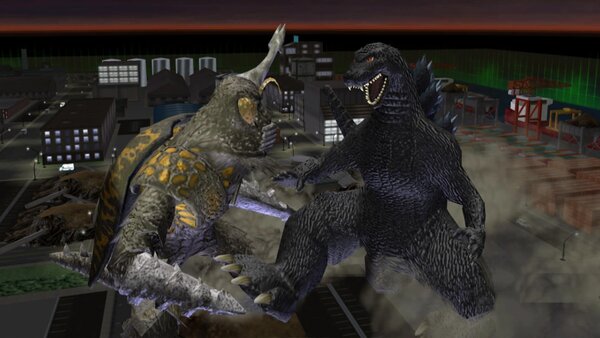
While the natural pick for a forgotten mecha monster fighting title might be Capcom's Tech Romancer, there is an equally good but even less remembered example of the genre from Pipeworks. Sure, Pipeworks are no Capcom, but they have co-developed expansions and porting for Madden, COD and Devil May Cry, as well as helming some significant titles over the years, including Prince of Persia and pretty much every single Godzilla game out there.
And so, we turn to the company's 2002 effort Godzilla: Destroy All Monsters Melee, released on GameCube and Xbox. Hands down the best Godzilla console game, Destroy All Monsters Melee allows you to stomp all over a city environment, razing buildings and slaughtering countless innocents while duking it out with other kaiju and mechas using an array of attacks and special abilities. Sure, there are many games like it, but this one packs the bonus of being packed to the gills with familiar characters we know and love from Toho's Godzilla franchise - King Ghidorah, Megalon, Orga, Rodan; they’re all here.
So why does nobody talk about it? Well, a direct sequel, Godzilla: Save the Earth, was released in 2004, but it failed to either finesse or expand upon the previous game, and was received with the same apathy as the rest of the Godzilla titles. Add to this that home gaming with your pals has gone out of the window since the 2000s, and its not really got a skyscraper-size leg to stand on.