10 Iconic Video Games You Had NO IDEA Were Originally Sequels
Post-apocalyptic Jak? Mario shot gunning ink? Dante flipping over zombies? It all nearly happened.

When a game emerges as a landmark classic, it’s hard to imagine its developers ever seeing it as anything other than what it became. Surely there’s no way it could’ve started life as just another sequel, spin-off, or tie-in to an entirely different franchise… right?
Funnily enough, it’s happened several times - in fact, enough to fill out a top ten list. Publishers are far more willing to fund a project if it’s connected to an existing IP or famous license, something with instant brand recognition. But that often clashes with developers who want to take creative risks and build something new.
In some cases, an expired license or soured IP deal led to developers having to shake up their sequel concept. Still, in most of these cases, it was a tug-of-war between business and creativity that shaped what the game eventually became - until development reached a point where the money men could finally be convinced to drop the old branding and let the idea stand on its own two feet.
Ironically, many of these so-called “accidental” new IPs went on to surpass the franchises they were originally meant to continue - proving that sometimes, shaking up the formula is exactly what audiences are looking for.
10. Splinter Cell

Originally: James Bond stealth game
Back in 1999, when Ubisoft was still just a Montreal-based developer without dozens of global offshoots, the team was experimenting with a prototype for a Sci-Fi action game called The Drift. It featured some interesting, forward-thinking mechanics, like the ability to aim at two enemies at once, or, most relevant, a grapple gun that could also fire custom surveillance cameras - but the rest of the project wasn't coming together.
In a last-ditch effort before higher-ups likely shut it down, the developers repurposed the concept into a spy-action game based on the James Bond IP, adding stealth missions, globe-trotting action, and blockbuster flair. They pitched it to the rights holders, who firmly turned them down.
Then another license came along to save the day. Ubisoft had recently acquired the rights to the Tom Clancy brand and was eager not only to create a “Metal Gear Solid 2 killer,” but also to plaster its new label onto games already in development. The unused Bond concept was reworked to fit, as cocktails were traded out for night vision - first as an adaptation of The Sum of All Fears, before shedding any story connections and simply adopting the Clancy aesthetic and tone.
From that, Sam Fisher was born - a worthy rival to Solid Snake, and arguably the most iconic character to ever emerge from a Tom Clancy game. Now, where on earth is that remake?
9. Donkey Kong

Originally: Popeye - The Video Game
Way back in 1981, Nintendo was not yet the video game powerhouse we know today. In fact, they were best known for making playing cards and novelty toys, and had spent much of the 1970s desperately trying to crack the arcade market with little success.
Then along came in-house developer Shigeru Miyamoto with something new. He landed the rights to the popular Popeye license and created a simple but clever concept: a level filled with stacked platforms, Bluto at the top throwing down rolling obstacles, Olive Oyl calling for help at the top, and Popeye climbing his way up to save her.
If that sounds familar, it should. When the Popeye licensing deal fell through, Nintendo reskinned the idea - replacing Popeye with Jumpman (later known as Mario), Olive Oyl with Pauline, and Bluto with a King Kong-like brute named Donkey Kong. The result was the classic arcade hit Donkey Kong - the game that saved Nintendo and launched their first true mascot.
Ironically, when Nintendo finally released an actual Popeye game soon after, critics dismissed it as a decent but unimaginative Donkey Kong rip-off. Little did they know, Donkey Kong itself had been the Popeye game all along.
8. Doom
Originally: Aliens - FPS Shooter
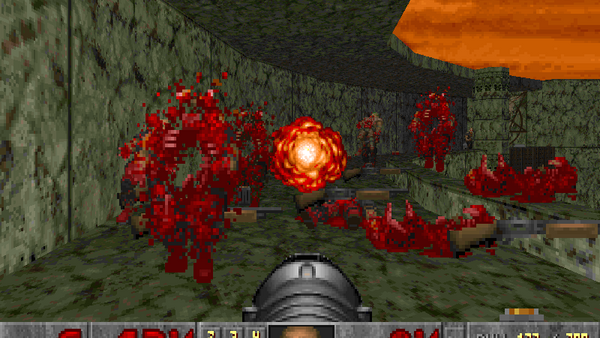
Hot off the success of Wolfenstein 3D, the World War II shooter that essentially created the FPS genre, id Software was eager to evolve its formula and apply it to a very different environment than retro Nazi shootouts. While Wolfenstein flirted with horror and fantasy elements, it never fully committed to them, and the studio wanted to change that, giving players an experience as tense as it was exhilarating. 20th Century Fox’s Alien IP would make for an enticing partnership.
It seemed like a match made in heaven. The Alien universe fit perfectly into the FPS mould, offering a completely different tone and atmosphere, not to mention featuring one of the scariest creatures imaginable charging straight at you. id began developing concepts as talks with Fox were ongoing, building around space marines, isolated stations, and dimly lit corridors for maximum tension. Then, suddenly, Fox got cold feet and pulled the license.
id was disappointed but quickly pivoted. They scrapped the Alien lore and replaced it with demons and a hellish invasion instead, keeping the sci-fi and space marine elements intact, and creating a wild mash-up of horror and action that still feels fresh today.
Ironically, Doom went on to raise the bar for the FPS genre to a level where the rest of the industry followed suit, including Fox, which tried to replicate its FPS success with Alien vs Predator in 1994. id probably got the call, but by then they were too busy counting their money to answer.
7. Perfect Dark

Originally: Goldeneye 2
GoldenEye on the N64 didn’t just bring FPS shooting to consoles in spectacular fashion (a genre previously dominated by PCs), it also introduced young gamers to multiplayer deathmatches and delivered one of the best licensed games ever made. No small feat. Gamers wanted more, and so did publisher Nintendo, who tasked developer Rare with delivering a direct follow-up.
Conceptually, though, not much work began due to two major factors. First, back then, the Bond license was handled on a film-by-film basis, and when it came time to bid for the next movie, Tomorrow Never Dies, EA dramatically outbid Nintendo at the auction. Rare could still make the case for an original story - essentially a direct sequel to their game, GoldenEye 2 - but then came the second issue: the team, when pressed, was simply over the Bond franchise. Luckily, they weren’t over the idea of making another cutting-edge FPS for the N64, and continued working on the concept, but untethered to the IP.
And from there, Perfect Dark was born. It took everything that made GoldenEye work - slick first-person action, surprisingly advanced AI and animations, and a tense, cinematic campaign that made players feel like they were living an espionage blockbuster - but added an evolved sci-fi twist.
Perfect Dark was always seen as the spiritual successor to GoldenEye, but as it turns out, at one point, it really was intended to be its genuine sequel.
6. The Last of Us

Originally: Jak and Daxter 4
After the massive success Naughty Dog achieved with Uncharted 2, the rest of the studio focused on pushing ahead with part three of Nathan Drake’s adventures, while a newly formed B-team was splintered off to work on something else in parallel.
Neil Druckmann spearheaded this smaller team, tasked with figuring out what that project would be. Originally, the assignment was to make a new Jak and Daxter entry - the studio’s flagship PS2 franchise. They kicked around ideas and entered early conceptual stages, but their hearts were elsewhere. The most exciting ideas they were coming up with felt like they belonged to a completely different kind of game.
What those ideas were exactly remains a mystery: Jak as a sad dad to Daxter’s wayward sidekick? On-the-fly weapon building mechanics? Stealth and action mixed with horror tension? It’s hard to picture any of that fitting into a world with a talking animal, but whatever it was, it was enough to convince the team to shed the shackles of the IP entirely and place the mechanics around something brand new, switching it with a pitch Druckmann had been carrying with him since his university days.
The rest, as they say, is history. It resulted in one of the studio’s most celebrated games and a defining title of its era, with Druckmann eventually becoming head of the studio - no doubt thanks to his work on it.
5. Assassin’s Creed

Originally: Prince of Persia - Assassins
It’s a funny thought nowadays, but at one point, the Prince of Persia series was one of Ubisoft’s biggest properties. Originally an Apple II franchise that eventually sputtered out, it came roaring back with The Sands of Time in 2003, a title dripping with lush Arabian Nights fantasy and revolutionary platforming mechanics. It was a landmark game of the PS2/Xbox era, leading to two sequels that tried to inject a bit of Nu Metal attitude to mixed results, but regardless, they all sold well.
As the next generation of gaming (Xbox 360/PS3) loomed on the horizon, series creative director Patrice Désilets grew eager to evolve the formula. The team pinpointed a gritty historical period - the Third Crusade, circa 1190 AD - and experimented with NPC behavior, open-world systems, and stealth mechanics designed to sit at the very heart of the experience.
Development eventually sidelined the titular Prince entirely, focusing instead on his bodyguard assassin, as seen in a 2004 prototype that looked like a completely different game than what had come before.
And there lay the dilemma: Ubisoft supported the project, but wanted to keep the Prince of Persia brand for recognition. The developers, however, felt tethered to an identity their concept had clearly outgrown. Eventually, they won out, and a whole new series was born in the form of Assassin’s Creed - a franchise that has since completely overshadowed the poor Prince in both popularity and relevance.
4. Dead Space
Originally: System Shock 3
System Shock 2 might not have sold like hotcakes, but it created a ripple effect across the industry, inspiring developers to rethink what a sci-fi action RPG could be - blending immersive-sim mechanics with blistering horror. In the eagerness to create a part three to that franchise, two classic games were born.
The first was a straightforward non-starter. Ken Levine, the lead creative behind System Shock 2, wanted to evolve the series further, but by that point, the rights had gone to EA, making it a no-go. Hence, BioShock was conceived as a spiritual successor with him at Take-Two instead.
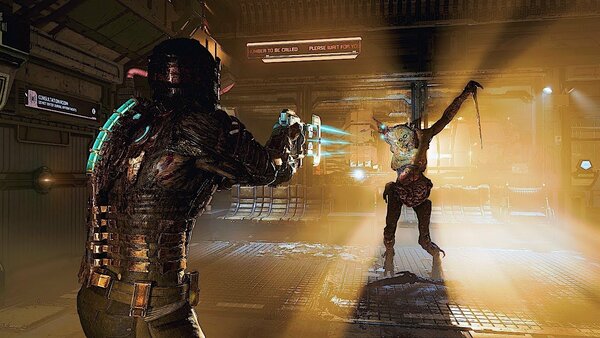
Meanwhile, at EA, publisher-owned Visceral Games were huge fans of System Shock 2 and wanted to pick up the mantle. The publisher supported the idea, preferring to build on an established (if underperforming) IP rather than risk an entirely new one. Development began with the team studying the franchise closely - it was originally meant to be a first-person immersive sim in the style of the franchise.
And then Resident Evil 4 happened...
That landmark game essentially rewrote the rulebook for how a horror blockbuster should play and feel. Visceral made the case to keep System Shock’s atmosphere and setting, while shifting to a third-person perspective with tighter, more action-oriented controls - but to really work, it would need to be a new IP.
This was an uphill battle; Visceral had to convince EA, but the result was a perfect fusion of survival horror and sci-fi dread.
3. Splatoon

Originally: Super Mario multiplayer shooter
Nintendo doesn’t often create new IPs anymore, mostly sticking to its tried-and-true legacy characters for guaranteed first-party hits. However, Splatoon was a rare modern attempt that managed to find its audience - essentially Nintendo’s take on the sweaty online multiplayer shooter, but lathered in the charming, family-friendly polish fans expect from the company.
The original prototypes, though, were playing it much safer. Early in development, Splatoon was essentially going to be another competitive Mario multiplayer spin-off, with the famous plumber serving as the default character during initial testing.
The team was excited about how the competitive gameplay was shaping up, but as development progressed, Mario began to feel like an odd fit for the setting. They wanted to replace him with something fresh and original - new characters to match their new style of gameplay. Eventually, they landed on the idea of humanoid, squid-like creatures who looked like ocean-dwelling skater kids, which neatly explained why everyone was splattering ink everywhere in the first place.
While Splatoon isn’t as iconic as Nintendo’s biggest milestones, it does hold the honor of being one of the company’s few modern IPs to truly stick the landing and carve out its own niche among Nintendo’s evergreen fanbase.
2. Super Mario Kart

Originally: F-Zero multiplayer spin-off
On the Super Nintendo, F-Zero was a bona fide, wig-peeling experience back in the day. Its slick sci-fi presentation, evolutionary Mode 7 graphics, breakneck racing, and nail-bitingly competitive nature made it a showcase for the console’s power. But there was one major flaw Nintendo didn’t foresee: there was no option to play multiplayer.
Of course, back then, “multiplayer” meant strictly local sessions, but it was still a major omission as the novelty of couch co-op grew in popularity. The limitation came down to hardware - the SNES simply couldn’t handle rendering two high-speed Mode 7 tracks on top of each other for split-screen racing.
Nintendo wanted to fix that. Development began on a new project focused on allowing multiple players to race each other, even accommodating more screens with the upcoming Super Multitap accessory. However, combining that with F-Zero’s blistering speed just wasn’t working. The team needed slower, more manageable vehicles - karts - and started with generic drivers before eventually realizing how much sense it made to put Mario and his friends behind the wheel.
That single decision changed everything. The prototype evolved into Super Mario Kart, released in 1992, and went on to launch one of Nintendo’s most beloved and enduring series.
1. Devil May Cry

Originally: Resident Evil 4
The Resident Evil franchise had taken the PS1 generation by storm with its modern visuals, iconic puzzle-horror gameplay, and its role in making “survival horror” a cutting-edge commercial genre. But with new tech (the PS2) on the horizon, Capcom knew they needed to push the formula forward or risk it going stale.
Led by Resident Evil 2 director Hideki Kamiya, early prototypes for the fourth entry featured familiar elements: a gothic setting, fixed cameras, location-based puzzles, and grotesque enemies. However, the main character, monikered “Tony”, was a far cry from the tank-like protagonists of the series. He had supernatural abilities, could backflip across rooms, and dual-wield pistols in a dazzling display of agility - gameplay that looked truly evolutionary for the time.
Producer Shinji Mikami urged the team to drop the Resident Evil branding, though, feeling the tone was too vibrant and action-focused for the series, and instead rework it into its own standalone game. Amusingly, aside from (thankfully) changing the protagonist’s name to Dante and cutting his family ties to the Umbrella Corporation, not much else was altered.
Mikami would go on to direct the eventual Resident Evil 4 - itself revolutionary - but Devil May Cry became a franchise just as iconic and memorable in its own right, with Capcom accidentally landing two landmark games out of the same creative spark.