10 Hidden Video Game Mechanics With MAJOR Consequences
Your actions might cost you more than you think!

The main thing that differentiates video games as a medium from movies and novels is the fact that the player has a say in what is going on in the story.
Your impact on the game is usually blatantly obvious. However, there are also games that like to hide just how much your decisions matter by using hidden mechanics.
Some titles include secret scripts that don't show up in any menu or HUD, even though they meticulously analyze everything that you do. You don't realize you're being judged about these things at all until the mechanic finally comes into play and determines your fate in ways you couldn't even imagine.
From hidden morality points that judge if you're worthy of getting the good ending to secret companion scripts that determine how they behave, all of these mechanics are deliberately obscured so that you aren't aware of them, even though they can completely change the course of your playthrough.
If you're curious to learn how they work and perhaps prepare for them ahead of time, the following list is for you!
10. Hidden Reputation Can Cost You Allies - Assassin's Creed Shadows
Although Naoe and Yasuke are feudal Japan’s powerhouses, Assassin’s Creed Shadows allows you to recruit allies that can aid them in battle with special abilities.
There are six recruitable NPCs in the game, but what the game doesn’t tell you is that some of them may not want to join you due to a secret reputation mechanic.
Despite being an Assassin, you don’t actually have to kill every enemy you encounter, and in fact, you shouldn’t. This is because several of the NPCs you can recruit will not join you if they consider you too bloodthirsty or they realize you’ve murdered something specific.
The mechanic can come as a shock, considering there is really not much difference between a lethal and non-lethal playthrough in most other aspects of the game. It’s an even bigger surprise to find out not being a pacifist can cost you someone with a really useful skill.
It’s not just Naoe who deals with the heavy guilt of taking people’s lives. You can also end up regretting being a murderous bastard, although it will probably be for more pragmatic, gameplay-related reasons.
9. The Only Dialogue That Matters - Kingdom Hearts

Kingdom Hearts isn’t really a choice-determinant game. The story is linear, and there are only a couple of secret endings that act more as teasers than actual consequences of your actions.
Still, the player can pick options in dialogue, and while they all seem to be inconsequential, it turns out the intro dialogue has a great impact on the rest of the game.
In the tutorial, Sora’s friends will ask him three questions about him: “What’s most important to you?” “What are you afraid of?” and “What do you want most out of life?”
The question seems to be noting more than flavor text that lets you add a little personal touch to Sora’s character, but, in reality, each answer secretly determines your character's stats.
If you answer most questions with the first answer on the list, Sora will level up faster in the early stages but fall behind in the late game. The middle answers will make his leveling balanced, and the bottom answers will make his progress slower at first but significantly faster later.
So if you ever wondered why you seem to be leveling slower at certain stages of the game, the answer is this seemingly innocent section.
8. Hardened Personalities - Dragon Age: Origins

In most RPGs the only thing that changes about your companions is their level and abilities.
However, Dragon Age: Origins secretly allows you to shape more than just their combat statistics with its special, untold mechanic.
Two of the game's most naive and innocent characters, Alistair and Leliana, have a hidden "hardened" script that allows you to make them more assertive and pragmatic with your choices.
Alistair's personality can be hardened when you bring him to his lost sister. After the woman coldly shoos him away, blaming him for their mother's debts and death, instead of consoling him, you have to tell him that everyone is out for themselves and he needs to learn that. To harden Leliana, you have to deliver a similar tough pill to swallow after she confronts her past as a spy.
In both cases, the hardened characters will behave differently and be more willing to do things they would have outright refused to before.
For example, hardened Alistair will be willing to marry Queen Anora and become king, despite hating both ideas normally, and Leliana will be more open to more morally dubious actions.
The mechanic can completely change your ending, so it's useful to know, even if the game doesn't let you in on it.
7. A Smelly Affair - Half-Life

Most of the innovations Half-Life has introduced into the gaming industry can be seen with the naked eye, but the game also features a few hidden mechanics that are just as impressive.
One of them is the simple but game-changing smell system.
Though most Half-Life players have never realized it, the game does include a separate mechanic related to the sense of smell. If you've ever wondered why so many guards in the game complain about the odor, that's why.
The game's script includes three different types of smells: meat, carcass, and garbage. Only the first two are used in the game, but even then, understanding them can completely change your game.
You see, each corpse in the game generates smells, and the more of them you pile up in the area, the stronger the smell.
Each AI in the game is scripted to react to the odor, and the aliens in the game are specifically programmed to be attracted to the smell of corpses, meaning that the more dead bodies you leave behind, the more monsters you're going to encounter.
So if you don't want to be swarmed by ravenous beasts all the time, you'd best not go on killing sprees and keep each room tidy.
This advice also applies to real life, by the way…
6. Careful Not To Turn Into A Plant - The Sims 2
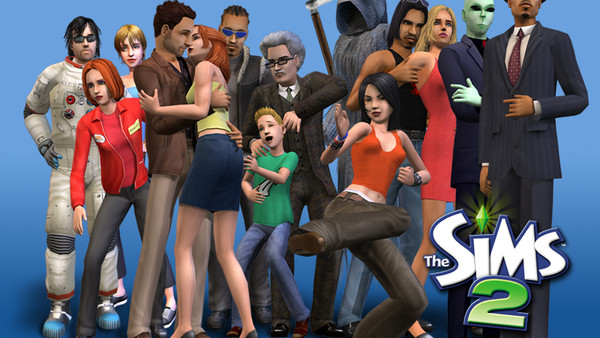
The Sims series loves its occult elements, and The Sims 2 is no different in this regard, although it's much sneakier about them.
Sim-Plants are a unique type of occult Sims that have been introduced in the Seasons expansion. There is one premade Sim-Plant in the game, but what the game doesn't tell you is that your regular Sims can turn into one, too, due to a special hidden mechanic in place.
The gardening skill introduced in the expansion pack allows you to grow and take care of plants by watering, pulling out weeds, and finally, spraying them with pesticides.
The last of these interactions has a secret percentage chance attached to it, which increases when you overuse the chemicals. When the script finally triggers, the toxic fumes will transform your Sim into a Sim-Plant!
Since the mechanic isn't explained and using pesticides is a basic gardening interaction, having your Sim suddenly transform into a half-plant is totally surprising. Especially since the transformation has some serious consequences for your Sim, replacing their hunger with a need for sunlight and forcing them to reproduce via spores.
Luckily, the condition can be cured with a potion you can purchase from the gypsy townie.
Just in case going green isn't for you!
5. Your Entire Gameplay Matters - Silent HIll 3

The Silent Hill series is an excellent collection of psychological horrors that keep the player on edge with every mysterious thing that happens in the titular town.
The games are big on creating fear out of the personal trauma of the main character, and in order to achieve this effect, they utilize several hidden mechanics that shape your character's psyche through the player's actions.
In fact, Silent Hill 3 determines what ending you're going to get through these exact scripts.
Two of the game's endings are determined by the amount of secret points that you accumulate through your actions. Your score changes depending on how often you kill enemies, how reckless you are in fights, and a couple of story-based choices.
If you play stealthily, avoiding combat and harming anything, you'll get the ending where Heather and Douglas survive and leave the town. However, if you've been acting like a maniac, the game will give you an appropriate ending in response, showing Heather killing Douglas in a mad frenzy.
The secret scoring system is surprisingly detailed, especially for a game that's more than two decades old now.
Yep, it's been twenty-two years. That's the true psychological horror!
4. Hidden Weight Value Can Kill You - Crusader Kings III
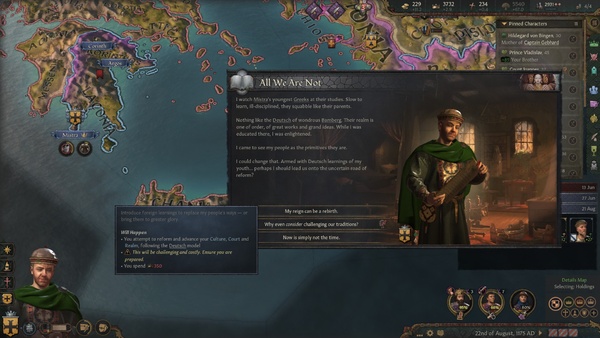
Crusader Kings 3 is Paradox Interactive's grand strategy game set in the Middle Ages.
The game loves to share info with you. Every minute detail is accessible, from the tax income of individual provinces to the traits and sexuality of NPCs on the other side of the world.
And yet, for some reason, the game still hides one simple but secretly very important mechanic from you—weight.
Even though it should be obvious, the weight value of your character is never really shown or explained, even though it comes with some pretty relevant consequences.
Gaining or losing too much weight can give your character special traits, such as fat or malnourished, that greatly reduce their health, endangering you to starvation and lethal heart attacks!
The only way to realize your character's weight has changed is when you've already gained a trait, so it's best to take preemptive actions just in case.
You gain weight when throwing feasts or stressing out, and you lose weight when exerting yourself physically or getting sick, so ideally you want to do all in equal measure.
Maintaining a healthy weight is a careful balancing act with next to no explanation. In other words, it's about as easy as keeping your diet in real life...
3. Be Nice To Vince - Little Hope

Little Hope is one of the most hated Supermassive Games' anthology titles, and it's easy to figure out why when you realize the game's ending is not determined by your choices regarding your group's survival but rather a secret scoring system related to a random minor character.
Long story short (major spoiler ahead), Little Hope's entire story turns out to be nothing but a hallucination of an old bus driver named Anthony.
The other people you play as have been dead for a long time, killed in an accident caused by Anthony. The only other real human you encounter is a random man named Vince.
Vince pops up in the game only a couple of times, but both of these encounters are secretly the most important moments in the game.
If you act nice to Vince, he ends up letting Anthony go after he stops hallucinating his victims. If you had more mean interactions with him, however, he sells you out to the police, revealing you've been responsible for the death of the passengers.
Considering how forgettable Vince is, it's totally understandable why everyone was so upset to find out interacting with him was the only thing that affected the ending.
2. Moral Points - Metro 2033

Metro 2033 is a highly atmospheric first-person shooter set in the post-apocalyptic world of the Metro series. The game tries to capture the bleak reality of its source material as best as it can, and one of the ways it does so is by utilizing a hidden morality system to make your choices in the game fully immersive.
The game’s two endings are determined by how good you act throughout the story. Although the game doesn’t indicate this in any menu or bar, most of your actions in the game determine your morality.
The most important aspect used for scoring moral points is avoiding killing enemy soldiers, but you can also increase them by doing more simple things like talking to the underground’s residents and playing guitar and relaxing in between all the postapocalyptic chaos.
The only indication of you doing a morally positive action is a gentle sound effect that plays afterward.
The consequences of doing them are not so gentle, however, as how good you are is the difference between launching nukes or seeking a way to peacefully end the conflict between human survivors and mutants on the surface.
1. Shadowheart's Dilemma - Baldur's Gate 3

Baldur's Gate 3 features an approval system for all of your companions that visibly changes whenever you make choices in the game.
However, affection isn't the only way you can influence your friends. There are also several hidden mechanics that arguably shape your companion in a far more important way. The best example of it is Shadowheart's secret points system.
Early in the story, your party's cleric, Shadowheart, reveals that she is devoted to an evil deity of loss called Shar. This makes her hate her lady's rival, Selune, with all of her (Shadow) heart, but as it turns out, the girl can be secretly influenced by you to change her mind.
All the way up to Act 2, the choices that you make affect Shadowheart's relationship with her goddess. If you do good deeds and respect her beliefs while also supporting Selune's worshippers, Shadowheart will accumulate points of doubt, which, in her final test of faith, will cause her to renounce Shar in favor of Selune.
Doing the opposite will instead reinforce her in her devotion to Shar. And while you can influence her choice with persuasion and good approval, if you can't do either, it's best to be mindful of this mechanic.