10 Features That Will Define Next-Gen Gaming
A new challenger approaches... and its name is Google.
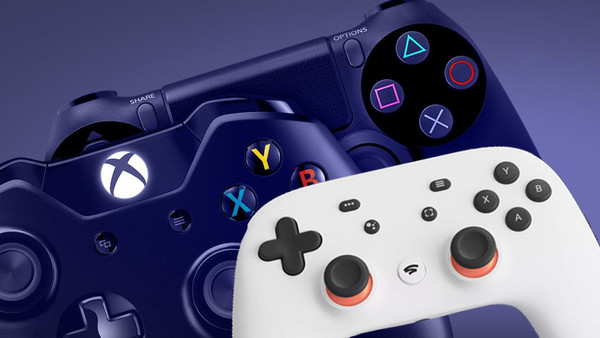
It doesn't feel like 5+ years since both the PS4 and Xbox One first launched, but indeed, the current generation of gaming is fast winding down, and if persistent rumours are to be believed, next-gen consoles from both Sony and Microsoft will likely be unveiled over the course of the next 10 months.
A new gaming generation on the horizon is always an exciting time, but the upcoming shift is especially intriguing as it marks a distinct period of change across the industry.
Sony and Microsoft are likely to offer gaming on more platforms than ever before, while a mighty new challenger hopes to disrupt the established battle between the Big Three for market supremacy.
But of course, nothing is set in stone about the inevitable arrival of new gaming hardware, yet if current industry trends continue to play out, this could be one of the most tectonic and significant years that the medium has ever seen.
Brace yourselves, because things are about to get very interesting...
10. Streaming Enters The Mainstream
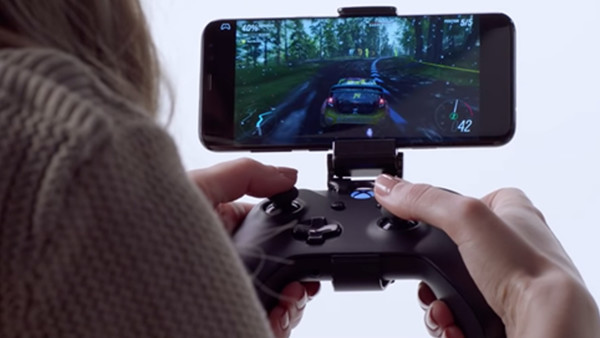
Cloud-based streaming isn't exactly a new trick, what with OnLive proving massively ahead of its time with its 2010 launch, and its patents eventually being acquired by Sony, who put it to use for their quietly successful PlayStation Now service.
Sony have also offered extensive PS4 remote play functionality for years, and recently even added Apple iOS support.
Microsoft, meanwhile, offers streaming within the same wireless network, and is set to launch Project xCloud in the near-future, which will allow more extensive streaming options away from home.
Elsewhere, there's Google's newly-announced Stadia platform, a streaming-only service which will offer up to 4K HDR 60 FPS support, with plans to eventually carry streaming up to 8K.
With all-but-Nintendo getting in on the streaming game, it's clear that this will be a major cornerstone of the next gaming generation, even as questions about latency, data caps and net neutrality remain unanswered.
While native hardware-driven gaming will always have a place with tech enthusiasts, for more casual players who lack the means to buy expensive rigs (or simply can't be bothered with the faff), streaming is sure to become immensely popular.
For many, the ability to play a brand new AAA game on their iPhone is far more of a selling point than crystal clear, faultless 4K, and so it's easy to see how game streaming could eventually rival VOD streaming services such as Netflix and Amazon Prime in popularity.
9. Subscription Services Reach Fever Pitch

The latter half of this generation in particular has already seen the makings of a gaming landscape becoming increasingly dominated by recurring subscription services over one-off fees for games.
Between PlayStation Now, Xbox Game Pass, EA/Origin Access and Stadia's upcoming service, clearly the prospect of guaranteed revenue from players every month is mightily appealing to just about every company in the business.
As such, don't be surprised if, within a year or two, we see the likes of Ubisoft, Activision, Square Enix, Sega and Capcom launching their own subscription services. In many ways this may start to replace loot-boxes and intrusive micro-transactions - or at least keeping them somewhat at bay.
These individual services will certainly present value for those pouring dozens of hours per month into live-service games, but it may also result in frustration for players who end up juggling numerous subscriptions per month.
In much the same way that many cable cutters are now faced with signing up to endless VOD subscriptions of a near-equivalent value, the hardcore gaming contingent could end up paying a premium price for the convenience of having every major AAA game at their finger tips (with no real ownership, no less).
Xbox Game Pass has become a market leader in proving how to offer up a competitively-priced service with a shocking amount of value, so hopefully any prospective "competition" follows suit.
Though with the current success of Sony's first-party output, they'll likely be the last major company to place their AAA tentpoles on a subscription package.
Above all else, there's only so much time we all have to play games per month, and an over-the-odds price tag is an easy way to kill a promising subscription service right out of the gate.
8. Google Shakes Up The Console Wars
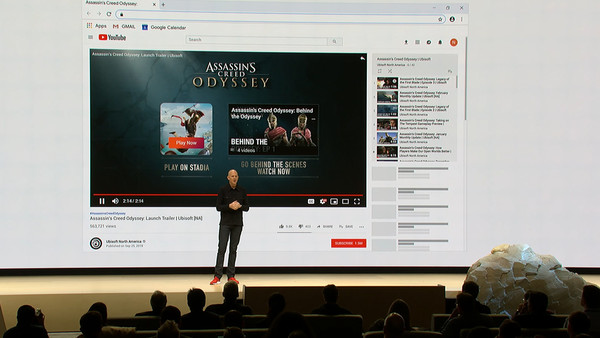
This past week Google revealed their entrance into the AAA gaming arena with their Stadia platform, effectively transforming the three-company battleground into a fatal-4-way.
And though streaming has its obvious, aforementioned issues, Google basically has more money than God and a clear desire to solve infrastructural issues while staking out a meaty claim on the market share.
Don't be surprised to see the console war shift into a "cloud war" scenario as streaming becomes a more prevalent concern for Sony and Microsoft in particular.
Google's move on the industry won't happen overnight, but the convenience Stadia will offer to players who won't need to buy any additional hardware whatsoever - not even the Stadia controller, in fact - speaks for itself.
That's not to forget Google's desire to provide "elastic" system hardware to developers, where graphics, CPU and RAM can be upgraded as needed rather than forcing them to be shackled by the constraints of traditional console specs.
Google has the potential to significantly disrupt the current market dynamic, though with Microsoft in particular taking an enthusiastic dive into streaming tech themselves, competition will be incredibly fierce.
Sony is obviously starting the next generation with a clear lead, but between the Stadia reveal and Microsoft reportedly planning some megaton reveals at this year's E3, the next few months could signal some Earth-shattering changes for the future of the industry.
7. The Arms Race For First-Party Exclusives
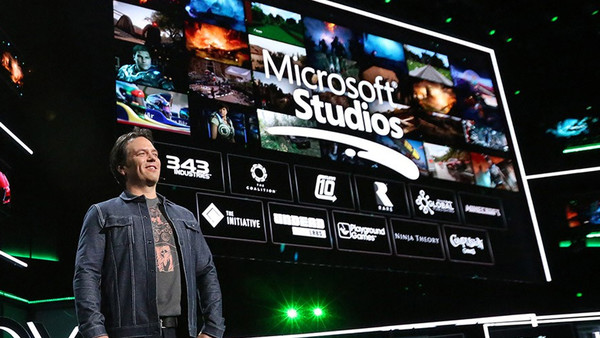
First-party exclusives have and always will be a major selling point for games consoles - look no further than the current generation.
Sony has dominated the last five years with an abundance of quality AAA first-party titles, while Microsoft has limped its way to the finish line and is only now hoping to claw back goodwill by buying-up first-party studios. Nintendo, as usual, is doing their own thing, and doing just fine.
The next gaming generation will obviously see Microsoft aiming to make a ferocious return, likely debuting footage from numerous first-party next-gen games at this year's E3, while Google Stadia will similarly need to bolster its service with as many exclusive titles as their considerable coffers will allow.
Competition is a wonderful thing, and intensifying the race for AAA blockbuster content across all platforms will be a net win for players of all persuasions.
Sony once again goes into the upcoming generation with a decisive lead in this regard, but Microsoft and Google are definitely huge potential spoilers if they play their cards right.
6. Microsoft & Nintendo's Curious Alliance
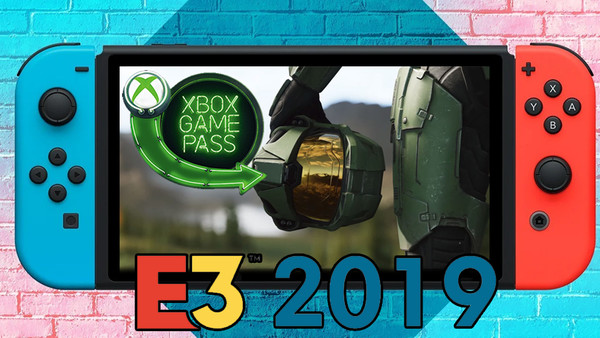
Over the last year-or-so, gamers have been surprised by the unprecedented level of co-operation between Microsoft and Nintendo, largely as it pertains to cross-play initiatives between their platforms, all while Sony has, until recently, been a stridently unpopular hold-out.
It speaks to the classic notion that "the enemy of my enemy is my friend" - if competition really constitutes an "enemy" at all - and with Microsoft on the back-foot, them making in-roads with Nintendo certainly isn't a bad idea.
Recent reports suggest that Microsoft is planning to launch Xbox Live on the Nintendo Switch and may even release a streaming-focused version of Xbox Game Pass for the handheld hybrid, which would be an enormous win for Microsoft if true.
Though Stadia will clearly offer up substantial competition to the Xbox's subscription-based streaming initiatives, the Switch is so intuitive and ergonomic as a handheld platform that, for many, it will be preferable to playing on a tablet, phone or laptop with a controller.
Then again, there's no guarantee that the tacit alliance will hold strong throughout the generation, and indeed, anything can happen.
5. Dedicated Consoles Become A Niche Product

Before the hand-wringing starts, let us first say that dedicated gaming hardware isn't going anywhere.
Sony and Microsoft are still going to be manufacturing physical games consoles for the foreseeable future, though they are going to be a far-less important piece of the puzzle if the streaming future takes off unimpeded.
In the next generation physical console ownership will become more and more incentivised for the enthusiast crowd that wants crystal-clear 4K and zero latency, rather than the casual player who just wants to stream a bit of FIFA for an hour a night.
The inevitable ramp-up in streaming options and the ability to play (almost) anywhere will severely diminish the cost-benefit trade-off of owning a console, when for a flat monthly fee, you can access a heap of games with the press of a button on just about every device you own without the need for physical connections, installs, updates and so on.
Though some doom-and-gloomers insist that the next generation will be the final one for physical consoles, short of global Internet infrastructure enjoying a stratospheric leap over the next 5-7 years and ISPs uniformly agreeing to loosen data caps, it's tough to imagine a near-future where local, native play isn't a thing anymore.
It will definitely become a lesser concern, for sure, and some may even end up viewing non-streamed gameplay as a bit quaint by the end of the generation, but it's absolutely not going away entirely.
4. Quick-Launch Gets You Into Games Faster Than Ever
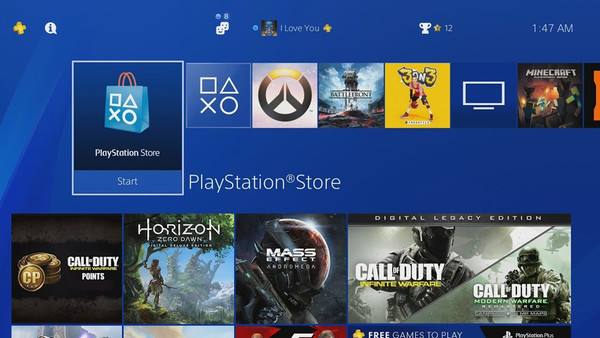
We're all busy people, and so nothing as a gamer is quite as frustrating as games taking their sweet time getting going, either by way of excessive, infuriating loading times, large game updates out of nowhere, or if you're a PC player, driver and compatibility issues.
But if the current generation prided itself on introducing brilliant suspend-resume features across all three platforms, the next generation may become fixed on getting as close to instant-launch gaming as possible.
Google's Stadia demo showed players loading into Assassin's Creed: Odyssey in less than 5 seconds - in a perfect network environment, of course - while Digital Foundry's comparison of loading times between Stadia and Xbox One X saw Stadia loading Odyssey in just 25% of the time it took Microsoft's console.
It's also well-documented that Sony has been pursuing patents related to quick-launch software, which would allow an unprecedented fast-boot for native hardware, though of course, a patent is far from confirmation that the PS5 will definitely adopt this tech.
In our mile-a-minute world where people have more entertainment options than ever, gaming which cuts down on opening preambles will be hugely valuable, and expect this to be a common feature across PS5, Xbox Two (?) and Stadia.
3. Wireless Virtual Reality Takes Off
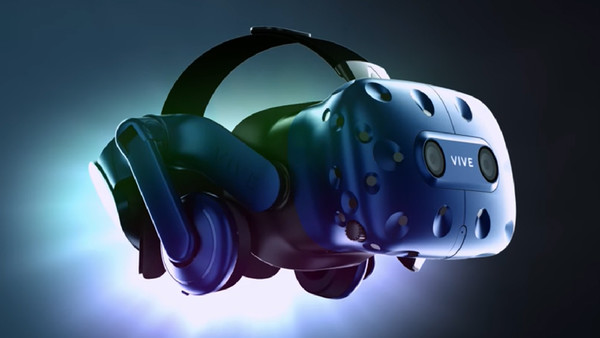
Though virtual reality hasn't exploded with the might that some industry analysts initially expected, it has nevertheless been a solid, steady success for Sony in particular, who were estimated to hold 43% of the global VR market share by the end of 2018.
Microsoft meanwhile has shown little interest in VR and, sensibly, that is likely to continue, while Nintendo recently announced a VR-lite contraption for their Labo kit, yet that's probably the extent of their dabbling in the tech (for now, at least). As for Google, they'd be smart to keep their focus on Stadia.
A big barrier of entry for many consumers isn't just the cost or the space involved for VR, but the wires. Hooking up a VR headset can prove quite cumbersome, and it's not always easy to forget about the thick, immersion-breaking cables attached to the HMD during play.
Across PC platforms, however, the HTC Vive and Oculus Rift already have offered up wireless solutions, and it's widely expected that the inevitable PSVR 2.0, likely to launch mid-way through the next generation, will be wireless (and a recent patent also supports this possibility).
Wireless VR will be a major game-changer for Sony in particular, and on a broader level could open the floodgates for a wider adoption across the industry.
Hell, perhaps it'll even convince Microsoft, who previously said they were waiting for some of VR's technical challenges, such as wires, to be solved, to join in on the game later in the generation.
There's virtually no chance the end of the next generation still has VR constrained by wires, so while wireless play presents a number of difficulties itself - namely power and charging - it seems plausible that these issues will be ironed out by the mid-way point of the generation (that is, around 2023-2024).
VR will surely continue to be a niche product, but wireless will change market perception of its viability considerably, especially for those with precious little free time and no desire to faff around with a spaghetti-like jumble of cables.
2. Platform Ecosystems Diminish The Importance Of "Generations"
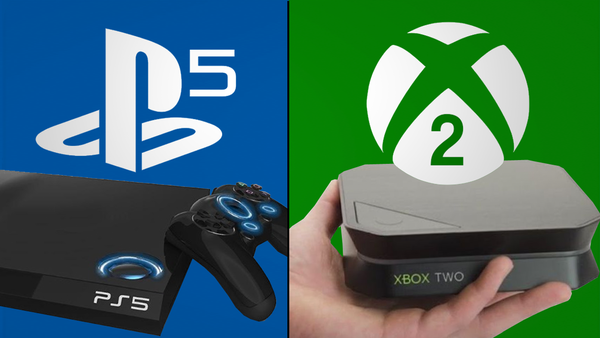
It's been predicted for years by many that the notion of generational gaming itself is dying, though this certainly feels a little closer to the truth in recent years.
Microsoft in particular has attempted to re-brand Xbox as an overall ecosystem spanning years (and eventually decades) of hardware rather than focused simply on the current family of consoles on the market.
And between Microsoft's upcoming xCloud service and their impressively aggressive support for backwards compatibility, the importance of delineated platform generations will become even more diminished.
Given that we're likely entering a future where a multitude of games across generations can be quickly accessed via streaming, not only Microsoft but also Sony will surely be pivoting towards engaging players with the overall brand across devices rather than focusing fully on whether or not you own their latest flagship console.
It certainly raises technical and logistical challenges in of itself, but creating a more singular umbrella for an entire company's legacy of games, especially if most of them are playable under one service, will be a massive win for players of all kinds. If Sony doesn't leap on this, they're begging to be left in the dust by Microsoft.
1. Cross-Platform Saves Become A Major Selling Point
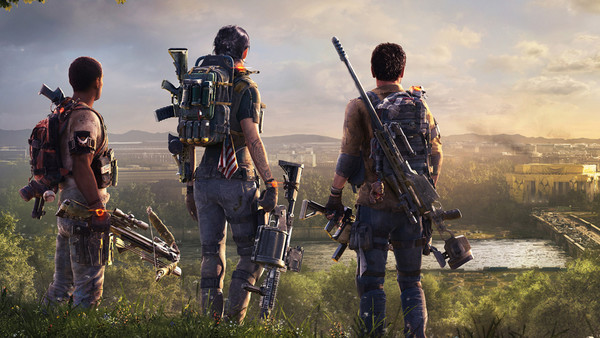
Cross-platform play has been a huge talking point for the last year-or-so, but being able to play games with people from other platforms is really just a precursor to a wider issue - that is, being able to swiftly resume save files across platforms with a single unified account.
Google has already stated their commitment to allowing devs to enable cross-saves for as many games as possible on Stadia, though it's safe to say that industry-wide adoption will roll out far more slowly.
Cross-saves are especially useful for multiplayer live-service games. Case in point - after an embarrassing amount of push-back, Sony recently relented and allowed Fortnite to offer cross-progression totally restriction-free.
But this is still very much an outlier, and though there aren't that many people playing AAA retail games across multiple platforms, it'll do wonders for the free-to-play market. And more than anything else, it never hurts to give people more options for how they choose to play.
We will definitely see progress in this regard over the course of the generation, with more and more titles making cross-saves a standard, hopefully to the point that it will be widely embraced within a few years.
Which features do you predict will define the next generation of gaming? Shout them out in the comments!