10 Dumbest Reasons Video Games ALMOST Got Cancelled
How could anyone think GoldenEye would suck?

There are few things more heartbreaking to a gamer than when a hyped video game suffers the Big C - Cancellation.
However, the dissolution of a gaming project can be a blessing in disguise. Considering how badly Duke Nukem Forever and Alien Colonial Marines turned out, the developers should've trusted their gut when things went south.
However, there are just as many great titles that nearly got canned. Classics like Super Smash Bros., Harvest Moon, and the original Donkey Kong narrowly avoided ending up on the chopping block.
Now, that's not suggesting there aren't valid reasons to axe a game, even if it has the potential to be awesome. If the higher-ups don't have the funding or resources to see an IP through to the end, they'll have no choice but to close shop. It's not fair - it's business.
However, the reason why certain games were on the verge of cancellation is so absurd, you'd think it was a joke. When you learn the truth behind why studios nearly dropped Grand Theft Auto, Battlefield 1, or Star Fox 2, you'll struggle to believe it.
10. A Flood - No Man's Sky

No Man's Sky's chaotic launch is well-documented. After being touted as the be-all-and-end-all of gaming, fans were dismayed to learn Hello Game's project was tedious, boring, and above all, not the greatest thing since sliced bread.
But after the developers whipped up dozens of updates, No Man's Sky is much closer now than what we initially expected. With future updates planned, the formerly vilified title seems destined to only get better with time.
In hindsight, it's a miracle No Man's Sky made such a miraculous recovery, and it's not just because of its abysmal debut. The fact this survival title exists in the first place is astounding, since Hello Game's office in Guilford was completely flooded. According to managing editor, Sean Murray, "We lost all our PCs, laptops, equipment, furniture, dev-kits, work in the blink of an eye." And when the insurance refused to cover the damage, the developers were stuck between a rock and a hard place.
Rather than quitting, Murray and his team made a makeshift work station, and plowed through. Despite facing trials and tribulations on a biblical scale, No Man's Sky saw the light of day.
9. Too Similar To Diablo - Fallout

Fallout didn't start out as the post-apocalyptic role-player we're all familiar with today. Initially, it was a game engine based on the table-top playing system, GURPS.
While head producer, Tim Cain, worked on the project, he hit some major snags. After Interplay attained the licensing rights for two Dungeons & Dragons franchises, it looked like GURPS was finished. Because D&D is the pinnacle of tabletop games, it was more sensible for the company to focus all their energy on that, rather than a lesser-known IP. However, Cain had faith in GURPS and so, refused to back down.
But the problems didn't stop there. Around this time, Blizzard released Diablo, cornering the RPG market on PC almost overnight. Interplay immediately terminated the licensing for GURPS, believing the inferior role-player had no chance of competing.
Rather than going quietly into the night, Cain reworked his entire game into what became known as Fallout. In order to do this, he and his co-designer, Christopher Taylor, had to redesign and recode everything... in one week.
Even though Fallout didn't sell as well as Diablo, it was recognised for its potential, allowing it to spawn many sequels and spin-offs.
8. Restructuring - Bayonetta 2

PlatinumGames did well straight off the bat, since their first two games, MadWorld and Infinite Space, were met with praise.
But their third title, Bayonetta, blew everything out of the water. Due to the sexy hack-n'-slasher's innovative gameplay, mesmerising cut-scenes, and creative mechanics, we knew PlatinumGames had forged the next big franchise. Selling over a million copies, it looked like there was a 100% chance Bayonetta 2 was on the cards.
Sadly, all hope seemed lost after Bayonetta's publisher, Sega, uttered that dreaded word - restructuring. Due to financial issues, company execs decided to axe several potential titles, including the Bayonetta sequel.
According to Bayonetta's co-writer, Hideki Kamiya, his company scrambled for funding from other publishers, but were repeatedly turned down. With nowhere else to turn, Bayonetta 2 was done for.
Suddenly, PlatinumGames' saviour came from the strangest source imaginable - Nintendo. Despite being a family-friendly company, the Japanese titan was eager to turn the hyper-violent sequel into a Wii U exclusive.
Bayonetta 2 became one of the highest rated Wii U games, to the point where gamers purchased the console just to play it! Nearly a decade later, the series is still going strong, with the recently released Bayonetta 3 and Bayonetta Origins, all thanks to Nintendo's intervention.
7. Nintendo Assumed The Franchise Was Dead - Every Fire Emblem After Awakening

For a time, Turok, F-Zero, and TimeSplitters were massively popular. But when money and interest dried up, each of these series faded away. Because gaming is a mercurial industry, it's hard to tell when a franchise has reached its climax, meaning studios have to guess the best time to call it quits.
But sometimes, the gaming giants get things wrong. During the millennium, Fire Emblem series finally broke into the West, giving Intelligent Systems' beloved RPG a wider audience than ever.
Just before the release of 2012's Fire Emblem Awakenings, Nintendo suddenly came to the conclusion that fans had their fill of the tactics-based title. As a result, they were ready to abandon the franchise entirely, if this entry didn't reach its sales quota.
But not only was Awakenings a major success, it was the highest rated Fire Emblem entry. Receiving a resurgence in popularity, Intelligent Systems churned out numerous Fire Emblem sequels, spin-offs, and crossovers. They also released a mobile title, Fire Emblem Heroes, which became Nintendo's highest-grossing mobile game ever. (It even outsold Mario Kart Tour!)
With the latest entry, Engage, doing well critically and financially, Fire Emblem is stronger than ever. Although Nintendo were certain Fire Emblem was on the way out during the 2010s, it's made over a billion dollars since.
6. Nobody Could Agree On The Gameplay - Grand Theft Auto

Even though the original Grand Theft Auto seemed pretty straightforward, the nightmarish behind-the-scenes antics tells a very different story.
In a nutshell, none of the creators could agree on anything. Some developers wanted GTA to be a 2D-styled racer, while others pushed for a top-down view game. Although a lot of team wanted the player to take control of a police car, just as many wanted to play as the criminal being chased. Since the coders, scriptwriters, and programmers refused to get on the same page, they threw tons of conflicting ideas at the project.
Worse still, the beta didn't work. DMA Design's creative director, Gary Penn, said "Even if you did get something in the game, you couldn't really test it. The designers couldn't test stuff out or try things out, it just kept crashing as simple as that."
After four gruelling years with little to show for it, DMA were desperate to can everything. In Penn's own words, "Every week, they wanted to kill this game" since the team couldn't figure out how GTA would look or play.
Despite the fact everyone was expecting an unplayable mess, the finished product was anything but. The creators may have winged it from start to finish, but they managed to kickstart one of the most celebrated and influential game franchises in history.
5. It Took Focus Away From The N64 - Star Fox 2
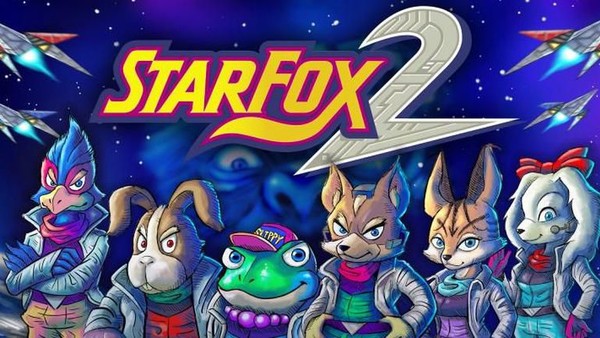
Star Fox's polygonal models caused a major shakeup in the industry, especially since gaming companies at the time were about to transition to 3D-focused consoles.
After the Thunderbirds-inspired rail-shooter sold over four million units, Nintendo got cracking on Star Fox 2. With new ships to pilot, new characters to play as, and more variety in gameplay, fans were excited to revisit the Lylat system.
As the developers were putting the final touches on this hyped sequel, Nintendo's priorities changed. After the release of the Sega Saturn and the Sony Playstation, 3D graphics were no longer a novelty - they were becoming the norm. Believing their 16-bit SNES title would look inferior compared to next-gen games, Nintendo halted all production on the Star Fox follow-up.
Although you can understand the company's line of thinking, it still seemed unfair, since Star Fox 2 was 99% finished. It was so close to completion, fans completed the prototype themselves, turning this "unreleased" Star Fox entry into one of the hottest emulated games of the 90s.
Fortunately, there's a happy ending. After a 22-year delay, Star Fox 2 officially debuted on Super NES Classic Edition, allowing gamers to play the almost-cancelled title for the first time (at least, legally).
4. EA Thought WWI Was Boring - Battlefield 1

Although Battlefield started in World War II, the sequels focused more on modern warfare. And with other shooters implementing more sci-fi elements, it appeared DICE's franchise would follow suit.
But creative director, Lars Gustavsson, decided to go in a different direction, having the 2016 instalment, Battlefield 1, take placing during the First World War. Because few war titles centred around this period, Gustavsson thought his project would stand out. Game designer, Daniel Berlin, was on board with this pitch, since the weapons and gadgets gave players more varied play-styles.
Unfortunately, EA exec, Patrick Soderlund rejected Gustavsson's plan immediately, believing, "trench warfare, it can't be fun to play". Even though Gustavsson was told to give the next Battlefield instalment a futuristic slant, he created a Battlefield 1 demo for Soderlund, with the WWI angle intact. EA were deeply impressed, allowing Gustavsson to maintain his vision.
Thankfully, Battlefield 1 received universal acclaim and sold a staggering 15 million units. Meanwhile, Call of Duty: Infinity Warfare, which launched at the same time, was ridiculed relentlessly for embracing the futuristic setting. If Gustavsson didn't stick to his plan, Battlefield 1 probably would've received a similar reaction.
3. Phil Fish's Ego - Fez

When game development becomes chaotic, it's only a matter of time before staff members are at each other's throats. However, butting heads is usually a side-effect from development problems, not the cause of it.
But things were different with the creation of Fez, since head designer, Phil Fish, was at the forefront of every disaster. Despite Fish's unquestionable talent, his flippant behaviour and childish antics nearly caused the indie project to self-destruct. Fish removed his founding partner, Shawn McGrath, early on due to creative differences. Stranger still, Fish sought a replacement on DeviantArt, accepting the first programmer to reply, Renaud Bédard.
Although the demo was promising, Fish quickly ran out of money. Due to working exhausting hours, the protracted development cycle took a toll on Fish's mind. During an interview with gamedeveloper, he admitted he "was seriously considering just giving up. Actually it became like this weird like suicide fantasy that I was going to cancel Fez out of spite, like, "You're NEVER gonna get it!"
At first, you might assume this proclamation was mere hyperbole. But that's EXACTLY what Fish did with sequel. Despite the fact Fez was a hit, the eccentric designer spontaneously canned the follow-up with little rhyme or reason. Considering how impromptu he was at terminating a guaranteed success, it's a marvel the first instalment was released.
2. Various - Metroid Prime

It's hard to think of a beloved gaming franchise that's endured more development problems than Metroid. Metroid Dread was delayed for 12 years. We still have no idea when Metroid Prime 4 is coming out.
And when you look as the issues the original Prime experienced, it's hard to know where to begin. Things were off to a rocky start when Shigeru Miyamoto tossed the project to Retro Studios after four of their IPs were abruptly cancelled. Miyamoto regularly demanded last-minute changes, which took an eternity to implement. Although the team worked up to a hundred hours per week, it took half a year just to complete the first section.
By this point, you'd expect the crew would get some extra help. Instead, 75% of the staff was let go, leaving nine people to complete the project.
Just when you thought things couldn't get worse, Retro Studios founder, Jeffrey Spangenberg, thought this was the ideal time to use the company's money to register a website depicting him with topless women. (Yes, seriously.) After Spangenberg was fired, communication in Retro Studios was in disarray.
On top of that, the gaming community wasn't particularly hyped for Prime, since many didn't like how the game was turned into a first-person shooter. Because the fans weren't invested, nobody would've been surprised if the higher-ups pulled the plug.
Although Metroid Prime should've been an unmitigated disaster, it became one of the most celebrated gaming titles of all time.
1. Nintendo Hated It - GoldenEye 007

GoldenEye 007 turned out so well, it's hard to believe the majority of its creators at Rare never worked on a video game before.
However, this was a major problem during the FPS's development. Due to their inexperience, the team hit many roadblocks, which caused massive delays. Nintendo's lead designer, Shigeru Miyamoto, was mortified by the game, due to its violence. Miyamoto was so unhappy by what he saw, he urged Rare to have the ending include a scene where 007 visits a hospital ward and shakes hands with all the enemy soldiers he shot, stabbed or blew up. (I'm not kidding.)
But that's not all. After seeing the game was riddled with bugs, Nintendo stopped funding the project for three months. Fortunately, Rare stepped in, giving the team the money and resources they needed to see the James Bond adaptation to the end.
Although few had any faith in the movie tie-in, GoldenEye 007 became the most successful N64 game not to be developed by Nintendo. Despite the fact this iconic shooter continued to have problems being released and ported, even after 25 years, there's no question GoldenEye 007 is among the most influential games of all time.