10 Awesome Video Games Ruined By TWO Terrible Mechanics
When terrible mechanics conspire to ruin incredible games.

It's easy to take for granted the thousands of hours of work that go into constructing even the most basic mechanics behind video games both big and small.
Mechanics and systems are the building blocks on which any game is built, and how they're implemented can either elevate or ruin the overall experience for players.
Sometimes a mechanic might be so horrendously executed that it heavily impacts an otherwise incredible game, and on occasion players might be unlucky enough to have two ill-advised features to deal with.
These 10 video games, though all well-received in their own right and many of them held up as masterpieces by critics and fans alike, nevertheless came to market with some infuriating gameplay systems to boot.
From intentional input lag to pesky mini-games nobody in their right mind asked for, esoteric magic-management systems, and everything in-between, these games were all the worse for including these puzzling - if ambitious - mechanics.
For the overwhelming majority of players, these games would be all the better off - and have a chance of realising their true potential - without these deeply frustrating gameplay features...
10. Intentional Input Lag & Weapon Maintenance - Red Dead Redemption 2

Red Dead Redemption 2 is unquestionably one of the most impeccably crafted video games of the previous generation, albeit one whose meticulous attention-to-detail is also occasionally its undoing.
For starters, Rockstar decided to give the game intentional input lag, such that the player's movements are more clumsy and less-precise than is typical, in an attempt to better-reflect "real life."
But the result is considerable player frustration, with even basic movements and actions often becoming a chore, as players end up doing something they never intended to.
Then there's the much-loathed weapon maintenance mechanic, whereby your guns' combat effectiveness will steadily decrease if you don't clean them.
Though wiping your gun down with gun oil is hardly difficult, it is boring busy-work that surely brings joy to not a single living soul.
Nobody wants to be thrust into this lovingly crafted world only to waste even mere seconds doing something so mundane.
9. BT Encounters & Soothing BB - Death Stranding
Hideo Kojima's delivery-man simulator Death Stranding is one of the most fiercely unique AAA video games ever made.
Uncharacteristically for its creator, the game places far less of an emphasis on both stealth and action than his Metal Gear Solid franchise, instead centering gameplay around tricky traversal with occasional stealth-action elements.
And yet, there's such an oddly addictive, comforting pull to the package-delivery loop that it's actually kind of a shame when you're thrust into more conventional action game scenarios whenever the otherworldly creatures known as "BTs" show up.
You're free to either take on the BTs upfront or stealthily avoid them, but whatever your method, these encounters get old pretty fast, especially when they interrupt an otherwise serene, relaxing trek from point A to point B.
It's strange to say this in a Kojima game of all things, but for many, Death Stranding would be better if it had no stealth or combat to deal with whatsoever.
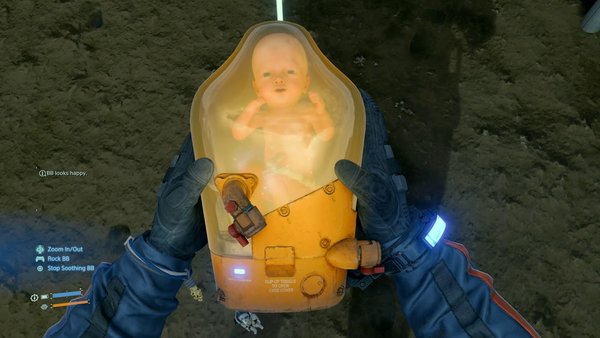
Secondly, there's the wildly frustrating requirement for players to sooth their bridge baby, BB-28, whenever it becomes stressed by the player's actions (such as falling over or getting attacked).
When BB cries, players need to find a safe spot, enter first-person view, and on PlayStation consoles rock the controller back and forth to settle BB down.
While it's amusing and maybe even cute the first few times you do it, it quickly becomes exasperating, because who wants to hear a baby wailing through their controller when they're trying to unwind?
8. Hacking & Camera Research - BioShock
BioShock is a ground-breaking FPS for many reasons, and for as many creative mechanics as it makes ingenious use of, it also touts two dead-on-arrival features that just about everybody hates.
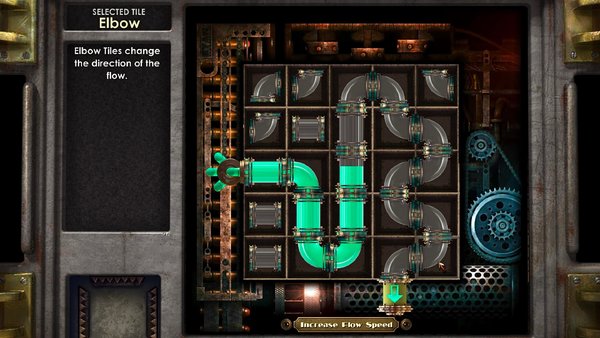
First off, there's the wretched hacking mini-game, which forced players to complete a series of plumbing tile puzzles. They're not fun, they're just boring and time-consuming, though at least rarely mandatory.
Then there's the Research Camera, which players could use to gain research points and level up their research trees, gaining permanent damage boosts to certain enemies, permanent stat increases, and so on.
As such, the camera incentivised players to initiate combat encounters with the camera in tow in order to score maximum research points.
It's a neat idea, but ultimately a chore for players who want to just kill enemies without having to swap between the camera and their weapon of choice. Instead, it made them feel like they were missing out on an easy advantage if they didn't use the camera.
Curiously, both of these mechanics were also included in BioShock 2 but given significant reworkings which made them a more integral part of the game and, dare one say, actually fun.
7. Draw & Junction Systems - Final Fantasy VIII

Final Fantasy VIII may be one of the most divisive entries into the hit RPG franchise, but by typical standards it's still an outstanding game - albeit one that tries its damnedest to make you think otherwise.
The game includes a number of radical revisions to the series' formula, most obviously with the introduction of two new arcane, unwieldy gameplay systems.
The Draw mechanic requires players to obtain spells by "drawing" them from enemies and stocking them like any typical item.
In the case of more powerful spells, you may have extremely limited opportunities throughout the game to acquire them. It's the worst kind of mechanic - unintuitive and a time-consuming bore.
In addition, there's the controversial Junction system, which allows you to assign stocked magic to stats, giving yourself a potentially massive stat boost in the process.
However, the Junction mechanic is extremely poorly explained by the game's early bombardment of verbose and dry-as-sawdust tutorials, ensuring many younger players had no idea what the hell they were doing.
6. Tripping & Magnet Hands - Super Smash Bros. Brawl

Super Smash Bros. is one of the most beloved video game franchises of all time, and despite the breezy thrills it offers millions of casual players, it's also serious business on the competitive beat 'em up circuit.
The entry into the franchise which bore the most venomous ire from the hardcore fanbase was 2008's Super Smash Bros. Brawl, which introduced two highly contentious mechanics.
First off, we have tripping. Brawl allowed the small possibility that any player could suddenly trip over mid-match, courtesy of a background RNG.
Many felt that this was a transparent, cynical attempt by Nintendo to close the skill gap between players, especially as there was no option to disable tripping in the game's menu.
Fans also took umbrage with the addition of "magnet hands" in Brawl, making it much easier for players to cling to the edge of the stage after falling off. Basically, many felt it was catering too much for the casual player.
Thankfully Nintendo jettisoned tripping from all future Smash games, and though magnet hands are still around, they've been given a welcome nerf in more recent titles.
5. Interrogation & Combat - L.A. Noire

L.A. Noire is one of the most creative video games of the last decade(ish), a visually ground-breaking love-letter to classic film noir, centered less around gunplay than investigating and interrogation.
But the game's admittedly ambitious interrogation mechanics have proven intensely divisive ever since release.
Though the recent remaster fixed the interrogation prompts to be less-ambiguous, there's still a frequent disconnect between the tone intended by players and the one that protagonist Cole actually adopts.
Also, trying to read NPCs' faces for "tells" during interrogations isn't nearly as refined as Rockstar hyped it up to be, and so it often proves more frustrating than intuitive.
Secondly, there's the combat, which while not too frequent throughout the game is abundant enough to be majorly irritating every time it shows up.
Between the floaty gunplay and unresponsive close-quarters fisticuffs, it feels like a massively clunky afterthought.
When neither the interrogations nor the action-driven elements quite work as intended, you've got an almost-incredibly game failed by its rough fundamentals.
4. World Tendency & Item Burden - Demon's Souls

Bluepoint Games' remake of Demon's Souls is assuredly the definitive version of FromSoftware's classic action-RPG, but it didn't quite make every last possible improvement to the brilliant-but-flawed original.
The game's infamous World Tendency system has received a few nips and tucks, but it's still perhaps the most controversial feature in the entire game.
Long story short, World Tendency is a morality system which shifts depending upon the player's actions - defeating bosses will push you towards white tendency while dying in your human form or killing NPCs will nudge you towards black tendency.
White tendency will give you easier enemies to battle, but black tendency's tougher monsters will drop more souls and more worthy items.
The system isn't fully explained in the game itself, and players are generally advised to look up a guide online to have a complete idea of how to master it.
Then there's the return of the limited inventory system, with the item burden meaning players won't be able to carry much in the early stages of the game.
While the remake handily allows you to send items back to the Nexus - rather than having to venture back there manually to drop stuff off - it's still a busy-work affectation having to even think about the load you're carrying.
Above all else, it forces players to think about something incredibly mundane in an otherwise mesmerising fantastical experience.
3. Enemy Scaling & Persuasion - The Elder Scrolls IV: Oblivion

The Elder Scrolls IV: Oblivion is one of the greatest RPGs of all time, which is especially impressive considering how widely-despised its levelling system is.
Oblivion includes a much-hated enemy scaling mechanic, meaning that rather than enemies having set levels and stats, they will scale according to your own level.
This really hampers the sense of progression necessary in any RPG, as there's never any feeling that you're actually getting stronger relative to the enemies around you, who will simply get better kitted-up to match.
Secondly, there's the persuasion mechanic, a round-based mini-game in which players attempt to win an NPC's favour by reading their facial expression and picking the appropriate option on a wedge-filled wheel.
It's an interesting idea albeit one too convoluted to really work - it's more an annoyance, especially with the time limitations imposed upon the player, such that you might simply prefer to start waving the bribes around instead.
2. Weapon Durability & Rain - The Legend Of Zelda: Breath Of The Wild

The Legend of Zelda: Breath of the Wild is quite debatably one of the greatest video games of all time. Well, were it not for these two absolutely infuriating mechanics holding it back.
Easily the most contentious aspect of the entire game is the inclusion of weapon durability, whereby weapons have a tendency to break incredibly easily, forcing players to suddenly seek a replacement and often disrupt their current task as a result.
While some praised the feature for the dynamism and strategy it introduced to combat, many felt that it simply became an unnecessary chore.
Secondly, there's the damn rain. Sure, it looks nice and all, but rain also prevents players from traversing the land as they see fit.
Given that the game was sold on the player's ability to climb practically any surface, making them wait until the rain subsides to climb can be a real pain in the ass.
Fingers crossed that Nintendo revises these features for the much-anticipated upcoming sequel.
1. Motion Control Graffiti & Karma - Infamous Second Son

Infamous Second Son was an almost-great launch title for the PS4 - on the pure basis of its graphics and its core superhero gameplay, it was fantastic, albeit let down by its superficial story and a couple of ill-conceived mechanics.
Firstly, there's the infamous (sorry) graffiti feature, whereby players can use the DualShock 4 controller to simulate the action of using a can of spray paint.
You need to first shake the DualShock 4 and then use the controller's trackpad to spray the paint onto the desired area.
A cute idea in theory, perhaps, but implemented in a goofy, corny way - it feels like a parody of a launch title trying to make the most of a console's shiny new feature.
Far worse than this silly aside, though, is the game's horrendously outmoded karma system.
Though the pre-release marketing promised players that the game would have a complex and nuanced morality system, ultimately it boils down to a binary set of good/bad choices.
Players are incentivised to pick a set path to achieve their maximum power potential, in turn effectively neutering the experience for those who would prefer to take a more ambiguous path.