10 Amazing Video Games That Were TOO EASY
Much as we love these games, they were absolute CAKE.
So many things go into making an amazing game - expert level design, gorgeous art direction, exceptional music, potent voice acting, and so on.
But one aspect of game design that's perhaps a little underappreciated is the art of difficulty balancing - of making a game just challenging enough to be satisfying, yet not tough enough that it just pisses everyone off.
It's so easy for games to unintentionally veer off in one direction or another, and in the case of these 10 awesome games, each ended up being a little too easy for their own good.
No matter how incredible these games were in terms of their aesthetics, story, and core gameplay loop, many were left wishing that the difficulty level was just cranked up a notch or two, to make the already-fulfilling experience pack more of a punch.
In fact, in some cases these games were so permissive and forgiving that some players imposed artificial restrictions upon themselves in order to have a more satisfying experience overall.
And so for as great as these games were, they also could've used a little more balancing in the difficulty department...
10. Final Fantasy XV
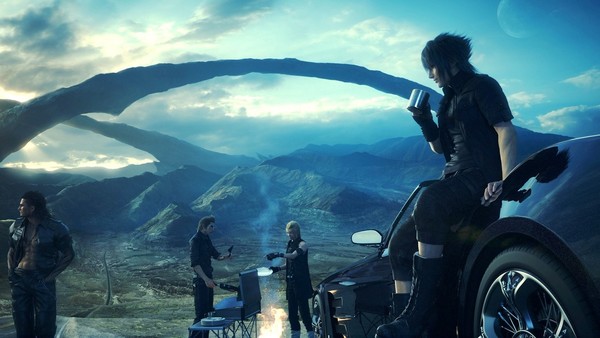
Unlike Final Fantasy 16, which - hot take incoming - is neither difficult nor good, Final Fantasy XV is a absurdly entertaining, bro-tastic entry into the franchise that just so happens to be extremely easy.
The game's massive inventory capacity means you can always have a ludicrous amount of healing items on hand and it absolutely showers you with EXP, ensuring it's incredibly easy to end up over-levelled even if you're not really trying.
Furthermore, the combat system is immensely versatile, giving players myriad ways to extricate themselves from a tricky spot, aided by incredibly capable AI party members.
Square Enix has made no secret about the fact that they designed Final Fantasy XV as a potential entry point into the series for newcomers, but the trade-off is that, in spite of the game's awesome characters and lush open world, it's probably the easiest game in the mainline series behind only Final Fantasy 16.
9. BioShock

BioShock is undeniably one of the most iconic games of the PS360 era - a mesmerising immersive sim that's still fondly remembered for its incredible art direction, vibrant atmosphere, and yes, that twist.
But BioShock is also rather forgiving as immersive sims go, and ever since launch the inclusion of Vita Chambers has been a major point of contention among those who love the game.
Whenever the player dies, they'll simply respawn in the nearest Vita Chamber, free to continue their session without losing any resources or suffering any sort of major inconvenience.
Moreover, enemy health doesn't reset when you use a Vita Chamber, and because they can be used an unlimited number of times you can effectively exploit them to brute-force your way through tricky encounters.
2K received enough pushback over this that they later patched an option into the game to disable Vita Chambers entirely, though this came many months after most players had already beaten it.
8. The Plucky Squire
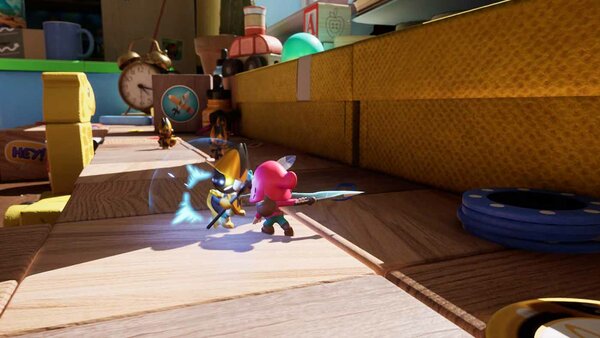
Last year's action platformer The Plucky Squire was an absolute joy to play through - an adorable, colourful, cosy adventure in which players can swap between 2D and 3D exploration at a moment's notice.
Though well-received by critics and nominated for numerous year-end awards, there was one consistent sticking point among reviewers and players alike - it's hand-holdy to a fault.
There's never much of an opportunity to lose your way or wander off the beaten path because the game always makes pains to ensure you're never at a loss for what to do.
Elsewhere the combat is laughably forgiving and the puzzles are arguably a bit too simple for their own good, ensuring the game is mostly left to thrive on its sheer charm and gorgeous aesthetics.
Developer All Possible Futures did eventually release a Challenge Mode which features tougher enemies and puzzles - as well as an Iron Squire permadeath mode - but considering it came almost a year after the game's release, it's fair to say that most had long since moved on.
7. Prince of Persia (2008)

2008's mostly forgotten Prince of Persia reboot deserved better - between its gorgeous cel-shaded art style, fluid traversal mechanics, and well-drawn characters, it was nothing if not a bold attempt to take the series in a new direction.
But amid all the praise, there was one major sticking point for many critics and players - the game is almost hilariously easy compared to its more demanding predecessors.
For one, it's basically impossible for the player to die - if you mistime a jump or get struck down in combat, you'll be saved by companion character Elika, allowing you to keep going without reverting to a far-flung checkpoint.
And so, there's absolutely no tension while navigating the world or fighting enemies because the penalty for failure is basically non-existent.
Moreover, the platforming and combat are considerably more straight-forward compared to the previous Prince of Persia games, meaning you probably won't need to be saved all that often anyway.
And yet despite how the game near-literally hovers over you like a helicopter parent, Prince of Persia 2008 is still a beautiful, fascinating curio that absolutely earns its cult classic status - and deserves to be talked about so much more.
6. Halo 3
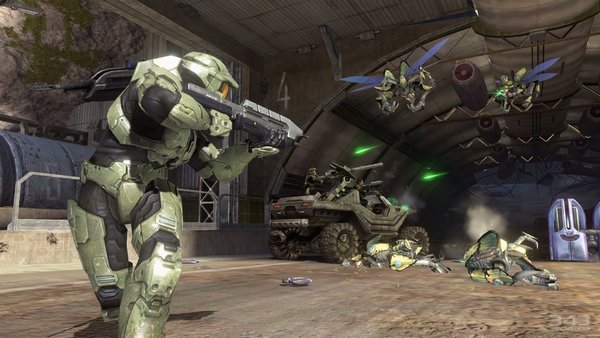
There's a strong argument to be made that Halo 3 is the best game in the series, or in the very least right near the top of the pile.
Combining a perfectly paced campaign with an almost narcotically addictive multiplayer suite, what's not to like?
Well, there is the matter of the campaign's excessively lenient difficulty.
In a classic case of a developer over-correcting to player feedback, Bungie listened to the great many who felt that Halo 2's campaign was unfairly challenging and poorly balanced.
And to be fair, those players were absolutely right, though Bungie responded to this by making Halo 3's campaign an absolute breeze.
Enemies are generally less aggressive and the player has more options for engaging them, while checkpoint placement is also more frequent.
Even on Legendary difficulty it's quite approachable, as left the die-hard quarters of the fanbase feeling a bit short-changed.
On the balance of everything, though, it's still probably the most purely entertaining Halo game.
5. Pokémon Sword & Shield

Pokémon Sword and Shield kicked off the series' eighth generation in sure style and laid the foundations for the franchise's future with its introduction of the much-loved open-world region known as The Wild Area.
Sword and Shield also made a concerted effort to streamline the overall experience and basically sand away the awkward edges which fans have complained about for years, ensuring the game is a stellar onboarding point for new players.
On top of all this it also looks and sounds great, and remains one of the better Pokémon games released over the past decade.
But it's also fair to say that Game Freak's desire to deliver a smooth experience went a little too far in some areas, because even for the relatively permissive standards of the series, Sword and Shield is easy to its detriment.
There's virtually nothing in the main game that veteran Pokémon players can't power through while only paying half-attention, in large part because the mandatory experience share system means it's tough not to end up over-levelled.
There's just no need to grind nor feel even remotely threatened when a battle begins - for all of its many merits, Sword and Shield is so easy as to feel almost inconsequential.
4. Spider-Man: Miles Morales

Spider-Man: Miles Morales was a superbly bite-sized follow-up to Insomniac's 2018 Spider-Man game, and though it lacked the same emotional pull, it nevertheless delivered a thoroughly entertaining web-slinging romp inside of a campaign lasting a tight 7-8 hours.
Miles Morales was in many way a streamlined spin-off from Spider-Man 2018, eschewing some of that game's open-world bloat while also fine-tuning polarising elements like stealth missions.
But the game also just gives you so many ways to deal with a given situation - Miles' Venom powers are extremely, well, empowering, yet the enemies the game throws at you never really rise to match that capability.
Even players inexperienced in third-person combat can pretty much breeze through the game on regular difficulty, because the Venom powers mean you never really need to master the finer intricacies of combat.
Furthermore, stealth is incredibly forgiving and, just when it feels like things are starting to ramp up, the experience is over.
3. Spyro the Dragon
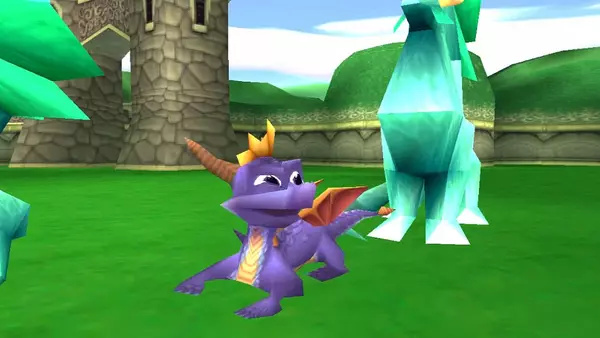
When the first three Spyro the Dragon games were remade as the Spyro Reignited Trilogy in 2018, many players found themselves surprised at just how damn easy the games were.
But the remakes aren't remotely to blame for that - it's easy to forget that the original Spyro the Dragon is indeed one of the most forgiving mascot platformers of its era, certainly more so than the likes of Crash Bandicoot and Mario to which it's most commonly compared.
The game holds your hand throughout the entire experience, and both combat and traversal are incredibly easy, making for an experience that's fun and colourful but not remotely challenging.
While it's worth considering that Spyro was clearly made for younger players, some of us who played it as whippersnappers on original release might recall that it was a cakewalk back then.
And yet in spite of the near-total lack of difficulty on offer, it still boasts enough charm and visual vibrancy to be hugely enjoyable.
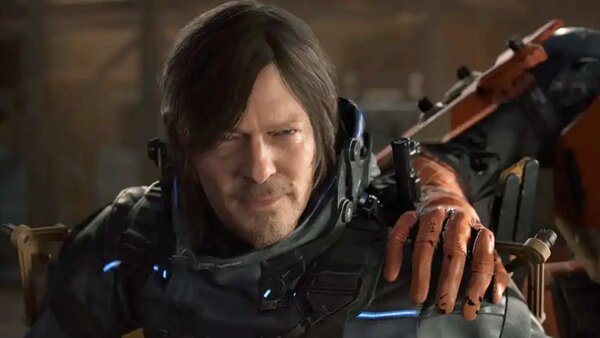
2. Death Stranding 2: On the Beach
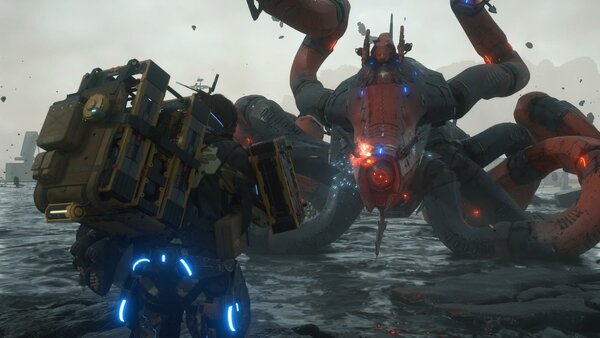
Death Stranding 2: On the Beach has quite rightly received rave reviews from most critics, and in many respects it's a tectonic improvement over its predecessor, offering up more freedom of choice for players to tackle missions while significantly improving the original's wonky combat.
But one chief complaint from many players has been that Hideo Kojima has also delivered a sequel that makes the players so capable at basically every moment that there's almost no friction at all to deal with.
For one, players get access to vehicles much earlier than in the first Death Stranding, which in turn trivialises the overwhelming majority of the game's orders as walking usually isn't required.
The generally flatter terrain this time around even makes driving less treacherous, ensuring it's incredibly easy to just drive away from BTs, human enemies, and mechs alike.
And even when you do need to fight, you've got so many combat options at your disposal that there's rarely a threat of dying - if you're even half-way familiar with Kojima's prior games, you probably only died a couple of times in the main story.
Now of course, players could make the game more challenging for themselves by not using vehicles and limiting their arsenal, but the onus of balancing the experience really should be on Kojima here.
If we're gonna have this many tools to get the job done, then the overall intensity level should probably be raised too.
1. Fable II
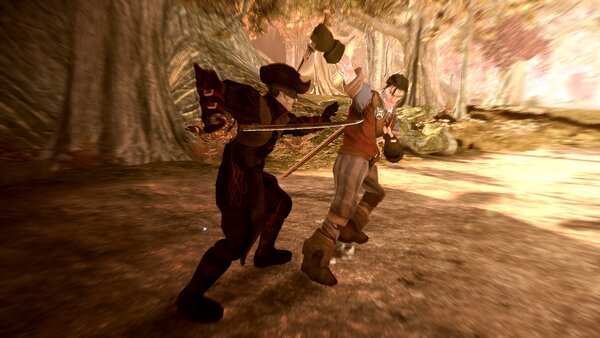
And finally we have Fable II, which is in many respects a marked improvement over the original action-RPG and to date the best game in the series.
Its refined gameplay, deeper story, and more expansive world allow it to soar in spite of the fact that it offers pretty much no pushback whatsoever.
This is typified by the fact that you can't die in combat - you'll merely be incapacitated, lose a little experience, and get a cool scar to show for it, before reviving in the exact spot where you went down.
Yet the strength of your magical abilities and the ease with which players can pretty much button-mash their way through the game makes it unlikely you'll get KO'd very often.
You'll also be given plentiful money, have your hand held throughout the entire campaign, and even be aided by an extremely useful doggo companion.
Thankfully Fable II is more concerned with its gorgeous world and charming characters than crafting a challenging experience, though many are surely hoping that the upcoming franchise reboot will offer a little more of a fight.