10 Amazing Video Games That Killed Franchises
These fantastic games nevertheless brought their franchise to its knees.
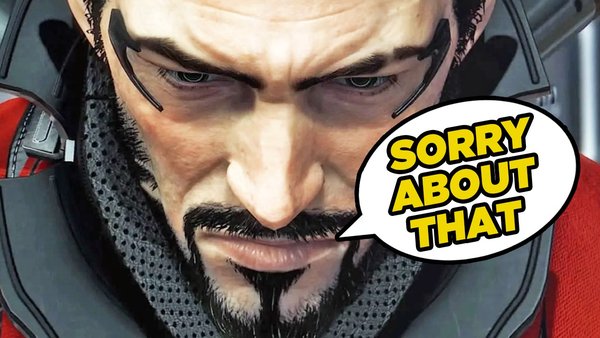
The business of video games development is so perilous, where a developer can do everything right from an artistic perspective and still end up failing for one reason or another.
That is to say, a video game can be brilliant and still flop for one of many reasons, enough that it might well kill off the very franchise that it's a part of.
And that's sadly the case with these 10 video games, each of which were enthusiastically received by both the press and fans of the series, yet nevertheless spelled the end of their respective franchises.
In almost every instance it comes down to the bottom of line of sales, that despite their obvious quality these games just didn't shift enough units for more entries to be worthwhile to the publisher.
As a fan of any of these franchises it's enormously frustrating that such obvious talent wasn't rewarded, and all the more annoying when the reason for the flop was so obvious - be it releasing in a crowded calendar, charging too much money, or having inflated sales expectations.
Some of these series could be revived in the future, but you probably shouldn't hold your breath...
10. Titanfall 2

Considering that sci-fi FPS Titanfall sold 10 million units within roughly 18 months of release, it was simply assumed that Titanfall 2 would post similar levels of success, especially as it also released on PlayStation 4 unlike its predecessor.
Titanfall 2 also benefitted from rave reviews, for both its creative, cinematic campaign and ludicrously addictive multiplayer suite, with many deeming it an improvement over the first game.
But EA made one massive mistake with Titanfall 2's launch - giving it pretty much the worst release date imaginable.
The sequel ended up sandwiched between two far more popular FPS franchise titles, releasing a week after Battlefield 1 and a week before Call of Duty: Infinite Warfare.
And so, with players having limited money to spend, of course the masses gave their cash to these more tried-and-true franchises, causing Titanfall 2 to grossly underperform, selling roughly only half of what its predecessor did.
This commercial disappointment effectively led EA to put the mainline franchise on ice, and despite the success of spin-off hero shooter Apex Legends, almost a decade after Titanfall 2's release we seem no closer to a third game.
9. Deus Ex: Mankind Divided

Deus Ex: Mankind Divided released to strong reviews in 2016, and while fans are firmly divided on whether it's better than its direct predecessor Human Revolution, most agree that it's a great game in its own right.
But Mankind Divided launched to significantly lower sales than Human Revolution, attributed in part to it releasing on newer PlayStation and Xbox consoles with smaller install bases, while Human Revolution released late in the "PS360" era.
Within five months of its release, reports emerged that developer Eidos-Montréal refused to greenlight a sequel to Mankind Divided due to its softer-than-expected sales, even though the company refuted claims that the series was cancelled.
In late 2022, it was then reported that Eidos-Montréal was in the "very very early" stages of a new Deus Ex sequel, though by early 2024 it was cancelled by the developer's new parent company Embracer Group.
We're now almost a full decade removed from Mankind Divided and because its sales didn't satisfy the corporate overlords, it's not outrageous to deem the property dead, or at least close to it.
It's highly unlikely at this point that the Adam Jensen story will ever be picked up again, and the best fans can probably hope for is a slate-clearing franchise reboot years from now.
8. Dead Space Remake
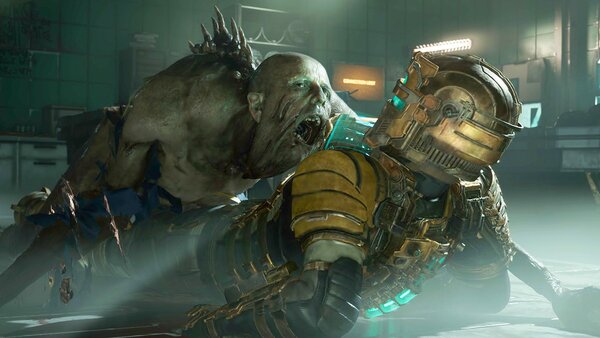
The sci-fi horror franchise Dead Space has actually been put out to pasture by EA not once but twice.
The first time occurred after Dead Space 3 fell short of the publisher's sales expectations, enough that they didn't even bother publicly reporting how much it actually sold.
And with that, the series sat dormant for an entire decade, before being revived with 2023's remake of the original game - a gorgeous, faithful retelling which also remedied some of the original game's biggest issues, namely that pesky asteroid-shooting mission.
However, despite the positive reception Dead Space Remake underperformed commercially - an outcome attributed to the niche nature of the franchise, the game's short length and limited replay value, and EA's decision to sell it for $70 at launch.
This led to reports that, as a result of the disappointing sales, EA cancelled a sequel to the remake, ensuring the franchise is back in the abyss for the foreseeable future.
7. Dishonored 2

The original Dishonored was one of the best-received games of 2012 and ended up selling an impressive 5.8 million units, ensuring that Bethesda had a new franchise on their hands.
Dishonored 2 released in 2016, with many deeming it an improvement over the first game, and most everyone at least considering it a rock solid follow-up.
Despite this, the sequel sold significantly less than the first game, failing to even shift half as many units.
This was blamed on a mediocre marketing campaign and the decision to launch the game within earshot of new entries into the Call of Duty, Battlefield, Titanfall, Final Fantasy, and Watch Dogs franchises.
Dishonored 2, as a more niche immersive sim, simply couldn't withstand so much competition.
Though Bethesda still released a standalone expansion, Dishonored: Death of the Outsider, the next year, this was already deep in development at the time that Dishonored 2 flopped, so it was always going to release regardless.
However, between Dishonored 2's poor sales and the fact it had a bigger budget than The Elder Scrolls V: Skyrim, Bethesda decided to put the franchise on pause.
While there have been rumblings of a possible Dishonored 3 in the years since, from a pure numbers perspective it doesn't seem terribly likely without a sudden uptick in popularity of the first two games.
6. Gravity Rush 2
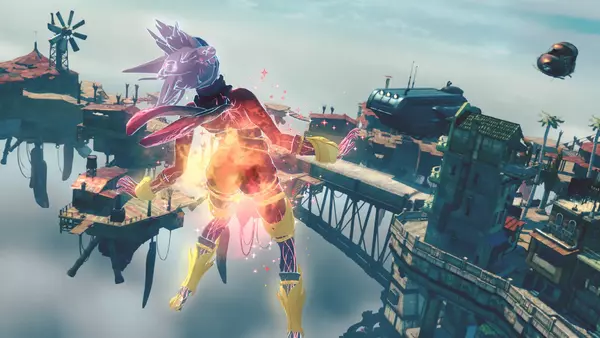
2012's action-adventure game Gravity Rush wasn't a massive sales hit, but sold enough - and was seemingly budgeted sensibly enough - that a sequel made sense for Sony.
Gravity Rush 2 released for PS4 in 2017, then, and though it was warmly received by critics and fans, it might also be the textbook example of a sequel that was sent out to die.
Sony barely marketed this thing, which was already a follow-up an incredibly niche first game, and also misguidedly released it in early 2017, where all the oxygen was swiftly sucked out of the room by both Sony's own Horizon Zero Dawn and the Nintendo Switch.
And so the most predictable outcome happened - Gravity Rush 2 tanked in sales, ensuring Sony had no interest in further pursuing the franchise.
Though it wasn't caused by Gravity Rush 2's commercial failure alone, developer Japan Studio was shut down a few years later, reportedly due to Sony's declining interest in producing AA games like, well, Gravity Rush 2.
5. Max Payne 3

Despite Max Payne 2: The Fall of Max Payne being a surprise sales flop, we did finally get a third entry almost an entire decade later in 2012.
However, despite strong reviews - with many deeming it the best game in the trilogy - Max Payne 3 underperformed commercially.
Though it sold 4 million copies within a year of release, this fell short of Take-Two Interactive's sales expectations considering the game's eye-wateringly massive $105 million budget, ensuring that the franchise has laid dormant ever since.
Now to be completely fair, Max Payne 3 does feel like a natural conclusion to Max's story, but it also goes without saying that had the game been a sales behemoth, we would've almost certainly gotten a Max Payne 4.
We do know that Remedy is currently developing a remake collection of the first two Max Payne games, and if they end up selling well a fourth entry into the series could very well end up back on the table. Here's hoping.
4. Viewtiful Joe 2

2003's beat 'em up Viewtiful Joe only sold around 300,000 copies, in turn falling short of the publisher's expectations, yet due to the game's low budget it was still enough of a commercial success for Capcom to take a punt on a sequel.
Viewtiful Joe 2 was ultimately released the very next year and warmly received by critics and fans, though sold only marginally more than its predecessor, partially due to bombing in Europe.
Though the second game explicitly teed up a third, Capcom unsurprisingly opted not to continue with the main franchise.
Two already-in-development spin-offs, Viewtiful Joe: Red Hot Rumble and Viewtiful Joe: Double Trouble!, were released the next year, after which the series went away.
By 2007, developer Clover Studio was shut down, though there was a semi-happy outcome for the series, as director Hideki Kamiya did eventually get to produce a spiritual successor to Viewtiful Joe with 2013's well-received action-adventure game The Wonderful 101.
3. Zone of the Enders: The 2nd Runner
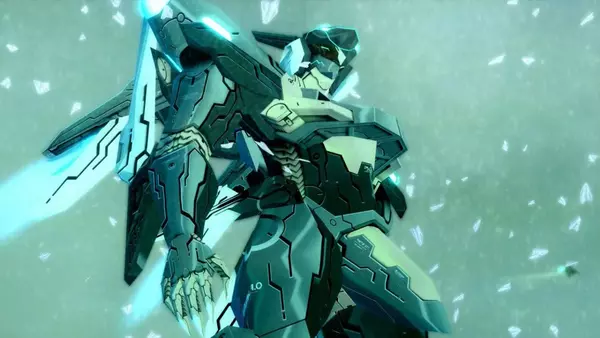
The Hideo Kojima-produced mech combat game Zone of the Enders didn't set the world alight sales-wise, though its commercial performance was likely boosted by releasing with a demo disc for the hugely anticipated Metal Gear Solid 2: Sons of Liberty.
This allowed it sell well enough for a sequel to be produced, then, with Zone of the Enders: The 2nd Runner landing two years later in 2003.
Though many critics and fans deemed it a solid improvement over the first game, it was a considerable sales disappointment, becoming the 130th best-selling game in Japan in 2003, where it shifted less than 100,000 copies.
Kojima blamed himself for the poor sales, claiming that he picked the wrong release date, and considering that Zone of the Enders 2 released within weeks of more successful franchise titles like Splinter Cell, The Legend of Zelda: The Wind Waker, Dynasty Warriors 4, and Burnout 2: Point of Impact, he might have had a point.
This killed plans for a third Zone of the Enders, and though Kojima hoped that 2012's HD collection of the first two games might reignite interest, the myriad technical issues on launch stymied its sales and put Zone of the Enders 3 in the grave for good.
2. Crash Bandicoot 4: It's About Time

Crash Bandicoot 4: It's About Time was the first mainline entry into the franchise in 12 years since 2008's Crash: Mind over Mutant, though was ultimately envisioned as a direct follow-up to the beloved original trilogy of games.
And despite developer Toys for Bob - best known for working on the Skylanders franchise - being a major question mark, Crash 4 ended up releasing to rave reviews, many feeling that it was not only a worthy successor to the original trilogy but one of the best games in the entire series.
Yet almost five years on from Crash 4's release, there's no sign whatsoever of a fifth game, which many have attributed to the fact that Crash 4 sold just a fraction of what 2017's N. Sane Trilogy remaster collection did.
Though Crash 4 sold 5 million copies by 2024, this was just 25% of the 20 million units that N. Sane Trilogy has shifted, and if Activision assumed that N. Sane Trilogy's success would make any subsequent Crash sequel a sales juggernaut on the same level, they were evidently proven wrong.
Last year a Toys for Bob developer, Nicholas Kole, confirmed that Crash 5 was indeed cancelled mid-development, with a report suggesting that Activision nixed it due to Crash 4's "underwhelming" sales, preferring to focus instead on live service projects. Ewww.
1. No One Lives Forever 2: A Spy in H.A.R.M.'s Way
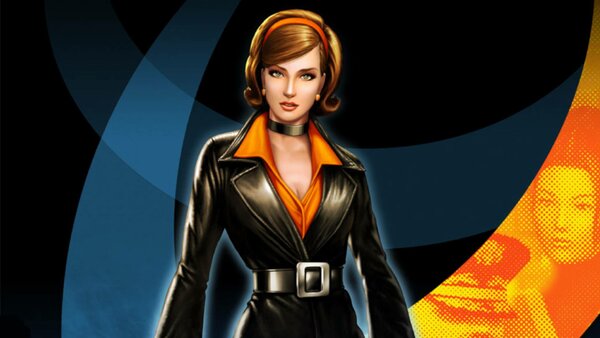
The Operative: No One Lives Forever is one of the best-reviewed FPS games of the early 2000s - a gloriously entertaining homage to the spy genre that's often held up as one of the most underappreciated video games of all time.
This is in large part because the game wasn't much of a seller, shifting only 350,000 units within around 18 months of its release - a figure you'd freely assume would kill any franchise potential outright.
Yet either due to the game's modest budget or the overwhelming critical acclaim, Monolith Productions were bankrolled to produce a sequel, No One Lives Forever 2: A Spy in H.A.R.M.'s Way.
The sequel more-or-less matched the euphoric reception of its predecessor against the odds, though considering that no sales data was ever released for it, it's safe to say that it fell short of expectations.
Though a spin-off, Contract J.A.C.K., was released the next year, NOLF 2's poor sales ensured the franchise ended after just two main installments.
More depressingly still, in recent years a campaign to re-release the games has been stalled by a most bizarre situation - nobody knowing who owns the rights.