10 Amazing Video Game Sequels That Won Back The Fans
It took them six years, but Capcom's apology for DmC was worth it.

Video game franchises are always fighting a bit of an internal war. Because they come out regularly (sometimes yearly), there's a desire from hardworking developers to try something new and bold, while at the same time an understanding that fans have certain expectations going into each title, and subverting them can result in disaster.
All popular names have to evolve and grow with the times, but sometimes a sequel will drop that's so radical and such a departure - whether that's at the behest of the publisher to make something more 'mainstream' or because the devs simply grew tired of repeating the same formula - that rubs fans the wrong way, and sours the franchise as a whole.
All is not lost though, and as quickly as a series can tank it can be revived with a well-timed sequel that effectively apologises for the past, and gives fans the experience they've been craving.
10. Assassin's Creed: Origins
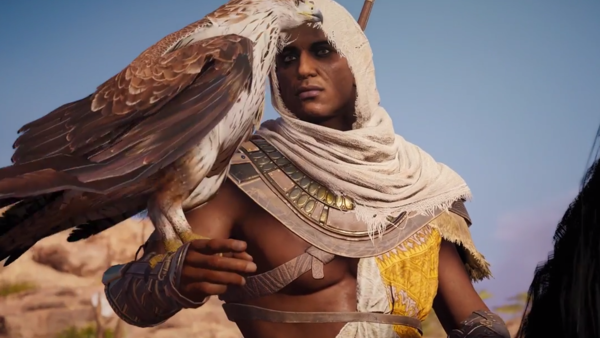
At the start of this generation, Assassin's Creed was in trouble. Burning out on its annual schedule, each new game brought with it a gorgeous new location, but the franchise's open-world formula was growing stale. Throw in high-profile glitch fests like Unity and Syndicate, which barely dented the cultural consciousness, and you'd have been forgiven for assuming Ubisoft's premier series had run its course.
Knowing the current model wasn't sustainable, the publisher took AC off its yearly schedule, and instead went back to the drawing board to figure out a way to breathe new life into this ageing series and get it back on top.
What they came up with was Assassin's Creed: Origins, a massive sandbox game that took more cues from RPGs than previous releases in its own franchise. Everything from the quests to the combat was radically altered, and while that risked losing the core of what the stealth series 'was' to fans, it birthed a new, exciting era.
It was the kind of kick up the arse Ubisoft needed, and hopefully they won't run this version into the ground like they did the last.
9. Dragon Age: Inquisition

Though Mass Effect was always Bioware's biggest, most beloved franchise (well, until 3 and Andromeda shat the bed, anyway), Dragon Age has slowly become something of a beast over the past decade. The original game, Origins, provided the kind of old-school RPG experience that ME was moving away from, boasting a proper fantasy epic for players to sink their teeth into.
However, the developers and publisher EA pretty much flushed that goodwill down the toilet immediately with Dragon Age 2. Instead of being a continuation of the first, the sequel was lacking in pretty much every area, with the cut corners and limited production time on display in the finished product. It stunk, and it made fans wary about the next game.
Fortunately, the developers heard those criticisms loud and clear, and with Inquisition addressed every single one of them. In fact, in their attempt to avoid critics saying the game lacked content, they might have gone too far in the opposite direction, prioritising scale over everything else.
Either way, fans and critics embraced Inquisition, and championed it as a return to form for the series. Dragon Age 4, frustratingly, is looking like it might repeat the same mistakes as 2, but here's hoping Bioware don't sabotage the respect they clawed back with this third game.
8. Far Cry 5

Far Cry wasn't in as dire straits as some of the other franchises on this list before Far Cry 5 came around, but it was certainly at something of a crossroads.
Fans hadn't soured on it completely, but the series was suffering through an identity crisis after 4 and Primal that threatened to lose sight of why people liked playing these games in the first place. For a time, Far Cry 5 could have branched off into virtually any direction, going down a wackier route with dinosaurs or sticking close to the realistic (in comparison) themes of the numbered titles.
In the end it opted for the latter option, ditching the international settings that defined previous games in favour of placing the focus on USA conflicts. It worked, adding just enough new to the combat, world and story to confidently bring fans back and clearly decide on an identity going forward.
7. Splinter Cell: Blacklist

As you might have guessed considering this is the third Ubisoft game on this list so far, the publisher was going through a phase at the start of the decade. It had always released solid games, but it reached a point where old Ubi wanted each one to be a massive, Assassin's Creed-level success, and that meant trying to open up their established franchises to wider audiences.
That new approach didn't transform any of their library as much as Splinter Cell, though. Double Agent attempted to welcome a new action focus while retaining the methodical gameplay of the first classic trilogy, but after that the developers were tasked with reinventing the brand entirely.
That led to Conviction, which started as a game where Sam Fisher would be stripped of his gadgets and forced to brawl his way through combat encounters. That version was thrown out in favour of the final product, which kept the more overt stealth elements but changed the focus to make players feel like a predator, rather than a ghost.
It was a decent enough experiment, but die-hard fans were left in the cold, not even able to do something as simple as move bodies to aid with stealth. Meshing this approach with the more classic experience, the follow up, Blacklist, acted as a great mix of styles, letting players choose action or stealth as they saw fit.
6. Gears 5

For a time, Gears of War genuinely did look like it was over for good. Epic's original trilogy went out on a high note, but even then fans and critics were wondering how far the cover-shooter formula could be pushed. Spin-off Judgement didn't help matters, amounting to little more than 'more Gears', while the original devs would sell the license to Microsoft and depart in full a couple years later.
Consequently, Gears 4 bent over backwards to prove that the franchise could still be relevant. While it was an admirable effort from a new studio, the biggest concern was that it played it too safe. The names and faces had changed, but it was yet agin just 'more Gears', only this time on a new generation of consoles.
Fortunately, Gears 5 was the confident return to form the franchise desperately needed. Not only did it broaden the scope of the series, adding in open world elements, some genuinely shocking story developments and tweaking the combat enough to keep it fresh, but it did it all with the same kind of bravado and personality that Judgement and 4 were lacking.
The multiplayer has its issues, but the campaign is the next evolution of Gears fans have spent most of the decade waiting for.
5. Mortal Kombat (2011)

Pretty much no fighting series went through the 2000s without running into trouble. There was pressure on each new sequel to be bigger and better than what came before, and it got to the point where having solid fighting mechanics wasn't good enough, you needed fully 3D environments, gimmicks and a whole host of modes to convince players to buy more copies.
Mortal Kombat succumbed to this mentality even more than others, though. Over the course of Deadly Alliance, Deception and Armageddon, the bloody fighting series became bloated, crushed under the weight of its ever-expanding lore, cast of characters and fetishistic desire to include daft mini-games like Mortal Kombat Chess (which I actually loved, by the way) into every game.
It was a bit of a mess, and while a core fanbase nodded along through each wacky entry, what made MK so special had been lost along the way.
A reset was in order, and that's where Mortal Kombat 2011 came in. The ninth entry in the series essentially rebooted everything, wiping the timeline, discarding the additive fluff from the sequels, and returned to a focus on violent 2.5D combat.
It made for a visceral, streamlined experience, and kicked off perhaps the most creatively rich run of games in the studio's history.
4. Resident Evil 7

Speaking of franchises that became so bloated they required a whole reset to get back on top, Resident Evil had become so bogged down by bad business decisions and lore before the seventh game came around to essentially brush all that under the carpet. The fifth main entry got the ball rolling by pushing the IP into action territory (even giving the zombies guns!), but it was the sixth which made everything go off the rails.
Probably high on power and under the assumption they could attract every market possible, Capcom drafted in 600 developers to create a sixth instalment with three unique campaigns. The idea was to have one classic survival-horror experience to appeal to old-school fans, one action-oriented story to get people in who liked Gears of War and one which doubled down on the co-op elements to sell as many copies as possible.
Even though I quite like it, it was an utterly bloated trainwreck, which sold under expectations and received a critical kicking.
Perhaps realising that trying to please everyone only results in you pleasing nobody, Capcom went back to the drawing board and conjured up Resi 7 a few years later. This franchise is no stranger to reinvention, but this was the most radical departure yet, and proved the franchise still had what it takes to deliver a cutting edge horror experience.
3. DOOM
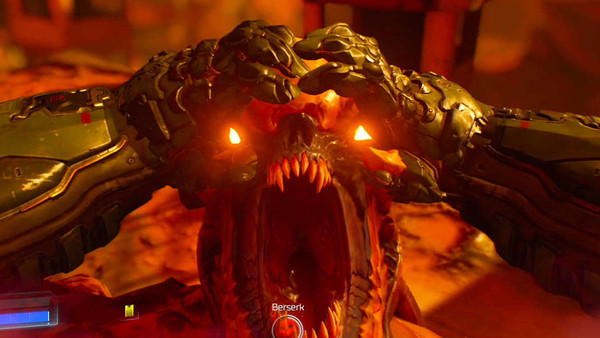
It's kind of crazy how long we went without a new Doom game. The third title branched the series out into a new direction, acting as more of a tech demo for the sick lighting Id's new engine could pull off. Those atmospherics resulted in a move away from the frenetic gunplay that defined the first two games in favour of something resembling survival horror, and it split fans right down the middle.
At one point, Doom 4 was set to separate even further from the franchise's roots. The idea was to move the action to Earth and, inspired by Call of Duty, give you a squad to shoot demons with. It was another case of the series losing its identity though, and thankfully this version never actually released, and instead morphed into a reboot.
2016's Doom is considered a home-run now, but players were cautious before it came out. Nobody quite knew whether Id's franchise had a place in the modern gaming world, but by embracing old-school game design and mixing it with the refinements of modern shooters, by delving into the past the developers managed to create a contemporary experience - one which relaunched Doom back to the top of the FPS scene.
2. Hitman

As is the case for most franchises on this list, there came a time in Hitman's life where the publisher and developers wanted the brand to be bigger. It was already gaming royalty - hell, there had even been two attempts to break it into Hollywood - but in the late 2000s, studios decided the only thing that sold was action games.
Like survival-horror, stealth was suddenly seen as unbankable, and Hitman: Absolution was made to be more immediate, more action-orientated, and more appealing to a wider audience. I actually still really enjoyed it, but I can see why it p*ssed off die-hard fans: the worlds were smaller, players had less freedom, and scripted action set-pieces were everywhere.
IO Interactive went back to the drawing board for the next game, and at first it appeared as though they were continuing to make mistakes and move away from what players wanted from the franchise by making it an episodic release.
That change in structure actually allowed them to create the best Hitman in years though, as the episodic release meant that the levels had to be infinitely replayable - each one an intricate sandbox full of hilarious and brutal assassination possibilities.
1. Devil May Cry 5

Nobody has quite lost a dedicated audience like Capcom did with Devil May Cry. Their reboot, DmC, was an attempt on their behalf to 'westernise' the popular franchise and - again - bring in even more players (and therefore money), but all it did was make sure those who loved the prior games didn't pay it the time of day.
It didn't help that the game itself actively mocked the past releases as well. It was a well-made actioner, but the general feeling was that it had no reason to exist. DMC 4 didn't stagnate - if anything, it was bolder than ever by introducing a brand new character - but the baby was thrown out with the bathwater when it came to the subsequent redesign.
It took Capcom a little while to respond, but eventually they dropped the reboot idea and released a proper Devil May Cry 5 that returned to the characters everyone loved.
The game itself was bloody good as well, proving the franchise didn't have to change to still be popular.