10 Amazing Ideas Wasted On Terrible Video Games
Kane & Lynch shouldn't have been so forgettable when its multiplayer was SO good.
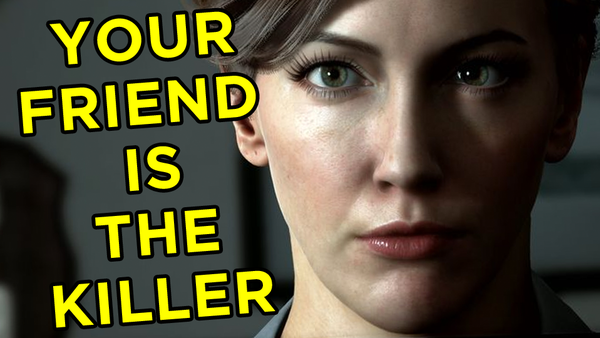
It's nothing profound to say that most bad games are based on bad ideas. Fans knew that the decision to make Fallout online-only multiplayer survival would result in 76 being terrible, while just as many others realised that prioritising graphical fidelity over gameplay would spell disaster for The Order: 1886.
The writing was always on the wall.
Of course, while it's frustrating to see a bad release botch a bad idea, it's another thing entirely when a project actually has unique and interesting aspirations, but not the talent behind the scenes to realise them in video game form. These are instances where a developer has something special on their hands, a concept which could potentially change the way games are played and made, and fans can do nothing but sit idly by and watch as the promise of said concept is completely fumbled before their very eyes.
The very definition of "it sounded better on paper", these ideas were wasted on games that didn't deserve them.
10. Silence - The Quiet Man

Despite its weird-as-all-hell marketing, The Quiet Man had noble ambitions at heart. Similar to what Ninja Theory attempted to do for psychosis and mental illness with Hellblade by taking an underrepresented topic in gaming and doing it justice in an experimental indie, Square Enix aimed to deliver an experience that would reflect what it would be like to be a deaf video game protagonist.
Aside from a couple of key sequences, you're put in the head of hero, Dane, with most of the sound being muted and few subtitles shown on screen to let you know what's actually being said. The plot is difficult to piece together then, which could have made for a great challenge on the player's part in, well, in any other game.
Because, while the ideas at the heart of The Quiet Man are solid, Square Enix shat the bed at every level of execution. The plot itself is a shambles even when you know what's going on, told in amateur-hour FMV sequences that do not blend seamlessly with gameplay - which is itself trite, mundane and barely keeps you interested for the two-and-a-half hour runtime.
In fact, the story is so nonsensical that the devs included a "sound on" mode that unlocks for a second playthrough, so you can actually hear the dialogue and make sense of everything.
Kinda goes against the whole point of the game, but... sure?
9. Alternate History WW2 - Turning Point: Fall Of Liberty
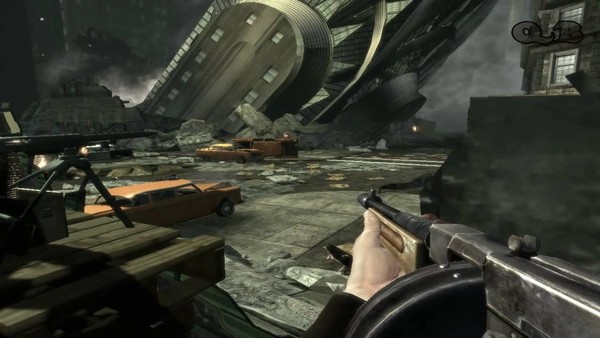
Even though there were plenty of WW2 shooters back in the day, most of them stuck pretty close to the realities of the conflict. Sure, you had your Wolfensteins, which emphasised the Nazis' preoccupation with the occult and tech, but few leapt properly into the realm of alternate history.
However, Turning Point was one of the few notable releases in the 2000s which tried just that. Set in an alternate reality where Chruchill died in the 1930s, Europe was fully invaded by German forces and the USA's isolationism kept them out of the war entirely, Codemasters' first-person shooter picked up in the aftermath of this version of WW2.
It was a cool backdrop to fight against as well, as players were put in the shoes of an everyman resistance soldier as the Germans finally attempted to invade America. Unfortunately, cool ideas and striking images only get you so far.
The gameplay itself was more than basic, a fossil compared to more modern shooters of the time like COD. Not only that, but the devs didn't actually capitalise on their cool concept, using it to deliver an uninspired - and surprisingly generic - military tale.
8. A Multiplayer Heist Mode - Kane And Lynch

The Kane and Lynch series crashed and burned, but you can't say it didn't at least try to do something new. Casting you as two abhorrent criminals on the run from the law, the two flawed titles threw everything at the wall in the hopes of becoming the next big shooter, but unfortunately they didn't have the fundamentals nailed down enough to capture an audience as big as Square Enix wanted.
The series did have a cracking multiplayer suite though, featuring a bunch of players teaming up to pull off a heist and trying to get away with as much money as possible. The twist was, however, that you could turn on your team at any moment and attempt to take all the money for yourself. Whether you were playing with friends or randoms, there was a sense of fear in every match around if - or when - you were going to be turned on.
Of course, neither Kane and Lynch game had good enough gunplay to support this great idea, and no other release has really picked up the idea since.
7. Realistic Fire Puzzles - Alone In The Dark

Even though it pretty much created the survival horror genre as we know it, the Alone in the Dark series has not enjoyed the same longevity as similar franchises like Resident Evil or Silent Hill. In fact, it pretty much peaked with the first game, although there was an attempt to resuscitate its lifeless corpse with a full reboot in 2008.
In many ways, though, the concepts it tried (and failed) to pull off a decade ago were eventually realised years later in better games. The episodic, DVD-like structure of the narrative would be adopted in everything from Call of Duty to Alan Wake, while its preoccupation with lifelike fire would be fully realised in games like Far Cry 2. It was that latter feature which was clearly the selling point of the reboot though, as a huge chunk of the gameplay was based around solving fire-based puzzles.
That alone was pretty jaw-dropping for the time, as lifelike fire that actually behaved like real fire was unprecedented. However, while that made for impressive pre-release trailers, when players got their hands on the end result, it became clear that most of the dev time had been put into perfecting the realism of flickering flames rather than, you know, creating a compelling game to put them in.
6. Body-Hopping - Driver: San Francisco

While Driver was actually the first crime game to realise a (rudimentary) fully 3D open world, where GTA only went from strength to strength until it became bigger than The Beatles, Ubisoft's title fell by the wayside before fizzling out entirely with Driver: San Francisco. Going back to its roots and opting for a more old-school experience where driving was once again key, the sequel did introduce one new neat feature: Shift.
The mechanic allowed you to jump to different cars (and minds, I guess) via teleportation which replaced the ability to actually get out your car and commandeer a new vehicle. Though that might sound like a step back, it actually made for a rather unique gameplay loop, as jumping to new cars was instantaneous, and opened up a wealth of different ways to finish each level rather than simply sticking to the one cruiser you started with.
Of course, Ubisoft didn't go anywhere near far enough with the concept, and while it was cool, it ultimately didn't live up to its potential. It also felt a bit awkward from a narrative perspective as well, and was far too out there for a time where games were trying to be as grounded as possible.
5. An Unreliable Protagonist - Haze

Even though it was effectively destroyed by Ubisoft wanting it to be the next Halo, Free Radical's underwhelming Haze did still have a cool couple of ideas fuelling it. In particular was the central narrative drive, which had you jumping in the shoes of a futuristic soldier hopped up on 'Nectar', an experimental drug that, it turned out, had pretty intense hallucinogenic properties.
Not only did it make you better at killing, but it also made it easier to kill, by warping the mind of its user so that they couldn't actually see the horrors of what they were doing. Not only that, but the drug actually left the majority of its soldiers complete wrecks if they ever stopped taking it, with only the most mentally-sound operatives being able to withstand being subjected to it for too long.
It played with some pretty lofty themes before the likes of Spec Ops: The Line would do it more elegantly, but even now an unreliable protagonist whose own mind is not to be trusted has sadly not really been experimented with, and it still hurts to see it squandered on Haze.
4. A Multiplayer Telltale-Style Story - Hidden Agenda
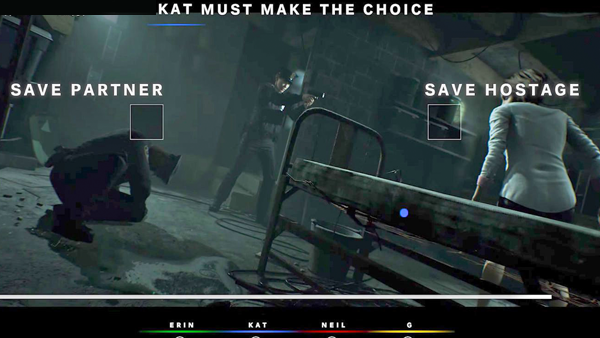
Supermassive Games came out of nowhere to announce themselves as the new authority on story-driven, choose-your-own-adventure titles with Until Dawn, but they've proceeded to experiment with their genres ever since. Between some ill-fated attempts at VR was Hidden Agenda, a game which, on the surface, looked incredibly unique.
It was essentially a detective game with mechanics similar to Until Dawn, only this time other players had influence over the story. It was still only one player controlling the experience outright, but other people were allowed to jump into the title via PlayLink and vote on vital narrative decisions. There was a competitive mode as well, where one player would receive a secret objective and actually have to work against the others without being found out.
The end result was awkward as all hell however, with the story itself not exactly being the riveting detective thriller many were expecting.
3. A Multiplayer Shooter With A Story - Brink

For a while in the 2000s, developers were really doubling down on trying to figure out the best way to eliminate the single-player story mode from games that were predominantly bought for their online components without pissing fans off. One 'genius' ideas was to tell a 'story' through multiplayer matches, which usually resulted in a talking head spouting exposition that didn't actually effect the action.
With Brink though, Bethesda were truly trying to create an expansive, story-driven RPG that took place entirely within the confines of traditional multiplayer shooter modes. The idea was that you'd join one side in a two-way civil war for control of a floating city called The Ark, being able to choose a specific class and customise your soldier to personalise the experience even more.
Each faction had their own set of objectives that contextualised each match as well, really driving home the war of attrition for control of the city. It was great in theory, and the Mirrors Edge-style movement made for a shooter that was rather unique at the time, but its ambitious vision was far from realised in the end result, and while it has gained something of a cult following now, it limped out onto shelves at launch.
2. Hacking Into Enemies - MindJack
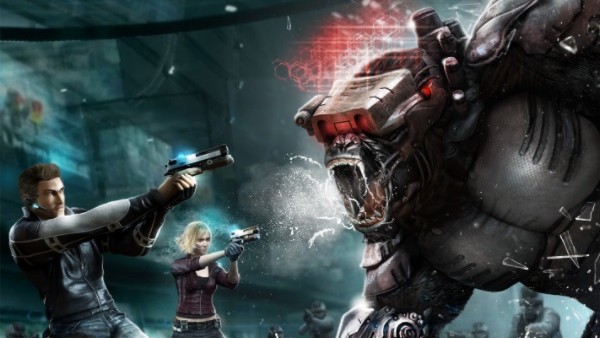
When MindJack released back in 2011, it was widely derided as one of the worst games of the year, immediately poised to become one of the worst games of the decade. A sci-fi shooter that came out five years after the original Gears of War, yet still had clunkier mechanics, the title received criticism for its horrible gameplay and terrible graphics, but, most importantly, for squandering a surprisingly great idea.
Long before Watch Dogs would attempt something similar, the unique selling point of MindJack was hacking, with players being able to jump into the bodies of enemies directly or indirectly by making them A.I. allies. Not only that, but there was an online component that let other players hack into your single-player campaign, taking control of enemies and attempting to halt your progress.
Unfortunately, the implementation was about as rudimentary as everything else in the game, and it couldn't save the ship from going under.
1. An Immortal Protagonist - NeverDead

Wolverine isn't only the best of the X-Men because he likes to say "Bub" a lot and has adamantium claws coming out of his fists, but because he has the ability to take as much punishment as possible and still win a fight. The idea of a protagonist being virtually invincible and yet still feeling pain sadly hasn't made its way over to video games however, despite death only ever being a minor setback in this medium.
The truly abysmal NeverDead did feature an immortal playable character, however, which was just about the only cool feature it had going for it. During gameplay you could watch your hero degrade the more he was hit, losing limbs and chunks of flesh as fights got more intense. It provided some cool visuals as arms would pop off like they were held together with sticky tape, and it felt awesome to push through the punishment and tear apart the monster trying to kill you.
Unfortunately, getting to do something as cool as retrieving your own dismembered arm during combat couldn't save the game from being a total mess mechanically and narratively, receiving some of the worst critical scores of the decade so far.