10 Amazing Game Spin-Offs You Totally Forgot Existed
The forgotten offshoots that no one cared about from your favorite franchises, but totally delivered.
When most gamers think of their favorite big, iconic franchises, the entries that come to mind rarely stray from the main series. And why would they? The flagship titles are where studios pour their best talent, time, and budget - the projects designed to showcase what makes the franchise tick.
Spin-offs, on the other hand, often feel like afterthoughts. They’re the side projects released to keep a brand alive between major instalments, justify a marketing push, or give the studio’s B-team something to tinker with. More often than not, they’re seen as non-essential distractions from the “real” thing.
But sometimes that lack of pressure and the freedom that comes with it can lead to something truly special. Without the heavy expectations of a mainline entry, developers can take bold risks, experiment with new genres, and twist familiar ideas into something fresh. Sadly, even when these spin-offs succeed, they’re rarely celebrated. Critics may have praised them at release, but history tends to forget the ones that dared to do something different.
This list is about those rare exceptions - the spin-offs that defied expectations, proved their worth, and, in some cases, outshined the very series that spawned them.
10. Mortal Kombat: Shaolin Monks

Out of all the fighting games that have taken the world by storm, Mortal Kombat easily has the coolest and most fascinating lore. The original game was a violent potpourri of cinema genre classics, including Kickboxer, Enter the Dragon, and Big Trouble in Little China - yet over time, the storyline has evolved and expanded to the point where even the mainline entries now feature fully cinematic campaigns, something few fighting games can boast.
With such a rich backstory, you’d assume spin-offs would be ripe for the picking. However, NetherRealm Studios (then Midway Studios LA) stumbled out of the gate with a mediocre Sub-Zero platformer (Mortal Kombat Mythologies: Sub-Zero) and a clunky 3D action title starring Sonya and Jax (Mortal Kombat: Special Forces). Both left a bad taste, which likely explains why this third attempt was unfairly overlooked.
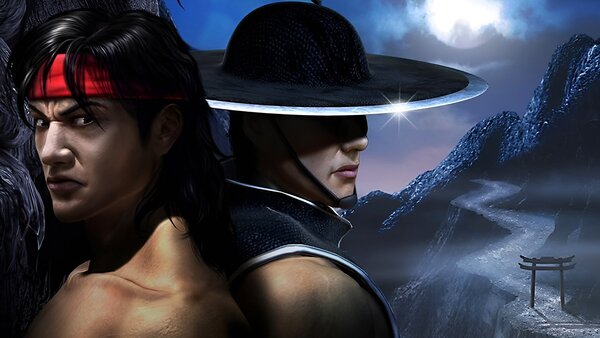
Shaolin Monks launched during the PS2 era and is essentially a 3D beat-'em-up with local co-op. It follows Liu Kang and Kung Lao as they brawl their way through the Netherrealm, pummelling anything in sight. It was a stellar modernization of a dying genre, backed by a surprisingly engaging campaign and great buddy-cop chemistry between its two leads.
With the Mortal Kombat Kollection bringing remasters of those other heavily criticized spin-offs, it’s a shame this vastly superior effort has been left out. Here’s hoping it makes it into the next collection volume - with online co-op, pretty please.
9. Gears Tactics

One of the defining franchises of the Xbox 360 era, Gears of War stood as the pinnacle of blockbuster gaming at the time, featuring cinematic storytelling, revolutionary cover-based shooting, and a testosterone-fuelled atmosphere that helped define a generation. However, as the years went on, its copy-and-paste formula started to wear thin, even among the most loyal Xbox fans. The series needed a fresh take, and ironically, when it finally got one, few people realized it existed.
Set shortly after Emergence Day, Gears Tactics follows Gabe Diaz, father of Gears 5 protagonist Kait Diaz. The game takes the familiar, grit-soaked action of Gears and reimagines it through an XCOM-style tactical combat lens - and truth be told, the combination works far better than anyone expected. On paper, the slow-burn, strategic pacing of a turn-based tactics game shouldn’t mesh with the loud, bombastic action of Marcus Fenix’s world, yet it does - largely thanks to the same tight cover mechanics that defined the originals.
It never feels like a cheap side project either. The production values, cinematic cutscenes, and story are right in line with a mainline Gears campaign, complete with intense boss fights and gripping set pieces. What began as a risky experiment ended up being one of the smartest evolutions of the series - which makes it all the more surprising, and disappointing, that it never got a sequel. Even Halo Wars managed that much.
8. Until Dawn: Rush of Blood

PS4’s Until Dawn was originally a PS Move game stuck in development limbo since the previous console generation, only for developer Supermassive Games to completely change its fate by reworking it into a cinematic interactive horror title. Featuring an impressive cast (including future Oscar winner Rami Malek), iconic set pieces, and twists, it became one of the best examples of the niche genre it occupies in the gaming space.
When Sony launched the PS VR headset, it seemed to task the developer with creating enticing exclusives for the new hardware. The studio’s later VR output reportedly soured their relationship with Sony, with duds like The Inpatient and Bravo Team Zero representing their worst releases, and even a rumored Killzone VR project being canceled as a result. But Supermassive really knocked it out of the park with their first VR release.
Playing into certain themes, monsters, and lore from Until Dawn, but not directly connected, it’s a horror-themed rollercoaster shooter that gleefully tries to terrify the player as much as possible (who didn’t rip off the headset during the spider-swarm scenario?) while delivering sweaty, exhilarating gunplay and boss fights. The VR scene quickly grew bored of arcade shooters, yet this one is really a peak in that niche - even Supermassive’s own PS VR 2 spiritual follow-up Switchback VR struggled to top it.
Ultimately, Rush of Blood was an odd but brilliant spin-off. Though largely forgotten by mainstream gamers, it remains an incredible experience - and is sadly stranded on Sony’s abandoned first-generation headset. Here’s hoping for a port someday.
7. Far Cry 3: Blood Dragon

With Far Cry 3, it could be argued that the series hit its pinnacle in terms of exposure. It had previously been a smaller franchise for Ubisoft, an open-world shooter blending the freedom of immersive sims with blockbuster spectacle, but it never truly broke into the mainstream. That all changed with a massive marketing push and an unforgettable villain front and center, catapulting the third entry into Ubisoft’s top tier of franchises.
During the tail end of the Xbox 360 and PS3 generation, it seemed like every developer was experimenting with offbeat, genre-fuelled standalone expansions for their biggest hits. Red Dead Redemption’s Undead Nightmare and Infamous 2’s Festival of Blood were fun, self-contained detours - yet none managed to surpass their originals… aside from this one.
As enjoyable as Far Cry 3 was, the neon-soaked spectacle of Blood Dragon felt like it had exploded straight out of a dusty VHS bargain bin. The open-world exploration, stealth-versus-combat gameplay, and map-checklist design all remain intact, but instead of a grim descent into the madness of war, its tongue is planted firmly in cheek as you fight laser-firing dinosaurs, rock out to a pounding synth soundtrack, and enjoy your protagonist’s gloriously hammy one-liners delivered by none other than Michael “Hicks” Biehn himself.
The Far Cry series has since continued to churn out similar entries ad nauseam, with only the occasional side experiment attempting to break the mold to mixed results - yet none have felt as fresh, confident, or joyfully absurd as this forgotten gem of a spin-off.
6. House of the Dead: Overkill

For '90s kids, there was a moment when zombies completely flooded the gaming scene thanks to two iconic franchises: Capcom’s Resident Evil on home consoles, and Sega’s The House of the Dead in arcades. The latter was very much the antidote to the former’s slow-burning, creepy atmosphere, strategic inventory management, and hair-pulling puzzles - instead, for a handful of coins, you grabbed a light gun and blew apart chainsaw-wielding corpses before they could shred your screen in half.
For a while, both series existed in tandem, yet House of the Dead was never exactly known for prestige. It was loud, cheesy, and repetitive, but it had a certain charm. As the arcade scene faded, though, so did the franchise’s relevance. In 2009, hoping to have fun with the concept and take advantage of the Wii’s popularity and motion controls, Sega produced a wildly irreverent spin-off that deserved far more attention than it got.
Drawing inspiration from the mid-2000s wave of grindhouse and exploitation cinema homages, Overkill drenched its visuals in film grain and partnered the straight-laced Agent G with foul-mouthed detective Isaac Washington. The result was an absolute blast of a campaign - packed with sharp dialogue, clever cinematic nods, and gloriously over-the-top boss battles.
It was a House of the Dead game that finally embraced the goof factor of the series while delivering some of its best action set pieces. It’s a shame it didn’t catch on, as it could’ve given the franchise a new tongue-in-cheek identity and a much-needed second wind - instead, it remains a brilliant but forgotten experiment.
5. Medal of Honor: Above and Beyond

While Call of Duty annually dominates sales charts on release, there was a time when Medal of Honor was the seasoned veteran that ruled the FPS battlefield. Ironically, CoD was created by Infinity Ward, a studio formed by burned-out developers from the MoH series, birthing it as a direct rival that decimated EA’s once-dominant franchise.
Then, when virtual reality was being touted as the next big thing, major publishers wanted a piece of it, and EA teamed up with Meta for an Oculus Rift-exclusive spin-off of its dormant FPS brand.
Developed by none other than Respawn Entertainment, founded by Infinity Ward’s own Vince Zampella, Above and Beyond was a big-budget attempt to rejuvenate it. It played like a full-scale cinematic reboot, featuring an engaging story, striking set pieces (including a breathtaking D-Day landing and a tense U-571-inspired submarine shootout), and polished interactive mechanics. The marketing push was huge - but the game quickly flopped and faded from view.
Too many factors worked against it: VR is niche, the game required a high-end PC and an exclusive headset, and its massive file size turned off most players. The pacing also suffered early on, with stop-start gameplay before it found its rhythm. The project heamorrhaged money, though it later made its way to Steam and the Quest; the damage was done.
In another reality, Above and Beyond could have been the triumphant return this series deserved - instead, it became a cautionary tale about ambition meeting the limits of its medium.
4. Metal Gear Rising: Revengeance

The classic Metal Gear Solid franchise has had its peaks, but no doubt its divisive lows too - none more so than in the second instalment, when it pulled a switcheroo from iconic hero Solid Snake to rookie operative Raiden. Many fans were left spurned, feeling cheated out of their cigar-chomping stealth icon.
Then Kojima did the unthinkable. With MGS4, he managed not only to redeem the “Jar Jar Binks” of the franchise but to make him undeniably cool - resurrecting Raiden as a cybernetic ninja with absurd agility, superhuman power moves, and an electrified sword to boot. Unfortunately, all his best moments took place in (admittedly spectacular) cutscenes. Naturally, the desire to actually play as this version of Raiden became too strong to ignore.
Enter PlatinumGames. Fresh off the cult success of Bayonetta and Vanquish, the studio was renowned for its blistering, over-the-top action and stylish combat systems. They were the ideal choice, placing Raiden in his own offshoot adventure as he slices, dices, and eviscerates anything in his path in a pure gamer-empowerment fantasy. The game delivered challenging combat, wall-punching boss battles, and just the right balance of polished cinematic flair and wacky, off-the-wall narrative choices that somehow fit neatly into the canon.
Launching to solid reviews but middling sales, it didn’t help that the game wasn’t the full-blown stealth experience fans expected. As a result, it’s often overlooked when revisiting the franchise’s highlights, dismissed as an experimental detour. Regardless, it remains a must-play - both a standout entry in the series and one of the best action games of its era.
3. Resident Evil: Revelations 2

Certainly, nowadays the Resident Evil franchise sits comfortably on top as one of the few horror series backed by a triple-A budget and a major publisher. But when Resident Evil: Revelations 2 launched back in 2015, the series was on life support. After several entries had shifted too far into overblown action and cringeworthy storylines, long-time fans were desperate for a return to the tense, claustrophobic survival horror that defined the franchise. Rather quietly, this smaller spin-off delivered exactly that - well before Resident Evil 7 brought the series roaring back into the mainstream.
Revelations 2 stripped the formula back to its essentials, setting the action on a crumbling island filled with grotesque creatures, decaying corridors, and sinister experiments. Its inventive co-op system was the real masterstroke: one character was heavily armed and combat-ready, while the other was vulnerable but vital for spotting hidden dangers and solving environmental puzzles. This dynamic forced players to rely on one another, building tension through teamwork instead of undercutting it.
The game was intentionally modest in scale, a kind of experimental side project to gauge whether players still wanted survival horror. Sales were decent but not spectacular, and many wrote it off as an odd detour. Yet in hindsight, it feels like a vital turning point - the moment Capcom started listening again. Revelations 2 walked so Resident Evil 7 could run, ditching the convoluted Umbrella Corp lore in favor of grounded, grimy horror that reminded everyone why the series mattered in the first place.
2. Five Nights at Freddys: Help Wanted

While the height of Five Nights at Freddy’s mania may have cooled off, the franchise is far from forgotten. What began as a low-budget indie horror title built on a simple idea - flicking lights on and off to keep haunted mascots at bay - exploded into one of the most recognizable gaming IPs of the past decade. With films, novels, and spin-offs still appearing, the brand remains firmly lodged in the public consciousness, even as it faces the fatigue of oversaturation.
Judging the series by quality, however, tells a mixed story. Many of the mainline entries have offered only slight tweaks to the original formula or added unnecessary complications. At the same time, larger-scale efforts like Security Breach struggled for popularity in the zeitgeist and looked meager compared to actual AAA horror. Ironically, one of the franchise’s best instalments flew under the radar of most mainstream players - all because it launched primarily as a VR experience.
Five Nights at Freddy’s: Help Wanted reimagines the first four games with modern tech, while adding several other suspenseful scenarios and lore expansions. Available in both VR and standard versions, the flatscreen port was dismissed as a novelty, but in VR it becomes something else entirely - for the first time, you actually are that night guard sitting at that desk, hitting that security door, and on game over, have to face the wrath of that evil bear face-to-face.
It's an experience hard to beat, and for a title that was sinking into predictability, it managed to become one of the scariest of its gaming generation.
1. Dead Space: Extraction

Dead Space might now seem like a relic to modern gamers, but at the time of its release, it grabbed the gaming world by the lapels. A blend of Resident Evil 4’s tight third-person combat with chilling sci-fi terror, the first two entries are rightly regarded as modern horror classics before the franchise began to lose its way. But tucked neatly between them was a worthy and often-forgotten spin-off that deserves far more attention.
Turning any major franchise into a light-gun shooter usually screams “cash grab,” yet in the mid-2000s, when Nintendo’s Wii was dominating living rooms worldwide, the idea suddenly made sense. With its motion controls perfectly suited to aiming and shooting, horror series like Resident Evil jumped on the trend - and EA wasn’t far behind. The result was Dead Space: Extraction, a surprisingly smart and well-crafted prequel.
Extraction took the signature limb-dismemberment mechanic of the series and repurposed it brilliantly for on-rails gameplay. It paired thrilling set pieces with clever puzzle-solving and an actual, emotionally grounded story that deepened the overall lore. Far from a throwaway experiment, it felt like a genuine extension of the Dead Space universe.
Sadly, mature-rated titles rarely found success on the Wii, and Extraction suffered the same fate. Even with a later PS3 port using Move controls, it failed to reach a wide audience. It’s a shame, as it remains an ambitious twist on the stand-and-shoot formula, but also an essential part of the franchise that remains stranded on dated tech.