X-Men Dark Phoenix Review: 4 Ups & 6 Downs
A sad end for Fox's X-Men.

Dark Phoenix, the final entry into Fox's mainline X-Men franchise, finally hits cinemas worldwide this week, following a prolonged post-production process rife with re-shoots, delays, rumoured cancellations and, finally, Disney's acquisition of 21st Century Fox.
Needless to say, between worrying test screening reports and a series of utterly underwhelming trailers, expectations have been basement-low for the superhero finale, and surprising nobody, the film is being largely panned by critics at present.
Indeed, though re-adapting The Dark Phoenix Saga wasn't the worst idea in the world, re-hiring X-Men: The Last Stand's co-writer Simon Kinberg to both write and direct the film was an utterly baffling decision that has spectacularly backfired here.
In almost every aspect, Dark Phoenix is a low-effort film that blows its monstrous $200 million budget on under-cooked thrills, wonky characterisation and, finally, an utter whimper of a conclusion to this most inconsistent superhero franchise.
At least now it's finally over, and the countdown can begin for Kevin Feige to eventually integrate the X-Men into the Marvel Cinematic Universe...
Downs...
6. The Cast Is (Mostly) Wasted

With only one major exception (which we'll get to later), pretty much everyone in Dark Phoenix's ensemble cast feels completely and utterly wasted.
It certainly isn't a film wanting for acting talent, which makes it all the more frustrating that so many skilled performers are squandered on...this.
First up, Jennifer Lawrence seems completely bored as Mystique, and to be honest, who can blame her?
She appears vaguely annoyed to even be there and decked out in her blue-skinned garb, with her every second of screen time screaming "contractual obligation."
Elsewhere, Michael Fassbender's Magneto is actually in the film a lot less than the marketing suggests, showing up at the mid-way point and, bar a few menacing grimaces, doing little he hasn't before.
Jessica Chastain meanwhile plays the film's totally forgettable alien villain, but one has to wonder why any filmmaker would cast one of the most talented actresses of her generation in a bland alien shape-shifter role that actively asks the actor not to emote. Bizarre.
As for the other peripheral X-Men, they're not given much to do, worst of all Quicksilver (Evan Peters), who is sidelined mid-way through the film, presumably to disguise the fact that he's a ridiculously over-powered character.
Before he disappears, he doesn't even bless fans with another slow-mo showcase scene, either.
5. Simon Kinberg's Awful Direction
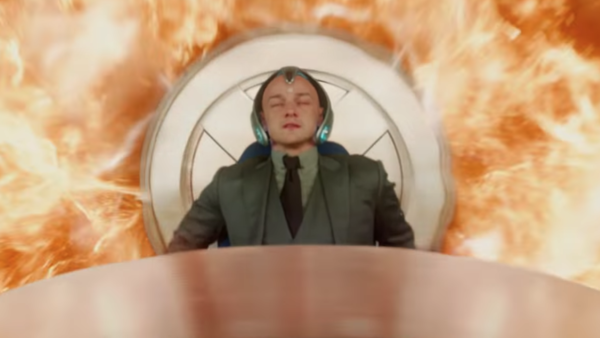
Giving a first-time filmmaker a $200 million budget is almost exclusively a terrible idea, and - shocker - Simon Kinberg does a totally sloppy job helming this film.
Throughout Dark Phoenix, it's clear that Kinberg's trying to emulate Bryan Singer's competent-if-unremarkable house style for the franchise, rather than trying to bring any of his own vision or artistry to the table.
Even with Kinberg's obvious influences, the film too often relies on dull shot-reverse-shot dialogues and poorly-shot action.
The latter is especially apparent during a mid-film mutant brawl with editing so haphazard it's tough to figure out the scene's basic spatial configuration.
Other promising sequences, like the X-Men's opening rescue of some stranded astronauts, feel rushed and oddly un-momentous, and only in the film's otherwise generic third act finale does it muster anything approaching fun action, if only for a few minutes.
Needless to say, with the film likely to under-perform at the box office, Kinberg probably won't get another budget of this size for the foreseeable future (if ever again).
4. The Generic, Dull Plot
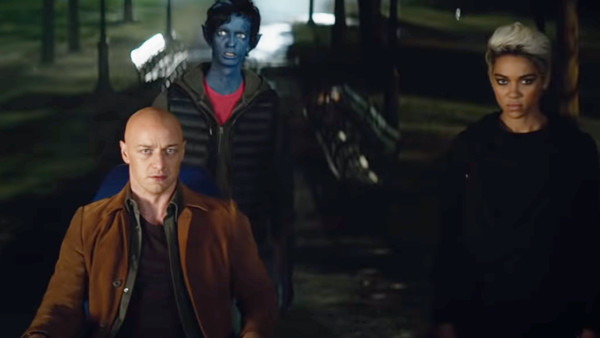
Though Kinberg promised that Dark Phoenix would offer up a more crowd-pleasing and comic-faithful adaptation of The Dark Phoenix Saga, the central Jean Grey (Sophie Turner) plot is bogged down by so much generic, boring narrative threads.
Whether it's Mystique (Jennifer Lawrence) yearning to leave the X-Men, Magneto (Michael Fassbender) yet again flirting with his dark side or shape-shifting aliens descending upon Earth, it all feels totally played-out for both this franchise and the genre as a whole.
There is precious little in this film approaching even basic imagination or uniqueness: it's all tired, old-hat cliches listlessly recycled with no passion whatsoever.
3. There's No Emotional Impact

Despite adapting one of the most beloved X-Men comic arcs to date, Dark Phoenix is curiously lacking in emotion and basic feeling, even more so than Brett Ratner's much-detested prior adaptation, X-Men: The Last Stand.
Jean Grey being consumed by the Phoenix Force feels rushed, railroading the character through a wonky arc, including a totally half-assed subplot related to her past.
Far worse than this, however, is the movie's big character death. No spoilers here - though no points for guessing who it is, either - but the scene is clearly supposed to be a devastating marquee moment for the audience, yet again feels rushed through, generic and above all else totally predictable.
Unintended laughter is the more probable emotion throughout the film, and Dark Phoenix is ultimately the complete opposite of Logan, which invested the audience fully in its characters for years before paying them off appropriately.
Here, nobody cares about Jean Grey's struggle, nor many of the other new characters introduced in recent films.
2. The Painfully Bad Dialogue

It's utterly baffling that Kinberg was the sole screenwriter of the highly entertaining X-Men: Days of Future Past, given that his script and especially his dialogue in this movie is so utterly atrocious.
Dark Phoenix's dialogue is a mish-mash of on-the-nose exposition and woefully generic "badass" superhero movie quipping. None of it sticks in the mind, at least not in a good way.
Audiences may struggle to forget, however, the cringe-worthy moment when Mystique tells Xavier (James McAvoy) the group should be renamed to the "X-Women."
Poor Jessica Chastain probably has to struggle worst of all, though, spouting all manner of convoluted nonsense in a flat monotone while trying to keep a straight face.
But throughout, the vast majority of the dialogue is hackneyed, trite and hilariously over-familiar.
1. It's A Forgettable End To The Franchise

Even with the film's many obvious flaws, fans might've hoped that Kinberg would find a way to bring the series to an affecting or vaguely satisfying close - but no.
Dark Phoenix concludes in utter unremarkable, even forgettable fashion, failing to pay tribute to everything that came before nor even allowing the characters to live "off the screen" in a fitting manner.
While rumours suggested that the film's re-shoots were in part intended to give the series a more concrete resolution, that's clearly not the case at all.
It just feels like any typical, garden variety superhero movie ending, complete with a vague sequel hook that will of course never come to fruition.
And so, Dark Phoenix is a bust for the most part, but it's not a total, unmitigated disaster. Here's what the film actually gets right...
Ups...
4. James McAvoy's Solid Performance

James McAvoy is unquestionably the glue desperately straining to hold this thing together.
It certainly helps that he's in the movie more than almost any other major character, and true to McAvoy's rep for never phoning a performance in, he is trying so damn hard to make this thing work.
Even when the dialogue sucks, he's giving it his all, bringing perhaps the only real shred of plausible human emotion to the entire story, even if it's still absolutely neutered and ineffective.
He certainly can't be blamed for what the film gets wrong, and unlike some of his co-stars, manages to escape with his dignity fully in tact.
As a farewell for the character, though, it's a shame he had to chew through such ill-conceived material.
3. Hans Zimmer's Pulsing Musical Score
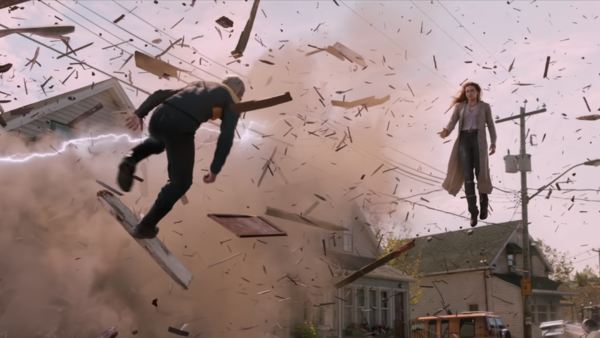
Despite Hans Zimmer previously declaring himself "retired" from scoring superhero movies, the man is back, and it's just as well, because his score for Dark Phoenix is one of the film's few big strengths.
Zimmer does a great job amping the operatic sweep up to 11 and milking some tense, pulsing synths for the set-pieces, trying desperately to wring a few drops of excitement from the joyless carnage unfolding on-screen.
It's a damn shame he wasn't able to score to better footage, of course, but one suspects even haters will keenly listen to the movie's score long after Dark Phoenix is nothing more than a bad, distant memory.
2. Sophie Turner Actually Isn't Bad

Perhaps the most discouraging element of Dark Phoenix's marketing campaign was Sophie Turner, who seemed primed to give another embarrassingly bad performance as Jean Grey following her frankly risible work in X-Men: Apocalypse.
So it's a genuine surprise to report that Turner's actually not bad this time around. Her American accent is a few measures more convincing, and she actually brings the presence necessary to sell the character in the third act.
That's not to say that Turner gives a particularly compelling rendition of Jean Grey overall, or that she's able to make much sense of the nonsense writing, but she feels a lot less like a kid playing pretend as Jean Grey than she did in the last film.
Of all the things fans should be worried about in this movie, Turner surprisingly enough isn't really one of them.
1. The Snappy Pacing & Short Runtime

Dark Phoenix may be a worse film than X-Men: Apocalypse on the balance of its merits, but it at least feels like much less of a slog.
Clocking in at "just" 114 minutes, it's a positively scant runtime for the standards of most modern superhero films, and a whole half-hour shorter than the wildly bloated Apocalypse.
The result is a film that, while fundamentally bad, at least doesn't stick around in any one place for too long, and even when boredom sets in, it's generally not too long before the film is trying something else.
It moves fast, even to the point of feeling rushed at times perhaps, but when so little effort is being put into the storytelling, characters and action, it's surely for the best that it doesn't waste too much of the audience's time in the process, right?