Why Gene Hackman Really Was The GOAT
"I was trained to be an actor, not a star."
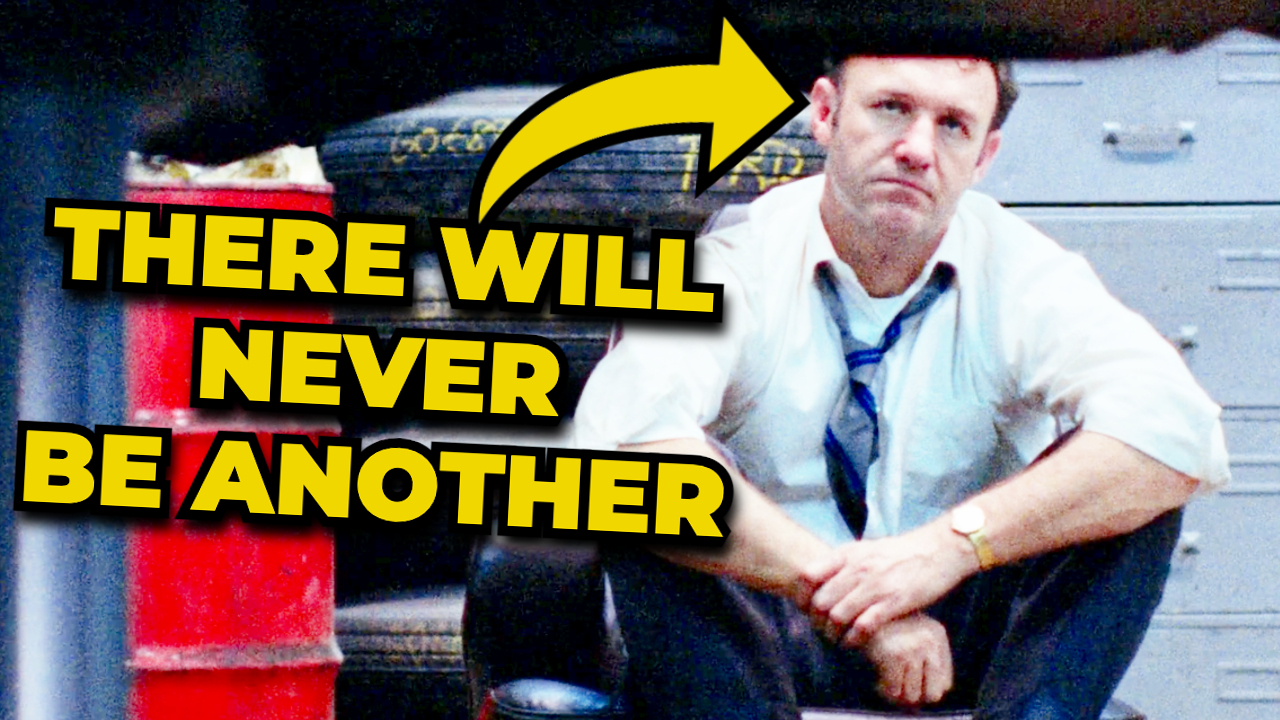
As has sadly become an all-too regular occurrence as of late, last month, we lost one of our greats. Gene Hackman - the legendary star of The French Connection, The Conversation, Unforgiven, and numerous other masterpieces - passed away at the age of 95 alongside his wife, Betsy Arakawa, in tragic circumstances. It's an upsetting end to what had seemed like a perfect final act for Hackman, who retired from acting in the early 2000s and with it any particular semblance of a public, celebrity profile. He'd gotten to go out (mostly) on his terms. It was a fairytale ending for a generational talent who had lit up the big screen for over 40 years, and who had earned numerous accolades in the process.
But aside from the specific circumstances of Hackman's death, there's another reason why this is so sad - what it represents. Hackman was another of that New Hollywood generation who has now left us - an additional break in a chain that has been slowly coming apart in recent years, as the chorus that gave life to the most iconic era of cinema approach the end of their journeys, and leave behind their own unquantifiable and myriad legacies. William Friedkin, Donald Sutherland, David Lynch, James Earl Jones - the masters are leaving us, and the world feels like a lesser place for it.
Even more so for Hackman, who - with his enduring onscreen versatility and inimitable presence - exemplifies that feeling of disconnect even more potently. The links are still there with the likes of Al Pacino, Robert De Niro, and Dustin Hoffman, but Hackman's arrival could have only occurred during the American New Wave. He was beautiful, but in a thoroughly human way - a different kind of actor to his peers, cut not from the mould of his idol Errol Flynn, but from the concrete and discord of America's post-War era. Hackman channeled it all with his performances - the angry existentialism of the sixties, the paranoid isolation of the Watergate years - they were reflective of a nation's troubled psyche as much as they were complex character portrayals in and of themselves.
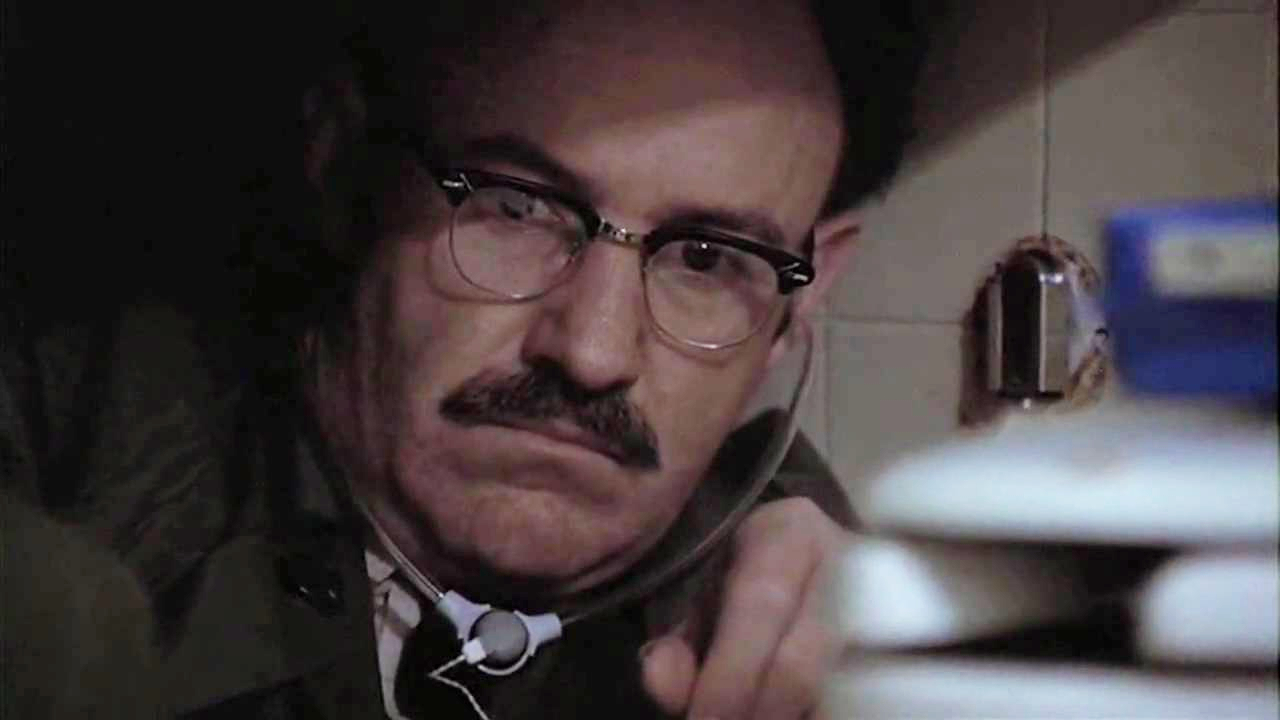
Those features were part and parcel for the New Hollywood, yes, but Hackman grasped the assignment in a way only he could. By the time he took on his breakout role as Buck Barrow in Bonnie and Clyde, he was 37. Before then, he'd served in the military and studied journalism. His dad left the family when he was young, and his mother passed away in 1962. In short, Hackman had already lived a life before he got to Hollywood - a crucial background context which may have contributed to the ineffable authenticity of his performances.
To be that authentic is to be vulnerable - something Hackman himself was all too aware of. "It really costs me a lot emotionally to watch myself on-screen," Hackman said in an interview with Reuters years ago (via Metro). "I think of myself, and feel like I'm quite young, and then I look at this old man with the baggy chins and the tired eyes and the receding hairline and all that." It's a sad irony that Hackman's human believability seemed to exact an emotional toll, because that very kind of unvarnished beauty - and he was beautiful - was part of what made him so special.
That aspect, in addition to the other elements that comprised his career - specifically his versatility and the prolific nature of his work - makes it easy to argue that Hackman was the actor of the 20th Century. Not the most iconic, perhaps - the Brandos and the Bogarts could more easily lay claim to that accolade - but then again, he never tried to be. In his own words, he was "trained to be an actor, not a star," which is perhaps why he was so durable. Hackman moved through multiple Hollywood eras and shared with us some of the greatest performances ever put to screen. He was, in other words, the acting GOAT.
[Article continues on next page...]
Sin With A Smile - The Genius Of Gene Hackman
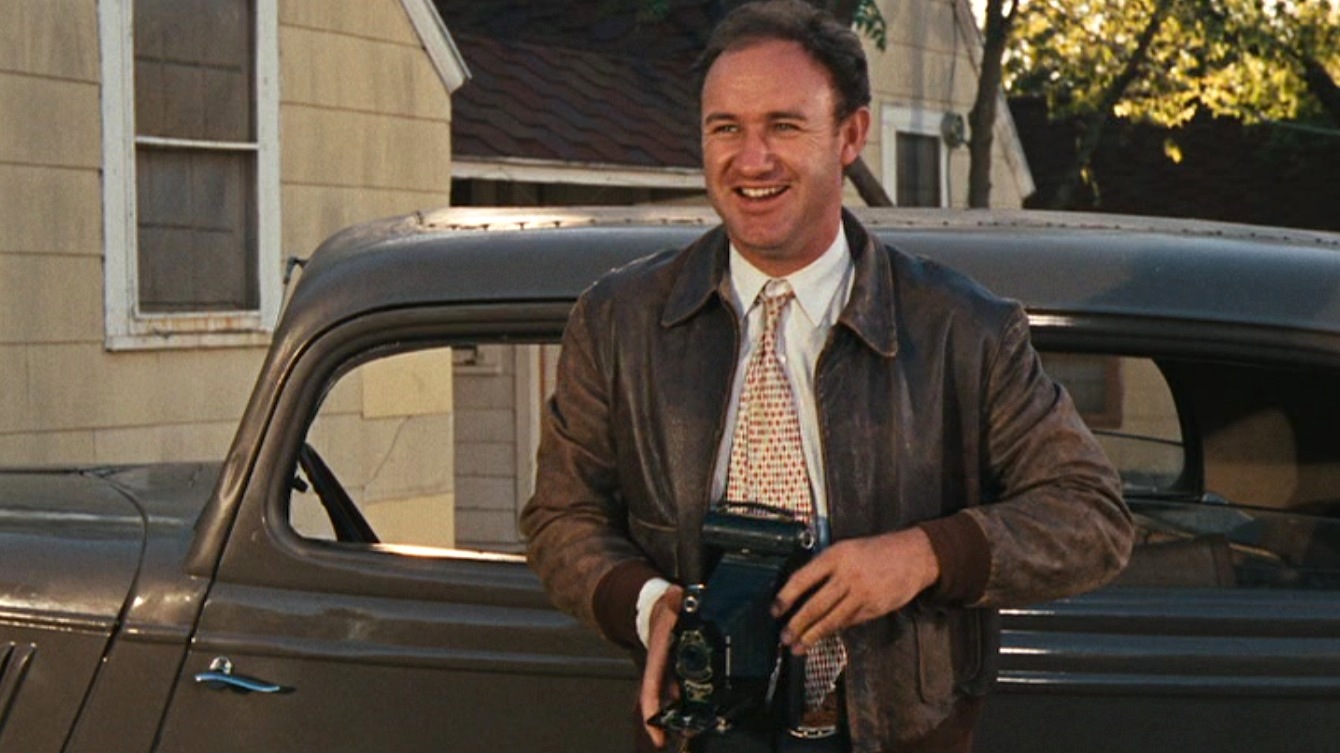
Even when he first arrived, Hackman's screen presence felt fully formed and statuesque, a combination of his burly physicality, rugged features, and the avant-garde nature of his breakout performance as Buck Barrow in the transformative Bonnie and Clyde. Arthur Penn's 1967 film - which depicts the combustion of the Great Depression's most iconic gangsters - has rightly been canonised for its watershed contributions to the New Wave, a focal point alongside Sam Peckinpah's The Wild Bunch that redefined violence in celluloid. But it's also a masterpiece in its own right, anchored by two remarkable performances from Warren Beatty and Faye Dunaway as Clyde and Bonnie, and a scene-stealing turn from Hackman as Buck.
Like their adoring public, Buck is swept up in the mythology of his sibling's criminal partnership - less a hardened criminal and more a giddy, tragic figure whose newfound freedom eventually costs him his life. There's a childlike innocence to his and Clyde's relationship, which is juxtaposed with Buck's marriage to Estelle Parsons' Blanche, as well as the shrinking playground the Barrow Gang are given to exist. They're pushed to the edge of the world, a figurative journey made literal in a gorgeous moment where Bonnie and Clyde find a convoy of Dustbowl Migrants taking respite at the edge of a lake. They've outrun all they can, and all that's left is poverty and heartbreak.
The film very much belongs to Beatty and Dunawaye, the former of whom was instrumental as a producer and was, of course, a pivotal figure in the New Hollywood movement, but Hackman's turn - which was nominated in the Best Supporting Actor category at the Oscars - is significant. Beatty was transgressive and raw, but he could have just as easily been a leading man of Hollywood's Golden Age. Hackman, conversely, was cut from a new cloth, the erratic and sympathetic Buck exemplifying the nuance of a burgeoning acting tradition, where cinema was more existential, and the leading men just as susceptible.
This isn't to simplify the evolution of the medium pre and post-Bonnie and Clyde, as the Old Hollywood was filled with just as much nuance and darkness, but it was carried in a different way. Hackman fit this new, documentarian style to a tee, with Buck showing all the promise that the actor would run away with in the ensuing decades - a promise enshrined in William Friedkin's The French Connection.
Friedkin, who we sadly also lost in 2023, was among a select crop of Hollywood talent that defined seventies cinema, but his 1971 film The French Connection was so imperious - so encapsulating in tone, content and atmosphere - that it almost feels like it had the last word on that era before his peers had arrived to the party.
More than Alan J. Pakula's All the President's Men or Francis Ford Coppola's underseen surveillance masterpiece The Conversation (which also starred Hackman), The French Connection seemed to distill and instantly capture the rage and decay of a decade where the US became untethered from continuity; where traditions were upended in the wake of unceasing crises, and the answers - let alone the prospect of a resolution, good or bad - seemed like fantasy. Like Hackman, Friedkin's film arrived fully formed - propulsive, gritty, and so close to the wintery streets of New York that the chill pierced the canvas.
That The French Connection feels like it was so prophetic of the Watergate era is a testament to Friedkin's ground-level perspective, but the film orbits Hackman, whose performance as the Ahab-like cop Popeye Doyle was so fierce and frenetic that it earned him the Academy Award for Best Actor.
Through Doyle, Friedkin paints an unvarnished portrait of policing, in turn revealing the translucent nature of the line between justice and criminality, as Hackman's detective doggedly pursues a French narcotics smuggler without care for anything or anyone who gets in his way. In the end, all that Doyle is left with is the chase - alone with the cold, nothing but ghosts for company. Hackman wears that isolation behind a mask of gruff bravado, masterfully layering the character's pain in between fits of rage and ugly humour. In the end, we pity Popeye. Not because he fails in his pursuit, but because he's too obsessed to realise that he's just as much of a monster as the man he's hunting.
The French Connection is undoubtedly Hackman's most iconic performance, and perhaps even his greatest film, but there were other highs from the decade that foreshadowed his staying power. In addition to Francis Ford Coppola's aforementioned The Conversation, Hackman re-teamed with Bonnie and Clyde filmmaker Arthur Penn for the 1975 neo-noir Night Moves, which dialled up the genre's already unforgiving impulses to new levels of devastation, with the actor playing a retired football star-turned-P.I. who takes on a missing persons case and ends up digging up the bones of Old Hollywood. (It also features an iconic fondu moment between Hackman and Susan Clark.)
Night Moves was an overlooked piece of genre fiction from that decade that has since become a cult classic, but Hackman's other assignments didn't take as long to find an audience. He quickly developed into a significant box office draw, taking on a variety of assignments that illustrated his acting range. An uncredited cameo in Young Frankenstein (organised by his Bonnie and Clyde co-star and fellow Gene, Gene Wilder) proved his comedic talents, while a legendary turn as DC supervillain Lex Luthor in Richard Donner's Superman made for an equally perfect change of pace.
Thrillers, action, drama, comedy - as the decade progressed, Hackman established himself as a genre journeyman who could elevate even the most typical Hollywood fare. His twinkle-eyed humanity remained a constant, even as the landscape around him began to change. The New Hollywood was fading away, but Hackman, like so many of the commanding figures he portrayed on screen, stood resolute.
[Article continues on next page...]
The Immovable Object - Why Hackman's Nineties Renaissance Was So Special
While there was never a decade after his arrival where Hackman wasn't a fixture, the eighties were slightly less fruitful for the actor - at least to begin with. Even though there were critical successes, such as Roger Spottiswoode's Under Fire, many films failed to register as strongly at the box office. They weren't fallow years per se, and some films, like the controversial Eureka, went on to be reappraised in the vein of Night Moves as highlights of Hackman's career, but there was less momentum compared to his breakout in the preceding decade.
That missing sure-footedness soon evaporated, with the latter half of the eighties seeing Hackman lead successes like the sports drama Hoosiers, the Kevin Costner-led thriller No Way Out, and the divisive but still Oscar-nominated Civil Rights drama Mississippi Burning. Hackman's role in the latter-most film, an Alan Parker-directed effort which cast him alongside a young Willem Dafoe, earned him another Academy Award nomination for Best Actor, priming him for an iconic career resurgence in the years to come.
Despite its historical shortcomings as they pertain to the whitewashing of the FBI's role during the African American Freedom Struggle, the filmic qualities of Mississippi Burning are not in doubt, with Hackman's performance as a southern Bureau agent a joyous reminder of his formidable screen presence. Indeed, as the nineties would show, Hackman would only grow more forceful and gigantic, somehow taking up more of the frame even when vacating space as a supporting player.
It might be over-generalising to call this Hackman's "villain era", but it's a role he played frequently and well during the decade. Tony Scott's Crimson Tide, Sam Raimi's The Quick and the Dead, Sydney Pollack's The Firm - all cast Hackman in an antagonistic capacity, but these were far from cut-and-dry performances. Hackman proved adept at finding the tragic humanity of these often conflicted villains, The Firm's Avery Tolar possibly the most heartbreaking of the bunch.
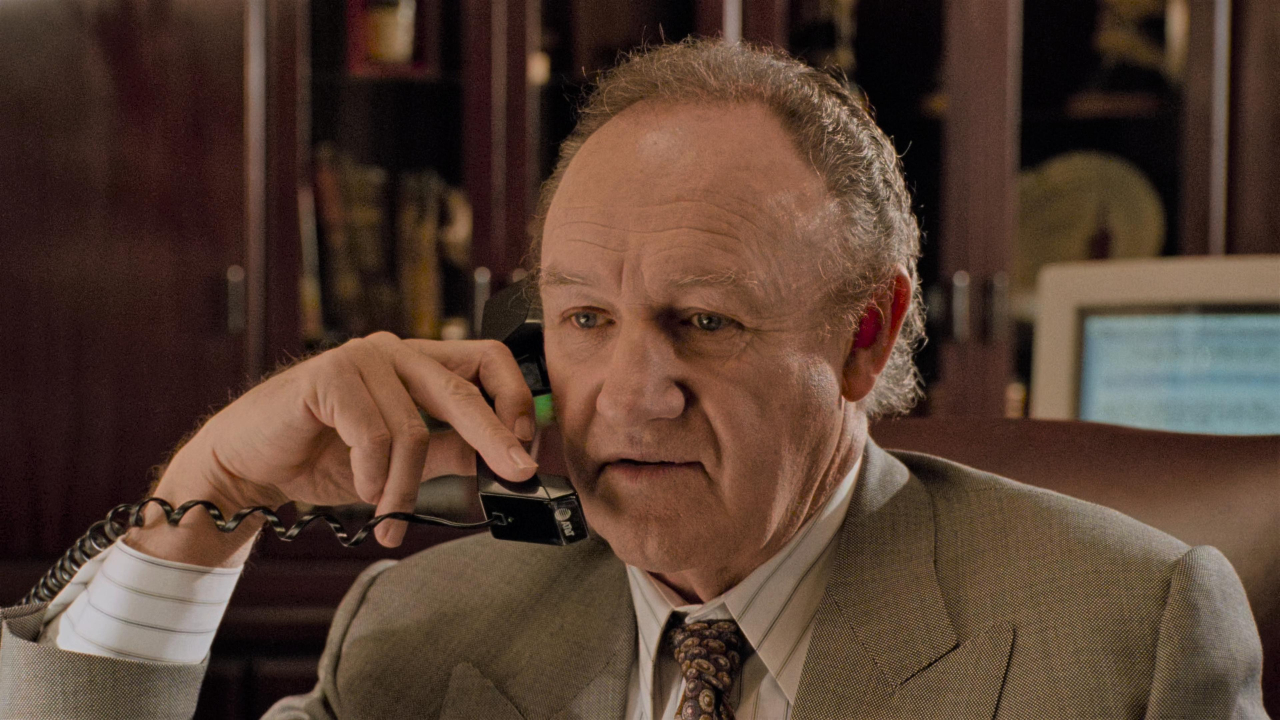
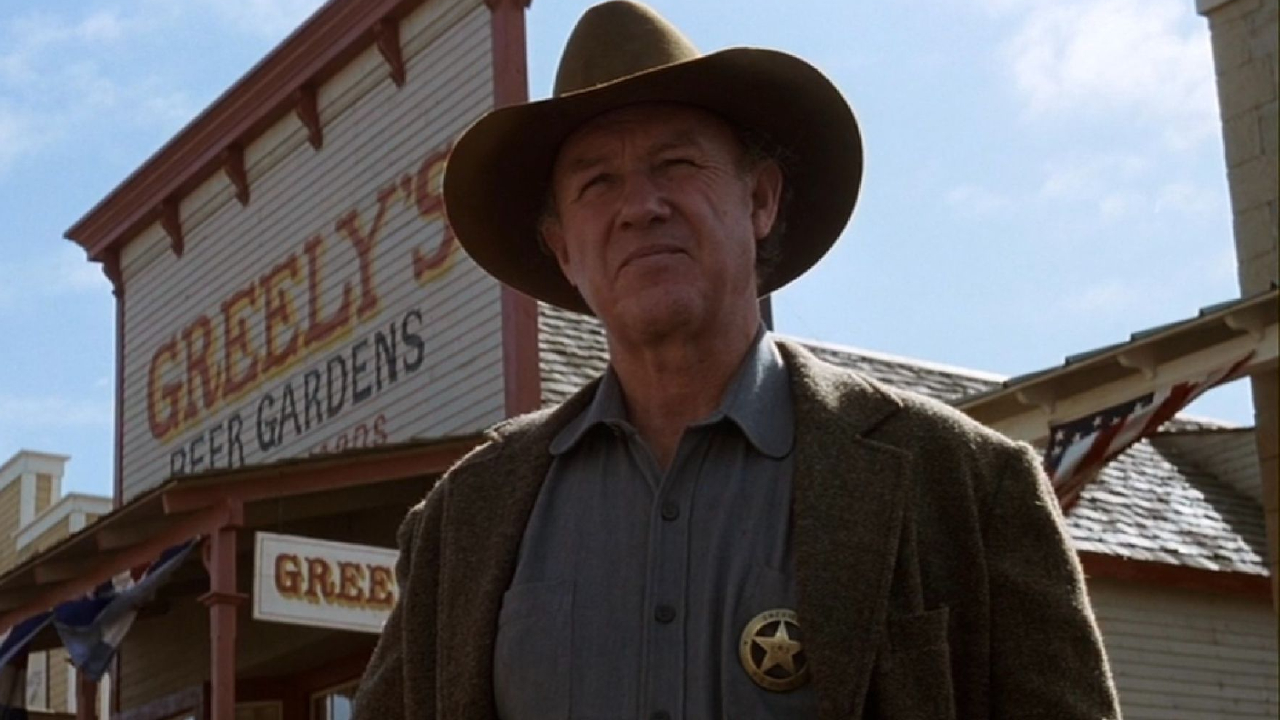
But undoubtedly the most fascinating film of Hackman's that decade is Unforgiven, the Clint Eastwood-directed Anti-Western that earned Hackman his second Oscar win, in which he took on the role of the tyrannical Sheriff "Little Bill" Daggett. Viewed in isolation as a strong character performance that complements the morose throughline of Eastwood's masterpiece, it's suitably impressive, but placed in the context of Hackman's early career, it takes on an altogether different kind of significance.
Eastwood's film is predicated around legacy - specifically his own. While its place in the genre canon is often exaggerated - as if it was the first Western to challenge Old West mythology - it is singular in its discussions around legacy and career. It is Eastwood's movie, and in it, he takes a long, hard look at his filmic self and the violence that personality is inextricably linked to. It's a sort of melancholic penance in that way - a vulnerable declaration of an old man looking back at his past, and not necessarily liking all that he's seen.
But this also extends to Hackman, because Unforgiven doesn't just serve as a commentary on Eastwood's career - it also works as a thematic rejoinder to its antagonist's breakout film: Bonnie and Clyde. If Bonnie and Clyde is pure myth - a film imbued with a rebellious spirit that exemplified the boundary-pushing nature of the New Hollywood - then Unforgiven is anti-myth, reaching back through the past of not just its own genre, but to an era of cinema more broadly. The inversion is made complete by Hackman's Little Bill, a cold-hearted pragmatist who has become an agent of the new world - someone who has more in common with the character of Frank Hamer than a free spirit like Buck Barrow. It's a small wrinkle, but one that amplifies the already sombre currents of a mournful Old-West ballad.
Unforgiven could have been the perfect bookend to Hackman's career, but it ended up heralding a brilliant twilight, rubber-stamped with one of the millennium's most seminal outings.
[Article continues on next page...]
A Royal Ending - Why Gene Hackman Really Was The Best
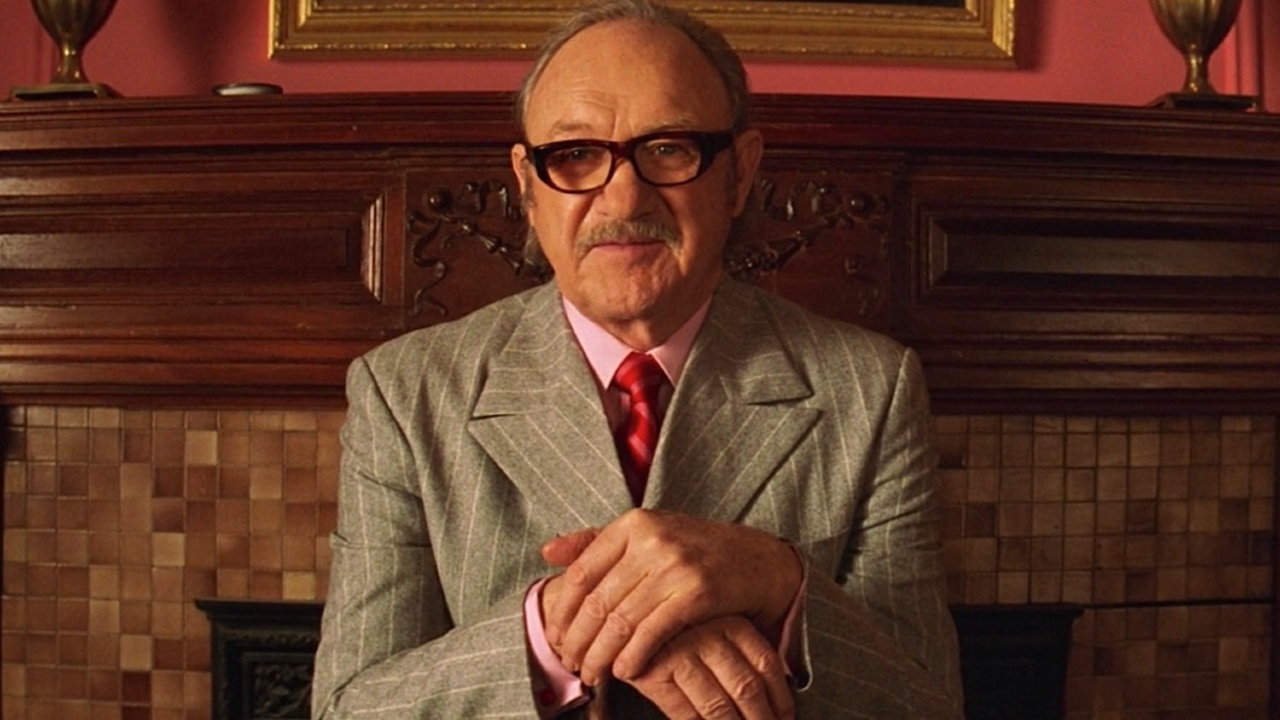
Gene Hackman marked his 2004 retirement with the comedy Welcome to Mooseport, but the perfect sign-off came a few years earlier in 2001, with Wes Anderson's The Royal Tenenbaums.
Although Anderson's film was produced in somewhat tempestuous conditions, with Hackman ostensibly struggling to gel with the filmmaker, the end result is nothing less than pure catharsis. This shouldn't be especially surprising for those familiar with Anderson's handiwork, as he has always excelled at operating in the space between whimsy and sorrow, vibrating molecules as the surreal gradually exposes the raw nerves of our existence. The Royal Tenenbaums does so with an extra level of potency, however, grappling with the weight of grief, lost time, legacy and redemption, as Tenenbaum patriarch Royal - played by Hackman - attempts to reintegrate himself into his prodigious (and deeply traumatised) family.
It's a deeply affecting text, featuring phenomenal performances from Luke Wilson, Gwyneth Paltrow, and Ben Stiller, but Royal is the heart and soul, with Hackman conveying his evolution from cynical schemer to enlightened grandfather beautifully.
As a display of Hackman's versatility and earnestness, it's a perfect send-off. In the wake of his passing, though, it feels like a fittingly emotional tribute - a film that provided a tailor-made canvas for him to convey his indelible attributes, before he "died tragically rescuing his family from the wreckage of a destroyed sinking battleship."
The real Hackman, of course, got to live two more hearty, life-filled decades, retiring to Santa Fe with his wife, where he enjoyed an active, peaceful sabbatical full of painting, bike riding, and being a part of the local community. It is so deeply unfair that this happy ending has been upended in the way it has, but there is solace to be found in just how long-lived Hackman's career was, that we got to experience that gift for so long, and that he was able to bow out and live what seemed like many peaceful and happy years.
As Morgan Freeman eulogised in his tribute to the actor at this year's Oscars: "Gene always said, 'I don't think about legacy, I just hope people remember me as someone who tried to do good work'. So I think I speak for us all when I say, Gene, you'll be remembered for that and so much more." It's a touching epitaph for one of our greatest performers - one whose passing brings us upsettingly closer not just to the end of a chapter in film history, but one he defined. Hackman was the New Hollywood. There will never be another like him.