True Story Of The Best Batman Movies Never Made
Clint Eastwood as old man Batman? SIGN US UP!!!
As unthinkable as it is now, for a long time, Batman almost wasn't a big screen character. In the wake of the super-camp 1960s show and a weird change of tone in the comics that almost saw the Dark Knight cancelled entirely, it never looked like a viable option.
It was only when Michael Uslan took it upon himself to champion Batman as a potential movie star and a nice little earner for Warner Bros that anything started to happen. In those early days of the 1980s, after two decades in the wilderness, the ideas weren't always great.
The first Batman movie we almost got was Batman In Space and the projects Adam West pitched feel more like cries for help than genuine movie ideas. But when Uslan came on board, he knew what Batman should and could be and he championed what would ultimately become Batman, kicking off a love affair with the character that has survived multiple dark days and slumps.
And as much as those early, sillier projects might have worked against the Batman era, there have been some pitches over the years for similarly unrealised projects that could have been genuinely great. Look a little deeper at the ideas, pitches and greenlit-but-cancelled Dark Knight movies and there's a picture of brilliance that could have been.
Some of the greatest working actors could have taken on Batman over the years, and the story of these near misses and missed opportunities goes right back to before Tim Burton's 1989 project got off the ground...
10. The Late 1970s - Return Of The Batman
In real terms, Return Of The Batman was never really intended to be a full movie - it was the script that Michael Uslan used to convince everyone that Batman could be in movies. It was, in effect, the script that made Batman movies, so it deserves its position as a key-stone.
As Uslan sought to make his Batman, Hollywood didn't share his enthusiasm and he repeatedly came up against brickwalls built on the back of Adam West and his campy version of the character, as Uslan said himself, studios saw Batman as "a pot-bellied funny guy with Pows, Zaps, and Whams." Silliness in other words and even when he showed them the comics that defied that image, they didn't get it.
Luckily Tim Burton did and he became Uslan's most useful ally, as he sat down and worked on a script called Return Of The Batman in the late 1970s to try and whip up some interest. And fundamentally he wanted it to be used to educate studios and executives on his and Uslan's vision for returning Batman to his origin.
It's a shame we've never even seen the storyboards, but whatever the shape of the movie, it worked and Batman 1989 was borne out of it.
9. 1983 - The Batman
When the studios wouldn't budge on their perception of Batman, Uslan took another approach, forming BatFilm Productions and buying the film rights himself. An inspired move in hindsight, but a risk at the time.
With everything set to go, the new studio commissioned James Bond and Superman writer Tony Mankiewicz to write the first official screenplay titled The Batman in 1983. His agenda was simple - he was to marry the poppy successes of Superman and the more realistic, darker elements of Bond.
His answer was to turn to the comics, relying specifically on Batman: Strange Apparitions. The film was announced in late 1983 with mid-1985 as the release date and a budget of $20m. Batman would have been played by an unknown, It would have brought in Rupert Thorne as a villain, as well as The Joker and Mankiewicz wrote in love interest Silver St. Cloud and built Robin's origin into the plot. The rest of the cast would be made up of David Niven as Alfred, William Holden as Jim Gordon, and best of all David Bowie as The Joker. Peter O'Toole was suggested to play the Penguin - a mobster with a low body temperature and Eddie Murphy and Michael J Fox were both suggested for Robin.
After the success of Ghostbusters, Ivan Reitman was attached as director, and expressed his desire to bring in Bill Murray with him to portray Batman. It would have been bold, but it's hard to argue that it would have been any stranger than Burton casting Michael Keaton.
The script had issues and unfortunately Reitman left as it underwent nine rewrites from nine separate writers, which completely reinvented the entire project. Joe Dante was briefly attached as his replacement, but it all died on its knees before Uslan turned to another director hot off his debut movie - Tim Burton.
8. 1994 - Tim Burton's Batman Continues
After Batman Returns, Tim Burton was not Warner Bros' favourite person. His dark style might have landed with fans, but commercially speaking, it had been a nightmare on both of his movies. The decision was made - partly thanks to pressure from commercial partners - to move Burton away from directing.
But by that point, Burton already had a movie in the works. It had all been mapped out already as Burton had signed on for a trilogy. His vision would have seen Two-Face (Billy Dee Williams) as the main villain, an idea that had been played with for Returns, but ultimately abandoned in favour of Max Schreck becoming the bad guy.
Burton take on the threequel, which was said to have been called Batman Continues who had The Riddler as a key villain, and both Robin belatedly and Chase Meridian were in there too. The former would have been played by Marlon Wayans. Sadly, the changed plans on Returns meant Burton ultimately also dropped Williams as Two-Face.
Warner Bros weren't keen though and Burton was dropped, which ultimately cost Warners their Batman. Annoyed at the change of vision, Michael Keaton snubbed a massive $15million contract and walked away and the world got Val Kilmer and Batman Forever instead.
7. 1996 - Burton's Catwoman Spin-Off

Strangely enough, Burton wasn't entirely done with Batman even when he lost his threequel. He was a producer on Batman Forever - though probably in name only - and he also had another iron in the fire.
Batman Returns had a final scene that had been hastily added at great cost to suggest that we would be getting more of Catwoman. The plan was to have Burton direct a spin-off, with Michelle Pfeiffer again attached to star, with Burton's writer Daniel Waters writing again. He turned a script in in summer 1995 - specifically on the day that Batman Forever hit cinemas.
Waters says that turning it in the day Batman Forever opened "may not have been my best logistical move, in that it's the celebration of the fun-for-the-whole-family Batman. Catwoman is definitely not a fun-for-the-whole-family script."
His story had Catwoman suffering amnesia and moving from Gotham to Oasisville - the Batman universe's version of Las Vegas, which is run by superheroes - where she encounters some terrible, flawed male superhero types that push her back to the Catwoman identity. A bold idea, undoubtedly and one years ahead of its time.
Sadly, life got in the way, Pfeiffer had her first child and admitted her priorities had changed and Burton began to focus on an adaptation of The Fall Of The House Of Usher. Eventually both left the project, with Ashley Judd briefly replacing Pfeiffer as rewrites gutted the script until it was so unrecognisable that the final result was the Halle Berry starring monstrosity released in 2004.
6. 1999 Onwards - Joel Schumacher's Sequels

A lot has been said about Joel Schumacher's Unchained idea and while there's some discussion on how it would have come out, it's probably not one to think of as potentially great. It was, after all, greenlit off the back of Batman & Robin's rushes, so it must have been in the same vein. It's one for the dodged bullet pile, really.
But Schumacher had OTHER ideas. And some were even good. When Unchained was canned, he pitched a take on Frank Miller's The Dark Knight Returns, with Clint Eastwood and Michael Keaton rumoured to be in poll position to play the older version of Bruce Wayne and David Bowie in line to be the Joker once more. Discussion were as far as it got.
Rather than give Schumacher his own way, the studio came to a compromise by going in a darker direction and returning the character to a more edgy tone centred around fear.
Bruce Wayne would have retired as Batman after realising that his greatest weapon - fear - was no longer effective. At the same time, Dick Grayson is at Gotham University, under the tutelage of Professor Jonathan Crane, who would be using his students as guinea pigs to test out his fear toxins, from where he would become Scarecrow. To complete the fear spectrum, Man-Bat was also going to appear, and Gotham's citizens would believe that he was in fact Batman himself, forcing Wayne to return, clear his name and save Robin.
Ultimately, Warner Bros passed and decided instead to focus on making Year One and Batman Beyond. You know how well they both worked out...
5. 2001ish - Boaz Yakin's Batman: Beyond

In October 1999, Warner Bros turned to the animated world for a new direction for the film franchise and brought in Batman Beyond creators Paul Dini and Alan Burnet to script and adaptation with Remember The Titans' director Boaz Yakin at the helm. Imagine how different that would have been!
A first draft was allegedly produced, but the project ultimately didn't make it because Yakin was drawn to the idea of a much darker Batman who wasn't afraid to swear, and Warner Bros weren't keen. Not least because it didn't exactly mesh well with the child-friendly spirit of the original TV show.
There's very little actually known about the project, but it's undoubtedly one one of the biggest missed opportunities in Batman movie history, given how much different it would have been and how compelling the idea of a futuristic steam-punk Batman could have been.
By 2001, though, Warner Bros. were clearly focused on adapting Year One and Batman Beyond was shelved indefinitely in the August.
4. Aronofsky - The Dark Knight Returns And Year One

Before he left the franchise, Schumacher had one more ace up his sleeve. He pitched a take on Frank Miller's darker, seminal work Year One. His film - which sounds a little like Batman Begins - would see Bruce Wayne travelling the world and then returning to Gotham and becoming the dark knight.
Batman fans may give him a lot of grief, but modern Batman fans do owe Schumacher the idea to concentrate on Year One, as it persisted until Batman Begins came about in 2004. And Warner Bros were obviously taken with it, to the point that they ran with it for years.
The first director hired was Darren Aronofsky, who initially pitched the idea of The Dark Knight Returns - again with Clint Eastwood starring - as a means to get his foot in the door. When he was in, he went about putting his stamp on Year One, which had been green-lit by the studio already. He hired Aaron Eckhart as Jim Gordon and set about finding his Batman by auditioning a number of actors, including both Ben Affleck and Cristian Bale.
Aronofsky's take ended up being too controversial and provocative, naturally. Bruce Wayne would have been an orphan on the streets, taken in by Alfred surrogate, Big Al, who ran an autoshop with his son, Little Al. It would have taken a lead from Taxi Driver, with Wayne driven to fight crime to protect his city from itself in a tank, while Gordon was to be a hard-nosed cop and Selina Kyle a prostitute. Weird didn't sell for long, though and Warner Bros rejected the script - written with Frank Miller - and eventually moved on from Aronofsky too.
3. 2003 - The Wachowskis' & Joss Whedon's Year One
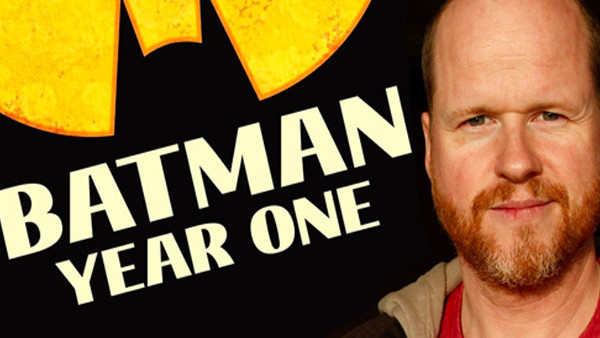
The studio next turned to the Wachowskis, hot off their success with The Matrix, and asked them to tackle Year One. Their vision, which they put together in a treatment that actually was submitted stayed closer to the comic book source, albeit with a change to how Batman gets into vigilante work.
Most other elements from the comic - including some that Frank Miller had rejected, in fact - stayed the same. It would largely have been a sanitised version of the story that would undoubtedly have sold better to younger audiences.
Sadly, the directing duo were quickly tied up when the Matrix sequels were greenlit and Warner Bros turned to Joss Whedon, as the future MCU and DCEU director revealed in 2008.
He said his Year One was similar in tone to Nolan's Batmna Begins, but that his was "a bit less epic" and would have been set more in Gotham City. He also wanted to bring in a new villain, who would have been tied to Wayne's training but would have been more like a Hannibal Lector sort of fiture with Batman learning from him in Arkham. Ultimately it didn't come off and Warner Bros. hired Nolan for Batman Begins in 2003.
2. 2004-1009: The Other Batman VS Superman & Justice League

While DC ensembles became a thing with the DCEU seeking to emulate the MCU, there were TWO projects in the works during the 2000s that almost saw it happen earlier.
First, Batman & Robin screenwriter Akiva Goldsman adapted an old treatment for Wolfgang Petersen to direct as a semi-continuation of the Burton/Schumacher universe at the same time as Aronofsky was still trying to make Year One. His Batman v Superman film would have seen the Joker return and kill Bruce Wayne's new wife, Elizabeth on their honeymoon, leading to him coming out of retirement and going even darker.
Superman would have stepped in to stop him killing The Joker and the heroes would have fought before eventually seeing the error of their ways and teaming up to take down The Joker and Lex Luthor. It was set for release in 2004, but ultimately Warner Bros decided to focus on getting Year One in and developing JJ Abrams Superman: Flyby.
But there was still some consideration for ensembles and as late as 2009, Warners turned to Mad Max director George Miller for Justice League: Mortal.
The plot focused on the aftermath of Batman's creation of Brother Eye - a Skynet-like program that monitors the world's superheroes and tracks how to terminate them, in the event of it being necessary. It was then down to other heroes - Iris Allen, The Flash, Wally West, and Superman to prove him wrong by showing him that everyone can be good.
Armie Hammer was cast as Batman, D.J. Cotrona as Superman, Common as Green Lantern, Adam Brody as The Flash, Anton Yelchin as The Flash (Wally West), Megan Gale as Wonder Woman, Santiago Cabrera as Aquaman, and Hugh Keays-Byrne as Martian Manhunter.
Unfortunately in January 2008, Warner Bros. announced it was on indefinite hold, officially because the script needed work, which was impossible because of the 2007-2008 Writers Guild of America strike. Eventually it shuffled off into Development Hell and was cancelled.
1. 2020? - Ben Affleck's Batman

When Ben Affleck was brought in as Batman, the world had a lot of reason to be excited and on the back of his showing in Batman v Superman, it looked like inspired casting, even if the film wasn't perfect. The idea of him getting his own movie, therefore, was hugely exciting.
Ultimately, after years of speculation and in light of Justice League's failure, Affleck stepped away from the role and the chance of a stand-alone, which he had been hired to write and direct as well as starring in, died.
It was a sad day, particularly as we've subsequently found out about the canned film. According to cinematographer Robert Richardson Affleck's The Batman was going to head to Arkham Asylum to explore Bruce Wayne’s own insanity. The film would have dug into “the darker side of Batman,” which would presumably have delighted DCEU fans.
It all sounds fascinating and it is genuinely a major shame that Affleck was never able to get his project off the ground. Let's just hope that what replaced it - Matt Reeves' The Batman - lives up to expectations.
Which of these alternative Batman projects would you like to see made most? Share your thoughts below in the comments thread.