This Men In Black Secret Will Blow You Mind (For The Worst Reasons)
Men in Black is basically the greatest '90s movie, but its success wasn't shared fairly.

1997's Men in Black is a perfect movie. Whether it's the chemistry of lead stars Will Smith and Tommy Lee Jones, the score by Danny Elfman or Barry Sonnenfeld's wonderful direction, MiB is pretty much the ultimate '90s blockbuster - a gloriously creative sci-fi comedy punctuated by a banging track from the king of summertime himself. The film grossed over a half-billion dollars at the box-office and spawned three sequels (two of them good), an animated series, games, and plenty of merchandise.
Cumulatively, the four MiB movies released to date have grossed over $1.9 billion (according to Box Office Mojo). So why does its production company and distributor, Sony Pictures, insist that the first movie made a loss?
Yes, even though it was made for a reported budget of $90 million, the first Men in Black is apparently yet to turn a profit - strangely, it would seem, to the benefit of the film's studio, Sony Pictures. In numerous ways, Men in Black being a loss-maker is beneficial to Sony, paying off when it comes to taxation and the payment of profit points to creatives involved with its production - one of whom has highlighted the issue repeatedly over the last few years.
It shouldn't be controversial to say that writers are the backbone of the movie and television business. Without scripts, you don't have anything to shoot. Without writers, you get stuff like Transformers: Revenge of the Fallen. And yet, consistently, over the years, writers have been mistreated by the Hollywood studios - exploited, overworked, and undervalued. It's little wonder that fresh strikes are ongoing at the time of recording, with the Writers Guild of America fighting for fair and equitable treatment for generating the ideas that makes Hollywood its billions.
Men In Black's Writer Hasn't Received Any Profit Residuals

But what does Men in Black have to do with all of this? Well, it serves as an unfortunate example of how writers are mistreated by the studio system - something the film's writer, Ed Solomon, has scathingly highlighted on social media. Solomon (who you can also thank for writing all of the Bill & Ted movies), adapted Men in Black from the Malibu comics of the same name, collaborating with director Barry Sonnenfeld to create that ineffable fusion of whimsy, action, and comedy that Jones and Smith channeled so well on camera.
The screenplay for Men in Black is a real thing of beauty - a funny, rapid-fire adventure that provided the ideal basis for Sonnenfeld, Elfman, and effects artist Rick Baker to work their magic and bring that world to life. Without Solomon, there is no Men in Black as we know it today - he was integral to its success.
However, despite Solomon's instrumental role in the development of the first Men in Black, in the last 25 years, he is yet to receive any kind of residual payment from Sony. Solomon has highlighted this over on his Twitter on several occasions, twice in 2019, calling his profit statement "the greatest work of science fiction [he's] ever been involved with." Solomon followed this up with another tweet in 2021 which stated that the film was losing money at a faster rate, "down over $6 million" within a year.
Okay my newest Men in Black profit statement has it losing money at an increasing rate! It’s down over $6 mil this year! At this rate I’ll get my 5% of net profits in 4830 B.C. Seriously, whatever they’re doing with it - which is, I think, nothing - they should really just stop. https://t.co/sNqz5Fzwd9
— Ed Solomon (@ed_solomon) January 16, 2021
Because many contracts stipulate that residuals are dependant on films turning a net profit, this means that Solomon has never shared in the spoils of the franchise he helped spawn, even though the first Men in Black obviously made loads of money, and it would cost relatively little for Sony to pay him.
Men In Black And Hollywood Accounting - Why Net Profits Rarely Materialise
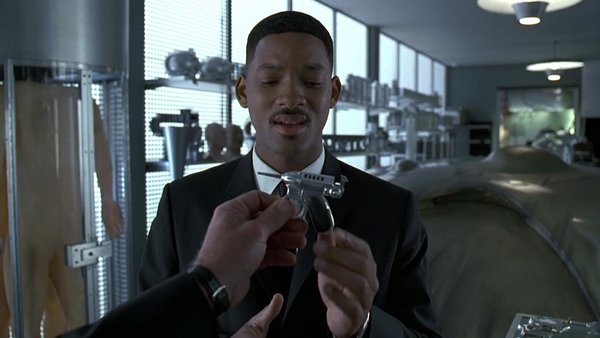
What Solomon highlighted here was the dark art of "Hollywood Accounting", a process where studios creatively twist the numbers to make it seem as if a film hasn't turned a profit. By doing this, they get to avoid pesky things like paying taxes to governments and residuals to creators set to benefit from net profits, thereby keeping more moolah in their coffers. The practice has been going on for decades and continues to deny creators with net points in their contracts a share of a film's success. This is how we end up with the farcical situation where a billion-dollar franchise can still somehow be in the red - as is somehow the case with Men in Black.
Solomon is far from the only creator who has been affected by these practices, which, while legal, are deeply unethical. Darth Vader actor David Prowse famously didn't receive any residuals for Return of the Jedi, while filmmakers Peter Jackson and Sylvester Stallone even took studios to court over alleged profits owed on The Lord of the Rings franchise and four action films - including Demolition Man and Tango & Cash - respectively.
The practice is endemic in Hollywood, and despite public controversy and potential legal challenges, the studios seem quite content to stay the course - partially due to it just being how things are done, but also because of the tax benefits, and the fact few writers have the weight or legal resources to make it an issue in the first place.
Hollywood Accounting - The Summer Blockbusters That Somehow Make No Money
So, what does Hollywood Accounting actually entail? Speaking to NPR in 2010 on the Planet Money podcast, Edward J. Epstein, the author of The Hollywood Economist (which dives into the dark financial arts of the movie business), described the process of said practice and how films can generate millions against a smaller budget and still end up making a net loss.
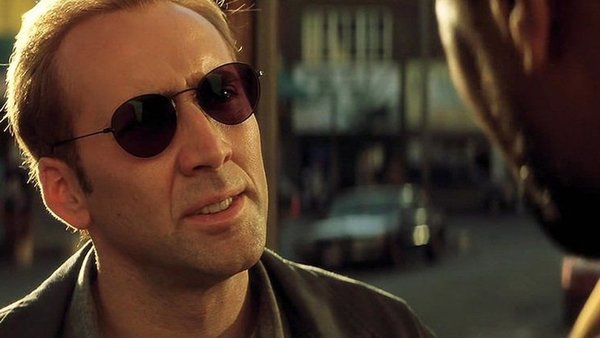
Using the example of Gone in 60 Seconds - a Disney produced car-crime caper which starred Nicolas Cage and Angelina Jolie - Epstein described how, even though the film was considered a success by then CEO Michael Eisner, grossing $242 million against an $103 million budget, according to Disney's own profit statements, that gross was swallowed up by a number of different costs.
As Epstein explains, theatres reportedly kept $129.8 million, and remitted to Disney $101.6 million. $67.4 million went to advertising costs, which when combined with logistics costs and other expenses, apparently brought the total gross profit to $11 million. This apparently led to the movie being $90 million in the red - meaning it has now made a loss. Home media sales and TV residuals apparently do not make up for this either, leading to Gone in 60 Seconds somehow making a $212 million loss, despite a portion of those losses essentially being fabricated, as it's essentially just money the studio has charged to itself.
This is because each movie gets set up as its own company by the studio that is making. That company then pays fees to the company that is already producing the film to begin with. The biggest of these fees is the distribution fee, which tends to be "30-35%" of any sale on that film, be it physical media, streaming, TV showings, or merchandise.
This also creates illusory income - actors receive contracts that include an up-front payment but also payments contingent on net profit. As the hosts of Planet Money describe, an actor's contract may be worth $10 million, but most of that could be comprised of net profits that will never materialise. Epstein argues this is done to guard actor, director, and producer contracts and for agents to protect their value by hiding their up-front salary, but the other consequence is that creatives are denied money they had reason to believe would be theirs, but that the studio never had any intention of paying.
Hollywood Accounting And The WGA Strike - Summing Up A System That Doesn't Work

Actors can potentially go without that contingent income depending on their salary, but for writers who are paid a less significant wage, the denial of net revenue is more egregious. Sometimes movies can - despite the creative accounting - make a net profit too, but this is rare. Studios do also occasionally go back and tip talent outside of the net points system, but it's not a practice that's applied consistently.
This isn't the case for everyone involved in a film's production, of course. Actors, directors, and writers who negotiate "gross" profit contracts as opposed to net points - referred to by Eddie Murphy as "monkey points" for the fact they never materialise - will earn money on the first dollar grossed, meaning they earn on the revenue accrued immediately rather than once the accountants have twisted the books. However, as Telita Snyckers of the British advocacy group Tax Justice Network writes, "while some big-name A-list actors may well be able to negotiate for a share in gross profits, the vast majority of them can’t, and are stuck with only [...] monkey points."
Clearly, this system cannot go on. But the sad thing is that it's likely to persist, especially with the murky territory of streaming denying writers a fair share. As noted in a report by Semafor, the WGA argues that streaming has depressed writer wages due to short-order seasons and companies paying at the lower end of pay-scales while also gutting writer's rooms. On top of this, streaming residuals are paid out at a lower rate compared to traditional broadcasts, despite these platforms generating millions for their respective businesses. The streaming boom may have led to more opportunities for writers, but even with that work on the table, creators aren't being given fair or equitable treatment, which is why strike action has been called.
Hollywood Accounting in itself isn't the main focus of the WGA's ire. More broadly speaking this is a strike on receiving better compensation overall, which does include residuals and better contracts. However, the dark arts that lead to films making a net loss - and thereby deny creators their share of the profits - seem unlikely to be addressed for now. As long as that continues, only a select few in the movie business - big actors and directors - will be able to negotiate better contracts or pursue profits owed. The sad reality is that a lot of talented folks - the Ed Solomons of this world, who give us amazing things like Men in Black - do not have the sway or resources to challenge the system, and get the rewards that they deserve.