The Black Phone Review: 6 Ups & 4 Downs
A strong cast elevates this surprisingly by-the-numbers horror flick.

There's been a considerable lack of major studio horror films released in cinemas since Scream this past January, but after many pandemic-related delays, The Black Phone is finally here to provide genre fans with some welcome relief.
From Sinister and Doctor Strange director Scott Derrickson, The Black Phone adapts the 2004 short story of the same name by Joe Hill (son of Stephen), centered around a kidnapped teenager, Finney (Mason Thames), who uses a phone to interact with his kidnapper's (Ethan Hawke) prior victims and hopefully affect his escape.
While The Black Phone certainly falls a little short of the ecstatic festival hype, it is a solidly entertaining horror-thriller that benefits tremendously from its strong cast and an abundance of mood from director Derrickson.
See it with an open mind and yet without expecting truly revelatory results and you'll likely have a good time, even if you couldn't be blamed for wishing that Derrickson and co-writer C. Robert Cargill pushed things just a little bit further overall.
And so, here's first what doesn't quite work in The Black Phone...
Downs...
4. The Story's Simplistic, Repetitive Execution

There's little denying the inherent creativity of The Black Phone's premise - of a kidnap victim using a mysterious phone within the kidnapper's basement to contact his victims and heed their advice for escaping.
It's a killer idea and one wide open for an imaginative, consistently surprising horror film, and so it's a tad disappointing that this script really only feels like it scratches the surface of the concept's genius.
The interactions between Finney and the prior victims of the kidnapper known as the Grabber don't evolve much beyond simple slivers of advice about the basement he's held within.
The idea of Finney learning from the collective experiences of the Grabber's previous victims is great, but these conversations don't really take advantage of the basement's geography in any particularly interesting or creative ways.
As a result the phone call conceit becomes repetitive rather quickly, and little effort is made to ramp up the urgency or nature of the calls throughout.
Again, this is a great idea for a horror movie, but just lacking the spark that would help take it to the next level.
3. Not Enough Ethan Hawke
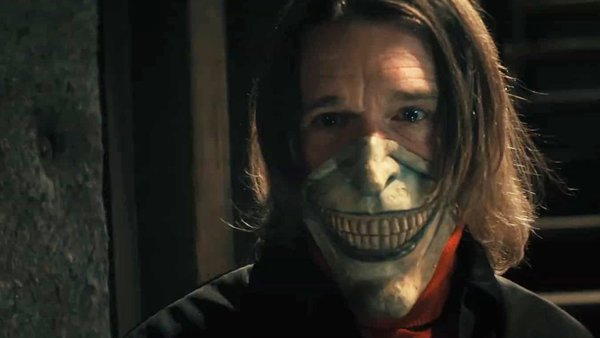
The marketing has quite understandably trained its focus on its single A-list actor, Ethan Hawke, who gives a wonderfully unsettling performance as the Grabber.
However, if you're expecting Hawke to have an especially substantial role in the film, prepare to be left disappointed.
While Hawke devours the screen every single second he's on it, his appearances throughout its 102 minutes are fairly sporadic: he's almost entirely absent from the first act, and disappears for long stretches of time during Finney's various phone calls.
All in all Hawke probably has around 20 minutes of screen time in the entire movie, and while that might be an effective approach when dealing with an effects-heavy supernatural creature, for a flesh-and-blood human antagonist it's a damn shame we don't get to spend more time with him.
2. The Wildly Uneven Pacing
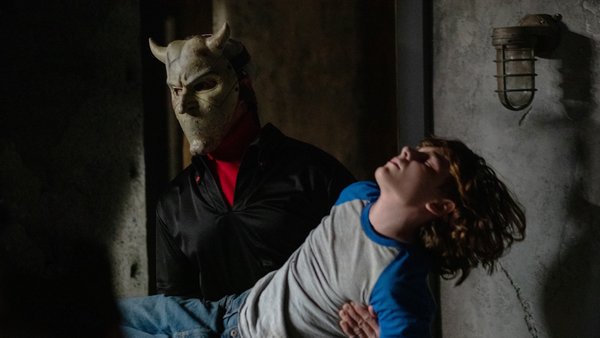
While on paper The Black Phone's 102-minute runtime might sound totally reasonable, it's how you use those minutes that counts, and in this case it's all over the place.
Though the first act provides a sturdy setup, it also feels a little too padded out and overstuffed for its own good, such that we don't actually dig into the supernatural phone concept until the film is getting shockingly close to the mid-way point.
Getting to the dramatic meat quicker and trimming down some of the subplot-related fat - which we'll expand upon shortly - would make this film feel like a much leaner, more efficient genre vehicle.
As it stands the first act is too long and the third act conversely feels a bit rushed. Another editorial pass could've helped smooth over some of these pacing hiccups, even if some issues clearly go back to the script's structure.
1. The Sister Subplot Is A Mixed Bag
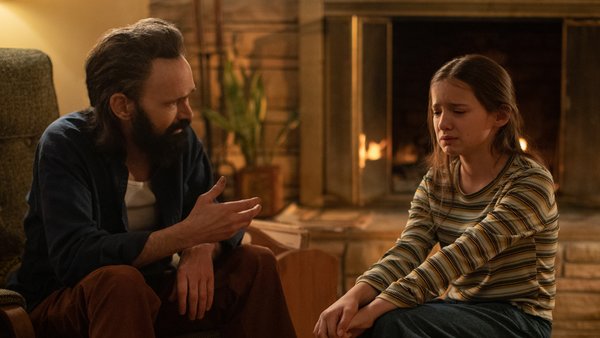
The central kidnapping story is so potential-rich that it's almost a shame we routinely cut back to a subplot involving Finney's sister Gwen (Madeleine McGraw).
Though Madeleine McGraw gives a terrific performance in the film, her supernaturally infused storyline - whereby she experiences dreams of the Grabber's victims - ultimately feels rather half-baked and tacked on.
It smacks of Derrickson and Cargill needing something for Gwen to do once her brother is kidnapped, and yet much of this subplot ends up feeling like unnecessary dead weight.
A horror film more intently focused on the claustrophobia of Finney's imprisonment probably would've worked better, as every time we cut to Gwen's attempts to track him down, the narrative hits a major lull of interest.
If you can accept these issues, though, there's a decent horror flick to enjoy here. And so, this is what The Black Phone gets right...
Ups...
6. Scott Derrickson's Atmospheric Direction
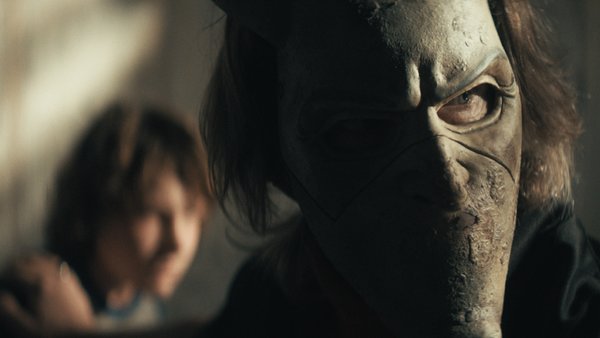
Scott Derrickson's most high-profile work might reside within the Marvel Cinematic Universe, but he cut his filmmaking teeth as a horror director, and as with his 2012 hit Sinister, Derrickson proves himself highly adept at weaving a dread-soaked atmosphere.
Though the vibe of Stephen King unavoidably looms large throughout, Derrickson's keen eye for imposing visuals conveys the bleak isolation of Finney's scenario and also the abject evil of the Grabber's acts.
Aided by Brett Jutkiewicz's grimy cinematography, this is quite the uninviting world we step into - a deceptively sleepy Colorado suburb which harbours a deranged child-killer in its midst.
The frequent use of Super 8 film footage to depict nightmarish visions of the Grabber's abductions is also highly effective, just as it was for the snuff films in Derrickson's Sinister.
If the movie ultimately lacks a little in the suspense department, Derrickson nevertheless ably tightens the screws through his thick stylistic mood, ensuring you'll probably want to take a long shower once this thing is over.
5. Ethan Hawke's Sublimely Creepy Performance

Though his role is ultimately disappointingly small, most everyone will agree that Ethan Hawke gives a remarkable performance as the Grabber.
Though Hawke hasn't played too many outright villain roles in his career - let alone straight-up terrifying murderers - he proves himself a sure natural at it here.
Even while spending much of his screen time hidden behind a mask, Hawke's gravelly voice and physical mannerisms lend the Grabber a skin-crawlingly unpredictable quality.
Hawke is a captivating presence every time he shows up, and though the Grabber remains an enigmatic cipher throughout basically the entire movie, he also cuts an unnerving figure in every single moment.
Hopefully this won't be the last time we see Hawke playing a horror movie villain, because he absolutely knocked the assignment out of the park.
4. The Strong Period Detail
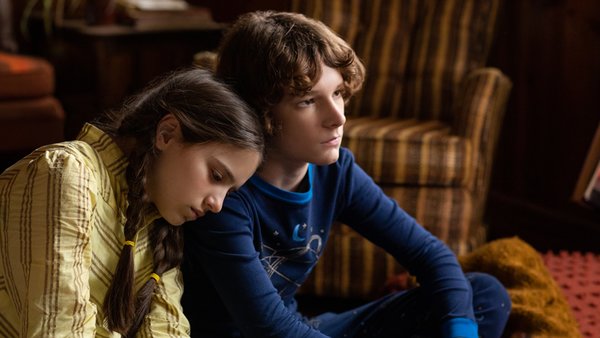
With The Black Phone being set in 1970s Colorado, it's reasonable to expect a certain degree of period detail, and it's clear that Derrickson and his crew made great pains to recreate a distinctive era of suburban America.
Both in terms of its production and its story, The Black Phone evokes its time with persuasive skill.
The production design of the few locations featured throughout - namely the homes belonging to both the siblings and the Grabber - lean hard into nostalgic period decor, as do the characters' wardrobes.
Yet the film feels most of this era in the bones of its script. Derrickson, who grew up as a child of the '70s himself, nails that paradoxically more permissive and terrifying past, where kids were left alone to play in the streets yet had no direct line of communication to their parents in the event of disaster.
The dialogue also convincingly nails the period without going overboard, placing the story firmly in a time and place as distinct as it feels otherworldly to us today.
3. Mason Thames & Madeleine McGraw Steal The Show
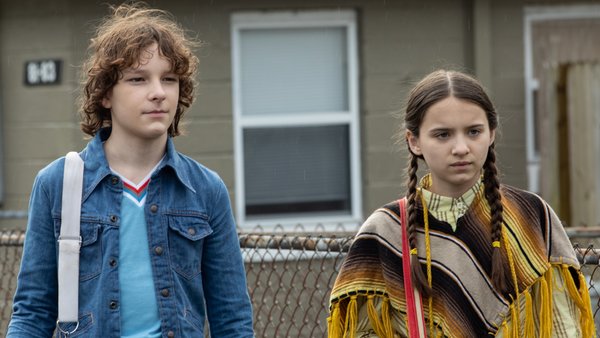
Though Ethan Hawke is the only marquee name here, joint MVP honours ultimately go to the film's two young stars, Mason Thames and Madeleine McGraw, who play Finney and Gwen respectively.
Thames does a stellar job making the embattled Finney an easy "hero" to root for - an understandably terrified but resourceful teenager who avoids doing stupid horror movie things in order to drag the story out.
Yet even when she's trapped in her awkward aforementioned subplot, McGraw proves to be a frequent scene-stealer.
Especially in the early going, her Gwen alternates between hilariously precocious and incredibly sympathetic, the latter due to the physical abuse she suffers at the hands of her alcoholic father (a very good Jeremy Davies).
Trauma might be the big buzzword in horror these days, but Thames and McGraw make their characters feel well fleshed-out even when the script is at its most formulaic and least interesting.
2. It's Surprisingly Funny In Parts
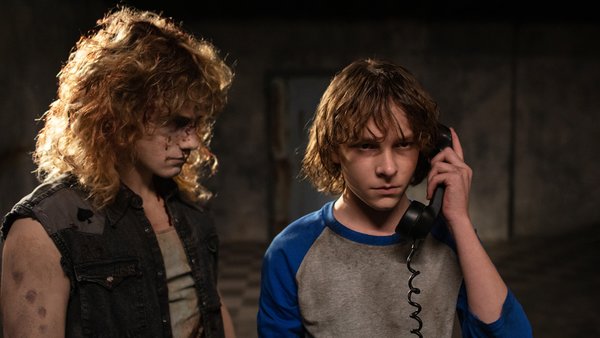
Even with the story's generally downcast vibe, Derrickson ensures to liberally pepper some unexpected comedy throughout.
In the early going this stems from Gwen's cheeky teasing of her brother, and later both Finney's surreal interactions with the Grabber's victims and the aggressive weirdness of the Grabber's own unhinged mannerisms.
Black comedy is firmly the order of the day here, and while you likely won't be doubled over with laughter throughout, there's a decent spicing of mordant humour to prevent things from getting unremittingly bleak.
While comedy could threaten to derail the tone of a movie with a subject this innately serious, Derrickson and Cargill prove once again that they know how to shape flourishes of mood that compliment rather than undermine each other.
1. Mark Korven's Moody Musical Score
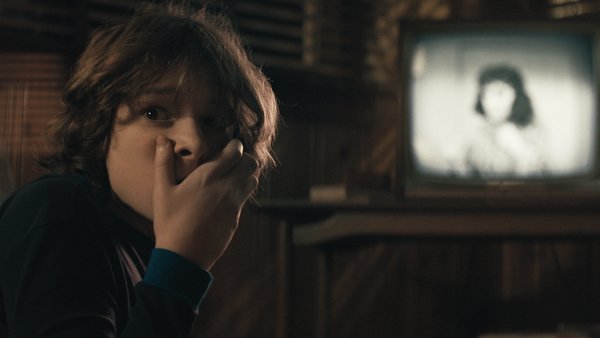
And finally, tying everything together is a pulsing musical score from regular horror movie composer Mark Korven, whose prior genre credits include Cube, The Witch, and The Lighthouse.
Experimental industrial composer Korven makes shrewd use of ticking synths in a manner not entirely unlike the classic scores of John Carpenter, thoroughly enhancing the tension and unease of Derrickson's images in the process.
Korven's finest work in the film is heard during a fantastically ominous opening titles sequence, where grotty Super 8 footage of the Colorado suburb in which the story takes place is set to an offputting, metronomic electronic tick.
His music deserves a wealth of credit for helping elevate moments that, without such a searing soundscape, surely wouldn't hit nearly as hard.