Star Wars: 15 Things The Movies Stole From The Expanded Universe
Kylo Ren, Jacen Solo wants a word.
The genius of Star Wars' success is that from the off George Lucas never let it settle at just as a series of films. Ever since the first movie proved an unexpected hit, there's been a seemingly endless stream of books, comics, video games and other various tie-ins that jumped off from the base space opera to become a massive universe to rival Tolkien's.
But that's all it is, right? A bunch of made-up stories that simply piggy-back on the world of the movies? Well in some ways, yes, but in fact an awful lot of times it also goes the other way; the various filmmakers have looked to the reams of further material and taken the best ideas for the movies, sometimes to strengthen continuity, for others simply because the idea's too good to waste in a specialist sci-fi novel.
The Expanded Universe may have been rendered non-canon to allow for the new films, but its impact can still be felt. Here are fifteen times that the Star Wars movies looked to the massive EU and thought, "That's looks good, I'll have that."
Honourable Mention - Boba Fett And General Grievous Both First Appeared In Cartoons
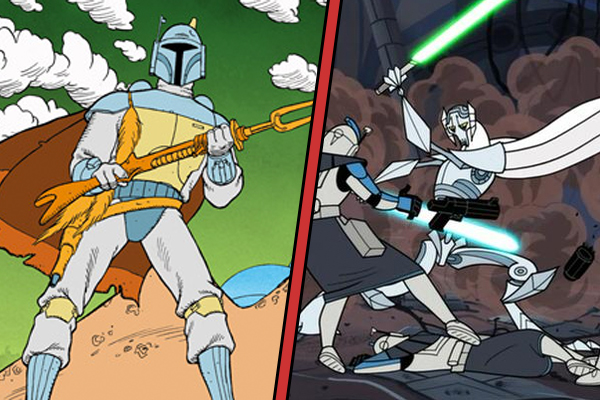
OK, these guys were always intended to appear in movies from conception, but in an attempt to acclimatise fans to two purposely "cool" designs, George Lucas decided to first seed them in expanded universe material, making for some very interesting debuts.
First up, Boba Fett made his entrance in the one passable (if still not great) element of The Star Wars Holiday Special - an animated short where the bounty hunter tried to catch Luke and Han for Darth Vader. He's pretty badass and seems to do more on screen than he did in the later movies.
General Grievous had a similar honour, unveiled in the finale of Star Wars: Clone Wars Season 1 before becoming the main villain for Season 2 (which told the events leading up to Revenge Of The Sith). The Grievous in Clone Wars is a bit different to the movie version, reflecting his gradual behind-the-scenes development - his cape exterior is white instead of black, he doesn't have four arms at first and that cough is nowhere to be heard (a last minute addition had Mace Windu choke the General as he escapes with Palpatine).
15. Double Bladed Lightsabers First Appeared In A Comic In The Mid-Nineties
The one thing everyone can agree on about The Phantom Menace is that the climactic lightsaber duel is pretty damn cool. Now a big part of it is John Williams masterful Duel Of The Fates and Nick Gillard's intense choreography, but, still, a lot of the awesome factor boils down to Darth Maul's double-bladed lightsaber. If you go back and watch the effective teaser for Episode I, it's that unveiling that gives the most chills.
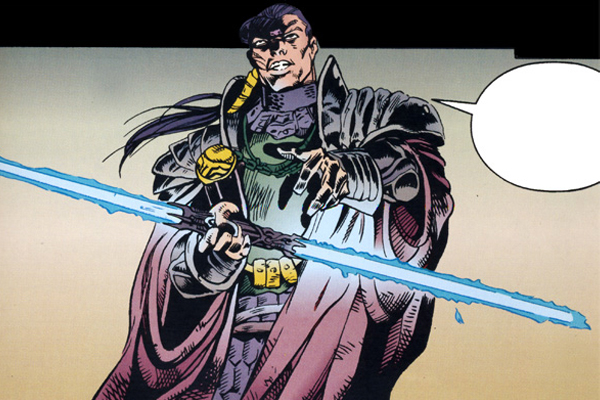
But the prequel trilogy wasn't the first time we saw one of these blades; that was four years earlier in Tales Of The Jedi, a long-running comic that fleshed out the pre-history of the galaxy millennia before the events with the Skywalkers. The invention of Exar Kun, a former Jedi who turned to the Dark Side (and, thousands of years after his death, caused major problems at Luke's Jedi Academy as a Force ghost), the weapon featured a shorter handle and blue blade than the movie version, but is the clear design predecessor of Maul's (in the canon the weapon caught on with Sith, popping up in several other books and games set in the era).
The debutant issue of the weapon - The Sith Lords #3 - was first published in 1995, just around the time that George Lucas was beginning to bring his plans for The Phantom Menace together.
The Expanded Universe featured all manner of blade variations, although none have made it into the movies proper (there was a cross-guard lightsaber previously, but it was different to Kylo Ren's crucifix, and many expected Rey's weapon in The Force Awakens to wind up being a saber-staff though).
14. Coruscant First Appeared (And Was Named) In The Defining EU Book
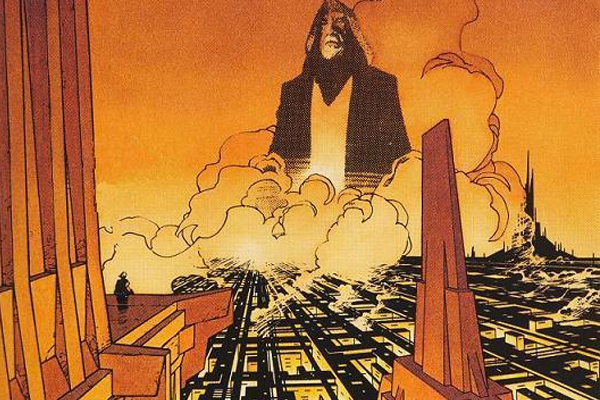
Heir To The Empire is one of the most important pieces of Expanded Universe material ever made. Almost single-handedly reigniting interest among die-hard Star Wars fans and proving to George Lucas there was a hunger for more adventures in that galaxy far, far away, Timothy Zahn's novel continued the adventures of the original three while bringing iconic characters like Mara Jade and Grand Admiral Thrawn to life.
But that's not all. It also marked the introduction of Coruscant. Seriously - although Lucas had ideas of a city-planet capital for the Old Republic, it was Heir To The Empire that first fully realised it and coined the name.
Oddly enough, although The Force Awakens took a lot of the broad ideas of the New Republic from the book as set-up for, one thing it didn't do was keep the capital - the city planet that was destroyed there was in fact Hosnian Prime, a distinction made probably to resolutely distance Episode VII from the prequels.
Various other, more specific elements of the planet were seemingly borrowed from the EU too; the heavily industrial part of Coruscant where Palpatine hides out when in Sidious mode (seen at the end of both Attack Of The Clones when Dooku returns and the site of Vader's surgery in Revenge Of The Sith) is visually similar to the depiction of the capital in the Dark Side ending of Dark Forces II: Jedi Knight.
13. The Jedi Code (And The Jedi Monk Ideal) Wasn't Created For The Prequels
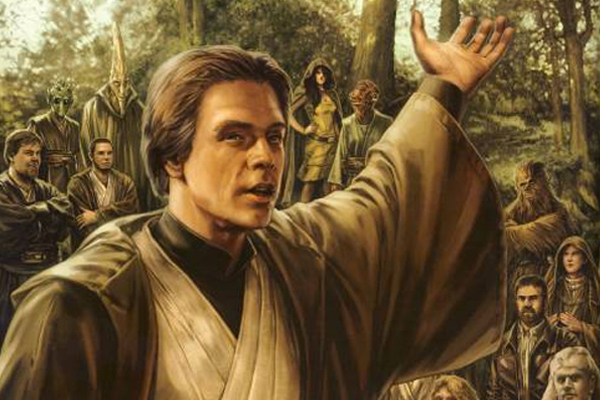
The Jedi Code played a massive part in the prequel trilogy, the rigid rulings on age, relationships and distant compassion eventually building to Anakin's turn to the Dark Side. Its rulings were never stated on screen (they were detailed in various bits of companion material), but the implications were very, very clear; although the exiled Yoda and Obi-Wan had had something restrained and spiritual about them (because exile), the entire Order were close to monks.
That's not some typical George Lucas misguided extrapolation though - the Jedi Code in its pure form comes from the EU.
It too first appeared in Heir To The Empire, a relic for Luke to learn from, and became the backbone of the stories of his New Jedi Order: "Emotion, yet peace; Ignorance, yet knowledge; Passion, yet serenity; Chaos, yet harmony; Death, yet the Force." Again, despite not being recited in the movies, the Code itself and the lessons it taught Luke greatly informed how the Jedi were mapped out on film. Had Lucas not followed this track, and instead gone with his earlier plans of Jedi being something close to crusading knights, then the prequels could have been very different indeed.
The only thing not explicitly in the code, and something that was retconned into it for Episode II, was the no-love clause - there was no mention of Jedi partners until that "forbidden love" story.
12. George Lucas Personally Picked Aayla Secura From The Comics
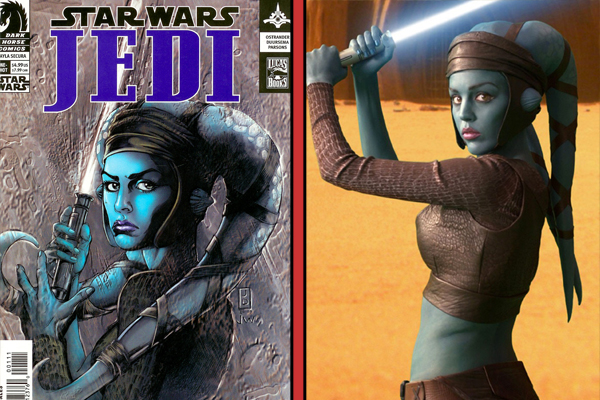
It was always a point of ridicule every character, no matter how obscure, had an intricate backstory in the Expanded Universe. That guy running with an ice cream maker through Cloud City? Why he's Willrow Hood, a technician who played a super important role just of screen. Erm... OK? But there's one minor character where having a convoluted EU story is totally legitimate, because that's where she comes from.
Aayla Secura first appeared in the Star Wars: Republic comic series back in 2000, a young Jedi Knight jetting around the galaxy before the Clone Wars. Her design was so striking that when George Lucas saw some cover art of the blue twi'lek he decided to put her in the next film. Portrayed by ILM production assistant Amy Allen, Secura appeared during the Battle of Geonisis in Attack Of The Clones and had the ignominious honour of being gunned down during Order 66 in Revenge Of The Sith.
It's a background appearance, sure, but she's the most prolific character the make the jump from the EU to the movies, which has gifted her a lot of life post-prequels; she popped up in several episodes of The Clone Wars, something that's unlikely to have happened without the movie endorsement.
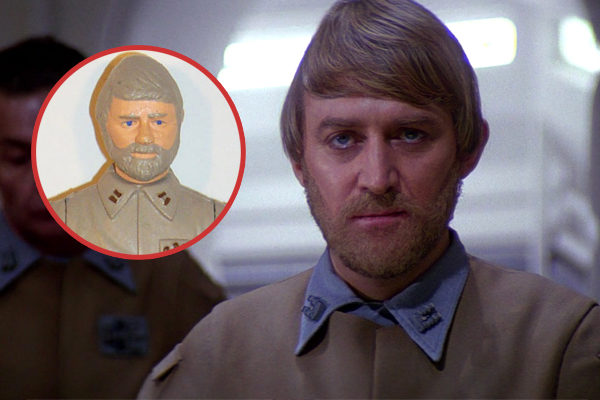
11. General Madine Was Given A Beard Because Of A Toy
Anybody who's seen the Poe Dameron action figure for The Force Awakens probably knows that toy accuracy isn't high on Lucasfilm's list of priorities (seriously, is that really meant to be Oscar Issac?), although it seems that that's more on the toymaker's side than the filmmaker's.
By the time Return Of The Jedi rolled around Star Wars was a merchandising giant, to the point where creating tie-ins began to dominate key development points in the movie (it's highly suspected that was the reason we got the teddy bear-esque ewoks and a second Death Star). There was even one creative decision in the film that wasn't just done with toys in mind, but done because of them.
Crix Madine, the General who briefs the Rebels on Han's strike-team, is notorious for his incredibly obvious fake beard (that was probably made by skinned ewoks). The reason for such a shoddy make-up effect in a movie series known for envelope-pushing visuals was simple - it was realised at the last minute that the action figure Kenner were developing had a beard, and in the interest of giving kids the best possible tools to recreate the movie, the character needed one too.
10. The Prequels' Force Powers Come From Video Games
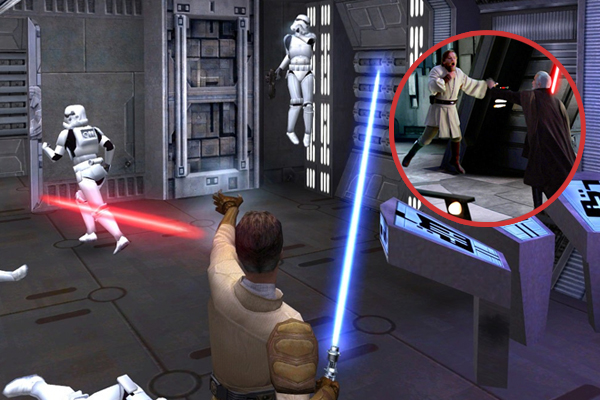
Star Wars almost seems like it was made for video games. An expansive world that by its very design is ripe for further exploration. Vehicles and weapons that defy physics to look and sound awesome. And the Jedi, who are the ideal playable characters. OK, we're yet to get a game that really gets lightsabers right (although Jedi Outcast did bloody well, with a fairly complex swordfighting system that elevated duels above simple hack 'n' slash mechanics), but there's been plenty of successes in giving players the ability to wield to Force.
It's a match made in Lego (or at least its moons). So it's hardly surprising that some of the Force powers in the movies were first conceived for video games.
Force Speed, which Obi-Wan and Qui-Gon used to escape the Droidekas at the start of The Phantom Menace and seem to forget for the rest of the film, had been conceived years previously, popping up in various forms in novels before getting visualised in the sublime Dark Forces II: Jedi Knight. That series also introduced the idea of using the Force to simultaneously lift and choke an adversary, with higher powered characters able to throw their enemies great distances, just like Dooku does to Obi-Wan in Revenge Of The Sith.
9. Quinlan Vos Was Inspired By The Movies, Then Reworked Back Into Them
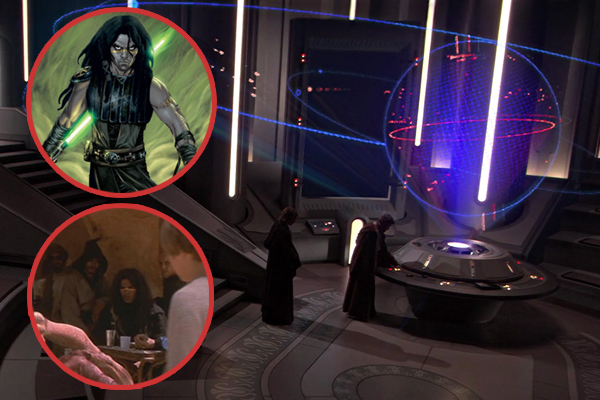
"Saleucami has fallen, and Master Vos has moved his troops to Boz Pity," is how Obi-Wan sums up the Outer Rim sieges to Anakin in Revenge Of The Sith. Just the usual Lucas mumbo jumbo, like "jawa juice" and "bantha poodoo", right? Wrong!
OK, Saleucami is just another made-up planet, but Master Vos is actually a reference to a big EU fan favourite and, Ayla Secura aside (who, incidentally, was his apprentice), the biggest Jedi brought into the movies from the comics: Quinlan Vos.
What's so interesting is that Vos actually originates in design from the movies - he's based on an interesting background extra from Mos Espa in The Phantom Menace, seen when Sebulba tries to kill Jar Jar. His simple look - dreadlocks and yellow eye band - was so striking John Ostrander and Jan Duursema worked him into various comics. He subsequently became so successful that Lucas actually planned for him to have a proper appearance in Episode III on Kashhyk. That never came to pass, but, regardless, having his name make it in still brings the whole thing full circle.
8. Kashyyyk Comes From The Star Wars Holiday Special
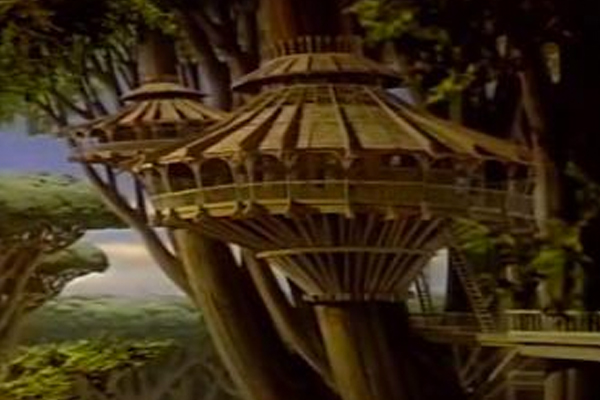
If George Lucas really wants people to forget The Star Wars Holiday Special (out of everything he's done with the franchise, it's the one thing he openly regrets), then he really shouldn't have used it as the introduction of so many important Star Wars ideas; on top of Boba Fett, the TV special also gave the world its first look at the Wookie home planet of Kashyyyk.
Much of what the show introduced about Wookie culture - including the pivotal Life Day - has since been brushed under the carpet like Jaxxon the big green rabbit (look him up), but the design of Kashyyyk itself, with big wooden houses built into towering trees, has remained pretty consistent.
Obviously George Lucas had a very clear idea in his head of Chewbacca's home was from the off and stuck with it throughout the decades. Kashyyyk was originally going to appear in Return Of The Jedi before being swapped out for Endor, but eventually made its way onto the big screen for Revenge Of The Sith, looking rather similar to the Holiday Special.
7. Minor Comic Book Jedi Tsui Choi Has An Even More Minor Cameo In Revenge Of The Sith
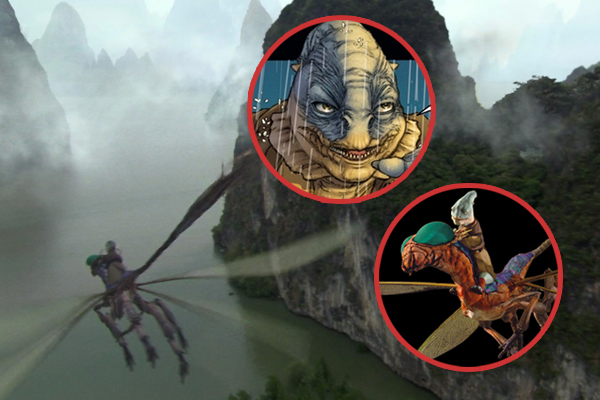
Although Aayla Secura and Quinlan Vos are relatively noticeable inclusions (to fans at least) of Jedi from the EU, there's another, third character who also made the jump from print to screen.
That would be Tsui Choi, a Knight of the same species as podracer Ratts Tyerell (who met an explosive end in Episode I) who appeared in a few issues of the Star Wars: Republic comic run and was later hunted down by a post-transformation Vader. He's seen oh-so-briefly in the first Kashyyyk sequence in Revenge Of The Sith, riding a flying beast as the camera swings through the assembling Republic troops.
This at first appears like an incredibly odd inclusion - Choi is a minor character as it is, and this cameo is barely noticeable even if you're searching for it - but looking into the film's development reveals he was originally set to have a bigger role: sitting on the Jedi Council. When the death of outgoing Jedi Shaak Ti was removed, however, that shifted everything about and he was demoted to Kashyyyk. Poor little guy.
6. A Bunch Of Shadows Of The Empire's Ships Appeared In The Special Editions
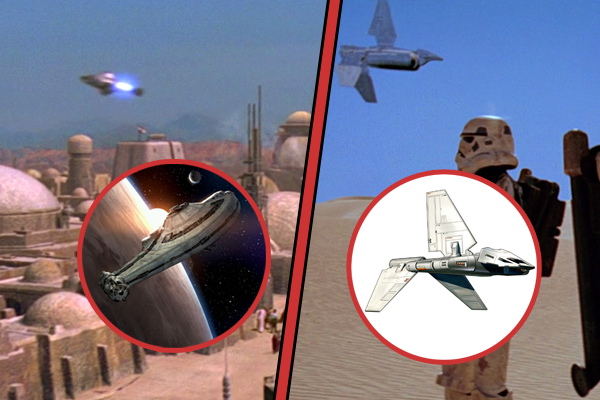
The Special Editions weren't all about Han not shooting first and Jabba having a funky band - there were a lot of other, more minor alterations and additions that turned the original masterpieces into overstuffed irritations. One of the biggest was the addition of a lot of elements from Shadows Of The Empire, the massive multimedia event from the year before that filled in the story gaps between The Empire Strikes Back and Return Of The Jedi (turns out neither Boba Fett nor Luke and co. headed straight to Jabba's Palace).
Biggest of all, the Outrider, the ship of badass Han Solo replacement Dash Rendar which looks exactly like what you'd draw if you were told to make another Millennium Falcon, only cooler can be seen taking off from the now-bustling Mos Eisley as Luke and Obi-Wan enter.
But there's plenty of other video game elements brought across from what was then the biggest new bit of Star Wars since Return Of The Jedi; an Imperial Landing Craft taking off in the expanded desert combing scene, as well as a swoop bike and ASP Droids in some of the unnecessary comedy beats in Mos Eisley.
5. The Mural In Palpatine's Office Depicts The Great Hyperspace War
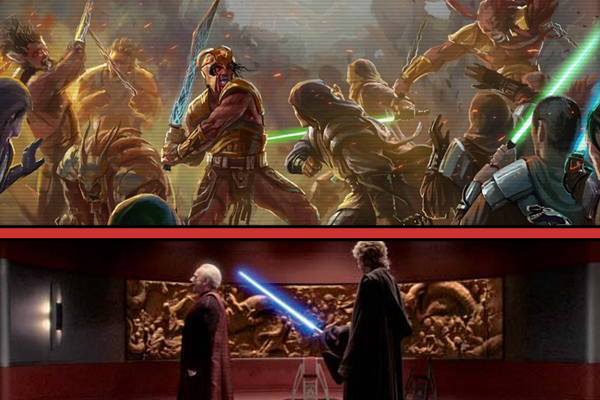
As the Star Wars franchise expands outside of the main movies with a bevy of spin-offs, many fans are clamouring for a movie depicting the Knights Of The Old Republic era. And while that'll be a long way off in Disney's plans (if a possibility at all), that doesn't mean there won't be any Old Republic elements in the movies. In fact, there already are.
The mural in Palpatine's office, where he finally reveals his true identity to a painfully oblivious Anakin, depicts The Great Hyperspace War, a massive conflict between the Sith Empire and the Republic set 5000 years before the main movies told in the Tales Of The Jedi comics. The whole thing went down a millennium before the beloved RPG and its sequel, although it does get namechecked in both and was a distant catalyst for the events of MMO The Old Republic.
George Lucas conceived of the frieze simply as depicting a random historic battle, which led the production designers to taking inspiration from the EU's intricate history. There's some debate over whether it was actually inspired by The Great Hyperspace War or the Battle of Russan (the event where the Jedi believed they killed all the Sith), but the official statement is that it's the former. Either way, it's the canonisation of a pretty big event in the galaxy's past.
4. Lots Of Background Prequel Elements Are Lifted From Droids
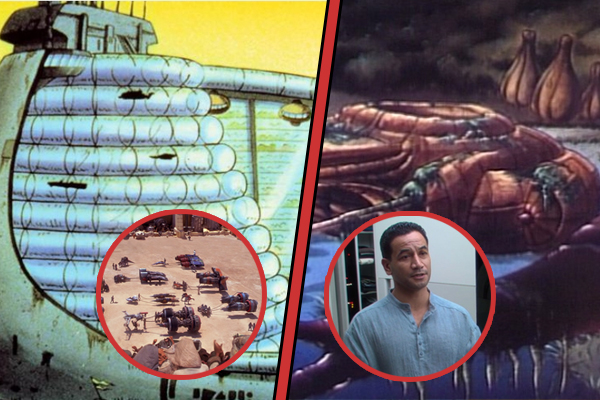
The mid-eighties cartoon Droids was already pretty out-of-step with the Star Wars continuity even before it and the rest of the EU was labelled non-canon. It was, after all, a mid-eighties cartoon; all bright ideas, cheap-ish animation and randomised plots. But that doesn't mean it didn't leave some impact on the movies; a lot names and ideas wound up informing the prequels.
Explicitly there's Bogden, the planet whose moon is where Jango says he was commissioned for the Clone Army, which was visited in an episode, one that also featured a villain called Kybo Ren, which is incredibly close to Ben Solo's assumed title (although the genesis of that may be a merging of Skywalker and Solo, similar to Dark Lord of the Sith).
There's also an awful lot of reused or otherwise appropriated names and ideas. R2-D2 and C-3PO visit the Boonta Speeder Race (the pod-race in The Phantom Menace is the Boonta Eve Classic), a 50s-esque diner owned by a four armed creature (like Dexter Jettster's in Attack Of the Clones), a planet littered with holes in the ground (like Utapau's sinkholes in Revenge Of The Sith) and meet a guy who rides a wheel bike (near identical to Grievous' in Sith).
Given that several names from the show were also lifted for EU expansions of characters (the unlucky podracer Ben Quadinaros' speics, Toong, was first referenced in Droids, as was the surname of Ben Burtt's Phantom Menace cameo character, Baobab), it's likely these come from people on the production crew, working in old ideas in homage.
3. Aurebesh Was Meaningless Gobbledygook Until The Roleplaying Game
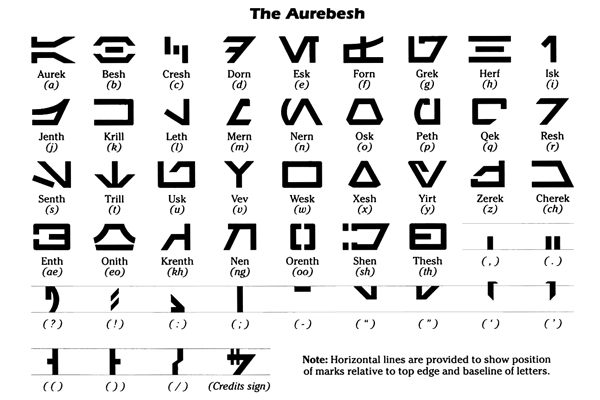
Language in Star Wars is an odd beast. There's various alien tongues of different levels of development - Chewie's roars are pretty much all based on inflection, while Huttese has a pretty comprehensive phrase guide - but despite a rabid fan following none have been expanded to become as in-depth (or obsessed over) as much as Klingon or Elvish.
Maybe it's because it doesn't have as dense enough script; most of the characters speak Basic (English by another name) and the written language is simply a signification of our own. Although that there's an alphabet at all is only thanks to the EU.
In the original movies, the Aurebesh language was meaningless gobbledygook - random symbols to make things all a bit more sci-fi - and sat alongside standard English as well. But The Roleplaying Game in 1987 (one of the biggest expansions of the universe) changed that, coming with a direct signification of Aurebesh symbols to English counterparts.
So, for the Special Editions and later the prequels, Lucas decided to bring in this element, replacing the original English with Aurebesh and ensuring any future appearances of the symbols were now coherent phrases.
2. The Force Awakens Ditches The Force Being Sides
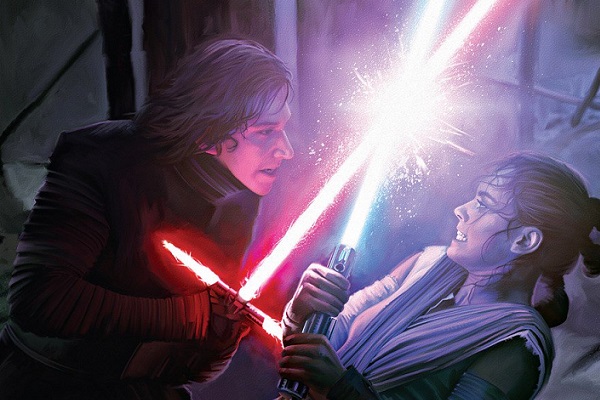
Although it didn't alter the Force anywhere near as much as the other new trilogy starter (in fact, midi-chlorians were shockingly completely absent), The Force Awakens did mess with the status quo of the magical energy Force a little bit.
Besides adding in some cool new tricks to characters' arsenals (Kylo Ren's laser catch and intense mind-invasion tactics were a standout), the whole balance between the Light and Dark Sides (one element from Episode I that did make it through) became a bit more complicated; Kylo Ren fears the sliver of Light in him, while expanded material reveals Rey felt the pull of the Dark during their climactic duel.
Those are fairly new abstract concepts for the films, but not Star Wars as a whole; there's been shades of grey throughout the EU (given the limited Sith, there's a lot of conflicted Dark Jedi). But, beyond that, there's also the complimentary idea of calling them "Light" and "Dark" (sans side); something that's actually pretty new, introduced in The Clone Wars animated series.
1. Kylo Ren Is Basically Jacen Solo
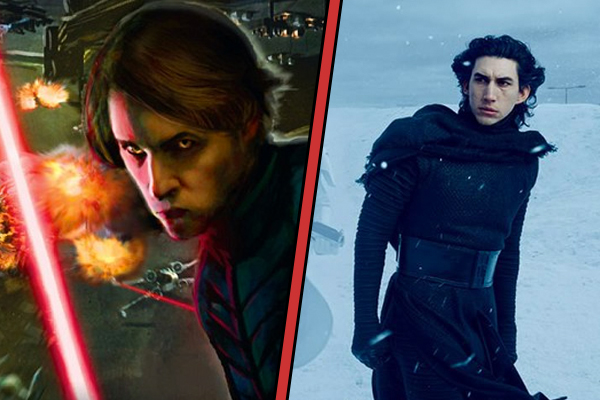
A son of Han Solo and Leia Organa, who is raised to be a Jedi but turns to the Dark Side, taking on an assumed moniker and killing a family member who dies trying to save their son, Ben. What a great character! So great Star Wars has done it twice.
Before Kylo Ren there was Jacen Solo, who's assumed title is Darth Caedus and, among other crimes, murdered his aunt Mara Jade (Ben was her and Luke's son in the EU).
Now it may be simply a case that Han and Leia having kid who follows in the steps of his grandfather is simply too beautiful a narrative development to not use, but the sheer number of parallels and coincidences between the characters mean it's highly likely J.J. Abrams and co. were somewhat influenced by this major EU arc. And who said it was no longer canon?
In the Legacy Of The Force books, where Jacen becomes Caedus, he's only stopped by his twin sister, Jaina. Will Kylo face a similar fate, killed by his sister/cousin/casual acquaintance Rey? Only time will tell.
What other Star Wars movies moments came from the EU? Shout out any more down in the comments.