Spider-Man: Far From Home - 26 Easter Eggs & References Explained
From Shakespeare to Power Rangers, the latest MCU film has LOADS of references...
To date, each entry in Marvel's monolithic Cinematic Universe has featured dozens of Easter eggs and references to other MCU storylines, events and characters from the comics, or even just other aspects of popular culture. As you can imagine, Spider-Man: Far From Home is no different.
The film boasts an array of different nods and winks to not just Marvel's wider properties, but also dozens of other things spanning various mediums, from music, to literature and of course comics and films.
Some boast no major significance at all, while others could yet play a part in the MCU's changing landscape. That last aspect was made abundantly clear in the film's two post-credits sequences, but there are other Easter eggs littered throughout the film that hint at what's to come in Phase Four too.
So, if you were ever at all curious as to the secret origins of Spidey’s new suit, the thematic implications of The Jam’s Town Called Malice or what exactly a Kree sleeper cell actually is, have no fear - all and more will be addressed here.
MAJOR SPOILERS AHEAD!
26. The Bodyguard

Far From Home opens up with perhaps the funniest intro in an MCU film to date, showcasing the multimedia talents of Midtown High's finest with a comic sans-laden tribute to the fallen heroes of Avengers: Endgame.
The song playing over the students' somewhat touching tribute is none other than Whitney Houston's seminal power ballad I Will Always Love You, which she composed specifically for 1992's The Bodyguard.
25. Spider-Man's Trademark... Peter Tingle?!

Anyone at least vaguely familiar with Spider-Man will know his powers. He's super-strong, super agile, and he can stick to walls too, but his most defining trait is his trademark Spider-Sense, an added gift that alerts the wall-crawler to incoming danger. The ability was only vaguely hinted at in Homecoming and Avengers: Infinity War, but it becomes an integral component of Far From Home's story - only with a completely different name.
From start to finish, Far From Home refers to Parker's famous power as his "Peter Tingle". It's an admittedly hilarious rebrand, but one you'd assume is unlikely to stick around in subsequent films.
24. Brad Davis

Far From Home affords more opportunities for the students of Midtown High to get their chance in the spotlight, and one of them is Brad Davis, a student who avoided the blip and has thus gone from being a scrawny twelve-year-old into a high school senior. Remy Hii's character wasn't created specifically for the film though, and a small part of his arc is lifted straight from the comics.
Davis first appeared in Spidey's comics in 1979, primarily as a rival for Mary Jane's affections. He's a high school quarterback who dated MJ while she and Peter had separated, but other than that Far From Home does its own thing with the character.
23. Hydro-Man's Comics Origin
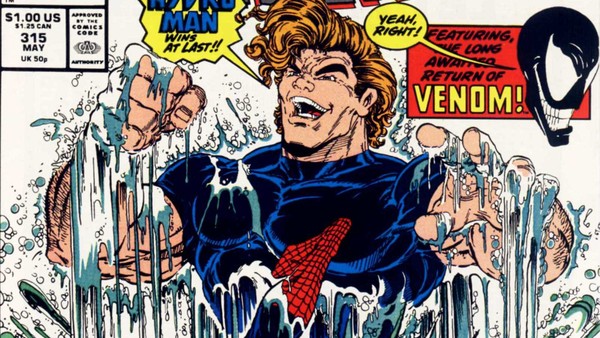
While it's later revealed that all of the Elementals were merely illusions created by Mysterio and his band of disgruntled ex-Stark employees, Far From Home does take a brief second to acknowledge their origins. They do this for Hydro-Man via dialogue with Flash Thompson, who's reading a BuzzFeed article aloud after the monster's attack.
Flash mentions that BuzzFeed claim the real monster was Morris Bench, a mariner who fell into the water while an experimental generator was active, which turned him into the monster.
The significance of that comment comes from the fact that was Hydro-Man's actual comics origin. His real name was Morris Bench, and he became the creature in that exact way in Amazing Spider-Man #315.
22. Heavy Is The Crown

Far From Home manages to sneak in a few literary nods in its runtime, but the most pivotal relates to Shakespeare. As Talos-Fury says, it has nothing to do with Star Wars so Peter doesn't get it, but those familiar with the playwright's works undoubtedly will.
Included with the Edith glasses is a note from Tony that reads as follows, "Uneasy lies the head that wears a crown". As it was in Shakespeare's play, Far From Home uses the quote to discuss matters of responsibility and legacy. Peter is anointed the new Iron Man without his own say-so, and it's a burden he struggles to carry for the entire feature.
21. Flash's Love For Spider-Man

Flash Thompson loves Spider-Man. He also hates Peter Parker. It's kind of hilarious.
Tony Revolori's version of the character is a far cry from the boneheaded jock of Stan Lee and Steve Ditko's comics, but he's retained a distinct feature of his comics counterpart in the film - his admiration for the web-slinger.
In the comics, Flash develops such a love for Spider-Man that he eventually enlists in the US Army, hoping to emulate his hero. He later became Venom, but it's unlikely that MCU Flash's hero worship will go any further than the occasional live stream and odd comment.
20. The 'Multiverse'
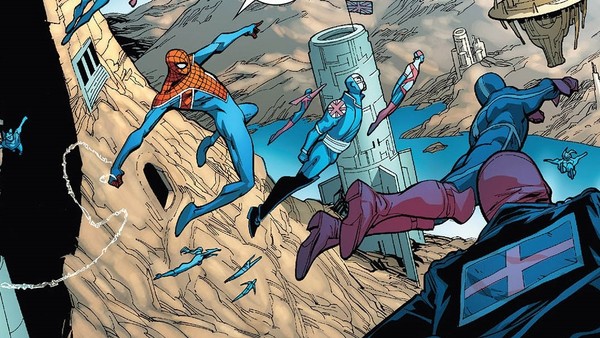
Mysterio may have fooled everyone with his tales of a multiverse full of different Earths, but the door is by no means closed on such a scenario. With the Quantum Realm still a thing and multiple timelines confirmed with Endgame, the door is well and truly open for some Spider-Verse shenanigans to occur in the future.
Either way, when Quentin Beck first meets Spider-Man he brings him up to speed by telling the story of his alternate Earth. He claims to hail from Earth-833, while the MCU is said to be 616. Naturally, these numbers hold a great deal of significance.
In the comics, Earth-616 is the number used to denote the 'main' Marvel continuity. The MCU's actual designation is Earth-199999, which should've maybe clued us in on Beck's story being a lie in the first place.
There is one other interesting thing to note though. Beck claimed he came from Earth-833, which was home to Spider-UK (a version of Spidey who was also Captain Britain). That Earth actually did end up getting destroyed however, thanks to the Incursion events following Jonathan Hickman's Secret Avengers.
19. The Elementals
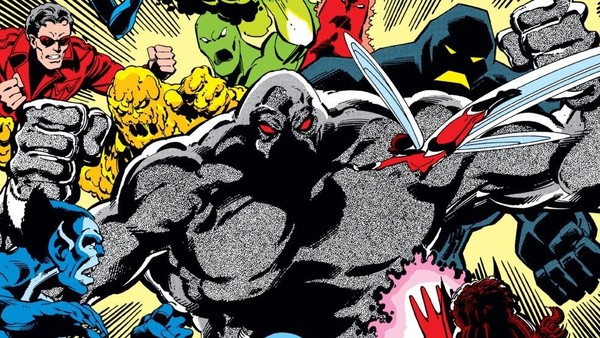
The MCU's Elementals might've all been illusions, but they for sure existed in the comics. Only in a completely different way to how they were depicted here.
The Elementals of Far From Home are all actually based on several Spider-Man villains. The first monster in Mexico is Sandman, the one seen in Venice is Hydro-Man, and the fire-demon in Prague is none other than Molten Man. All have fought Spidey in the comics, but never under the Elementals banner. No - they were a different group altogether.
The Elementals in the comics are not to be confused with another group, called the Elementals of Doom. However, it is the latter that line up more closely with what is seen in Far From Home, with them originally being named Air, Water, Fire and Earth respectively.
18. The Black Dahlia
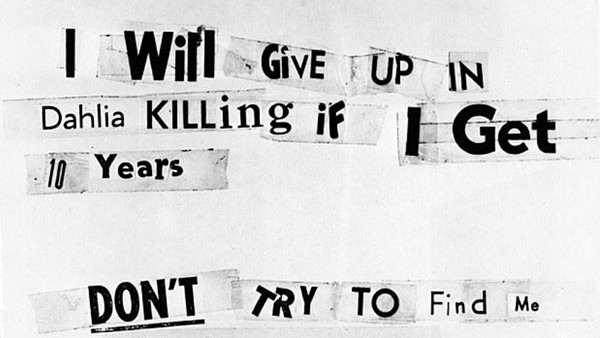
Zendaya's MJ is a big fan of history, or more specifically its darker aspects. She lists off all sorts of interesting and somewhat disturbing details of Europe's past during the trip, and Peter's plan to reveal his feelings to her revolves around a particularly grim event - the Black Dahlia murder
Michelle's favourite flower is the Dahlia because of its association with the death of Elizabeth Short. A little grim, sure, but hey - there are definitely worse interests to have.
The Black Dahlia murder occurred in the city of Los Angeles in 1947. Short was given the nickname by the press in light of The Blue Dahlia, a noir film that had released a year prior.
No suspects were ever convicted for Short's death, but its grizzly nature has ensured it's been immortalised in pop culture ever since.