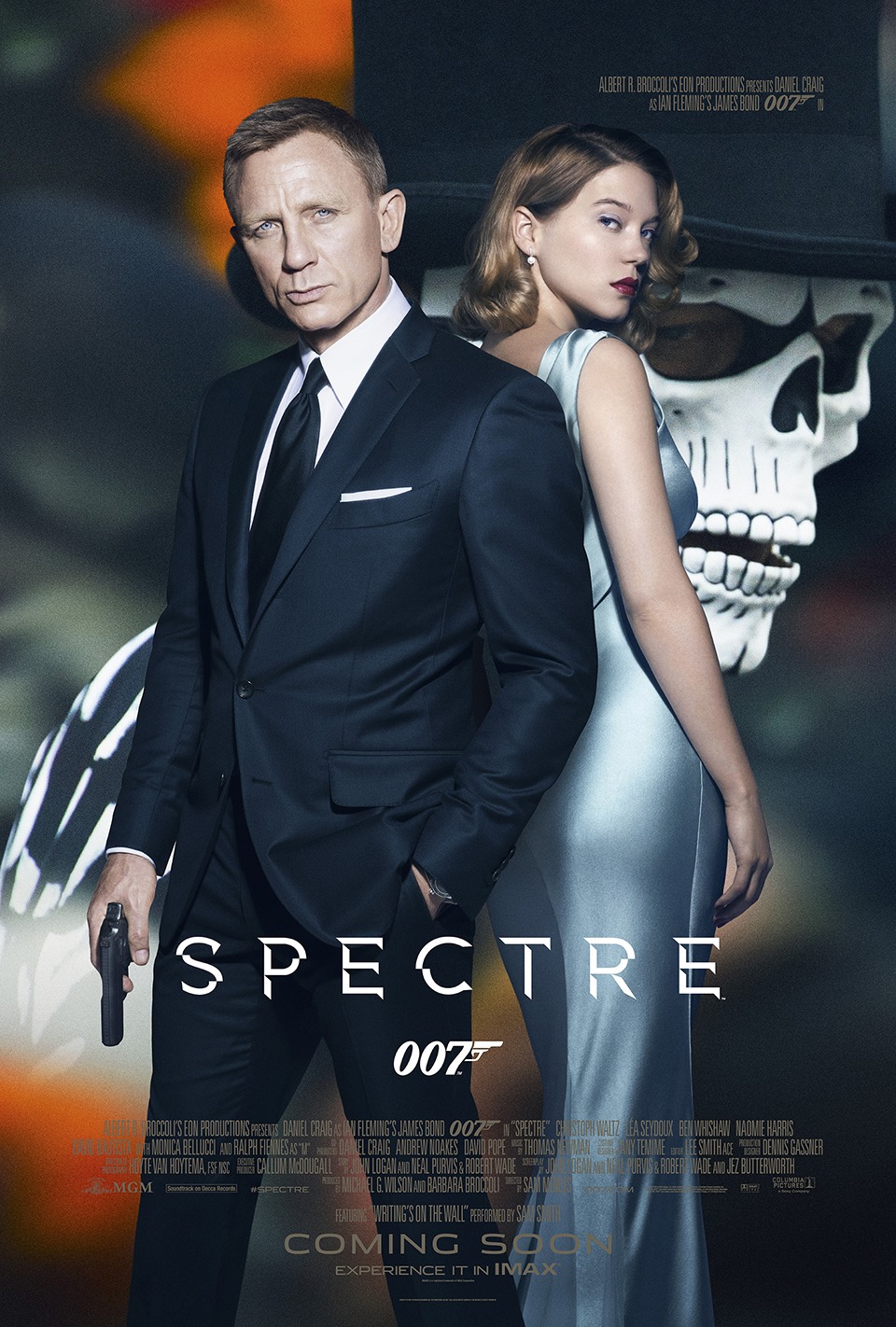
https://www.youtube.com/watch?v=7VAkbrykUHU Rating: Skyfall was the best Bond film yet. Exciting yet smart, stylish yet rugged, old yet new, it was simultaneously a thrilling entry in the fifty-year-old franchise and a dissection of what that franchise really was. How do you top that? Short answer? You don't. Now, Spectre isn't a bad film. It just isn't really a great one. Whereas its predecessor was a truly brilliant movie that happened to be a Bond flick, this is a solid Bond outing in an average movie; if it's anything to go by, we're back to the pre-Craig status quo, where Bond is never truly great, but for the faithful sure can be a lot of fun. Regardless of expectations, the biggest problem with Spectre is being a follow up to Skyfall. Quantum Of Solace has already shown that sequels don't work for Bond, yet here, only two entries on, we have another film whose plot is motivated by various loose threads from the previous one and now also takes plenty of time to remind us throughout about antics from across Craig's tenure. It's an unnecessary attempt to add weight though iconography (something naming the movie after Bond's most famous foe kick-started) and seems to be used here purely as an excuse for Spectre to not add much depth itself.
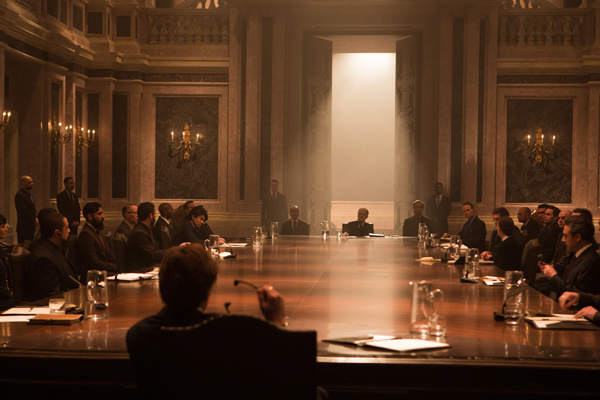
But that's just the start of it. A more ruinous franchise issue is in what Spectre's trying to do; for all its action and referencing, at its heart the film's asking the question, "Is Bond relevant?" Which is exactly what Skyfall asked. And what Casino Royale was jumping off from. And probably played a part in Quantum Of Solace (I don't really remember or care about that one). An entire subplot is dedicated to this idea, while the whole mentality of Bond, repeatedly called an assassin (don't think the Civil Service Fast Track schemes put that in the job description), centres on the moral and personal logic of what he does. Nice idea, but not only has it been done through to completion before, but the handling here is very choppy, as if the finished script had dialogue exchanges musing on the finer things shoved in at random intervals days before shooting. What Spectre does advance from the previous films, doubling-down on an element that Skyfall briefly flirted with, is levity. There's been a lot made (both positively and negatively) about how serious Craig's tenure has been and, like Nolan with emotions in Interstellar or Whedon with saving civilians in Avengers: Age Of Ultron, Spectre tries to correct that prominent issue. The opening half is full of great gags, quips and winks that create this wonderful mesh of 2010's filmmaking and 1960's sensibilities (something the unique score really accentuates), even if it sometimes manifests in odd places - there's a bizarre diversion during the Rome car chase for some slow-paced, jokey Fiat 500 product placement. This is a ridiculous Bond in a classic sense, at the start fully delivering on the promise of Skyfall's "back to work" final scene. There's an evil organisation infecting its way into power of the entire world through maniacal means that is quite literally obsessed with Mr. Bond, who only has his wit and some vaguely-grounded gizmos (bonkers even if not from Q branch) to bring them down. If you've longed for some Connery-style silliness or Brosnan-esque contrast of ideals, then you're in luck here. And, if not, Spectre still errs on the side of grit, allowing these moments to slot nicely into the slightly more offbeat tone of the film. Well, until it's all dropped for a kinda more serious second half. For the second half of the review, click next. Take Spectre away from the Bond context (which is harder to do with the long-running 007 series than with any other franchise) and it's just not that great a movie. The plot zips along from one grand set piece in an exotic location to another without ever really clarifying why we're going there or, more importantly as the film veers into what's meant to be a game-changing final third, why the characters are developing the way they are. For all the attempts at deep thinking, it soon becomes apparent the narrative is just filling in the cracks between those more high-octane and visually resplendent beats. That action is good and mostly well-framed, but lacks consistent tension and a sense of narrative momentum (or goes too far the other way and just has exposition doled out in the middle). The sequences are odd experiences, with the audio setting for the fights either naturalistic or booming music, neither of which work as well as intended (although the thuds and cracks that accompany Dave Bautista's Mr. Hinx are spine-tingling and add to the wrestler's already imposing screen presence). Not necessarily bad, but rather confused. There is a lot to like though. The cast is impeccable, especially Lea Seydoux as Bond girl Madeline Swann and Christoph Waltz as Franz Oberhauser (although the latter does insert lashings of Hans Landa giddiness into his role for some reason); their characters are pretty one-dimensional thanks to the jumpy storytelling, but the actors provide enough emotion and grounding when it matters. Also, a big shout out to Ben Whishaw and Ralph Fiennes as Q and M respectively, who once again bring balanced takes on the eternal figures. Oh, and there's Daniel Craig as Bond. He may appear exhausted with the character (or perhaps just Spectre's gruelling production), but on screen he's suave, cutting and capable (and still able to sell some of Bond's creepier moments). If there's one place where all that repeated introversion works, it's in his performance - this is a personal story for James and Craig has the chance to remind everyone there's a man behind those digits. It's the individual moments of genius that really stand out though - a jaw-dropping opening shot, a tense meeting of the eponymous organisation in Rome, a scene where a Bond girl does the most un-Bond girl thing imaginable - and give a genuine, Bondian thrill. This is Sam Mendes flying high and giving fans (either of Bond, his movies or action cinema in general) what they want. But, like multiple flying vehicles in the film, everything must come down, often in explosively spectacular fashion. Frankly, the 21st Century Bond formula is wearing thin. Neal Purvis and Robert Wade have written every entry in the series since The World Is Not Enough and their tropes are becoming increasingly transparent and invariant: we have an opening sequence that's fun, but also slavishly setting up the plot; Bond is somehow exiled or otherwise detached from the MI6 fold and must go it alone; the villain pops up much later than expected and has a scheme that, while complex at first, is really dependent only contrivances and plot holes if you over think it; and through all this a subplot questions the relevance of 007 before making the obvious conclusion. That's been the blueprint for every one of Craig's outings and, while how it's executed varies from film to film, it's restrictive even by the usual Bond checklist. Spectre is in the mid-range thanks to the strong actors and, in particular, Sam Mendes, but even those talents can't overcome the rushed, regurgitative script. But oh well - this is Bond. Every time we get a lacklustre entry we just brush ourselves with an air of cool and look to the future. And, if the "one good, one bad" model keeps up (as it has now since Dalton), then Bond 25 should be awesome. Spectre is in UK cinemas from October 26th and US cinemas from November 6th.