20 Devastating Oscars Moments Hidden In Plain Sight
The quietly crushing Academy Awards moments you need to know about.
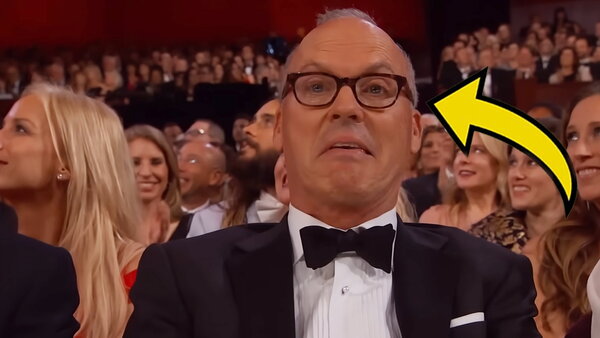
The Academy Awards is the Super Bowl of Hollywood - the night where the supposedly best films of the year duke it out for the biggest honours the film industry has to offer.
It can be a hugely exciting, even life-changing night for those who win awards, but the intense, high-pressure nature of the live ceremony broadcast can also be anything but joyous.
And while there have been many public-facing disasters at the Oscars, what about those more subtly devastating moments that are instead hidden in plain sight?
That's absolutely the case with these 20 Oscar heartbreaks, which weren't immediately apparent to everyone watching and perhaps only received their full context days, weeks, months, even years after the fact.
No matter what these Oscar moments might seem like at face value, there was plenty more going on that only the most eagle-eyed of viewers picked up on - and even then, perhaps not.
And so, as the 2026 Oscar ceremony fast approaches, be mindful that the Oscars are as much an emotional minefield as they are a celebration of elite filmmaking...
20. Liza Minnelli Gets Cut Out Of Iconic Oscar Selfie
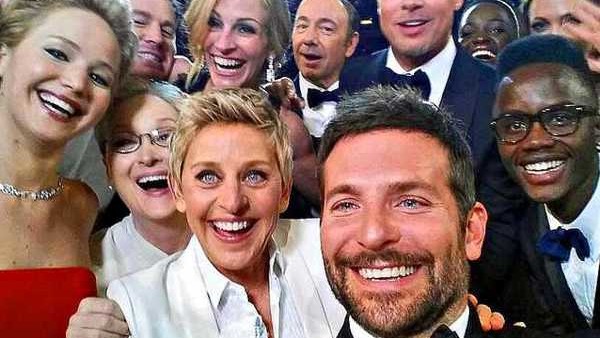
One of the all-time most iconic Oscar moments is the Oscar Selfie, when at the 2014 ceremony Bradley Cooper took a selfie including host Ellen DeGeneres, Angelina Jolie, Jennifer Lawrence, Jared Leto, Lupita Nyong'o, Brad Pitt, Julia Roberts, Kevin Spacey, Meryl Streep, and Channing Tatum.
By the end of the Oscars broadcast, the selfie became the most retweeted tweet in history, even causing Twitter to crash due to the traffic load.
And though it remains a fondly remembered Oscar moment to this very day, the picture doesn't tell the full story, namely that one legendary actress was left cut out of the iconic photo.
A reverse angle posted online shows that the indelible Liza Minnelli was at the back of the group shot, but due to her short stature and the physical limitations of Bradley Cooper's reach, she sadly didn't make it into what instantly became one of the most famous photos ever taken. Boo.
19. Jennifer Aniston Presents An Oscar In Front Of Brad Pitt & Angelina Jolie
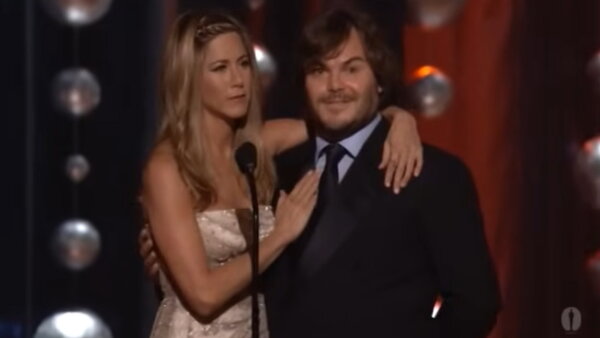
At the 2009 Oscars, Jennifer Aniston and Jack Black presented the awards for Best Animated Feature Film and Best Animated Short Film, and if you thought that Aniston seemed a little nervous and off her game while on stage, there's probably good reason why.
The occasional cuts to the crowd showed that Aniston was in the direct sight-line of her ex-husband Brad Pitt, along with the woman he left her for in 2005, Angelina Jolie.
And so, one couldn't really blame Aniston for being a little thrown off, with body language experts even pointing out that she seemed desperate to get off the stage.
Doing live TV is tough enough, but doing it in front of your ex and the star he left you for? That's a whole other level.
Thankfully Aniston and Pitt seem to be on far better terms today, per their cute reunion at the 2020 Golden Globes.
18. Warren Beatty Is Blamed For Best Picture Screw-Up
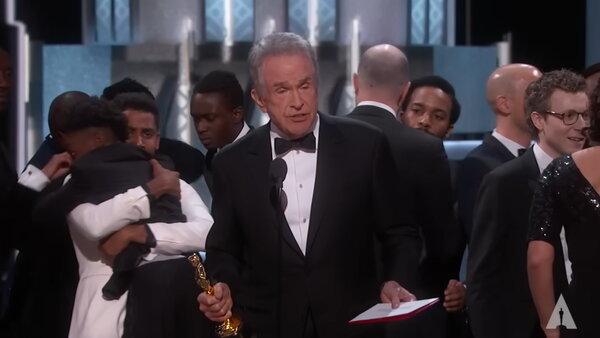
One of the all-time most infamous Oscar moments occurred in 2017 when the Best Picture winner was incorrectly announced.
Warren Beatty and Faye Dunaway presented the award, and after briefly hesitating, announced La La Land as the winner.
But a few minutes later, while La La Land producers were giving their acceptance speeches, the stage was flooded with crew members frantically collecting envelopes, as it transpired that the wrong name had been read out and Moonlight had in fact won Best Picture.
Beatty tried to explain to the audience that he'd been given the wrong envelope, though in the immediate fallout many online simply blamed Beatty, seemingly amid the belief that the then-79-year-old actor made a senior mistake.
An investigation later revealed that PricewaterhouseCoopers, the accounting firm for the Oscars, accidentally gave Beatty the backup Best Actress envelope, hence him and Dunaway announcing La La Land as the winner.
The accountant who gave the envelope to Beatty, Brian Cullinan, was later criticised for using social media during the event despite being instructed not to, some believing this to have played a part in the mistake.
Though PwC promptly issued an apology to all involved, for the great many who didn't stick around for the aftermath, they wrongly dubbed Beatty a doddering old man and swiftly moved on.
17. Living Person Included In 2017 In Memoriam
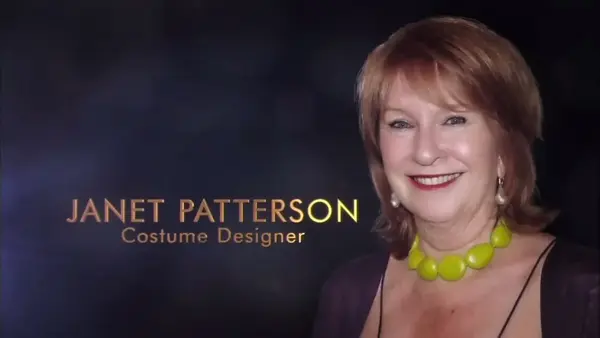
The In Memoriam segment is a classic staple of the Oscars, where we take a brief break from all the glitzy shenanigans to remember Hollywood's most prominent cast and crew who've passed away over the last year.
And while the show regularly gets dinged for excluding beloved talents, in 2017 it caught flak for an altogether stranger and more horrifying reason - including someone who wasn't dead.
When honouring four-time Oscar-nominated costume designer Janet Patterson, the screen instead showed an image of a different woman - Australian producer Jan Chapman, who is still very much alive.
Beyond the horrified confusion that anyone who knew either Patterson or Chapman probably felt, the two women were also close friends, with Chapman later issuing a statement that she was "devastated" by the use of her image in place of Patterson and found the error "very disappointing."
While it might seem like a darkly amusing mix-up to the layperson, to anyone who knew the two ladies it probably wasn't quite so funny.
16. Will Smith's Slap Hijacks The Night

How many Oscar moments prove so shocking that they have their own Wikipedia page?
At the 2022 Oscars, Will Smith infamously took the stage and slapped host Chris Rock in the face for making a joke about his wife Jada Pinkett Smith's shaved head - a result of her suffering from alopecia.
The insanity of an Oscar nominee - and eventual winner later that night - assaulting the host is one thing, but the wider, mostly unspoken tragedy of The Slap is that it basically derailed the rest of the night's proceedings.
After all, how many of us can remember which film won Best Picture that year?
It was CODA, by the way, but the underdog drama's against-the-odds victory was entirely overshadowed by Smith's act, which itself is destined to be remembered until the heat death of the universe.
The fact that CODA and all of the night's post-slap winners became a historic footnote behind Smith's scandalous conduct is the real shame of it all, honestly.
15. Henry Fonda FINALLY Wins Oscar, Too Sick To Attend
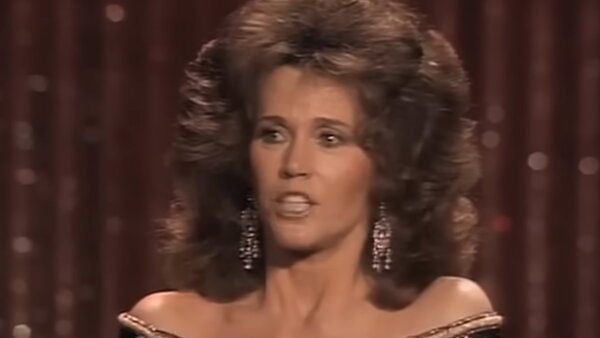
At the 1982 Oscars, the legendary Henry Fonda finally won the Best Actor Oscar for his performance in On Golden Pond - the culmination of almost 50 years of iconic acting work.
Sadly, though, the award came late enough in Fonda's life that he was too ill to attend the ceremony, leaving his daughter Jane to collect the Oscar on his behalf.
Jane gave one hell of an acceptance speech for her father, spending most of it commending the cast and crew of On Golden Pond, enough that the unlearned observer might not even know why Henry Fonda wasn't at the show in person.
In reality, he was stricken with both prostate cancer and heart disease, the latter ultimately causing his death barely four months after the Oscar ceremony.
Jane's acceptance speech remains an all-timer, even if it's suffused with the heartbreaking knowledge that it was for her father's final role shortly before he died.
14. Eight Categories Are Given Off-Screen In 2022
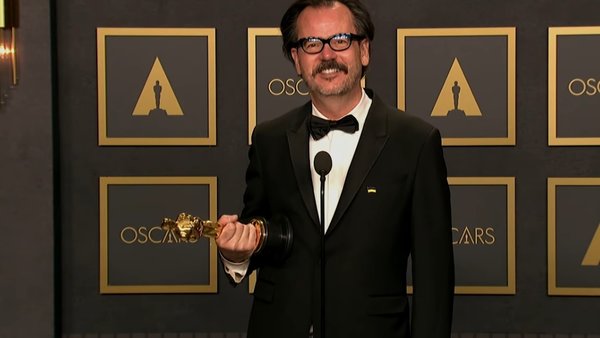
For years many have complained about the excessive runtime of the Oscars, and in a misguided attempt to combat this in 2022, producers decided to give out eight awards before the main show.
This included categories such as Best Film Editing, Best Original Score, and Best Sound, alongside all three short film awards, and was met with considerable ire from both Oscar fans and high-profile Academy members such as Steven Spielberg.
The decision was apparently made due to pressure from ABC executives to shorten the show's runtime while making more room for comedy skits, film clips, and musical numbers.
Despite considerable protest over the decision, the eight awards were indeed given out off-screen as planned and ultimately only briefly featured in a montage during the show proper.
Given that Dune, which both won the most Oscars and was the highest-grossing Best Picture nominee that year, received half of the eight sidelined awards, it seemed even more egregious.
And on top of this, the show still ended up clocking in at 3 hours, 40 minutes, running longer than the three prior Oscar ceremonies. Thankfully, at least, the outrage was vocal enough that ABC relented and restored all these categories to the main show the next year.
13. Hattie McDaniel Wins Historic Oscar In A Racially Segregated Ceremony
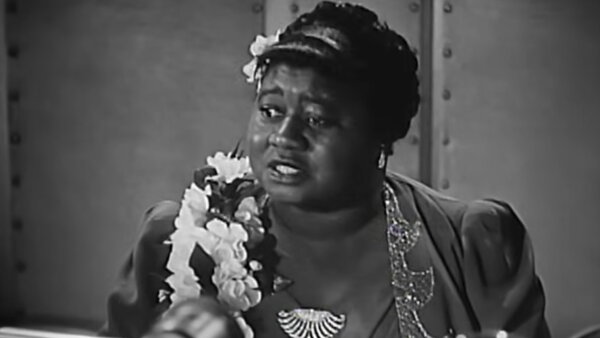
Hattie McDaniel became the first Black woman to win an Oscar of any kind in the 1940 ceremony when she won the Best Supporting Actress award for her unforgettable performance as Mammy in Gone with the Wind.
And while this was an undeniably triumphant moment for McDaniel and an important awards milestone of representation, there's a rather depressing asterisk added to McDaniel's win that night.
The 1940 Oscars took place at the Ambassador Hotel in Las Vegas, which had a strict segregation policy at the time, forcing McDaniel to sit at a table at the back of the room by herself, away from her white co-stars.
McDaniel nevertheless gave an emotional acceptance speech and her win remains a storied one to this very day, even if there's a distinct, tragic irony to McDaniel making history all while being prevented from sharing the night with her fellow cast and crew.
12. The Infamous Snow White Number Ends A Producer's Career
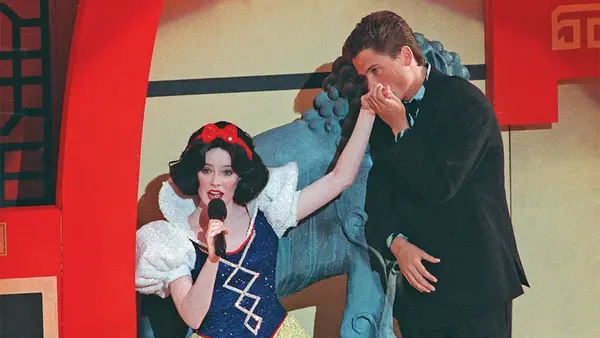
The 1989 Oscars went down in flames in record time by featuring what remains the consensus-worst opening number in the show's history.
The brutal 11-minute sequence is an elaborate song and dancer number revolving around Snow White, portrayed by actress Eileen Bowman, as she arrives in Hollywood.
It's got terrible costumes, a bunch of ageing celebrities being trotted out (even Vincent Price!), and a duet between Bowman and Rob Lowe where they sing a reworked version of Creedence Clearwater Revival's "Proud Mary." Sure, why not?
And while this number was an undeniable car crash the likes of which the Oscars hasn't witnessed before or since, it had a lifelong impact on the career of producer Allan Carr.
The relentless criticism of the 1989 opening was so vocal and sustained that not only was Carr replaced as producer for the 1990 Oscars, he never produced another film or theatrical show.
And to make matters worse, Carr died barely a decade later without mounting any sort of redemption story.
11. It Takes 92 Years For A Non-English Language Film To Win Best Picture

2020 marked a major milestone for the Oscars as it was the first time that a film not in the English language won the Best Picture award, with the gong going to Bong Joon-ho's brilliant black comedy Parasite.
And while it was an undeniably triumphant moment for film lovers, the fact that no other non-English language film had ever won Best Picture - and, a few years later, still hasn't - seems positively outrageous.
More to the point, Parasite was only the 12th non-English language film in the Oscars' 92-year history to receive a Best Picture nomination. How depressing is that?
One can't help but remember Bong Joon-ho's brilliant Golden Globes acceptance speech earlier that year where he said, "Once you overcome the one-inch-tall barrier of subtitles, you will be introduced to so many more amazing films."
There are so many incredible international films which would've been superb Best Picture winners - Crouching Tiger, Hidden Dragon, Letters from Iwo Jima, Roma, and Anatomy of a Fall - to name just a few of the ones that have actually been nominated for Best Picture.
Though we've seen considerably more international films be nominated for Best Picture over the past decade as the Academy has widened its voting pool, hopefully we won't be left waiting too long for one to follow in Parasite's footsteps.
10. John Wayne's Haunting Final Oscar Appearance
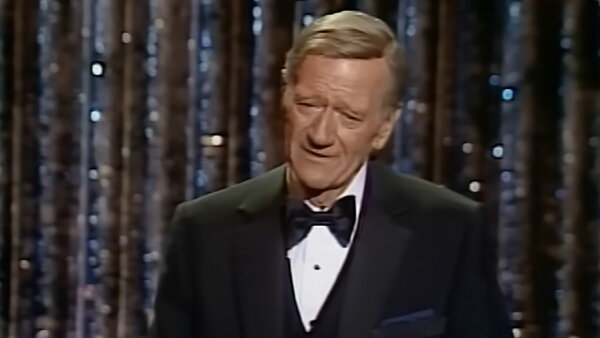
The 1979 Oscars saw the legendary John Wayne present the Best Picture Oscar - which went to The Deer Hunter - all while in the midst of publicly battling stomach cancer.
A visibly weakened Wayne consequently received a massive standing ovation from the audience when he came on stage, and gave a heartfelt introductory speech in which he said, "Oscar and I have something in common. Oscar first came to the Hollywood scene in 1928. So did I. We're both a little weather-beaten, but we're still here and plan to be around for a whole lot longer."
It was certainly a lovely sentiment from Wayne which the audience enthusiastically applauded, though the sad reality is that Wayne was in the end stages of his cancer at this time and ultimately passed away from the disease barely two months after the Oscar ceremony, which was also his final notable public appearance.
9. Halle Berry Becomes First Black Best Actress Winner (And Is STILL The Only One)
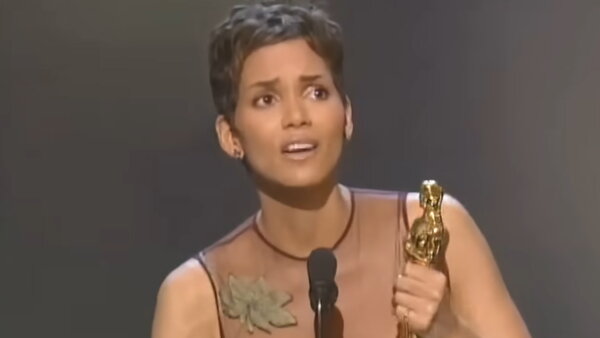
The 2002 Oscars was a history-making night for one reason above all others - Halle Berry became the first Black woman in history to win the Best Actress Oscar, when she received the gong for her sublime performance in Monster's Ball.
It's sad enough that it took 74 (!) Oscar ceremonies for a Black actress to win Best Actress, and while it left many hopeful that Berry's win would blaze a trail for many more to follow, the more devastating truth is that she remains the single outlier 24 years later.
With the Oscars' 100th edition fast approaching in 2028, it's looking quite probable that Berry will be the only Black Best Actress winner in an entire century's worth of ceremonies, which is obviously ridiculous.
There are a few hugely acclaimed nominees who arguably should've won over the years, namely Whoopi Goldberg (The Color Purple), Tina Turner (What's Love Got to Do with It), Gabourey Sidibe (Precious), ans Viola Davis (The Help), to name just a few.
In 2016 Berry herself spoke out about the lack of Black Best Actress winners to follow her, saying, "To sit here almost 15 years later, and knowing that another woman of colour has not walked through that door, is heartbreaking."
8. Apocalypto Sound Mixer Has A Very Bad Night
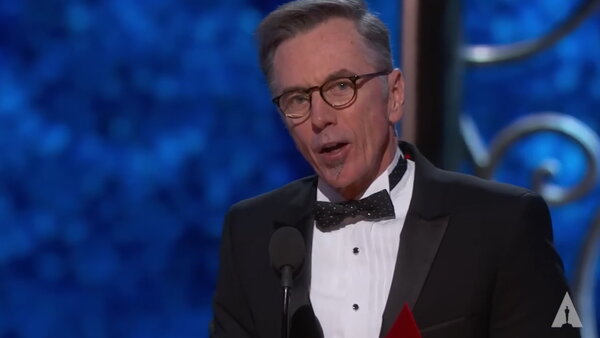
At the 2007 Oscars, the Best Sound Mixing award went to Dreamgirls, and as drama-free as that sounds, there was plenty of heartbreak going on behind the scenes.
Dreamgirls was up for the award against, among other films, Mel Gibson's Apocalypto, whose sound mixer Kevin O'Connell received his 19th (!) Oscar nomination without a win.
O'Connell failed to win the award, and while that's unfortunate, things got much worse from there.
O'Connell's mother, Skippy, was extremely ill at the time of the ceremony, and so as soon as his award was presented, he rushed to the hospital to be with her.
O'Connell's mother ended up passing away that night, and because that wasn't enough of a crushing double-blow, one of Dreamgirls' Oscar-winning sound mixers, Michael Minkler, disparaged O'Connell to the press, claiming that he was trying to win an Oscar out of sympathy and should consider another line of work. Talk about being a sore winner.
There is a closing positive to the story, though, as O'Connell finally won a belated Oscar on his 21st nomination in 2017 for Gibson's Hacksaw Ridge, where he proudly thanked his late mother.
7. Seth Macfarlane's Boob Song Underlines Classic Hollywood Sexism
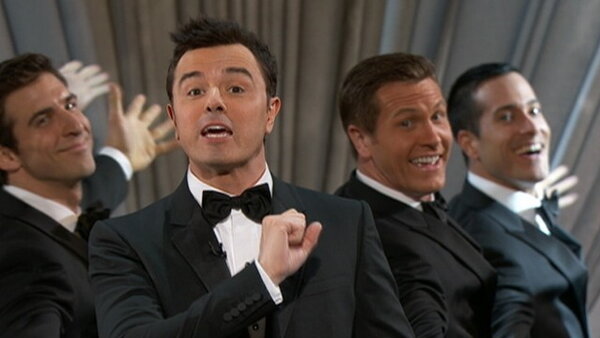
Family Guy creator Seth MacFarlane was the host of the 2013 Oscars, which featured an infamous song-and-dance sequence called "We Saw Your Boobs," in which he listed various movies where actresses in the audience had appeared in states of undress.
While some saw it as "just a bit of fun," others were less amused by MacFarlane's ditty, feeling that it harkened back to classic Hollywood sexism and indicated just how little progress the industry had truly made.
The song was openly criticised by both Jane Fonda and feminist lawyer Gloria Allred, while others pointed out that some of the scenes MacFarlane alluded to in his song involved rape and sexual assault, making it all feel even more crass.
While at face value many found amusement in the song, to others it showed that a lot of work still needed to be done to place women on an even keel with their male counterparts in Hollywood.
6. Michael Moore Gets Drowned Out
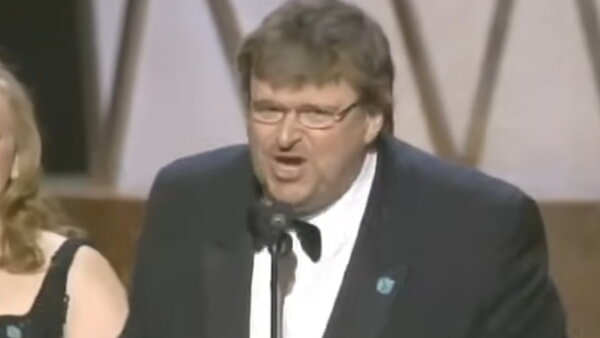
One of the most deserved Oscar wins in the 2003 ceremony was Michael Moore's Best Documentary triumph for his searing film Bowling for Columbine, which explores the gun violence epidemic in the United States.
Moore took to the stage and focused his acceptance speech on criticising President George W. Bush for initiating the Iraq War mere days earlier, going on to call him a "fictitious president" per the highly contested nature of the 2000 election results.
As Moore's righteously justified rant continued, however, he was swiftly drowned out by both a chorus of boos from the crowd and the Oscar orchestra attempting to play him off the stage.
That anything Moore said or stood for could be considered politically controversial, especially with Hollywood being as left-leaning as it is, is enormously depressing, not to ignore the fact that so little about gun control has changed in the two-plus decades since Moore's film was released.
5. Sam Smith Incorrectly Claims To Be The First Openly Gay Oscar Winner
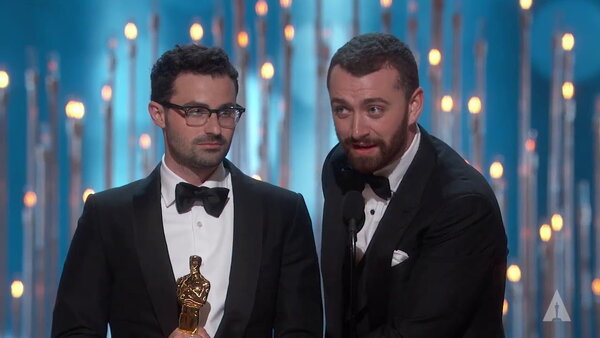
Sam Smith won the Best Original Song Oscar in 2016 for "Writing's on the Wall" - the title track for the James Bond film Spectre - and in his acceptance speech made mention of the fact that he was the first openly gay man to win an Oscar.
On paper it seemed like a welcome moment of representation, if not for the fact that Smith was far from the first openly gay Oscar winner, prompting writer Dustin Lance Black - an openly gay man who won a Best Original Screenplay Oscar for Milk in 2009 - to point this fact out.
But even Black himself wasn't the first - most prominently there's Midnight Cowboy director John Schlesinger, Elton John, and American Beauty writer Alan Ball, among several others.
Ultimately Smith misspoke, as he was quoting an article in which Sir Ian McKellen noted that there's never been an openly gay Best Actor Oscar winner.
But Smith's gaffe sparked a wider discussion about the sad reality of LGBTQ success at the Oscars being generally downplayed over the years.
4. The Blade Runner 2049 VFX Kiss Snub
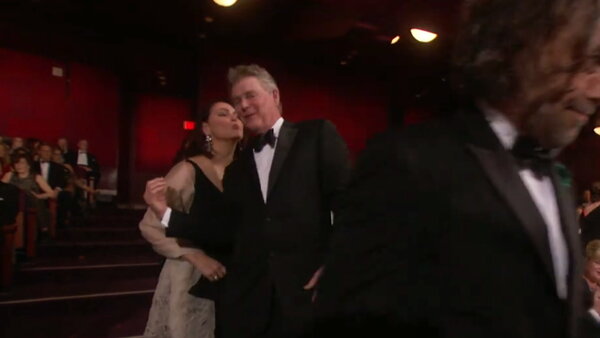
Blade Runner 2049 won an incredibly deserving Best Visual Effects Oscar at the 2018 ceremony, and as winners John Nelson, Gerd Nefzer, Paul Lambert and Richard R. Hoover rose from their seats to hit the stage, they were each congratulated by a female member of their party who, given that she kisses Nelson on the lips, we can assume is most likely his partner.
However, as Hoover makes his way past the woman, she goes in for a kiss on the cheek, only for him to walk straight past her, leaving her lip-locking the air for a moment.
Alright, so "devastating" might be laying it on a little thick here, but this brief moment of cringe was nevertheless picked up by a few eagle-eyed Oscar viewers.
It's exactly the sort of low-key embarrassing moment that might keep an anxious person up at night many years later (though we certainly hope not).
3. Sacheen Littlefeather Gets Jeered For Highlighting Hollywood's Shortcomings
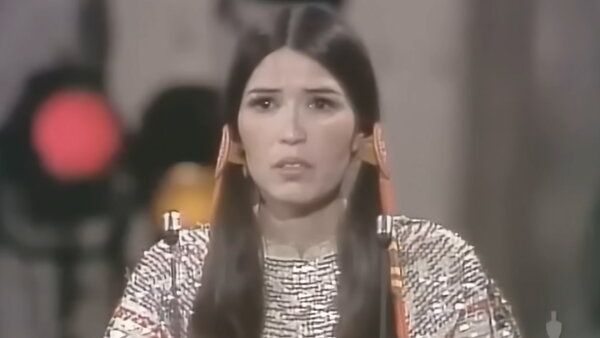
Marlon Brando won a well-earned Best Actor Oscar for his incredible performance in The Godfather, though Brando wasn't present at the ceremony, instead sending a Native American civil rights activist, Sacheen Littlefeather, in his place.
Littlefeather told the audience that Brando had decided to decline the award due to Hollywood's treatment of American Indians, instead giving her the moment to draw attention to this fact, which drew a mixed reception of cheers and boos in the audience.
Littlefeather's appearance remains a highly memorable Oscar moment no question, though less-known are the unfortunate off-screen details of Littlefeather's treatment.
According to Littlefeather, producer Howard W. Koch threatened to have her arrested if her speech ran over 60 seconds, and when she was escorted backstage people mockingly did the tomahawk chop gesture towards her.
Later she claims to have been shot at while visiting Brando, received repeated threats on her life, was blacklisted from Hollywood, and subjected to a smear campaign in the press.
Though Littlefeather's appearance caused the Academy to ban proxy acceptances - with presenters instead accepting for non-attendees - in 2022 the Academy sent Littlefeather a letter apologising for her treatment, just a few short months before she passed away.
2. Michael Keaton Puts His Acceptance Speech Away
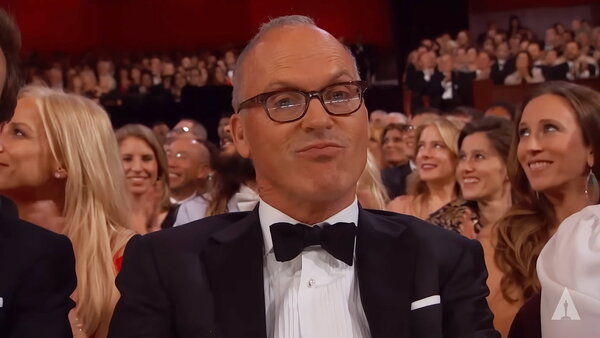
Michael Keaton was an easy favourite to win the 2015 Best Actor Oscar for his fantastic performance in Birdman, which went on to win four Oscars at the ceremony, including Best Picture and Best Director.
Best Actor sadly wasn't one of them, with the gong instead going to Eddie Redmayne for his admittedly solid turn in Stephen Hawking biopic The Theory of Everything.
When Redmayne's name was called and he took to the winner's podium, some swiftly pointed out a heartbreaking detail in the background - Keaton could be seen putting a piece of paper back in his pocket, which many have since assumed was his winner's speech.
The implication of course is that Keaton thought he was going to win the Oscar and had his speech at-the-ready, only for the rug to be pulled out and him to quickly stash the speech.
For his part, Keaton claimed that he was actually putting a gum wrapper back in his pocket, though some viewers maintain he might've just been saving face.
Either way, he deserved to win the damn thing.
1. First Black Director To Win An Oscar Has Speech Hijacked
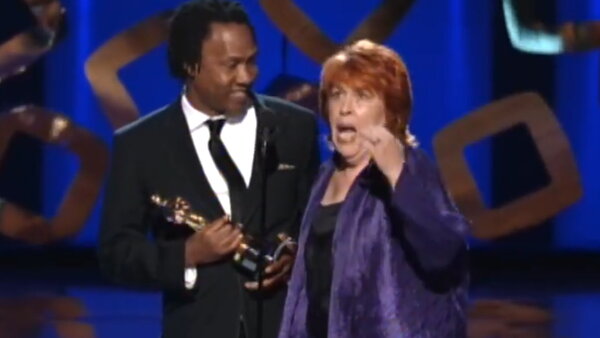
At the 2010 Oscars, Music by Prudence won the Best Documentary Short Oscar, at which point director Roger Ross Williams took to the stage to gratefully accept the award.
But after about 15 seconds of talking, the short's producer, Elinor Burkett, rushed onto the stage and interrupted Williams, saying, "The man never lets the woman talk. Isn't that just the classic thing?"
Burkett then gave her own acceptance speech while Williams had no choice but to stand there awkwardly, and though many criticised Burkett's behaviour as brash and rude, the full context makes it so, so much worse.
Williams' Oscar win actually made him the first Black filmmaker in Oscar history to win a directing Oscar, and so for a white woman to hit the stage and steal his moment away makes it even more egregious.
It ultimately turns out that Williams and Burkett had creative differences about their film in post-production, and the visible animosity stems from that.
Either way, it was a bad look for Burkett, though Williams took the moment in good grace, and has since claimed that due to the enormous amounts of positive publicity he received as a result, it was "the best thing that ever happened" to him.