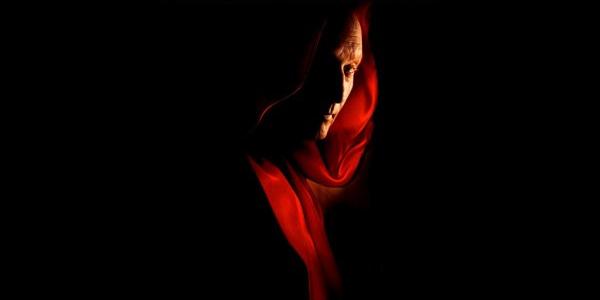
Nearly a full decade has come to pass since James Wan's little horror film Saw arrived in theaters, shattering financial expectations and immediately carving out a place in horror film history. Across seven films, the series effortlessly transcended into pop culture, cementing actor Tobin Bell's Jigsaw Killer as a horror icon worthy of standing alongside such genre stalwarts as Jason Voorhees, Freddy Krueger and Michael Myers. Having crossed into other media from comics to video games and represented at theme parks through rides and mazes, the series continues to retain a cult following. It seems inevitable that the series is poised at any moment to return from its self-imposed 2010 exile, The Final Chapter, through either another direct sequel or by heading down the ever-popular reboot route. With the original film set for a re-release this Halloween -- surely a move by Lionsgate to celebrate the film as much as it is an attempt to gauge whether audiences are still interested in the series -- Jigsaw's games are about to pull fans old and new back into theaters. Love it or hate it, the series has left an undeniably indelible mark on the horror genre. So in honor of the original film's ten-year anniversary, what better time to take a cue from Jigsaw and play a game to stack up the series and see which entries have managed to hold up better than the rest?
7. Saw 3D
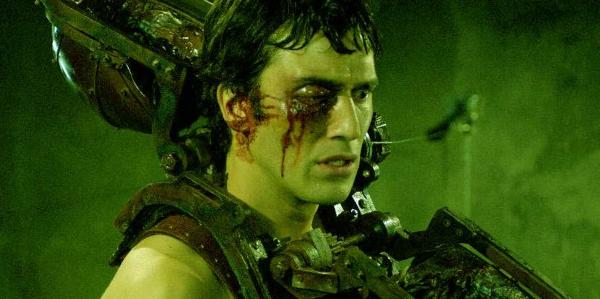
After Saw VI marked a relatively unhealthy box office dip for the series in 2009 despite earning some of the series' best reviews since the original film, Lionsgate decided to send the series off in 2010 with a final entry designed to bring as much closure to the series as possible, answering long-term questions such as the fate of Dr. Lawrence Gordon after severing his foot and crawling out of the first film's infamous bathroom and straight into ambiguity. Though the final film offers up some fundamentally intriguing ideas, like bringing together a handful of survivors from throughout the series, its attempts to focus on a number of new characters, including Sean Patrick Flannery's Bobby and Chad Donella's woeful new detective character, end up leading the film nowhere as their stories ultimately contribute nothing to the series' endgame. As such, characters audiences actually want to spend time with are given nothing to do, with Cary Elwes' long-awaited return as Dr. Gordon amounting to an all-too-fleeting role and series anchor Tobin Bell being reduced to the point that it's hard to remember he's in the film at all. And though seeing Jigsaw's successor-gone-rogue/wet blanket of personality Hoffman finally get what's coming to him by film's end is relatively satisfying, it's not as rewarding as it should be due to the film's general aimlessness leading up to it. Ultimately, the series' final entry is its weakest, with its failure to expand on any unexplored concepts and lack of desire to allow Tobin Bell any screentime leading the film to go out with an uninspired whimper instead of the give-it-all-we-got attitude it should've embraced.
6. Saw V
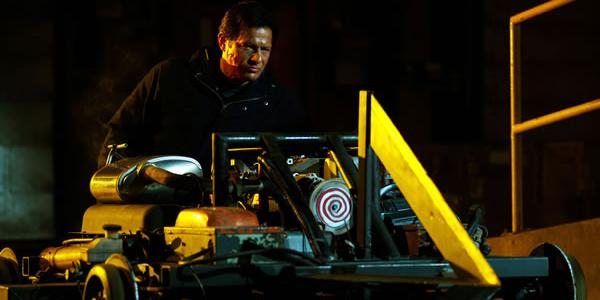
Whereas Saw 3D crumbles under the weight of failing to swing for the fences, Saw V suffers by feeling relatively needless. Its predecessor, Saw IV, had the gift/curse of having to find a way to continue the series in the wake of Jigsaw's death at the end of Saw III, which it managed to sidestep by taking place concurrently with that film. With the fifth film, the series had no choice but to continue moving forward with both its timeline and its newest Jigsaw apprentice, Matt Hoffman. Unfortunately, Hoffman had to carry on the series from under the far more interesting shadow of Jigsaw and Shawnee Smith's Amanda while simultaneously being devoid of a personality worth being intrigued by. Though Scott Patterson's Agent Strahm spends the film uncovering Hoffman's past after a pretty slick scene in which he manages to survive a water-based trap, the backstory isn't entirely engrossing in light of the fact actor Costas Mandylor doesn't have the same gravitas as Bell. While the film does offer a number of callbacks to the previous films -- and if there's one thing that sets the Saw series apart from other horror franchises, it's that it excels in maintaining a pretty stellar continuity -- it fundamentally feels like nothing more than a water treading entry. Unlike the previous films, the B-story plot involving a group of connected people caught in an underground game feels too detached from the rest of the narrative, more perfunctory than necessary even after it's tied together during the last act, just like Saw V's placement in the series.
5. Saw IV
As mentioned earlier, the fourth entry in the franchise had the unenviable task of continuing the series following the demise of Jigsaw and Amanda at the end of the previous film. After the film starts off with an appropriately grotesque autopsy of John Kramer's body, it switches gears to position the previously minor character Daniel Rigg as the next in line to take part in Jigsaw's games. Though the big twist at the end of the film reveals that the meat of the narrative takes place concurrently with Saw III, sneakily sidestepping the issue of having to completely move beyond the death of John Kramer until the next sequel, Saw IV does a pretty slick job of injecting a number of new elements into the series. From the introduction of Agent Strahm and Jill Tuck to the reveal of Hoffman as another Jigsaw accomplice, as well as dealing with some dangling threads left over from its predecessors, such as the fate of Eric Matthews -- whose "I don't want to play anymore" line is the best in the film -- and Jeff Denlon, the film deserves credit for not relying on its parallel narrative to avoid changing the game, even finding time to shine a light on John's past to thankfully keep Tobin Bell in the fold. Like the third film, where Jeff's tests involved forgiveness, Rigg's tests involve him seeing the world through Jigsaw's eyes, as the "victims" Rigg comes across encompass a spousal abuser, a pimp and a rapist. By this point in the series, it's an interesting twist on the formula as, unlike the drug users and other generally "ungrateful" victims of prior films, the film positions the audience and Rigg together in wondering whether or not their lives are worth sparing considering their crimes, relying more on the weight of Rigg's choice of how to deal with them over showing off garish new traps. While the franchise could have easily bowed out with Saw III, the series' popularity meant its continuation was unavoidable. It may not have been necessary to keep it going, but Saw IV at least deserves credit for being more effective than it had a right to be and managing to hold off the franchise fatigue until Saw V.
4. Saw VI
After the disappointment of Saw V, Saw VI was a surprisingly lean, energetic entry. Faced against the first entry in the Paranormal Activity series and carrying the baggage of its predecessor, though, the sixth film took a pretty hefty financial plunge for the series that would only end up forcing the creative team to bring the series to a close the following year even in spite of garnering praise as the best Saw film the series had provided in several years. At this point, people were either fans of the series or not, and Saw VI took strides in making up for the general lifelessness of the fifth film while celebrating the series in the process, implementing flashbacks involving Tobin Bell far smoother than before and even bringing back Amanda to explore the struggle over Jigsaw's legacy between her, Hoffman and even Jill Tuck, fueling the present-day storyline with a forward momentum V had been lacking. This time around, too, the film's primary game involving Peter Outerbridge's insurance agent and his team was actually interesting and the carousel trap stands as one of the series' best, both in its simplicity and for the moral quandary it presents. With each passing film, the series had continually pushed the suspension of disbelief beyond the breaking point, which fans had long since accepted, but what helps Saw VI stand above its implausible scenarios in a way that V couldn't is the vigor in which it presents itself. Saw VI may not have set out to reinvent the series or appeal to a whole new set of fans, but its palpable effort to give the series some semblance of a pulse back puts it head and shoulders above the sequels it's sandwiched between.
3. Saw II
With the original Saw having immediately become a horror phenomenon in October of 2004, it was no surprise when Lionsgate pushed ahead with a sequel for the following year. Compared to the more quiet, slow-build structure of the first film, Saw II upped the ante by escalating the number of players in Jigsaw's latest game, confining them all to a house of horrors where, unsurprisingly, they would die in increasingly graphic ways. Though the game and its results easily satisfy gorehounds -- though, ironically, the film's most brutal scene is actually one of its least graphic, involving Amanda being pushed into a pit of hypodermic needles -- the real strength of the film comes in its devotion of time to the character of John Kramer. Almost immediately, Jigsaw is seemingly caught by police, but the tricks up his sleeve and Tobin Bell's savoring of every moment that he's on screen were enough to cement the character as the horror icon the first film suggested he truly could be. The sequel may have marked the series turn towards going bigger, gorier and increasingly more ludicrous in its implausible scenarios, but it works here, standing out clearly enough from the first film to feel like more than just a rehash while providing a final twist involving Amanda that's almost as slick and surprising as the closing moments of the original. If anything, Bell's owning of the role solidified him as a character audiences were willing to see more of, ensuring his status as the pivotal cog in what makes the series truly work.
2. Saw III
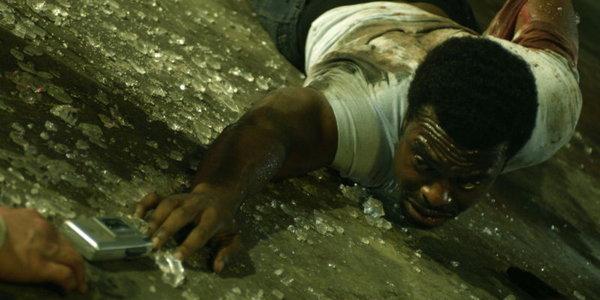
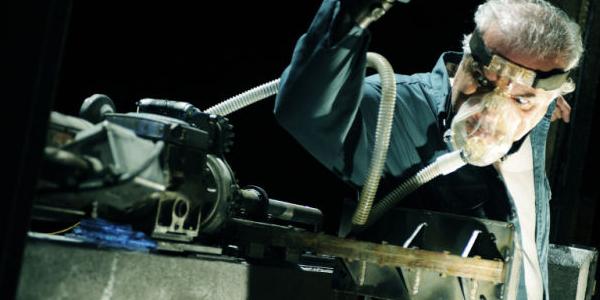
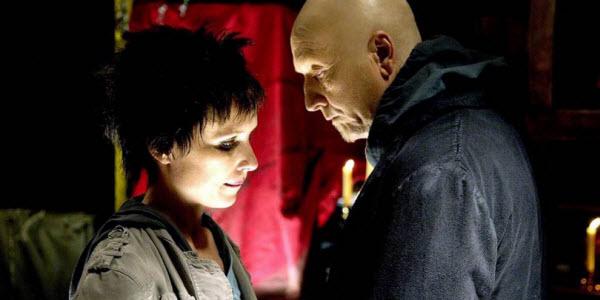
Where Saw III succeeds is in its willingness to explore new territory on the road to bringing the trilogy to a close. With the exception of a few requisite planted seeds for a potential continuation, including a mysterious letter read by Amanda, the brief introduction of Hoffman and Jill Tuck and a tape covered in wax by John near the end of the film, one could easily never watch any of the further films and be satisfied with the film as the conclusion of the series. Beyond touching upon the fates of earlier characters like Saw's Adam and Saw II's Eric Matthews, the film dives headfirst into the relationship between John Kramer and Amanda, effectively illuminating both characters as the film courses its way to a finale that leaves both of them dead. As with the first sequel, Tobin Bell demonstrates why he owns the series and his demise at the end is undeniably ballsy for a series that would only go on to struggle to find new ways to keep going in the wake of his diminished presence. Here, too, the series finally has a player in the game worthy of sympathy in the form of Jeff, whose journey of learning whether or not to forgive those involved in the death of his son and the aftermath that ensued is far more engaging than watching a group of unlikable criminals fight with one another again and again. When Jeff's seemingly disconnected storyline finally intertwines with that of Jigsaw, Amanda and Dr. Lynn Denlon, the film serves up some of the series' tensest moments and one of its bleakest endings. Throw in some of the series' best traps, such as Troy's chain situation, the gross-out pig vat and the Rack, and there's more than enough to satiate fans' desire to see what Jigsaw conjures up.
1. Saw
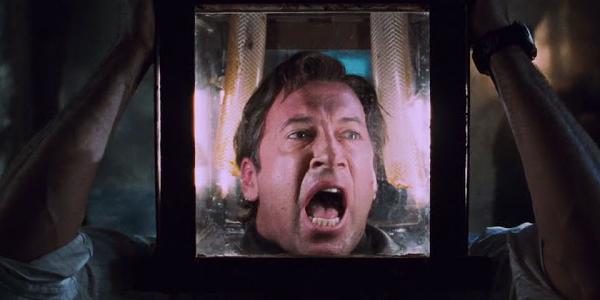
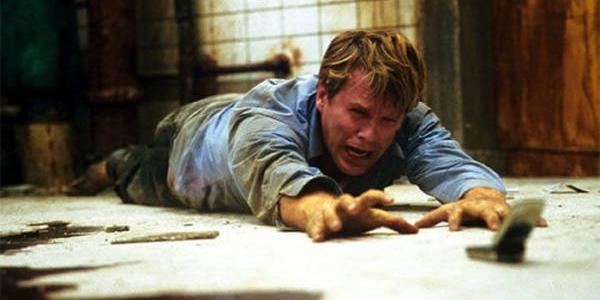
First things first: Is the original Saw a perfect film? No. Like its successors, its riddled with holes and illogical moments, but what sets it apart and makes those issues forgivable is in its execution. Nearly a decade on, Saw is still a tense horror classic deserving of its spot in the genre despite the "torture porn" label that its sequels would retroactively earn it. While the series would go on to be known for its gory nature, violent traps and improbable situations, the original film is a rather modest affair, embracing the idea of less is more to craft a story more mystery/thriller than an outright horror piece. Watching Adam and Dr. Gordon attempt to piece together the circumstances of their imprisonment in the series' infamous bathroom while simultaneously figuring out how to avoid the bottom line of Jigsaw's game is far more rewarding than seeing characters stuck in clearly inescapable conditions and traps solely to see them die. From Jigsaw himself to Billy the puppet, the closing "Hello Zepp" theme by Charlie Clouser to the big finale twist -- a moment that continues to make watching the film with someone who's never seen it all the more entertaining -- and even the gritty texture of the film itself, Saw introduced to horror fans the world over a whole handful of recognizable ingredients that would lay down a template the rest of the series would attempt to recreate and expand upon to varying degrees of success. If anything, the low budget film marked one hell of an entrance for the director/writer duo of James Wan and Leigh Whannell. With the re-release of the film set for Halloween, new fans are bound to be made while old ones will be reminded why the series ever took off in the first place. Though the franchise otherwise remains dormant for the time being, it's hard to believe that it will stay that way forever. Hopefully, whenever Lionsgate decides to pick up where it left off, either through the direct continuation of the series or by way of hitting the reboot button, it can take lessons away from the stronger entries to ensure that Jigsaw's next game is actually one worth playing.
Writer, film enthusiast, part-time gamer and watcher of (mostly) good television located on the fringe of Los Angeles, who now has his own website at www.highdefgeoff.com!