20 Recent Movies Ruined For INSANE Reasons
These movies were derailed in the most WTF ways.
It's no easy feat bringing even the simplest of movie ideas to fruition, with dozens, hundreds, or even thousands of artists collaborating in hopefully-harmonious unison to deliver a grand cinematic vision.
With so many individuals involved and so many moving parts, there are innumerable way that even the most well-organised production can run totally off the rails, resulting in an end product that falls short of audience expectations.
And as of late, these 20 movies all ended up faltering because of some frankly ridiculous, frustrating, and downright WTF behind-the-scenes reasons.
Perhaps there were upfront casting issues which The Internet called out early on, maybe the shoot itself was beset by unforeseen problems, or the studio just couldn't keep their hands off of it during post-production.
And frankly, they're some of the more predictable issues on this list - we've also got directors who weren't even on set, actors who barely showed up for work, and social media posts which threw a certain slasher sequel into a pure tailspin.
All in all these films were hobbled in ways few could've reasonably expected...
20. Having No Director On Set - War of the Worlds
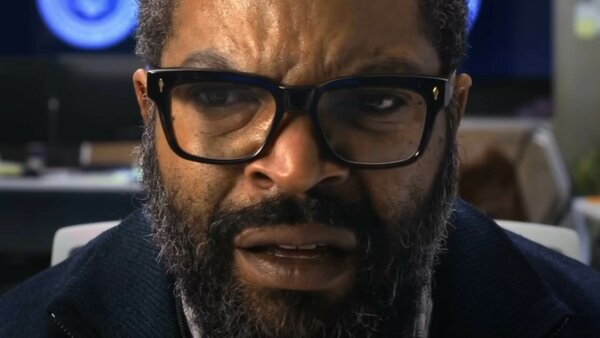
Now in total fairness, last year's new screenlife version of War of the Worlds was probably always going to be a bad film, but did it have to be quite this awful?
Possibly not, as the multi-Razzie-winning sci-fi film was shot under extreme logistical limitations in 2020 at the height of the pandemic.
Pandemic-related restrictions meant that star Ice Cube had to shoot his lead role entirely isolated from both the rest of the cast and even director Rich Lee, performing his role remotely with a skeleton crew.
While scrappy indie films like Host have shown what could be done with remote filmmaking in the middle of the pandemic, they're more of an exception that proves the rule.
After all, Ice Cube seems completely lost throughout War of the Worlds, his clueless performance surely informed by the fact that he didn't have a filmmaker on-set to directly interact with, instead only speaking with Lee remotely.
Again, War of the Worlds would've surely been a rough film regardless of its strained production, but these issues transformed it from a merely bad piece of work into a genuine all-timer dud.
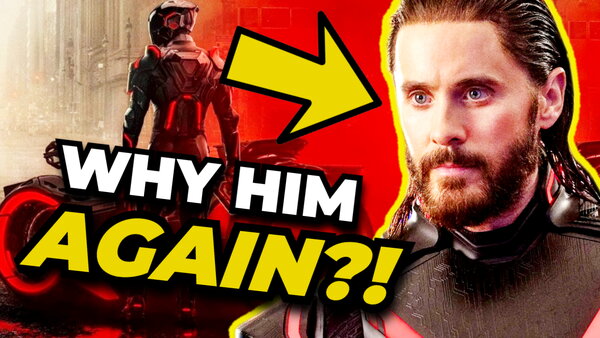
19. Casting Jared Leto - Tron: Ares

Tron fans were left chomping at the bit for a new film ever since Tron: Legacy was released in 2010, and when Disney finally greenlit a new mega-budget Tron sequel intended to revitalise the franchise, it sure seemed like they meant business.
But even forgiving the fact that Tron: Ares was a mostly tangential sequel which only vaguely followed-up Legacy, its true fatal mistake came down to casting.
Tron fans collectively groaned when Jared Leto was announced to be playing the lead character, because as talented as the Oscar-winning actor might be, he's hardly shown much of that talent in recent years, and there's a widespread exhaustion with his eccentric movie star persona.
That's not to ignore the fact that historic sexual misconduct allegations against the actor resurfaced during post-production, making it clear that Disney made no attempt to vet the actor intended to effectively re-launch the Tron franchise.
Now, was Tron: Ares' commercial failure entirely down to Leto's casting? Absolutely not, but it was a massive red flag which only compounded the film's other issues, ensuring that only the most die-hard Tron fans bothered going to see it.
At least if Tron: Ares had a more likeable, less problematic, and more commercially reliable actor in the lead role, it might've stood a fighting chance at the box office.
18. Studio Interference - The Bride!
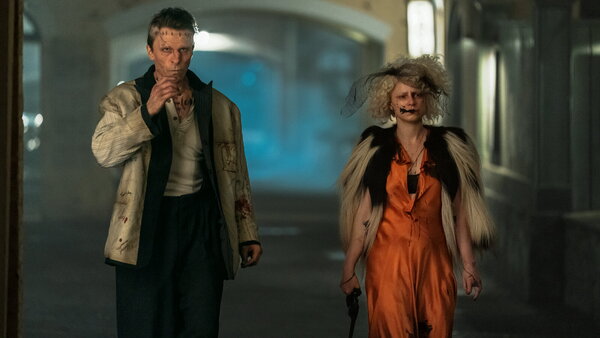
While there's nothing inherently surprising or insane about studio executives tinkering a filmmaker's vision into a chaotic mess, it does become an infuriating tactic when those in charge greenlit the script in the first place.
And in the case of Maggie Gyllenhaal's The Bride!, Warner Bros. signed off on Gyllenhaal's frankly bonkers Bride of Frankenstein reimagining, and even stumped up an eye-watering $100 million to make it happen.
But as was widely reported before the film's release and later confirmed by Gyllenhaal herself, The Bride! went through an exhaustive test screening process where the studio pushed back on some of the more graphically sexual and violent imagery, and also insisted upon additional voiceover to clarify the story.
Ultimately, why bankroll an auteur director's bold new project only to butcher it in post-production? While there's no guarantee Gyllenhaal's original cut would've been any better, at least it would've been her uncompromising vision from start to finish.
And with The Bride! tanking catastrophically at the box office, it seems highly unlikely that Warner Bros. will ever let Gyllenhaal release her own director's cut.
17. The Wildly Rushed Production - Jurassic World Rebirth
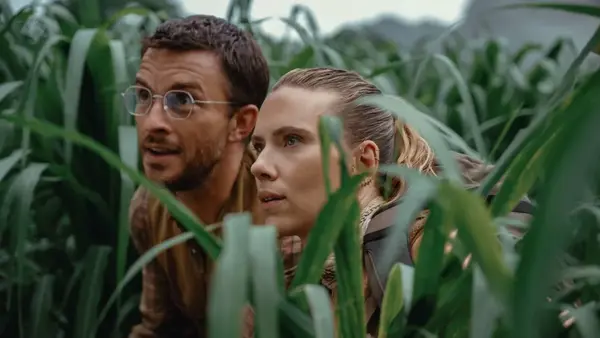
Blockbuster films are gigantic machines which generally take years and years to get made, but in the case of Jurassic World Rebirth, Universal had a prime July 2, 2025 release date scoped out and weren't going to miss it for any reason.
As a result, the seventh entry in the franchise underwent an expedited development process, with director Gareth Edwards having less than 18 months to prepare the film, shoot it, and get it through post-production.
Given that Edwards expected to have two-and-a-half years for such a task, he asked Universal to delay the film, but they refused.
Shooting ultimately began on June 13, 2024, just a year and four days before the film's world premiere - a mind-bogglingly small amount of time for an extremely effects-heavy and technically complex blockbuster film.
And while Edwards, a smart filmmaker and VFX artist himself, delivered a competently made end-product, Jurassic World Rebirth was also the most forgettably bland entry in the entire series - exactly the sort of flavourless cinematic gruel you get when a film has to get made within a specific timeframe in order to satisfy shareholders.
If Universal had only pushed the release date by a year, then all involved would've been able to give the sequel the added thought it so desperately needed.
16. Changing The Story For No Reason - Return to Silent Hill
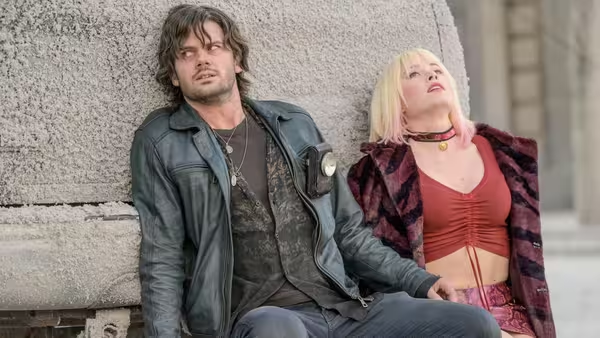
Though it was painfully apparent pre-release that Return to Silent Hill was being produced with an inadequate $23 million budget to pull off a fully satisfying adaptation of the second game in the series, it was easy to buy into the passion of filmmaker Christophe Gans, who previously directed the solid 2006 film.
Gans had been trying to get this follow-up produced pretty much ever since, and though his perseverance was certainly laudable, it only left fans all the more bemused that he delivered such a blatant mess of an adaptation.
For as much a fan of the Silent Hill 2 video game as Gans claims to be, you'd barely know it from this movie, which makes countless puzzling changes to the source material, from changing the nature of the central relationship to conflating several distinct characters into one, and even offering up a wildly unsatisfying new ending.
All Gans really had to do was follow the basic template of the game's story, but as a misguided attempt to retool it for a big-screen treatment, he ended up fumbling the entire thing.
Gans recently stated his desire to adapt more Silent Hill games in the future, which most fans now seem to be taking as a threat.
15. Replacing The Director 18 Months Before Release - Elio
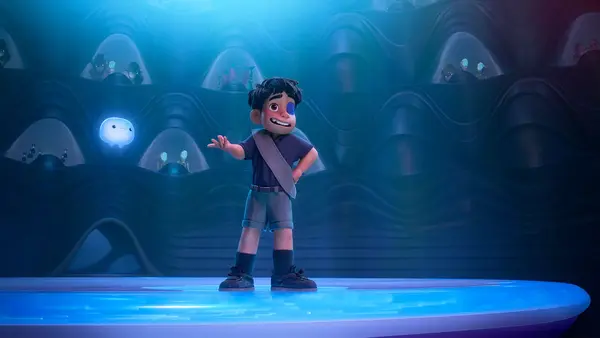
Pixar's Elio released to broadly positive reviews from critics though flopped at the box office, the consensus being that it was a passably entertaining animated romp but an undeniably lower-tier offering from the beloved studio.
Elio was initially conceived as a more personal project from filmmaker Adrian Molina, inspired by his own experiences growing up in isolation on a military base, but following polarising test screenings in late 2023, Molina was dismissed as director and replaced with Madeline Sharafian and Domee Shi.
In the 18 months that followed, Elio underwent significant changes at the behest of Disney executives in an attempt to make it a more "accessible" film.
For one, the queer-coded elements of the central character were largely eliminated, while the cynical perspective of Molina's original story, which featured a more contentious relationship between humans and aliens, was replaced with a broader, conflict-averse one.
The result was a film which anonymous Pixar employees believed was "sanded down" into a more generic animated film, prompting the howlingly tone-deaf response from Pixar Chief Creative Officer Pete Docter that, "We’re making a movie, not hundreds of millions of dollars of therapy."
Ultimately this speaks to a wider cultural shift at both Disney and Pixar, but first and foremost - why greenlight a director's deeply personal passion project if you're not going to follow it through to completion?
14. Totally Changing Genres - M3GAN 2.0
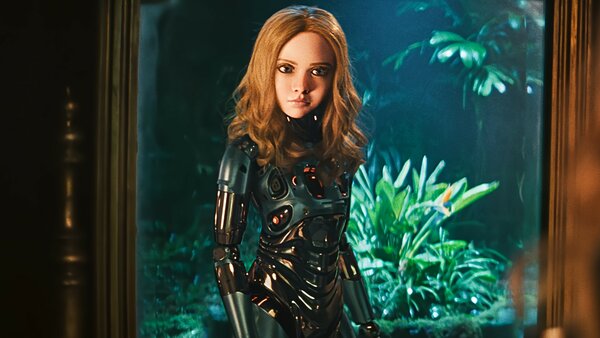
2023's sci-fi horror film M3GAN was a surprise box office smash, grossing a stonking $181.8 million on a mere $12 million budget, ensuring that a sequel was swiftly announced.
And frankly, all M3GAN 2.0 really had to be was a slightly fresh riff on the same deranged formula that worked the first time - such is the slasher movie tradition.
But in a surprising and ultimately audience-alienating move, writer-director Gerard Johnstone decided to ditch the horror angle almost entirely from his sequel, shifting instead into over-the-top sci-fi action territory.
The result was a film that received wildly mixed reviews and absolutely tanked at the box office, with many surmising that Johnstone delivered a sequel that was simply too far divorced from what audiences enjoyed about the first.
While there's something to be said for a filmmaker not merely taking the easy option and instead delivering an envelope-pushing sequel, perhaps the better call would've been a compromise which retained the original horror elements while leaning into sci-fi camp.
Quite tellingly, producer Jason Blum said of the film's commercial failure, "We all thought Megan was like Superman. We could do anything to her. We could change genres.... And we classically overthought how powerful people's engagement was with her."
13. Miscasting TWO Oscar Winners - Love Hurts
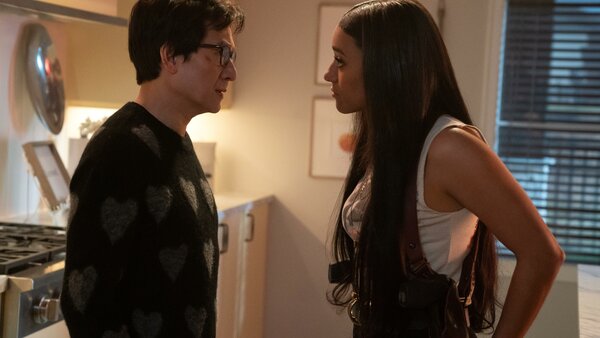
No matter how good a film's script might be, miscasting can absolutely derail everything, as it undeniably did with last year's action-comedy Love Hurts.
On paper, casting recent Oscar winner Ke Huy Quan as a former hitman-turned-realtor who is forced to dust off his special set of skills actually seemed like a pretty inspired idea.
But the big problem here is that Quan's love interest is fellow recent Oscar winner Ariana DeBose, and even if you're able to accept the 20-plus-year age gap between the two performers, they just have no romantic chemistry, like, at all.
Given that the engine of the story is the interplay between these two characters, their non-chemistry ensures the entire movie falls totally flat, with both Oscar winners showing themselves to be egregiously miscast.
There were a few easy options here - either replace Quan with a younger actor, replace DeBose with an older one, or change their relationship to be platonic.
If nothing else Love Hurts is an acute reminder that casting is an art form in its own right, and when the casting director does their job you genuinely don't think too much about it.
12. Getting Stallone For Just ONE Day - Armor

Armor is yet another of the countless disposable "geezer teaser" direct-to-VOD action flicks which Sylvester Stallone finds himself starring in these days.
Though "starring" is a rather generous description of what Sly does in this one, given that he shows up for just about the legal bare minimum of screen time possible for his mug to be plastered on the film's poster.
When the film was released in late 2024, it was reported that Stallone was actually only on set for a single day, for which he was paid an outrageous $3.5 million.
The result is not only that Stallone's villainous thief Rook is only on screen for about 15 minutes, but that he spends most of the movie standing on the same stretch of road staring menacingly into the distance, all while the filmmakers have to awkwardly cut around his obvious lack of presence during many scenes.
There was probably never a reality where Armor was a genuinely good film, but with a more engaged lead actor willing to put at least a few days' graft in, it surely would've avoided a 0% score on Rotten Tomatoes.
11. Reshooting Almost The Entire Film - The Strangers - Chapter 3
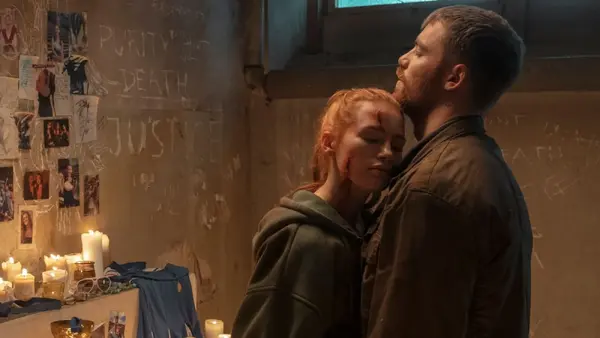
It's painfully clear that Renny Harlin's new Strangers trilogy just didn't have enough thought put into it, and there wasn't a clear vision for how the trio of slasher films would play out from start to finish.
As a result, Chapter 2 had to undergo a week's worth of reshoots following the negative response to Chapter 1, while Chapter 3 reportedly underwent an entire three weeks of reshoots.
Considering that all three movies were originally shot over just 52 days, it's a reasonable deduction that the vast majority of Chapter 3 was reshot over those three weeks.
And while reshoots certainly aren't inherently a bad thing, when they're so overwhelmingly extensive, they do suggest that the project in question has major issues at the most fundamental creative levels.
Rather than commit to the original vision, whatever the heck it was, Harlin decided upon a reactionary pivot which clearly didn't work out, given that Chapter 3 received even worse reviews than its two panned predecessors.
10. Shelving It For 9 Months - The Life of Chuck
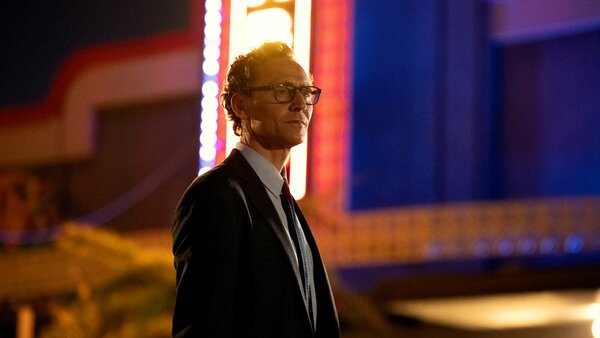
Mike Flanagan's fantasy drama The Life of Chuck, adapted from Stephen King's 2020 novella of the same name, was riding high following its premiere at the 2024 Toronto International Film Festival.
Flanagan's film won the festival's coveted People's Choice Award, which has historically been a strong indicator that a film will be nominated for the Best Picture Oscar.
But rather than capitalise on this buzz and ready the film for a splashy theatrical rollout at the end of 2024, distributor Neon decided to hold onto the movie and release it in June 2025.
In addition to being a decidedly less awards-friendly release window, the film's early buzz had largely fizzled by this point, ensuring it ultimately failed to garner any serious awards traction, making it the first People's Choice Award winner since 2011's Where Do We Go Now? to not secure a Best Picture nod.
Now, would The Life of Chuck have been an awards juggernaut if Neon released it in late 2024? No, but it would've had a good shot at scoring nominations for Best Picture, Best Adapted Screenplay, and maybe even Best Supporting Actor for Mark Hamill, whose performance was widely acclaimed as his career-best.
None of this undermines the quality of the film of course, but The Life of Chuck absolutely deserved a more committed awards push from a distributor that really should've known better.
9. Hiring Len Wiseman - Ballerina
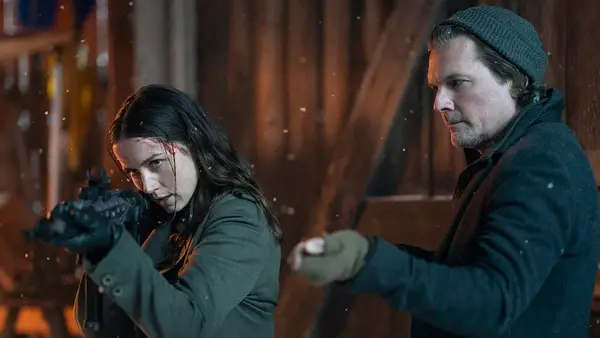
On paper a John Wick spin-off starring Ana de Armas sounded pretty damn great, but many abandoned most hope for it the moment that Len Wiseman was hired to direct.
Wiseman, best known for his work on the Underworld franchise and whose last well-received film was Live Free or Die Hard back in 2007, simply seemed like a deeply uninspired choice for a franchise known for its visually creative, kinetic action sequences.
When there are so many talented, hungry action filmmakers out there, why would you hire the dude whose last good action film was almost a full 20 years ago?
And so, it wasn't hugely surprising that Ballerina ended up undergoing extensive reshoots due to dissatisfaction with what Wiseman turned in, with mainline John Wick filmmaker Chad Stahelski even being brought in to shoot the new material himself.
While Ballerina isn't a terrible film, it is a rather middle-of-the-road, mostly forgettable spin-off that bears the scars of its messy production, given how stapled-together it feels from scene to scene despite some solid action beats.
Clearly, Ballerina needed a director like Timo Tjahjanto or Gareth Evans to bring the necessary brutal intensity to the fore.
8. AI Slop Effects - Coyotes

Last year's horror film Coyotes had a whole ton of fun potential, as it stars Justin Long and Kate Bosworth as a couple who find their Hollywood Hills home targeted by a pack of ravenous coyotes.
But Colin Minihan's film has quite the heavy albatross hanging around its neck, given that the killer coyotes were achieved with the use of obvious Generative AI tech, lending them an overly airbrushed, clunky look which is distracting in every single scene.
The coyotes even look inconsistent from scene to scene, a fact which numerous prominent reviews picked up on, and while the production hasn't ever confirmed the use of GenAI, it seems obvious to anyone who's seen much of it out in the wild.
While there was never any reality that actual coyotes would be used on set, traditional VFX delivered by actual human beings was clearly the way to go.
Instead, presumably in an attempt to cut costs, the movie's very idea was undermined by its awkward-looking AI slop animals.
7. Not Enough Daniel - Karate Kid: Legends
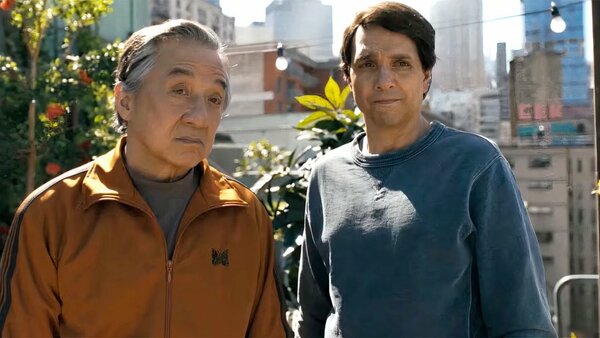
In theory Karate Kid: Legends should've been a basically unscrewupable concept - a new Karate Kid movie which unites the original era with the 2010 remake fronted by Jackie Chan.
And while the marketing largely suggested that Legends was going to deliver a harmonious, nostalgia-soaked meet-up between Daniel LaRusso (Ralph Macchio) and Mr. Han (Chan), the final film bafflingly struggled to fulfil that easy brief.
The primary issue is that Daniel is off-screen for the first two acts of the movie, only showing up almost a full hour into the 94-minute film.
As a result Daniel has scarcely little screen time, and there's not much room for him to have many meaningful interactions with Mr. Han.
All in all Karate Kid: Legends ended up feeling like a half-hearted subplot in another movie - a weirdly disinterested failure to capitalise on the obvious appeal of bringing both Karate Kid eras together under one roof.
6. Hiring Michael Chaves AGAIN - The Conjuring: Last Rites
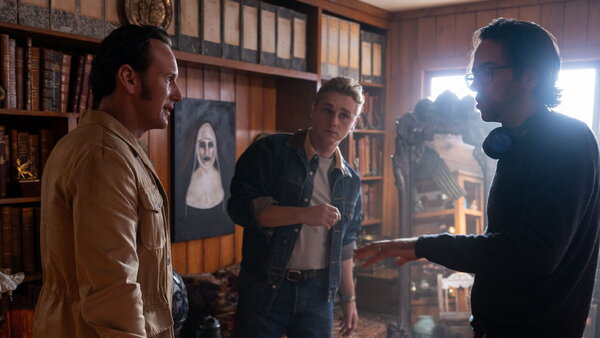
Though there was considerable initial excitement about the fourth Conjuring movie being the final entry in the mainline franchise, much of the hype swiftly deflated when it was confirmed to be directed by Michael Chaves.
Since James Wan departed the series as a director, Chaves has basically become its go-to filmmaker, having previously helmed The Curse of La Llorona, The Conjuring: The Devil Made Me Do It, and The Nun II, each of which received mixed-to-negative reviews.
Simply, Chaves is more of a passable journeyman filmmaker than an inspired genre auteur like Wan, and so it was easy to assume that The Conjuring: Last Rites would be yet another sauceless, underpowered offering from him.
Which, predictably, it was.
Even if Wan couldn't be coaxed back to film the main series' big finale, there are surely many hungry, talented genre filmmakers who could've brought a stronger vision to this sequel.
Instead Chaves served up the same predictably stodgy, tired fare once again, ensuring the Warren saga sputtered to an utterly lackluster conclusion.
In fairness, though, that didn't stop it grossing $500 million worldwide and becoming the highest-grossing Conjuring movie to date.
5. Shooting In Wales - Havoc
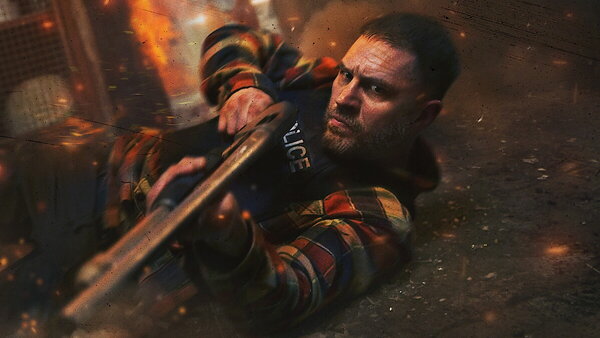
In the lead up to the release of Tom Hardy's recent Netflix action thriller Havoc, much was written about it being shot in Cardiff, Wales, making it one of the biggest productions to ever be filmed in the country.
Even with director Gareth Evans being Welsh himself, the shooting location seemed like an odd choice given that the film is set in an unspecified fictional American city which combines elements of Chicago, New York, and Philadelphia.
And while the UK is often used to double for American cities, Cardiff isn't a natural fit at all, resulting in many of the film's scenes being heavily modified with distracting green screen backdrops.
Now to be clear, that's no shade against Wales, which with its lush scenery has long been Hollywood's go-to for fantasy fare - just not so much gritty American cop thrillers.
Ultimately the shooting location contributed to Havoc feeling incredibly artificial from start to finish, and in turn lacking the very grit that Evans was evidently seeking out.
4. Letting The Producer Write The Script - In the Lost Lands

Post-apocalyptic action-fantasy film In the Lost Lands had one major selling point - it was based on a short story of the same name from legendary Game of Thrones writer George R. R. Martin.
And honestly, pairing Martin's text with the wild stylings of filmmaker Paul W. S. Anderson could've made for a good time - if a capable screenwriter was hired to adapt Martin's story to the big screen.
But instead Constantin Werner - a German film producer who acquired the rights to the story - installed himself as the film's writer, despite having just two prior writing credits on obscure genre films he directed in 1998 and 2009.
Nothing about those credentials suggested he was up to the task, then, and while In the Lost Lands is an abject mess any way you slice it, at least with a more engaging and well-crafted script it could've been a fun mess rather than a dreadfully dull one.
3. Ending The "Final" Film On A Cliffhanger - Hell House LLC: Lineage
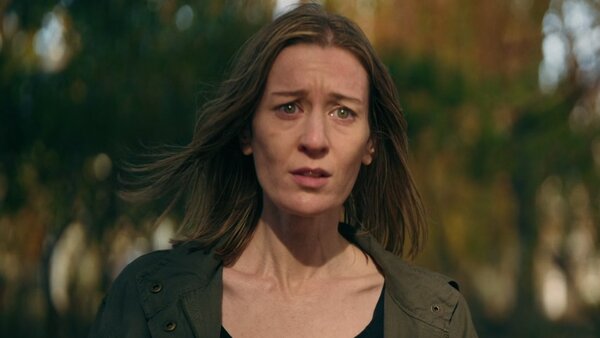
The marketing for Hell House LLC: Lineage categorically sold it to fans as the climactic entry in the cult horror franchise, and one which would tie up all the unresolved threads surrounding the eerie town of Abaddon.
And though the third film's returning protagonist, Vanessa Shepard (Elizabeth Vermilyea), makes a game attempt to end the curse once and for all, Lineage ends with the curse still very much a thing.
Furthermore, the final scene reveals that Vanessa's twin brother Mitchell, who she thought to have died in childbirth, is actually still alive, before the end credits abruptly roll.
Basically, this "final" film committed the cardinal sin of promising fans a concrete ending only to deliver a cliffhanger which just invited a ton more questions.
If filmmaker Stephen Cognetti ultimately decided to pivot and keep the series going, this was an awful way to do it, as flat-out lying about the movie's nature has surely burned bridges with many of Hell House's most devoted fans.
2. Firing Melissa Barrera - Scream 7
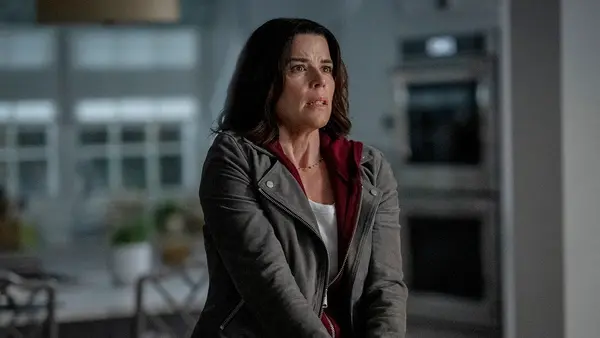
After the enormous success of Scream VI, development of the swiftly announced seventh film should've been totally smooth, even with directors Matt Bettinelli-Olpin and Tyler Gillett opting not to return this time around.
Happy Death Day filmmaker Christopher Landon was swiftly hired as their replacement, though pre-production went off the rails in late 2023 when star Melissa Barrera was fired due to her pro-Palestinian social media posts about the Gaza war.
Co-star Jenna Ortega soon departed in apparent solidarity and Landon also exited thereafter, leaving Scream 7 both without a director and the two leads of the last two movies.
In the months that followed the sequel underwent a hurried creative retooling, with franchise creator Kevin Williamson being hired to direct while original star Neve Campbell was announced to return after sitting out Scream VI due to a salary dispute.
Bringing Sidney back after her arc was resolved felt like an act of desperation - one which left many sceptical that Scream 7 could live up to the standard of the last two sequels.
And the woeful end product, the worst-reviewed Scream film to date, bears all the hallmarks of a roughshod production rushed in front of cameras amid frantic rewrites.
But because it went on to become the highest-grossing Scream film regardless, Paramount will probably take all the wrong lessons away from Scream 7's success.
1. The Death of Halyna Hutchins - Rust
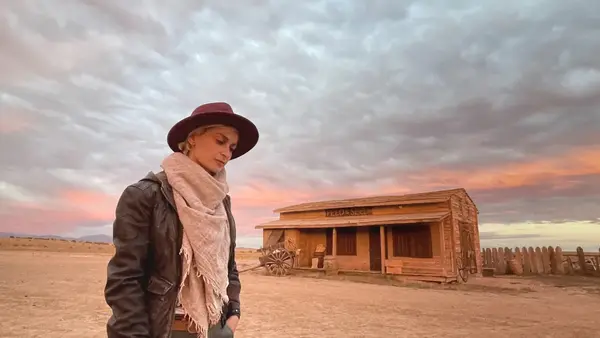
But at least these 19 other movies were made without anyone involved coming to physical harm, as sadly can't be said for the Alec Baldwin-starring Western Rust.
During filming in October 2021, cinematographer Halyna Hutchins was tragically shot and killed when a live round was accidentally discharged from a prop revolver.
Production immediately ceased amid an investigation, which eventually led to prop armorer Hannah Gutierrez-Reed being convicted of involuntary manslaughter.
At the behest of Hutchins' family, production was completed in the spring of 2023, though many still questioned the decision to finish the film.
And even though much of Hutchins' gorgeous lensing work is apparent in the final film, her death cast a permanent dark pall over the film's belated release last year, as audiences seemed divided over supporting the film to honour her legacy or ignoring it to avoid enabling the practises which caused her death.
Either way, the controversy led to Rust having a paltry theatrical release before being quietly dumped on streaming, where its legacy is to be remembered largely for the horrifying incident which needlessly took a crew member's life.