Ranking Every Lars Von Trier Film Worst To Best
The best and worst from the innovative and controversial filmmaker.

In the world of Hollywood, Danish filmmaker Lars von Trier stands as one of the most daring, divisive and controversial directors in the game. Releasing his first short film The Orchid Gardener in 1977, he has been shocking audiences worldwide for four decades thanks to his honest and dark examination of themes like depression and suicide, as well as various social and political issues.
His career has been marred with controversy from day one, and it's no secret that he's something of an acquired taste. That being said, underneath the sinister imagery, graphic violence and disturbing actions that characterise his films, many of his projects are far deeper and more thoughtful than his detractors would have you believe.
That's not to say all of his films are good, however. Several of his earlier works, for example, have not benefitted from the director's love of experimentation, and sometimes his need to go big or go home has hindered the best parts of his work from shining through.
Nonetheless, Lars von Trier is as risk-taking and as innovative as they come, and when he gets things right his films are nothing short of masterful. Hard to watch, yes, but seamlessly achieved and unique. With that in mind, here are all of von Trier's films ranked worst to best, excluding his early short projects (The Orchid Gardener, Images of Liberation) and his TV work. Let's get stuck in.
14. Epidemic (1987)

The second installment in von Trier's Europa Trilogy, Epidemic serves as a meta art-house horror film split into five segments. Von Trier and co-writer Niels Vorsel play themselves, battling to create a script for their next project. The bulk of the film focuses on the pair as they write their screenplay over an 18 month period; the rest of the film is intercut with scenes from their work-in-progress, a horror yarn about a doctor (also played by von Trier) trying to cure a violent epidemic.
This being a von Trier film, even an early one, Epidemic is an increasingly strange and disturbing vision, which becomes more twisted and surreal as the story wears on. The main issue is the plot, which, whilst inventive, meanders through the majority of the runtime until its deeply unsettling final moments.
Epidemic is vintage von Trier, but isn't nearly as well-drawn as his other projects.
13. The Element Of Crime (1984)

Lars Von Trier's first full-length film as well as the opening to his Europa Trilogy, The Element of Crime is far removed from the films that would come later in his career. Not a horror in the typical sense, the film is instead von Trier's attempt at a surreal neo-noir crime drama, in which a detective (Michael Elphick) attempts to hunt down a mysterious serial killer.
The Element of Crime is a abstract tale of murder and obsession, sporting great performances but never really allowing itself to stretch its legs and get comfortable with the story. Also, the tight budget of the picture unfortunately shows when it comes to the set pieces and camera work, and so the allure of the film is lost in the technical issues.
Still, at its core, The Element of Crime is a unique crime thriller and makes for key viewing for anyone interested in von Trier's work.
12. Manderlay (2005)

The second part of von Trier's as-yet-unfinished USA - A Land of Opportunities Trilogy, Manderlay stars Bryce Dallas Howard as Grace (first seen played by Nicole Kidman in Dogville), a woman who returns home with her father (Willem Dafoe) and learns that slavery is still being practised in her old town. Grace and her father then work to liberate the slaves, creating a more standard drama than von Trier is used to.
With its provocative themes and angry message, the film sometimes slips into forced sentimentality and lacks the subtly needed to convey its message with the raw power of von Trier's other pictures. It is however very well made, shot on a bare sound stage and set in only one location. Its simplistic setting, mixed with a great starring turn from Howard and its well-meaning sincerity, makes Manderlay one of von Trier's most surprising films, and though not as effective as others in his filmography is still a solid slice of devilish drama.
11. The Boss Of It All (2006)

The most comedic film to ever come out of von Trier's often dark and twisted mind, The Boss of It All is a pitch-black satire about the owner of an IT company (Peter Gantzler) who has convinced his staff that there is a manager above him calling all the shots. When he gets the chance to sell his company, he hires an actor to play his fictitious boss in order to keep up the ruse.
The Boss of It All is a great little comedy, with a unique plot that only sometimes feels forced and out of touch with the funnier aspects of the character interactions. Also, the whole thing was shot without a camera operator, a move that only von Trier would be crazy enough to try, and though there are moments where this adds to the whip-smart humour of the film, it is overly distracting in places.
All told, The Boss of It All is a fun film that serves as a welcome addition to von Trier's back catalogue and for all its faults is well worth giving a chance.
10. The Idiots (1998)

One of the first films ever shot entirely on digital cameras, The Idiots is one of von Trier's most polarising projects, a risky social satire that sees a woman (Bodi Jorgensen) suffer a miscarriage and join a group of performance artists as they challenge social norms by acting developmentally disabled in public. Von Trier purists see The Idiots as one of his best works; detractors see it as one of his worst.
Watching it over, it's hard to think of the film as either good or bad. On the one hand, von Trier made it in hopes of seeing people look at the ways in which they present themselves in public, and with some sharp jokes it often succeeds at making people think. However, with its sexual scenes adding little to the plot and the blunt observations of social constructs, it can seem a little on the nose, unable to shock without doing something controversial.
It's funny and wildly unique (as with all von Trier projects), but The Idiots, for all its strengths, will always feel a touch too extreme for the message its trying to convey.
9. Europa (1991)

The final installment in von Trier's early Europa Trilogy, Europa was filmed using three cinematographers and features some of the director's most striking and affecting imagery. The plot follows an American called Leopold (Jean-Marc Barr) as he becomes embroiled in a dangerous Nazi conspiracy. The whole thing is narrated by the late, great Max von Sydow, and comes complete with a mostly black-and-white aesthetic and a surreal love story.
Von Trier is of course no stranger to strange films, but Europa was the first time in his career that he fully took control of his craft. The experimental art film is bursting with great ideas and a seamlessly shifting tone, with no aspect of the plot or character becoming distracting or unnecessary. It's also an effective imagining of a post-war Germany, allowing for clever political commentary alongside the main plot.
Von Trier's first truly great film, Europa is not a film to miss if you want to understand the director's approach to cinema.
8. The Five Obstructions (2003)

The Five Obstructions signalled von Trier's first foray into the realm of documentary filmmaking, and showcases not just the director's love for film, but also his own immeasurable talent and passion for his craft. In it, von Trier challenges his idol, the experimental filmmaker Jorgen Leth, to recreate his 1967 film The Perfect Human five times.
Each time Leth remakes his film, von Trier puts an obstruction in the way, challenging his cinematic hero to really show what he's made of. In one instant, von Trier has Leth make it as a cartoon, and in another he must film the whole thing in Cuba with no set and strict time constraints.
The Five Obstructions is a joyous, funny look at the filmmaking process, and is stretched to greatness by the clear glee von Trier feels tormenting his inventive and tough-to-beat role model. It's also a rewarding experience, ending on an undeniable high and cementing von Trier as a genius when at his best.
7. Dogville (2003)

The first part in von Trier's unfinished Land of Opportunities Trilogy, Dogville stars Nicole Kidman as Grace, a woman who hides from some pursuers in the town of Dogville. There, she comes across the strange townspeople and must work for them in order to secure lodging. Increasingly dark and morally ambiguous, the film is a twisted and stylish parable of hope, suffering and abuse.
Like its weaker successor, Manderlay, Dogville was filmed on a bare sound stage, the whole thing complete in one setting. Though on paper this seems as though it would be a constrained way of working, the simplistic construction allows the film to feel constantly claustrophobic and palpable with tension.
As with many of von Trier's films, Dogville is both loved and hated, and regardless of where you find yourself once the shocking climax has reached its end, it cannot be denied that the film is a grade-A example of what makes von Trier such as a unique and brilliant presence in cinema.
6. Nymphomaniac (2013)

Released in two parts, Nymphomaniac shows von Trier at his most unapologetic, daring and darkly funny. An art-house erotic drama, the film features the director's most impressive ensemble cast yet (Stacy Martin, Jamie Bell, Willem Dafoe, Uma Thurman, Christian Slater and more) and a tale as dark and haunting as it is bold.
Simply put, the five-and-a-half hour epic follows Joe (Martin and Charlotte Gainsbourg), a diagnosed nymphomaniac who attempts to navigate a twisting journey of self-discovery.
Visually striking and deeply moving in parts, the film has a lot to say about modern-day existence and addiction, allowing von Trier to really dig into his own thoughts about the world and its faults. Of course, it's incredibly graphic (and it must be said that some of the sexual content isn't completely necessary as a whole) and even alienating in parts, but even then Nymphomaniac is an emotional masterclass that still stands as one of the director's most impressive achievements.
5. The House That Jack Built (2018)

Lars von Trier's latest film seems, on paper, to be one he should have already made. A violent and intrusive drama following the murderous trails of a serial killer (a terrifying Matt Dillion), The House That Jack Built is characterised by its brutal displays of violence and Jack's attempts to rationalise his unforgivable crimes.
Using Dante's Inferno as a main plot-thread, The House That Jack Built is a lot more intelligent and inspired than the slaughter would have you believe, and between Dillion's blood-curdling performance and a fantastic supporting turn from the late Bruno Ganz, it is at once a soul-crushing neo-slasher movie and a frank assessment of innocence, justification and death.
As ever, this is a divisive film, with many finding its violence exploitative and self-indulgent, verging on torture porn in places, and though for many it will be difficult to sit through, it's nonetheless a stylish, clever serial killer romp that is a much-watch for any fan of von Trier or the psychological horror sub-genre.
4. Dancer In The Dark (2000)

An artful musical about a young woman, Selma (a brilliant Bjork), who attempts to save up enough money to pay for an operation for her son, Dancer in the Dark is arguably the most beautiful film that von Trier has ever made. Selma spends her days dreaming about Hollywood musicals, and is kept upbeat during her life thanks to her love for music.
After being accused of being a criminal by her neighbour (David Morse), Selma's life begins to derail in almost explosive ways. Between Bjork's remarkable performance and the magical realism that comes with Selma's musical-inspired daydreams, Dancer in the Dark is at once von Trier at his most poetic and tragic. The scenery is beautiful, the message of love and hope clear as day, the dark undercurrents tinging it all with malice and fear.
A quick disclaimer, though: Bring your tissues. It's a bumpy ride.
3. Antichrist (2009)

For many, Antichrist remains von Trier's most controversial and infamous film, and watching it it's not difficult to see why. From the very first scene, this is a film designed to make the audience uncomfortable, but is under all of its sinister intentions a clear exercise in daring - not just for von Trier, but for stars Willem Dafoe and Charlotte Gainsbourg, as well.
Poetic, deeply disturbing, violent and unsettling without pause, Antichrist follows a mother (Gainsbourg) after the loss of her child. In her grief, she ventures with her therapist husband (Dafoe) to a cabin in the woods, where her surroundings and building depression explode in waves of sadomasochism and frightening revelations.
In its horror, Antichrist is poetic but unrelenting, a tour de force that is nonetheless a harsh and emotionally draining character study. It's bound to leave your nerves jangled, but shows off von Trier (and those willing to work with him) as a brave and daring filmmaker more than ready to show off what he can do even with the darkest of stories.
2. Breaking The Waves (1996)
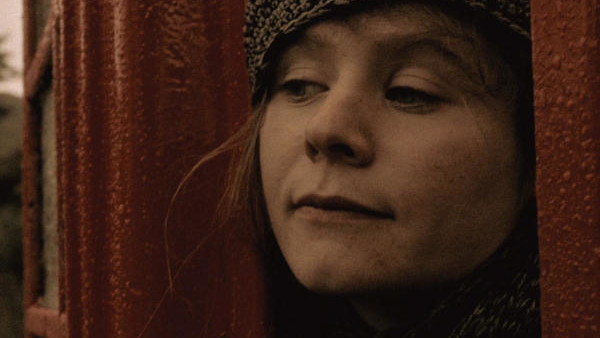
Breaking the Waves stands as von Trier's true break-out film. A deeply affecting tale of love, loss and compassion, the film stars a career-best Emily Watson as Bess, a beautiful and naive woman whose husband Jan (Stellan Skarsgard) becomes paralysed after an accident and begs his wife to find a new romantic partner.
It's a dramatic and heart-wrenching portrayal of faith and atonement, a mesmerising romance tied to a surreal and dream-like tragedy. The staggering imagery in this film is close to unrivalled in von Trier's filmography, but is amongst the beauty a troubling and disturbing tale of moral questioning and what we do in the name of love.
Like the vast majority of von Trier's films, Breaking the Waves is as magical as it is unsettling, but unlike many in his back catalogue, there is something almost hopeful about the horror taking place. It's not an easy watch (though is far easier to sit through than Antichrist or The Idiots), but is perhaps von Trier's most rewarding film.
1. Melancholia (2011)

The second part of von Trier's Depression Trilogy (following Antichrist and concluding with Nymphomaniac), Melancholia stands as the director's most personal and fully-realised masterpiece. As with Antichrist before it, Melancholia tackles big themes, mainly depression and faith, and was thought-up by von Trier after his recent depressive episodes landed him in therapy.
The film is spearheaded by Kirsten Dunst in her finest performance, and follows two radically different sisters as they come to terms with the end of the world. A planet, the titular "Melancholia," is heading for earth, destined to destroy everything.
Complete with startling visual effects, excellent performances and surreal imagery, the film watches like a tragic fairytale, confronting the inevitability of death and the pain of letting go with affecting results. Out of all of Lars von Trier's films, Melancholia is the perhaps the most stunning and unforgettable, and certainly features the director's most personal passages.
Every director has their masterpiece, and Melancholia is his without question.