Mulan Review: 6 Ups & 4 Downs
A solid return to form for Disney's live-action remakes.

Following a six-month delay, Disney's live-action Mulan remake has finally been released, with the House of Mouse taking the unprecedented step of releasing the movie direct to Disney+ day-and-date for a premium fee.
But beyond audience debates about Disney's pricing model for the blockbuster's VOD release - is it actually any good?
The answer, mercifully, is a solid "yes," for while Mulan 2020 is in no way superior to its beloved 1998 animated predecessor, it is a heartfelt reinterpretation of the original which avoids most of Disney's recent remake pitfalls.
While hardly up there with the likes of Jon Favreau's The Jungle Book, Mulan proves that there's still plenty of room to reinvent these classic tales in a way that doesn't just feel like a cynical cash-grab.
It may be imperfect, but it's mostly worth the hefty Disney+ asking price - or if you're more patient, you can just wait until it releases "free" for all Disney+ subscribers on December 4th.
But before we lavish the praise, here's what doesn't work in Mulan...
Downs...
4. The Inconsistent Visuals

Though it's clear throughout Mulan that a pretty penny was spent on its production - a stonking $200 million, in fact - it also has to be said that the end result is a little spottier than you'd hope for from such a handsomely-priced movie.
Though the sets, costumes, natural locations, cinematography, and general production design are all frequently gorgeous, much like Guy Ritchie's Aladdin the overall aesthetic is wildly inconsistent.
It is a film that at once looks both expensive and cheap, at times resembling a mega-budget wuxia movie and at others a kitchen sink attempt at an historical epic.
The worst offender style-wise is without question the visual effects, which while often beautiful and convincing, frequently devolve into muddy, blurry ugliness, especially during an avalanche sequence in the second half of the film.
For every sumptuous shot filmed by director Niki Caro (Whale Rider), there tends to be one that looks bafflingly cheap or even corny, which for a film of this scale is a bit disappointing.
3. Mushu's Absence Is Sorely Felt

Though the new Mulan mostly gets away with ditching the beloved musical licks of its animated predecessor, far more divisive is the exclusion of Mulan's beloved dragon sidekick Mushu, played with exuberant glee by Eddie Murphy in the 1998 film.
Given that Aladdin similarly toned down sidekick Iago, it seems to speak to Disney's desire to strip away the more outwardly "ridiculous" elements of these live-action remakes, but considering how Mushu accounts for so much of the animated film's heart and soul, his absence is sorely felt here.
While it certainly would've been a challenge to update the character for a grittier and more serious style, it was absolutely possible. Instead, Disney just cast him aside, with rumours suggesting this was due to the character's negative reception in China.
2. It's A Little Bloated

Like the overwhelming majority of Disney's live-action remakes, Mulan isn't just a remake but an expansion of the original tale, and to that end clocks in at almost 30 minutes longer than its animated predecessor.
Though the film is hardly a slog, there isn't much in here which really justifies that near two-hour length, as even if you excuse the riveting third-act action sequences, there's a ton of generic waffle about warring clans and the importance of family.
It's all the more bizarre that Mulan is so much longer than its animated forebear given that all the songs have been stripped out.
While the first and third act clip along pacily enough, it's clear that some of the excess exposition and chit-chat from the middle-portion could've been trimmed down a bit.
There's no reason this thing had to be a second over 100 minutes long, basically.
1. Jet Li's Distractingly Dubbed Role
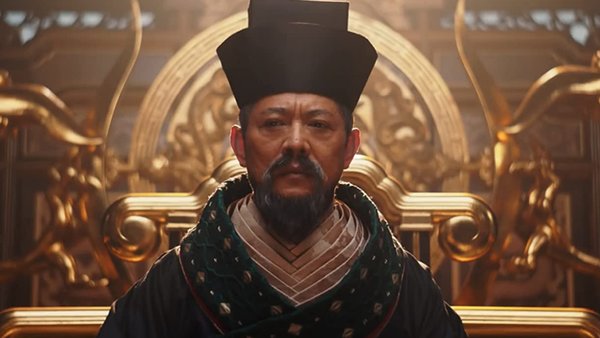
You wouldn't be blamed for failing to recognise Jet Li in the role of The Emperor of China, with the martial arts legend donning feature-concealing facial hair to play a role that, surprisingly enough, doesn't ask him to beat anyone up.
And while that's no big deal, it is extremely peculiar that Li's dialogue has been very obviously re-dubbed during post-production.
Though his role in the film isn't particularly large, every time he's on screen the bad ADR job draws considerable attention to itself, making it tough to take his character seriously or even pay basic attention to what he's saying.
It's tough to think of why this decision was made: Li's English may not be the best, but he's certainly been totally understandable throughout his Hollywood career.
These gripes aside, though, Mulan mostly works, and here's everything it gets right...
Ups...
6. It's Far More Than A Lazy Remake

Given that Disney's recent live-action remakes like Dumbo, Aladdin, and The Lion King have been relatively mixed affairs, you'd be forgiven for approaching Mulan with a healthy measure of trepidation.
Thankfully this doesn't feel cut from the same cynical cloth as those movies, and with its inventive approach to reinterpreting the beloved source material, feels like a solid return to form for Disney.
Though these remakes are basically damned whatever they do, Mulan strikes an impressive balance between paying loving tribute to the animated film and doing something new - it's basically the same but different.
On one hand it's far from the soulless facsimile that was The Lion King, with its more serious-minded tone and focus on wuxia-style martial arts action, but it never strays too far from the heart and soul of the original.
While some might roll their eyes at Mulan effectively being re-imagined here as a chi-powered superhero, director Niki Caro never takes it too far where it feels like Disney is simply cashing in on the prevailing superhero formula.
Above all else, it's clear that this movie was made with care and attention by the cast and crew, and was clearly a passion project for the major players.
5. The Terrific Cast
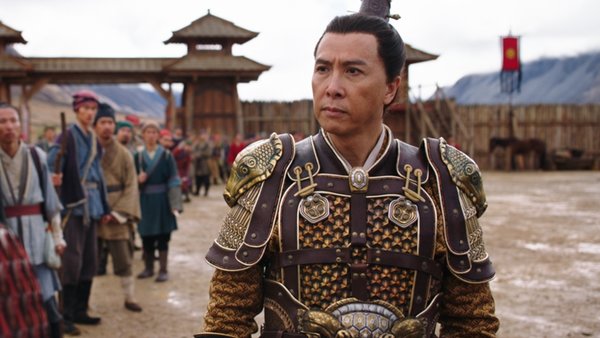
Mulan also benefits from a spectacular live-action cast, led by a remarkable Liu Yifei in the title role.
Her personal controversies aside, Yifei's Mulan is an immensely likeable and easy-to-root-for lead, making Mulan equal-parts a charming - with her hilariously affected "man voice" - and emotionally engaging protagonist.
Elsewhere, veteran character actor Tzi Ma is fantastic as Mulan's tortured father Hua Zhou, and the legendary Donnie Yen is a stoic delight as the forthright Commander Tung.
On the villain side, Jason Scott Lee and Gong Li give appropriately hammy turns as Bori Khan and Xian Lang respectively, though more on them later.
With the exception of Jet Li's dub-compromised performance, the ensemble cast delivers above and beyond expectations.
4. The Spectacular Action Sequences

If you can accept the aforementioned visual issues, Mulan's bevy of action sequences are for the most part ludicrously entertaining to behold.
Though the majority of the set-pieces are saved for the film's action-heavy second half, they're absolutely worth the wait.
Mulan's action is defined by a creative combination of wuxia-style martial arts and magic hooey, and though the editing is a tad sloppy in places, the inventive fight choreography and slick camerawork ensure these scenes are satisfyingly breakneck.
Given that the animated film wasn't especially action-packed, it's perhaps the aspect of this remake which best differentiates it, shifting away from strict military combat towards something a little more heightened and fantastical. It was a sure gamble, but it totally paid off.
3. It Updates The Original Themes For 2020

To be fair, Mulan has always been one of Disney's more progressive and forward-thinking animations, free of excessively "problematic" elements, and so an update didn't really need to do too much to feel current.
Even so, the new Mulan does a solid job of updating the original themes of female empowerment and family for contemporary audiences.
The idea of a woman struggling in a man's world, where she's instructed to "know her place" is very much in tact here, though the script goes further to explore society's general infantilisation of women - that's women, not girls, as one character corrects another during the movie.
Beyond Mulan being encouraged to hide her chi abilities and be a dutiful prospective wife, the film also leaps off to examine its female antagonist, the witch Xian Lang, through a similar lens of servitude and enslavement.
Without needlessly beating viewers over the head with clunky or heavy-handed dialogue, the new Mulan crystallises and solidifies the themes of the original in an uplifting and gratifying way.
2. The Strong Villains
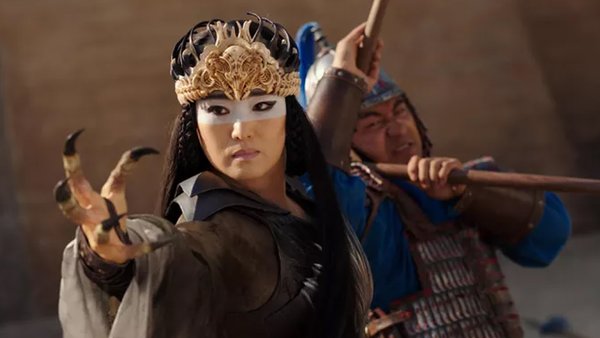
It's probably fair to say that few would rank the original Mulan's antagonist Shan Yu (Miguel Ferrer) among their favourite Disney villains, no matter how deliciously menacing the late, great Miguel Ferrer was in the role.
But this also gives the new Mulan plenty of room to explore new villains without leaving many fans miffed, and to that end the live-action antagonists are arguably superior to the animated equivalent.
Shan Yu is basically re-imagined here as Bori Khan, a supremely badass-looking warrior played with gleeful menace by Jason Scott Lee.
But he's easily outdone by shape-shifting witch Xian Lang, who ultimately proves to be far more interesting a character than she first appears, aided by Gong Li's knowingly over-the-top performance.
Needless to say, this isn't another Disney tentpole with a forgettable batch of personality-devoid villains.
1. Harry Gregson-Williams' Fantastic Musical Score
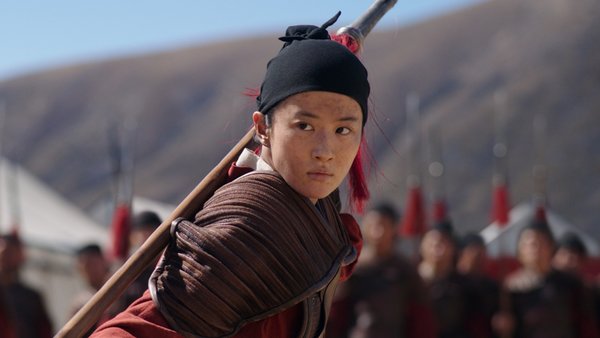
The ever-reliable Harry Gregson-Williams is a major reason that Mulan manages to evoke the epic, sweeping blockbuster feel it's desperately aiming for, with his diverse, operatic musical arrangements fitting the movie's style and tone perfectly.
Given how difficult it is to stand out amid other blockbuster scores these days, Gregson-Williams does a remarkable job evoking sounds typical of the era while melding them with a more contemporary, bombastic orchestral thrall.
Given that recent live-action Disney movies have proven pretty disappointing on the musical front, it's telling that the one which ditched traditional musical numbers entirely in favour of a pure musical score was actually the most successful.