Mowgli: Legend Of The Jungle Review - 5 Ups & 4 Downs
A flawed yet ambitious potential cult fave.
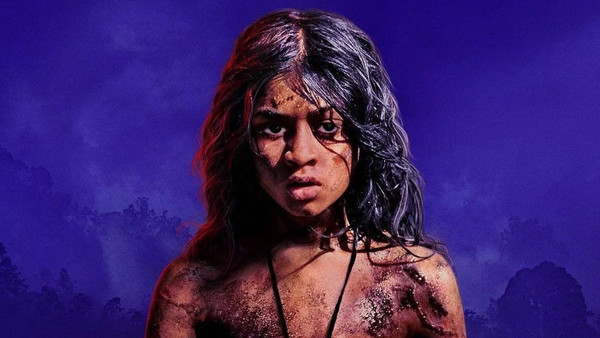
Andy Serkis' Mowgli: Legend of the Jungle finally releases on Netflix this weekend, and considering it started shooting way back in March 2015, it's certainly had one hell of an arduous journey to audiences.
Severely hamstrung by Disney's 2016 The Jungle Book stealing away most of its thunder - resulting in countless delays and title changes - Warner Bros. ultimately sold Mowgli to Netflix this past summer, and having now witnessed the final product, it sure is easy to see why.
Rest assured that Mowgli is not some disaster dumped on the streaming platform because it's a bad movie. However, it clearly had little commercial viability given both its proximity to the Disney film and some of Serkis' more daring, family-unfriendly creative decisions.
Is Mowgli worth a watch at home, then? Absolutely. It's a bold and interesting re-telling of Rudyard Kipling's classic tales, if also thoroughly messy and imperfect.
Critics have generally been fairly mixed on the film so far, and that feels about right for an envelope-pushing blockbuster which isn't quite as assured as it thinks it is...
Downs...
4. The Underdeveloped Human Characters
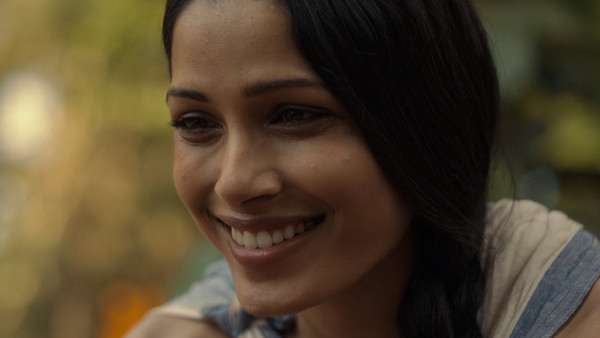
There are only three significant human characters in the entirety of Mowgli, yet aside from the titular protagonist himself, the others are given only the most cursory, surface-level of development.
Freida Pinto shows up late in the movie as Messua, Mowgli's new adoptive mother, though she appears and disappears from the story with a certain randomness before the audience can learn much about her or Pinto has much of an opportunity to do anything.
Then there's Matthew Rhys, who is absolutely well-cast as hunter John Lockwood, and while he avoids the cartoonish colonialist stereotypes associated with the character, he also isn't given a whole lot to do.
There's so much insight here into Mowgli as a human being and conversely almost nothing for the other human characters. Given their scarcity in a movie jam-packed with CGI animals, that's a sure shame.
3. It's Full Of Jarring Tonal Shifts
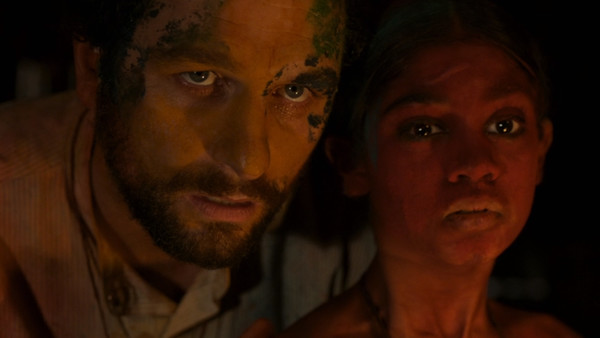
Hold onto your hats, because this film sure is a wild ride from a tonal perspective.
In the service of crafting a less family-friendly rendition of Kipling's source material, Mowgli certainly isn't afraid to get dark, but this isn't always juxtaposed particularly well with its lighter and more whimsical moments.
Serkis often changes the mood of concurrent scenes on a dime and the result proves distractingly jarring to the audience. Most frustratingly of all, it feels like a movie that can't quite decide if it wants to strictly appeal to grown-ups or go the kiddie fantasy route.
This could very well be a result of Serkis bristling with Warner Bros. on-set or in editing before the film was sold to Netflix, but whatever the reason, there's no clear tonal through-line here and it does draw far more attention to itself than it probably should.
2. The Third Act Is Messy & Rushed
Though the first hour-plus of Mowgli feels confident in its steady unspooling of plot and character beats, the final reel of the film goes into intense overdrive and consequently feels a tad too hurried for its own good.
In the final half-hour the plot picks up substantially and a lot happens, but given that this results in numerous character motivations shifting, these moments clearly needed to stew for a little while longer before taking effect.
It feels like the third act crams about half a movie's worth of material into itself, frantically cutting to the story's core in order to bring the film in at a fairly brief 104 minutes (especially as the end credits are almost 10 minutes long).
One can't help but feel that with an extra 20-30 minutes added to the length, Serkis could've explored the focal characters and their convergence towards the final showdown in a far more compelling and gratifying way.
Instead, it feels hacked up and glued back together in order to race to the finish.
1. It's Undeniably Inferior To The 2016 Movie

It pretty much goes without saying, but yes, Mowgli is unquestionably inferior to Jon Favreau's 2016 The Jungle Book.
While Serkis' goals are clearly very different and both films are aiming for a distinct style, tone and target audience, Favreau's film was simply executed with far more confidence in its own vision, while Serkis' project has the sure whiff of a fairly inexperienced filmmaker still figuring things out.
Again we'll probably never know exactly how much input Warner Bros. had on the final cut and whether or not Serkis had any opportunity to return to the editing room before Netflix locked the picture, but with these two takes destined to be compared alongside one another until the end of time, the Favreau film is far more persuasive in pretty much every way.
So, Mowgli has its share of issues, then, but that doesn't mean it isn't a worthwhile sit. Here's what Serkis and co. got absolutely right...
Ups...
5. The Stunning (But Weird) Visual Effects

Given the incredible visual majesty of the 2016 movie, Mowgli sure had a lot to live up to, and for the most part it surprisingly succeeds.
Given Serkis' experience working with performance capture tech, he's able to combine physical performance with digital animal trickery in a way that's a little offputting at first, but ultimately quite effective.
You can pretty much see the actors within the animals, which won't be for everyone, but thanks to the (mostly) high visual fidelity of the animal fur, it's a risky effort that pays off.
It also helps that, in its quest to be a darker telling of this story, the CGI animals look far rougher and more mangy than their fluffier counterparts in the Favreau movie.
There are some VFX elements that occasionally falter - some composited backgrounds and some CGI fire late in the movie in particular - but for the most part it feels like every penny of the production ended up on screen in the final film.
4. It's A Dark, Ambitious Adaptation
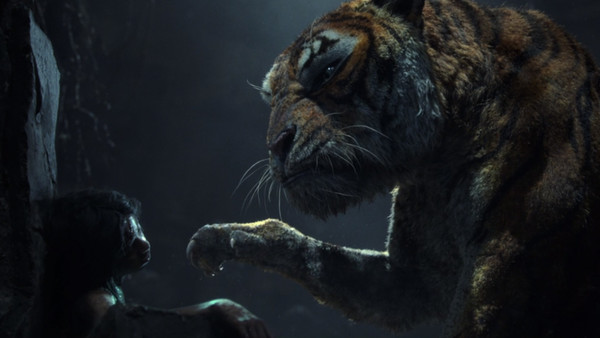
Though Mowgli doesn't always tow the line tonally as already mentioned, Serkis does deserve credit for creating a distinctly different film from Favreau's, leaning into the source material more faithfully, ditching the songs and generally being unafraid to depict the darker aspects of the story.
With a greater focus on jungle politics and refusing to smooth over the rough edges of its characters both human and animal, there's certainly a more visceral feel to this take, which embraces ambiguity rather than opting for the broader characterisations of the 2016 movie.
There's one especially shocking moment in the film's third act that's likely to take kids and adults alike wildly off-guard, and honestly, if you're planning to watch this with your own children, you might want to see it yourself first to decide whether they can handle it or not.
This movie gets intense, and Serkis mostly makes these sequences work, even if some may find it a little too tough-going for its own good (especially when contrasted with those jarring lighter moments).
3. The Terrific Voice Cast
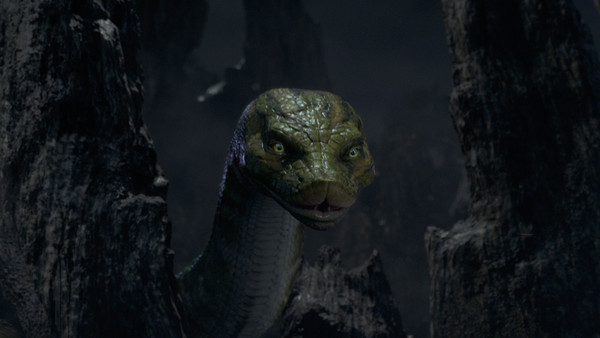
Easily the best thing about the movie overall is the strength of the voice cast, who at least sit on par with the performers from the 2016 movie and in some cases even surpass them.
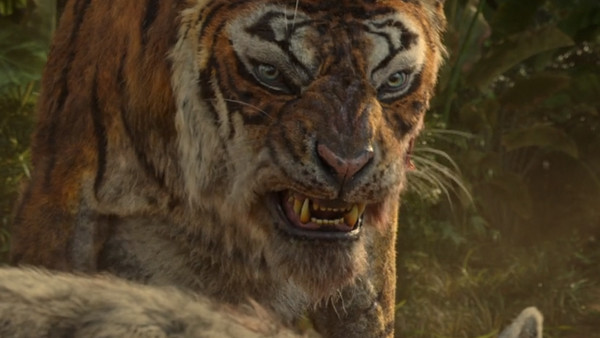
The clear standout performances come from Christian Bale as Bagheera, Benedict Cumberbatch as a perfectly-cast, delightfully vicious Shere Khan, Peter Mullan as stately wolf Akela and Cate Blanchett as slimy python Kaa (the latter proving especially more convincing than Scarlett Johansson's portrayal in the previous film).
While Serkis' own, weirdly cockney-ish portrayal of Baloo will likely prove more divisive with fans, everyone gives a richly well-rounded turn here, and thanks to the impressive performance capture tech, the actors lend plenty of themselves to these characters beyond the mere voice work.
2. The Eye-Popping Cinematography
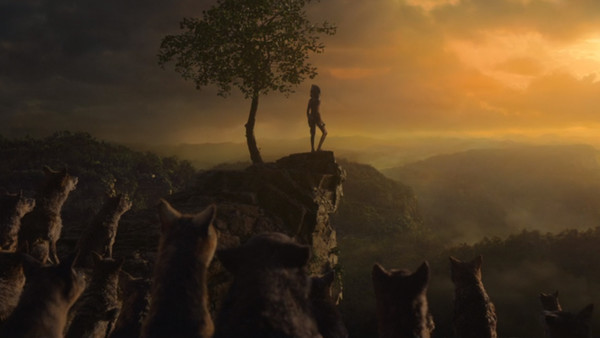
While it's fair to say that a good deal of Mowgli's cinematography is computer-generated, we now live in an age where a movie like Life of Pi can win the Best Cinematography Oscar despite the overwhelming majority of its visuals being CGI.
And despite the obvious reliance on VFX, overall Mowgli is an extremely handsomely-mounted film, full of lush digital vistas which largely prove completely convincing (bar the occasional blip).
It goes without saying that 4K TV owners will benefit immensely from Netflix's UHD HDR presentation here, making the most of the crisp shot selections, especially during scenes evoking the jungle's natural, sweeping beauty.
1. Rohan Chand's Strong Performance As Mowgli
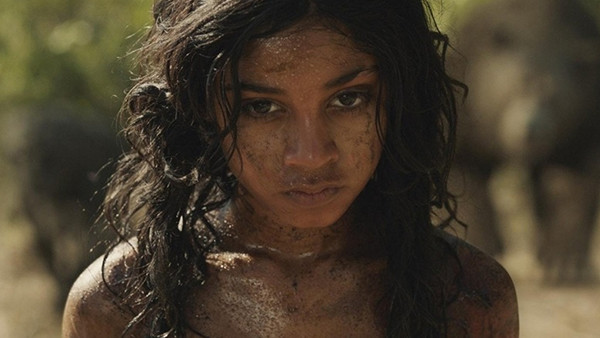
And finally, it would be remiss not to praise Rohan Chand for his stellar performance as young Mowgli.
A considerable improvement on Neel Sethi's fairly forgettable, occasionally whiny performance in the 2016 film - though it was somewhat by design that he would take a backseat to the animals - this more Mowgli-centric take gives Chand the floor to make the character more complex than he's ever been on-screen.
That Chand pretty much stands toe-to-toe with the elaborate digital creations every step of the way is no mean feat, and though he doesn't currently have any other major projects in the pipeline, he's certainly got a bright future ahead of him if he so wishes.
Have you seen Mowgli yet? What did you think? Shout it out in the comments!