MCU: 10 Things You Learn Rewatching Captain America: The Winter Soldier
Yes, it's still the best Marvel movie.

When Joe and Anthony Russo became attached to the sequel to Captain America: The First Avenger, fans didn't really know what to expect. They were of course known to fans of Dan Harmon's Community, but apart from that, the pair were yet to really carve a reputation as one of the great collaborators of the cinematic medium.
Today, the Russo Brothers have been charged with leading the Marvel Cinematic Universe into unchartered territory. And as all eyes are focused on Infinity War, a film far grander in scale than their earlier works, it makes sense to revisit the film that first endeared the pair to the Marvel faithful - Captain America: The Winter Soldier.
Back then and even today, the Russo Brothers' first Marvel movie was heralded as the best the MCU had seen - and it's easy to see why. Rooting itself in seventies-era conspiracy fiction and adapting Ed Brubaker and Steve Epting's seminal Winter Soldier arc from the comics, the film immediately stood out as a smart, character-driven and riveting ensemble, one driven not only by the performances of Chris Evans and Scarlett Johansson, but also by discussions surrounding surveillance, individual liberty, and interventionism too.
It really is an excellent film, and while there are several MCU features that could lay claim to being the franchise's best, this 2014 film still has the strongest case to make.
10. It's A Product Of The Seventies
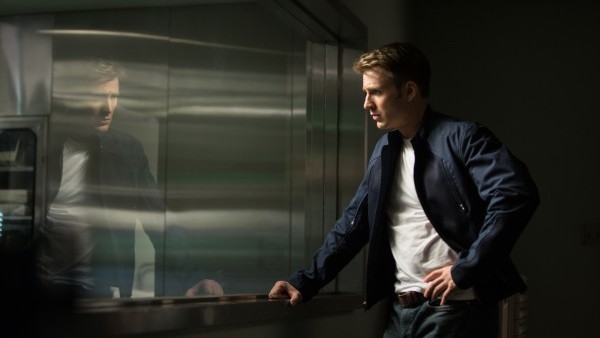
The true genius of The Winter Soldier lies in how it tells its story. This isn't a typical superhero film, and while comparisons to spy films are apt, there is another genre that fits it better - that of the conspiracy thriller.
Although they existed prior to the Nixon presidency, conspiracy fiction exploded during the early 1970s. Directors like Alan Pakula, Francis Ford Coppola and Sydney Pollack were its greatest proponents, and star Robert Redford - who starred in Pakula's All The President's Men and, in another of TWS' biggest inspirations, Pollack's Three Days of the Condor - played a key role too.
The Winter Soldier's story of an Agency compromised by a sinister force bears the echo of Three Days in particular - as does its structure - and in creating a pervasive kind of paranoia on the screen, the film follows Pakula (Klute, The Parallax Man) and Coppola (The Conversation) excellently. Redford's casting as an establishment villain - ironic though it may be - is also derivative of those works, and while there's action to match the tension, it's made apparent where TWS' takes its inspiration from right from the start.
9. It's Every Bit As Much Black Widow's Film

Since Scarlett Johansson burst onto the superhero scene as one of the few redeemable features of Iron Man 2 as S.H.I.E.L.D. Agent Black Widow fans have been desperate to see the character in her own film. It could finally - finally - be coming within the next few years, and while it'll be great to see regardless of how long it's overdue, it's worth remembering how integral Natasha Romanoff was to The Winter Soldier's narrative.
Johansson, who also turns in her best performance as the character in the film, features predominantly throughout the story as both an ally and as a leading character. She, like Steve, undergoes a massive journey too, as writers Christopher Markus and Stephen McFeely divulge more of the character's backstory in an effort to provide depth to a hero that had been played fairly one-dimensionally up until that point.
We learn more about her past as a Soviet spy, her encounters with the mythic Winter Soldier as well as her motivations for joining S.H.I.E.L.D., and it remains the most complete study of the character to date.
There's absolutely nothing not to love about this performance, and while the film packs a star-studded cast, Johansson steals pretty much every scene she's in.
8. The Fury Twist Is A Little Weak

Marvel have long been fans of a putting a little bit of deception into their trailers, and in Winter Soldier they laid their cards down pretty quickly.
Both the film's teaser and its theatrical trailer included shots of Nick Fury in considerable distress, either on the highway or on the operating table. He looked set to pass, and low and behold when the film came proper he did... for approximately forty-five minutes.
The attack on Fury made for one of The Winter Soldier's tensest scenes, and when he "died" on the operating table it lent the film a genuine sense of terror. Steve and Nat were now up against one of the most powerful intelligence apparatuses in the world, and while it's always been the case that Fury is several steps ahead of, well, pretty much everyone in the Marvel Universe, his subsequent return didn't feel all that great.
It doesn't derail the film by any means, but nothing of note has been done with the character since, making this particular resurrection feel doubly pointless.
7. Sebastian Stan Has A Fantastic Presence

Sebastian Stan is the unsung hero of the Captain America series, and while his performance in The Winter Soldier is a bit of mute one, there's no denying he commands the screen with a level of ferocity unmatched by his Marvel cohorts.
The Winter Soldier's entrance makes for one of the MCU's most memorable yet, and it's a testament to Stan's acting ability that he's able to impart that impression with no dialogue to mention. Sure, there's the "who's Bucky?" line later on, but these earlier confrontations intimate the character's history with ease, leading us to believe that he truly is deserving of the reputation he garnered over the course of the Cold War.
The film's climactic confrontation between Bucky and Steve also makes for one of the most impactful the MCU has seen, with Steve's attempts to rekindle his friend's memory falling upon deaf ears up until its closing sequence. You can see that Bucky isn't quite there just yet, but in spite of the fact Stan doesn't have much to work with, he manages to make the burgeoning moments of this transformation convincing and worthwhile.
6. The Score Is Actually Memorable
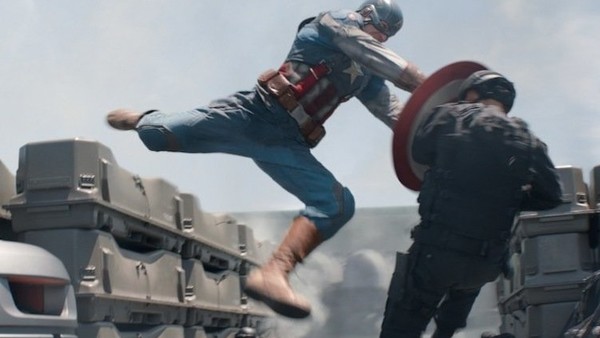
Although the Avengers theme is certainly recognisable (why else would Marvel have led with it in Infinity War's trailers?), a consistent criticism levelled against Marvel Studios has been that their solo features lack compelling scores. That might be true when it comes to Iron Man, or perhaps even Thor, but Captain America has always had an identifying theme - one that's shifted to mirror the character's own journey from 1945 through to the present.
Winter Soldier's score, composed by Henry Jackman, takes cues from Alan Silvestri's composition for The First Avenger and adds a modern edge to it. Embedding the Silvestri score was also a clever way of mirroring Cap's status as a man out of time - you have these classic instruments that harken back to the character's war years, but they're joined by electronic sounds to create a unique kind of dissonance on the screen.
It's easily labelled as a typical superhero theme, but it's not nearly as forgettable as other Marvel compositions. It benefits from Silvestri's earlier work but it also elevates it by mirroring Cap's own journey into a modern landscape, combining the heroic inflections of The First Avenger's music with new instruments to impart not only the film's paranoid leanings, but also Cap's own position in a world he's still getting used to (and railing against).
The MCU might have better compositions, but Winter Soldier's is one worth paying attention to.
5. It Has Something To Say

Modern Marvel was founded on the principle of mirroring "the world outside your window", and The Winter Soldier does so in a uniquely uncompromising way.
Of course, social commentary is not an alien concept to the MCU; Iron Man kicked things off with a blistering critique of the arms trade, Spider-Man: Homecoming highlighted class dynamics and corporate neglect, and Black Panther spotlighted systems of imperialism and the effects of institutionalised racism on the African diaspora. The Winter Soldier instead opts to analyse America's post-9/11 self, in particular the War on Terror and the constant battle between security and individual liberty - the liberty Steve Rogers has always fought to preserve.
Needless to say, the clandestine nature of S.H.I.E.L.D. doesn't necessarily agree with Rogers, and when Nick Fury introduces him to the Agency's latest fleet of Helicarriers - ones programmed to kill targets en masse before they've even committed an offence - his disgust is evident. "This isn't freedom. This is fear," he says, setting in motion the Captain's war with America's premier espionage outfit and with it his journey away from his old identity.
Hydra's influence on S.H.I.E.L.D. also makes for a fantastic metaphor on how security (in this modern context) has steadily eroded individual freedom, and in teeing up Cap for his eventual fight with Iron Man in Civil War, Winter Soldier should be considered essential viewing.
4. What Was With Natasha's Necklace?

Avengers: Age of Ultron was... divisive, to say the very least. It had its moments, but layered within its most compelling sequences came some rather bizarre storytelling decisions, including Bruce Banner and Black Widow's romance, as well as Clint Barton's secret family. Both features were heavily critiqued by fans upon the film's release (the former for its borderline painful "I'm the real monster' moment, and the latter for, well, just how contrived it was), but there may be another twist in the tale fans aren't aware of.
In the comics, Black Widow and Hawkeye shared a romantic past. Clint being Clint, the relationship didn't last, but fans nevertheless expected it to feature in the MCU at some point, particularly when their history together was made a focal point of both characters' development during Avengers Assemble. Winter Soldier only added fuel to the fire, with Nat actually wearing an arrow necklace for the majority of the film's proceedings. (Jeremy Renner was due to star in a brief cameo, but scheduling conflicts prevented such a thing form happening.)
Of course, it's just as good seeing Nat and Clint in a platonic light, but one can't help but get the feeling that a different path might've been planned for the pair. Not that it matters now of course, but it's interesting to consider that a small visual cue comprised a part of Black Widow's outfit for the majority of the story.
3. Alexander Pierce Is A Fantastic Villain

You know, with all these good villains coming around these days, to say the MCU has a bad guy problem would probably be a tad bit disingenuous.
There's Loki, Vulture, Ego and of course Erik Killmonger, but one villain who (both in and out of the film) has managed to eschew the spotlight is Alexander Pierce, Robert Redford's sinister antagonist who preserves Hydra's presence in the modern day.
Pierce is the very manner of a modern major nasty - the kind of villain who utilises any and all means at his disposal but who's able to mask it all with a welcoming presence. It's the perfect role for Redford, who - in the seventies - played the exact antithesis of this character, as crusading journalist Bob Woodward in All the President's Men, and as an analyst on the run in Three Days of the Condor.
It makes his deception all the more convincing, and while he leaves the dirty work for the Winter Soldier himself, he's a villain in the truest sense.
2. The Action Feels Genuine

The Winter Soldier's finale does devolve somewhat into a typical CGI spectacle, but for the vast majority of the film the opposite is true. Fight scenes are well choreographed, there's a genuine threat to the violence and, between Bucky and Cap, a clear and compelling emotional current.
One only need mention the film's stunning elevator sequence to illustrate its quality when it comes to action, which makes for one of the tensest encounters the MCU has ever seen. The unease increases as more and more bodies pile into the elevator, with the viewer alerting to the intentions of Cap's coworkers only as he does, making what seemed at first to be a fairly innocuous scene of transition a pivotal and devastating moment, with Pierce's role now fully disclosed.
There are plenty of other sequences of note, including the pivotal highway scene involving Sam Wilson, Steve and Nat against The Winter Soldier and his mercenaries, but perhaps the film's best comes in its final sequence. This is the moment the franchise had been building towards since Bucky fell off of Zola's train in The First Avenger, and Steve's attempts to rekindle his memory are heartbreaking, with the Captain delivering those famous, devastating words to his former comrade: "Then finish it. Because I'm with you to the end of the line."
When it comes to the MCU, there isn't a friendship stronger than theirs, and it shines through Winter Soldier's action as much as it does its dialogue.
1. All That Foreshadowing

When The First Avenger released in 2011, it was likely that Cap's destiny wasn't fully planned. He'd come to form a part of the Avengers, that much is true, but his role after the Chitauri Invasion was never set in stone.
That said, whether it be in that film or in The Winter Soldier or even Civil War, these stories have all boasted a hefty dose of foreshadowing. Foreshadowing what exactly? Well, for starters, the death of Steve Rogers has been prophesied repeatedly over the years. Speculation has been exacerbated by Chris Evans' past comments that he'd like to see himself bow out eventually and assume a directorial responsibility, but there's precedent for it in the comics too - and they just so happen to be the ones that've inspired the MCU's interpretation of the character.
When Steve did die in the comics, the mantle of Captain America fell to Bucky. Sam Wilson has also assumed responsibility since, but the bulk of foreshadowing - whether it be in The First Avenger, Winter Soldier or Civil War - has alluded to Bucky taking on the mantle. He wields the shield with such confidence, and TWS doesn't take exception to that fact - it places it front and centre in its biggest moments.
We know not yet where Bucky's story ends, but with three films worth of foreshadowing already released, it's hard to see it anywhere else than under the red, white and blue of Captain America's shield.