Maggie: 7 Tics In Arnie’s Performance That Make It Great
Prepare for something completely different.
As well as returning to the fold for the latest Terminator movie (and stealing just about every scene), Arnold Schwarzenegger is taking an entirely different path with the far more tender, far more nuanced Maggie, a zombie apocalypse movie with a more legitimate heart-beat than the genre typically offers. This isn't your usual all guts and glory, hundreds of faceless kills zombie movie: it's rather a touching, at times devastating look at what infection and loss actually mean in human terms.
It is, quite honestly, the most authentic portrait of that cost, which is more concerned with the idea of becoming dead rather than grotesquely celebrating what it means to become undead. And at its heart is a genius understated performance by an actor whose versatility is never as openly applauded as it should be. If Copland was Sylvester Stallone's proof that his acting chops could flex as impressively as his muscles, Maggie does the same for Arnie, whose status as a bona-fide legend makes gentle, understated performances like this all the more surprising and delightful.
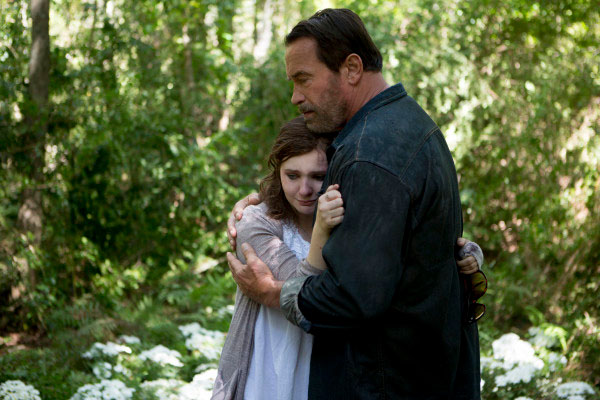
This is no typical action movie performance. He's not the invulnerable superman figure Hollywood seems so fascinated by at the moment; he's a father, made vulnerable by his love for a rapidly deteriorating daughter who is the centre of his universe. And the performance is rich and layered in a way that even the usual back-to-the-wall hero father roles tend not to be, thanks to the way the film has approached its message. There's a lot going on beneath that hulking surface, and identifying exactly how Arnie built the character is key to understanding his success...
7. He's Vulnerable
Particularly in his first sequence when Arnie arrives at the hospital where his daughter has reappeared after a two week flight to "freedom", which is in fact more to do with her infection than a traditional teenage sojourn in the Big City. That scene is carefully, starkly shot on Arnie's shoulder for the most part, as his trepidation builds with every haunting vision of infected victims and intercut shot of Maggie fleeing through the streets in a simultaneous flashback. The same framing happens elsewhere, cut with POV shots that verge on frantic, and it reinforces the idea of his distinct lack of safety. Throughout there's very much a sense that despite the familiar, gigantic size, this version of Arnie - this placid, quiet farmer - is made excruciatingly vulnerable by the marriage of fear, ignorance and the awful reality of the infections around him.
6. He's Protective
Whether he's faced with a zombie apocalypse and the considerable issue of his daughter's condition or not, Wade remains a father, which is part of the dark charisma of his performance. Even when he has picked Maggie up from the hospital, he berates her for picking at her dreaded wound. Despite everything, he has the same paternal instincts, and there's a marked change in his demeanour, as his constantly furrowed brow makes way for something older and sterner. Like a brief flash from before people started being bitten.
5. His Character Draws Heavily On The Last Of Us
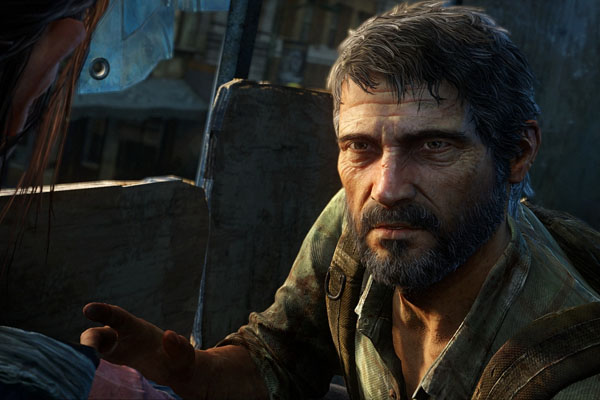
Unsurprisingly, director Henry Hobson has drawn a lot from his time working on The Last Of Us, which is at least a genetic cousin of Maggie, sharing a very similar feel and some obvious story similarities. Both concern a father in a protecting role, and in both cases, they're haunted by death. The difference, clearly, comes down to the fate of the daughters. In The Last Of Us, Joel has already lost his daughter and is looking for redemption by saving Ellie, while Maggie sees Wade struggling before the actual death. In both cases, the grief and the inability to deal with the inevitable see both men flounder from heroism to breaking point. Both men are drawn with patience and are defined by their emotions as much as by what they aren't expressing, and they make interesting creative brothers.
4. He Looks In Pain When The Truth Can't Be Hidden
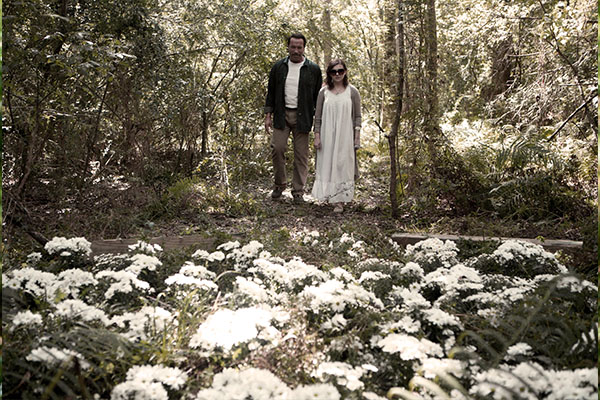
One of the most difficult parts of the film to watch is the way Maggie's condition plays out on her father's face, which accounts for why he spends most of the film not allowing his stoic exterior to drop. Early on when he's faced with talking about Maggie's grim diagnosis with his wife (Joely Richardson), he cannot make eye-contact, looking at the floor as he relates what he knows to be true. It happens elsewhere, as he seeks solace away from other people's gazes as if he will crumble to share that intimacy. And when he's in Maggie's company alone, he seamlessly transitions from smiling and laughing (to make the most of their time together) and reverting to the stern father who you suspect might just have been the reason she ran away.
3. He's Still Very Powerful
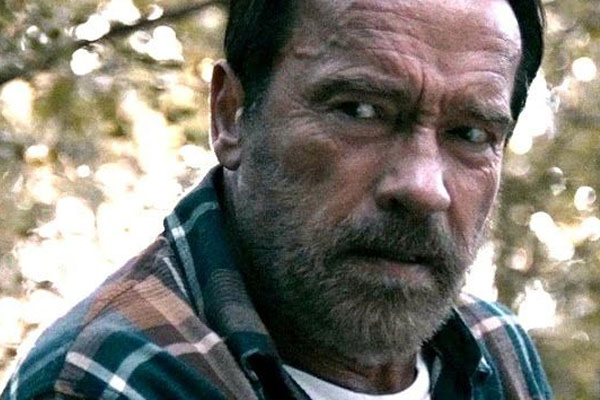
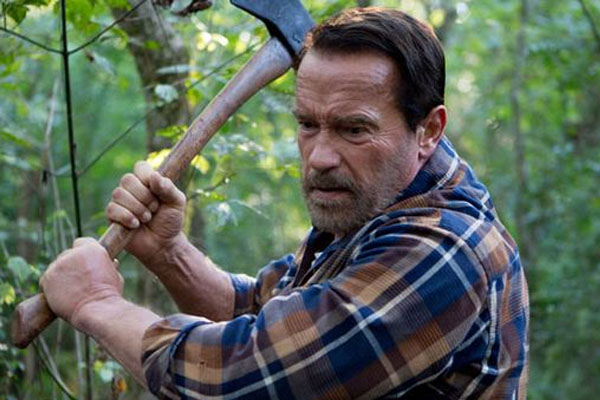
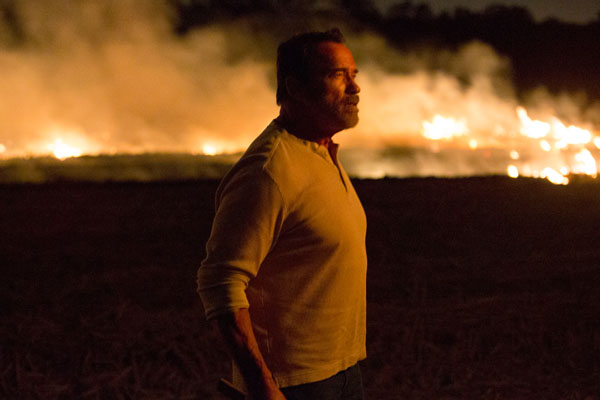
It only happens in flashes, but Arnie's Wade is still very much a weapon, not carved by military training or born a warrior, but more organically strong - a necessary part of his life as a farmer and a protector. There is no showy uniform to emphasise his muscles - no shirtless posturing either - instead he's dressed in simple flannel. But that doesn't mean that he's not capable of supreme moments of strength when circumstances dictate. He's a killer of necessity, who is measured and feels every time he is forced to do it, hesitating as if weighing up what remains of the humanity in who or what stands before him. That power that comes out of nowhere is a subtly brilliant element, and one that plays strangely and wonderfully against any expectations anyone might have of Arnie heading into the film.
2. He's A Caged Animal When Threatened
For the most part, Arnie walks around slowly, as if choosing every step carefully, and never really standing to his full, imposing height. It makes sense - he's not a man of violence (unless forced) and there's no call for alpha male posturing in his home haven. But when his house is visited by local cops looking to reinforce the dangers of Maggie's infection (and following up a case of infected neighbours on the loose), Wade changes noticeably as soon as he perceives a threat to his family. He doesn't just vocalise his threat, but also grows visibly and stalks his porch meaningfully, like the lion with the injured paw suddenly needed to remember what he was.
At that point, he's definitely still the familiar Arnie, if packaged slightly different, and that's sort of the point...
1. He's Not Completely Transformative
Importantly, Schwarzenegger is still recognisable as the same actor who has made a career in a very specific way, and crucially, it is his star power that makes up a good deal of the character's charisma.
Even though the performance is entirely unexpected - and brilliant for it - there is still enough of the old Arnie magic in there: the same wounded animal instincts we've seen elsewhere, the same fire, and the same extremes of emotion. It's just that it's wrapped up in something else: something more tender, more helpless and more devastating.
But this isn't an attempt to cast off everything that's gone before - and that's where the allusion to Stallone's Copland comes into mind again. Both characters feel like they could be alternate universe versions of classic action characters, just domesticated and haunted not by baddies toting guns but by their own inadequacies and their own difficult emotions.