Jurassic World 2: What The Ending Of Fallen Kingdom Really Means...
A new world order emerges...
By the end of Jurassic World: Fallen Kingdom, a lot of things have changed and by the sound of it, the world can never be the same again. As Dr Ian Malcolm would say, life will find a way, but it will have to adapt to a whole new dynamic before it can.
We already know that there's a follow-up to the movie coming, with Colin Trevorrow back in the director's seat and he has already firmly established that Fallen Kingdom was intended to be the middle of a trilogy. In other words, it will all come to an end in the next film, which promises to be an explosive finale to the new Jurassic World series.
The question right now is how that finale will take shape in the couple of years it takes to bring it to life. Will we truly see a closer return to Jurassic Park's spirit? Are we finally done with hybrid dinosaurs? And what of the possible villains of the piece? Even now, it's possible to look at how Fallen Kingdom ends and explore what themes and specific story beats we might see in its follow-up.
Inevitably, there are SPOILERS for Jurassic World: Fallen Kingdom from hereon in...
8. The Post-Credits
First, let's deal with the post-credits scene.
At the end of the movie, the surviving dinosaurs end up escaping their captivity at Lockwood's mansion thanks to some serious silliness - including the casual revelation of full human cloning - and are let loose on an unsuspecting America as Ian Malcolm's voiceover talks about how the world has changed now.
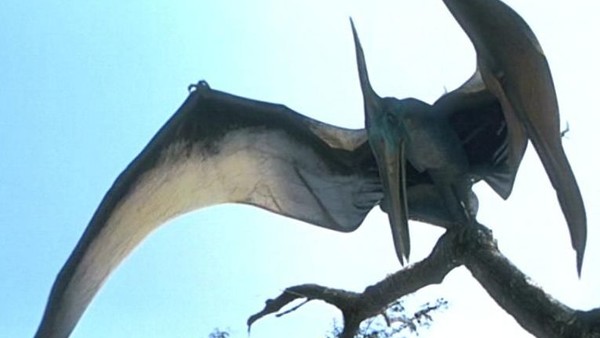
The credits roll as we see the dinosaurs adjusting to their new environments and definitely not just planning on eating everyone and then after the credits the stinger sees two pterodactyls flying to Las Vegas and landing on the smaller replica of the Eiffel Tower.
Presumably, this could be foreshadowing a dinosaur invasion of Las Vegas? Or maybe they just really like blackjack?
7. The Dinosaurs Are Free, People Will Die

So, saving the dinosaurs from death by poisoning is all well and good, but it's now led to a situation where there are now about 20-30 dinosaurs, including a couple of bona fide apex predators, simply out living free in America.
There's a Mosasaur seen swimming with surfers, a raptor heading towards a residential estate, pterodactyls hitting up the strip in Las Vegas. And that's without mentioning the T-Rex and the Allosaurus, which will both eat everyone they meet and the armoured vegetarian ones who will still do a lot of damage if spooked by anything they've not encountered.
Like, say, 99% of civilized society...
So, we're looking at the possibility of a small-scale apocalypse led by these dinosaurs as they try to adjust. It's not like they're going to turn vegan, they're going to hunt and kill and eat and that's going to be yet another bad PR day for InGen.
6. An Uneasy Harmony?

The most hilarious thing about the ending is Ian Malcolm's monologue about the shifted dynamic in the world now that the dinosaurs are now no longer in captivity. He mentions the fact that we will now have to come to some sort of new arrangement where we try to find some peace together. A world where man and dinosaur can co-exist.
Which definitely sounds like he's suggesting the future after Jurassic World 2 will be The Flintstones...
Also, it's ridiculous. If a Mosasaur wants to eat everything in the sea, including anyone that dares to swim in it, she will. If a T-Rex wants to make your neighbourhood her home, you best move out. They're not reasonable creatures.
Incidentally, why is Malcolm being asked to speak on that panel? After all of his experiences with dinosaurs, him giving an expert opinion is akin to asking pigs their opinion on bacon sandwiches.
5. It Doesn't Work In The Long-Term...

Well, not for the dinosaurs, anyway. Say what you want about Hammond, his plan to have all the animals one sex wasn't a bad one, even if it was undone by the fact that some frogs can change sex to suit their environment. That should mean none of the dinos can procreate, assuming the later scientists fixed the loophole (which you'd think they would with Henry Wu still involved).
Even if they could, there are only a couple of species that had pairs of dinosaurs, like the pterodactyls, so it's not like there'd be much of it going on anyway.
So even though the dinosaurs were saved to go free, they definitely aren't going to be around for generations. And assuming someone takes it upon themselves to fight back if they start eating people, the apocalypse might not even come in any kind of long-term way.
4... But There Are Lots Of Years Left In The Free Dinos

One of the film's most interesting revelations addresses the question of how the original T-Rex is still alive after more than 25 years when the life span was supposed to be 20-25 years according to science.
Stupidly, the film explains it by saying that it's like a caveman being revived now: he would be well-fed and looked after and would probably live four times as long now than he would in his own day. So, basically they're saying that the greatest predator to ever walk the Earth will now live longer because it has had a better diet and more love? Horse excrement!
No matter how silly the explanation, but it means the freed dinosaurs aren't just going to die of old age in the next couple of months. Assuming nothing can kill them, they could well be out there for a while.
3. There WILL Be More Gene Splicing

Speaking with Total Film (via Bloody Disgusting), Colin Trevorrow said of Jurassic World 3:
“I’m looking forward to, in the third film, getting a little back into the Paleontological, wild animal, true dinosaur nature of all of it.”
He also said that there wouldn't be any more hybrid dinosaurs in the next Jurassic World film. But that can't be true. The film ends with Dr Wu once more fleeing the situation with a big briefcase full of genes, and while the D-Rex bone was destroyed, there's no way Wu hadn't already taken the DNA from it anyway for himself.
For Wu to suddenly go back on his life's work would be ridiculous, so it seems that Trevorrow must have been misdirecting in this interview. Either that or he plans on leaving one almighty unresolved plot point in the sequel?
2. The Human Genetics Question

The way the film almost casually drops in the fact that Isabel Lockwood is a clone of her dead mother is so badly ignored (aside from when she expresses affinity for the dinosaurs) that you have to think that it's going to come back as a bigger deal in the sequel.
After all, there's a whole other set of considerations around human genetics and cloning than there is around dinosaurs and it should attract interest from lots of the wrong sorts of people. Could we see Isabel hounded for what she is and what she represents to science? Could we see a revival of the abandoned idea of splicing human and dino DNA to create super-soldiers?
Trevorrow might say no at this stage, but there's no way we aren't going to see more of an insight into Isabel's cloning in the next film.
1. A New Family

By the look of it, Jurassic World 3 will see a full-on family established as the hero group, following (well, surpassing) the model offered by The Lost World.
It seems we'll see Owen and Claire together as a couple in the third film, as well as them looking after Isabel now that her grandfather has been killed. That should at least bring a different feel to the film from the outset.
The finale sees them driving off into the sunset, but there's no way that will be the last we see of them. They're all too heavily invested in the story to walk away at this stage.
What did you think of Jurassic World: Fallen Kingdom? Share your reactions below in the comments thread.