Interstellar: 20 Easter Eggs & References You Need To See

Of course Nolan wouldn't reference Event Horizon... would he?!
Somewhat inevitably, Christopher Nolan's latest film is a divisive one: just as The Dark Knight Rises polarised responses from audiences, the sprawling, spectacular Interstellar will inspire wildly different reactions from viewers. It is a spectacle to be reckoned with, a tone poem like so many of its very obvious influencers, and it is a love letter to the aesthetic of cinema as much as it is a sci-fi about humanity's last ditch attempt to save itself. It might not be for everyone, but it has some truly stunning moments. Nolan's pure sci-fi isn't exactly subtle, there are some terribly cheesy lines, and the final third of it is a bit... odd, but it's a sci-fi in the purest terms (perhaps with more emphasis on the fi, rather than the sic at times, despite the presence of expert advisors). But as you would expect it is a film-maker's film, for cinephiles and lovers of the processes and legacy of film, and as such, it's packed with references and Easter Eggs, the best of which follow here. Some - like the Event Horizon link - might be more surprising than others. Inevitably, spoilers will follow.

20. It's Proper Sci-Fi

Asimov Reynolds For too long, the sci-fi movie genre has been a secondary action genre - thanks in part to the unintentional influence of the Alien franchise. It's rare that any sci-fi film consciously avoids the urge to bring something else to the table - be it action or horror or something else entirely - but Nolan stayed pure with Interstellar. Fans of the genre in literature will no doubt see the influence of Alastair Reynolds (and particularly his Revelation idea of higher beings monitoring the universe) and the social science fiction of Isaac Asminov.

19. The Dust Bowl & The Grapes Of Wrath
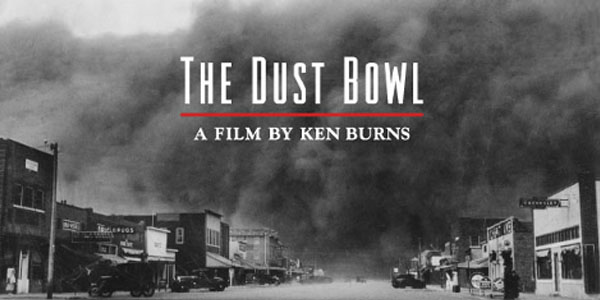
The film opens with video interviews with real people recounting their experiences of the Dust Bowl which is killing off humanity - thanks also to a blight epidemic that is wiping out crops - two of which are taken from Ken Burns' 2012 PBS film The Dust Bowl. That film shows twenty-six survivor accounts, offering a morality tale for humanity's relationship with the Earth - the underlying moral message of Nolan's film. The third of the three accounts comes from Exorcist star Ellen Burstyn, who is revealed at the very end of the film to be Cooper's aged daughter. Thanks to Nolan's aesthetic and the design choices that strip away any futuristic elements, there's a distinct recall to The Grapes Of Wrath - a very obvious narrative (but not generic) cousin of Interstellar.

18. Malick's Influence

Christopher Nolan has been very clear about the influence that Terrence Malick has had on his film-making career, and from the very first trailer, it seemed that the director's spirit was actively channelled. Visually, the film feels a lot like a love letter to Malick: not only is the aesthetic very similar, and the almost ponderous provocation to love every frame, but thematically, you can see the bones of a Malick-like film. Sitting next to Tree Of Life, for instance, the similarities are particularly evident, as wider spiritual and cosmological ideas play out through a very personal, very tight familial filter. Even Jessica Chastain confirmed that the two directors work similarly:
€œDefinitely in terms of their brilliance. I would ask Christopher a question about, like, time-space continuum, and then he just talks about science!... His brain works in a different way, and Terrence Malick is that way, too. He€™s a very intelligent person.€

17. Other Specific Influences

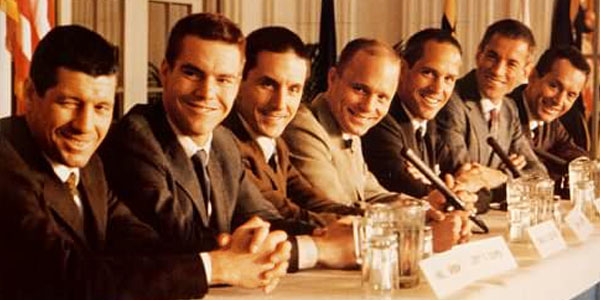
As ever, Nolan has openly announced his influences, admitting that 2001, Star Wars Episode IV, Close Encounters, Alien and Blade Runner all played a part. Some references are overt, as already discussed, while others are merely tonal or spiritual. In less intergalactic terms, Nolan also cites The Treasure Of The Sierra Madre, and The Mirror as influences. Nolan also apparently screened classic space movie The Right Stuff for the crew before shooting started, to help them understand their roles in the film. Clearly that film's mantra that "It takes a special kind of man to volunteer for a suicide mission, especially when it's on national TV" fits with Cooper's own sacrifice (even if he holds stead-fast to the hope of his return initially).

16. The Familiar Space Suits

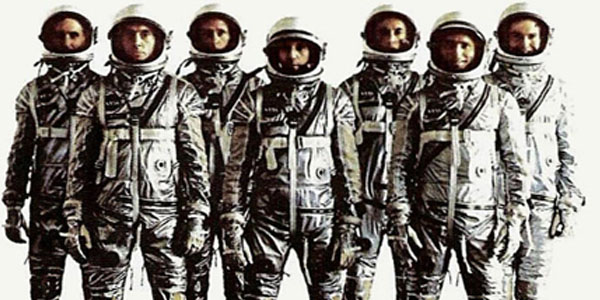
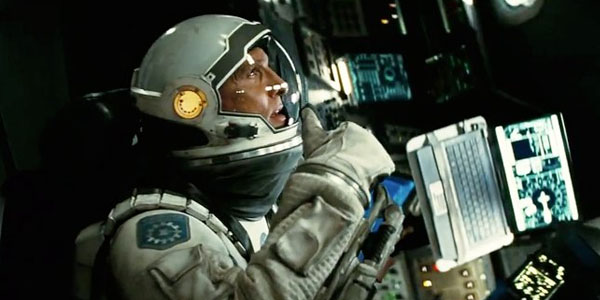
Having openly admitted that 1983's The Right Stuff played an important part in not only the narrative of the film, but also the film-making process, it's no surprise to see an obvious nod to the film in Interstellar's production design. Rather than going for something as obvious as 2001's orange spacesuits, Nolan clearly chose to base his Endurance suits on The Right Stuff's classic designs, from the smaller, rounder helmets with their unhelpfully small field of vision, to the shoulder pads....

15. The Event Horizon Pencil Trick

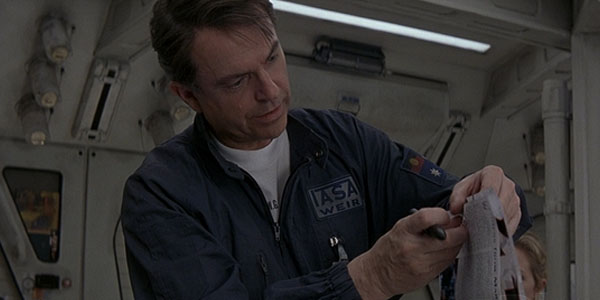
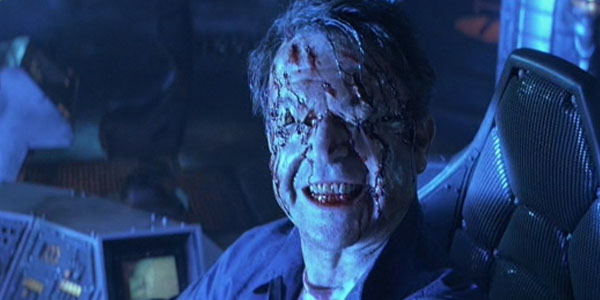
The grand rule of sci-fi is that whenever someone needs some complex science described to them (and there's always one playing the cipher for the audience), there's always a very handy prop lying about that translates it. With wormholes, somebody uses something to bend space - usually a bit of paper, which futuristic movies have never evolved beyond for some reason. In Interstellar, the moment when Romilly explains to Cooper how a wormhole works - because the pilot about to fly through one wouldn't have had that training, obviously - uses that layman's terms explanation, but rips it directly from Event Horizon, even pushing the pencil through the bent paper. If it's an accident, it's a good one, as the film explores similar themes, of lost and desperate humanity, madness, endurance and black holes.

14. The Stand

The Stand As Nolan's camera pans the bookshelves that play such a key narrative part in the film, we're encouraged to notice Stephen King's The Stand (the camera lingers lovingly), the post-apocalyptic horror/fantasy whose story of human survival against increasingly catastrophic odds is clearly a sibling to Interstellar. The vast book shelf also reveals a copy of Three Cups Of Tea: the humanitarian account of Greg Mortenson's attempt to promote education for girls in Pakistan and Afghanistan. Again, it's probably no accident: the book recounts one pioneering man's attempt to "save" the world, facing institutional ignorance and also the difficulty of being removed from his family.

13. The Explorer References
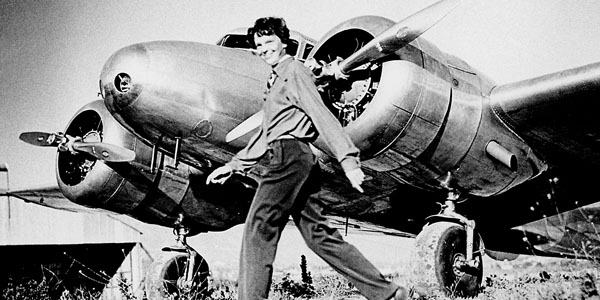
Interstellar is as much about exploration - internally and externally - as it is about conflict and conquest: the story is marked by uncertainty and the excitement of discovery. Despite the ominous agenda that pushes Cooper and the team into space, they are frontiersmen drinking in their new experiences the same way the audience is. For that reason, it's no surprise that the film is littered with references to great explorers: there's a mention for Heart Of Darkness early on, and shots of books about Sir Arthur Conan Doyle and Lindbergh. And of course, we have characters called Doyle, Romilly, Amelia (as in Earhart) and Mann - all great explorers from history. Names are clearly important, as Murphy is named for Murphy's Law - though it goes a little out of the window when you realise later in the film that Tom called his son Cooper Cooper "after his grandfather."

12. Endurance

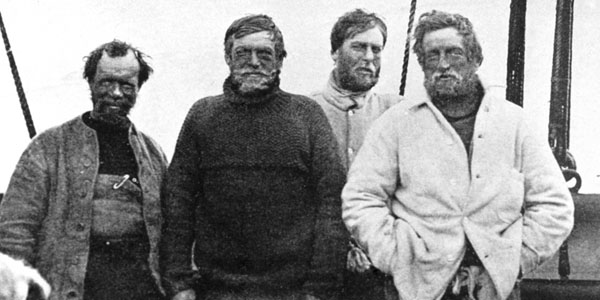
The exploration imagery continues with the name of the ship that Cooper pilots up to space. Obviously, Endurance is a smart fit for the mission - it signifies humanity's enduring spirit and attempt to survive - but the name goes further than that. It is clearly a reference to Ernest Shackleton's expedition to the South Pole, one of the greatest survival stories in human history. Crucially, it also foreshadows the disaster of the mission, and reading Shackleton's apparent recruitment call adds even more links to Interstellar:
"Men wanted for hazardous journey. Small wages, bitter cold, long months of complete darkness, constant danger, safe return doubtful. Honour and recognition in case of success. Sir Ernest Shackleton."

Contributor
Contributor

WhatCulture's former COO, veteran writer and editor.