The Hobbit Trilogy: 5 Changes That Worked And 5 That Didn't

Going there and back again one last time...
Peter Jackson's The Hobbit Trilogy is quickly gaining a reputation as the director's version the of the Star Wars prequels; that is, a hugely divisive set of films that have as many detractors as they do defenders. The balance between love and hate may shift more favourably in a particular direction at any given time, and that's a good thing, because the Hobbit trilogy deserves to be recognised for what it got right just as much as for what it got wrong. Everyone knows by now that Jackson and the writers behind the Hobbit trilogy took more than just a few liberties when interpreting Tolkien's book for the cinema screen, and while many purists out there were disappointed with some of the more drastic changes made to the live action Middle-Earth, not every single diversion from the book was a bad one. The biggest, and one of the most hotly-debated changes, came in the form of Gandalf's repeated detours throughout the Hobbit narrative and Jackson's decision to actually develop his solo adventures instead of explaining away his absence with no visual back-up. There is no single change, tweak or complete re-write of a story element that makes Jackson's trilogy unwatchable for certain fans though, and it's the sweeping changes that the director made to certain elements of Tolkien's book that some simply can't forgive. Just like everything in life though, there's always two sides to the same coin and here is no different. Jackson's Hobbit films will be continually dissected and scrutinised for many moons to come, but there's no better place to start than here to get an idea of the good and the bad that Jackson achieved with his Hobbit trilogy.

The 5 That Worked

5. Gandalf's Journey To Dol Guldur
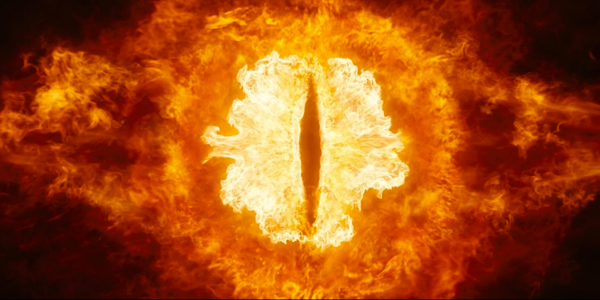
It's one of the biggest changes that Peter Jackson made with the overall narrative of the Hobbit films, and one that had to be made for the transition from book to film. Unlike Tolkien's book, which told the story through Bilbo's eyes, Jackson's films placed as much emphasis on Gandalf, the overarching narrative of Middle Earth's fate and Sauron's future return. There are moments within the book where Gandalf leaves Bilbo and the band of dwarves to embark on a separate investigation scarcely explained i.e. the Necromancer. While Sauron's alias is mentioned in Tolkien's book, his identity is never explicitly revealed, nor does the character actually appear in the book. Jackson decided to give substance to Gandalf's various departures from the dwarven company by 'filling in the blanks', so to speak. Many criticisms aimed at the films concern how Jackson has created events out of thin air that Tolkien never actually wrote or implied. And while there are certainly examples of Jackson being perhaps too overzealous with his changes, this certainly isn't one of them. The White Council's discovery of Sauron's revival established a continuity with the Ring's films absent from Tolkien's book and resolved the problem of Gandalf just randomly disappearing throughout the films.

4. Galadriel's Confrontation With Sauron
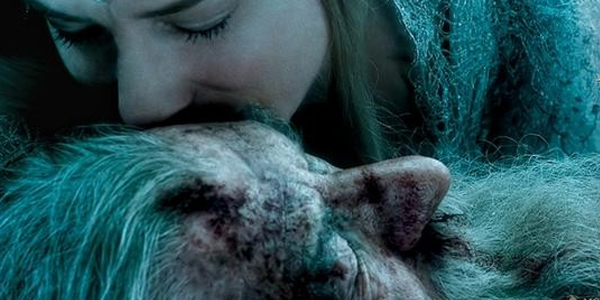
The White Council's assault on Dol Guldur is never described in Tolkien's Hobbit, and while the extended works of the author describe that it was the Council that drove Sauron out of the fortress and to flee into Mordor, such events are never established in the Hobbit book due to it's focus on Bilbo's journey to the Lonely Mountain with the dwarves. Galadriel, being a member of the Council would have assuredly been among the individuals that led the assault on Dol Guldur, but nowhere is it detailed that she was solely responsible for banishing Sauron from his fortress. The ancient elven ruler is cited by many characters residing in Middle Earth as one of the most powerful elves still living outside of Valinor, and Jackson's decision to make her responsible for the banishment of Sauron makes sense. Yes, it's an assumption, but a logical one considering her strength in comparison to other members of the White Council.

3. The Audience Perspective

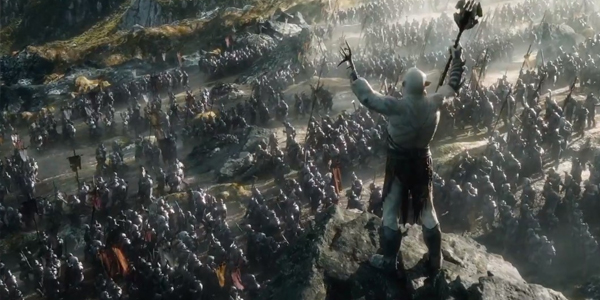
This has already been touched on in the previous two entries, and it's a change that needed to be made for the transition from book to film to work successfully. The Hobbit novel is a tale that focuses almost solely on Bilbo's journey and his interaction and observations of the people, places and monsters that he encounters on his journey to the Lonely Mountain. Many staunch fans of the book will quite rightly criticise the films for being bloated and unnecessarily long in comparison to the book, placing too much emphasis on events that had little to do with Bilbo's story. Those are all valid criticisms when the book and trilogy of films are directly compared on a point-by-point basis, but Jackson's decision to tie the films directly into the Rings trilogy and open the narrative up to multiple different character perspectives made a direct adaptation of the book impossible. The pacing of a film is entirely different to that of a book, and there can be no better example than the climactic battle of the five armies. Bilbo is knocked unconscious in the book, only regaining conciousness when the battle has already concluded in his side's favour. If the Bilbo-only perspective had been kept, Jackson would have had to either omit that detail or show a black screen signifying an unconscious hobbit.

2. Azog The Defiler

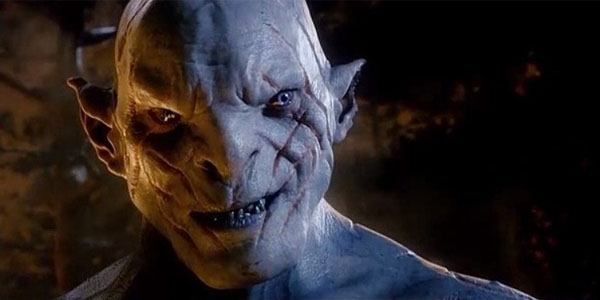
Azog never appears in the Hobbit novel, but he is certainly a character that was created by Tolkien. In the original back-story for Thorin Oakenshield, it was his father who had fought with the Pale Orc and not himself, having decapitated Azog as revenge for the orc's prior murder of Thorin's grandfather. In Jackson's films, Azog wants revenge on Thorin for slicing off his arm in the War Of The Dwarves and Orcs that took place many years prior to the events of The Hobbit. It's one of the biggest changes Jackson made to the back-story for the Hobbit films, but it was one that was necessary. Azog being present creates an essential sense of urgency for Bilbo and the dwarves that would otherwise have been absent had he not been. Azog's son, Bolg (the relation isn't mentioned in the films), could arguably have filled the revenge role in the films, but that would have required completely re-writing Bolg's background entirely.

1. Bilbo's Age

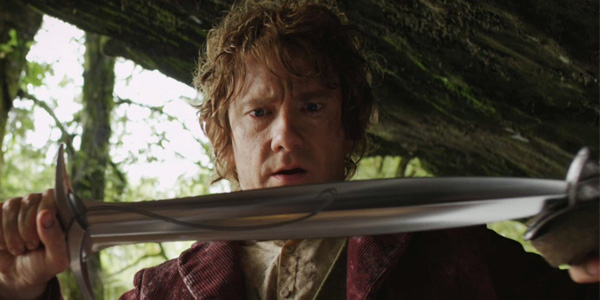
In Tolkien's Lord Of The Rings books, observations are made multiple times about how Bilbo never appears to age, looking essentially the same as he did on his journey to Erebor as he does when he departs for the Undying Lands at the end of Return Of The King. In the Hobbit, Bilbo begins his adventure at the age of 51, being 111 years old when he eventually leaves Middle Earth. Jackson's films, for obvious reasons, have had two different actors play Bilbo: Ian Holm and Martin Freeman. For any hope at maintining continuity, Jackson had no choice but to re-cast Bilbo for a younger actor to play - Ian Holm being simply too old to play a 51-year-old version of the character. It's a messy situation that Jackson didn't have the hindsight to avoid due to making the Rings films first, but the director made the right decision by including small cameo scenes for Ian Holm's version of the hobbit at the end of The Battle Of The Five Armies.

The 5 That Didn't

5. Legolas

The presence of Legolas, son of Thranduil in Jackson's Hobbit films is one of the most contentious changes made to the films. The character never appears in Tolkien's book and while his presence makes sense in terms of age and the fact that his father plays a prominent role throughout the story of the Hobbit, Jackson's decision to bring the character back added very little to the overall narrative. Perhaps it was a decision made by Jackson to further tie-in the events of the Hobbit films with the Rings trilogy, but if that was the case, then the director was perhaps better leaving him out of the story. The elven warrior is really just 'there' in certain scenes of the films, playing an unimportant role in every scene he's present in due to the fact that he was never meant to be there in the first place. Sure, he he's part of the weird love triangle between himself, Tauriel and Killi, but it's a sub-plot that's entirely unnecessary and could just as easily have been filled by a generic elf character if at all.

4. Beorn Being Sidelined

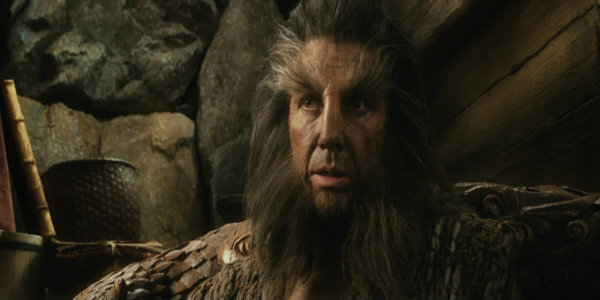
Beorn is a critically important character in the Hobbit novel. The shape-shifter is one of the main reasons that the alliance of elves, men and dwarves are able to fend off the advancing ranks of orcs and goblins, arriving just in time with a pack of griffins to turn the tide in their favour. With that in mind, you would expect his scenes in The Battle Of The Five Armies to be suitably glorious but no, all he's given is about five seconds of screen time. Free-falling through the sky after being dropped of by a griffin, Beorn promptly changes into his monstrously huge beast form and proceeds to trample through a stream of orcs. That's it. The decision to sideline Beorn in such a fashion made the character feel extremely shoehorned into the film, and the entire sequence stinks of being an afterthought rather than a genuine decision to include him. With so many discrepancies between the book and the films, it's baffling to see such a memorable character get nary more than a few frames of screen time.

3. Smaug's Early Death

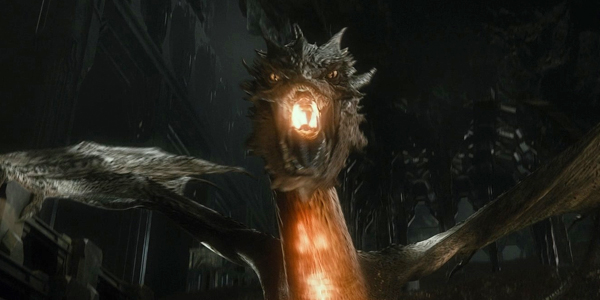
The placement of this entry into being a change that didn't work is a direct result of the Hobbit films being split into a trilogy. The issue here isn't with how Smaug died or that he died when he wasn't supposed to, it's with the baffling decision to prolong Smaug's death until the third and final Hobbit film. The film's writers may have thought that saving the dragon's fatal clash with Bard was a great cliffhanger moment to end The Desolation Of Smaug on, but The Battle Of The Five Armies more than proved otherwise. The final film in the trilogy obviously carries on directly after the climactic events of The Desolation Of Smaug, and while Smaug's destruction of Lake-Town is CGI treat for the eyes, his death only 10 minutes after the film begins just makes the transition from both films feel disjointed and unnecessary. Jackson could have just as easily included Smaug's death as the finale of the second film and made the looming threat of Sauron's forces the cliffhanger instead.

2. Radagast The Brown

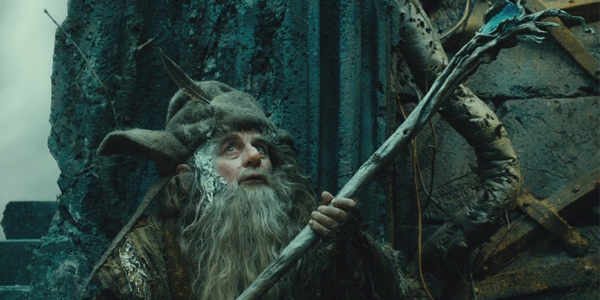
Radagast the Brown is another Tolkien character that is only mentioned but not seen in the original Hobbit book - only being mentioned in passing by Gandalf on occasion. That's fine, there's nothing wrong with including characters from the wider world of Tolkien's huge Middle Earth world, but Radagast's inclusion was a little haphazard at best. For starters, the character is one of the Istari; Maiar spirits sent to Middle Earth to aid the free peoples of the world against the threat of Sauron. Jackson got that part right, but the loyalty to the character's description essentially ends there. While Gandalf described Radagast as a wizard that was one with nature, the Istari themselves are described in numerous Tolkien works as being noble in nature, tasked with the protection of all things native to the world against Sauron. Radagast hardly fits the bill of a noble wizard, and while intricacies of the character were never detailed by Tolkien (therefore leaving interpretation open), Radagast's presence in the films is another example of an unnecessary character adding very little to the overall narrative of the films.

1. Alfrid

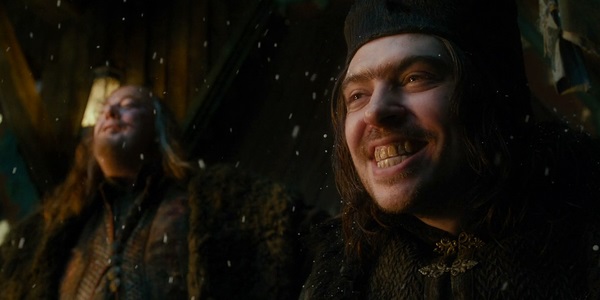
The final offender in Jackson's Hobbit films is so inane, unnecessary and annoying that the other four entries above combined don't even come close to the irritance that is the character of Alfrid. The Lake-Town citizen is already gaining a less-than-stellar reputation among fans of the series and book alike as being The Hobbit's version of Star Wars' Jar Jar Binks, and it's not particularly difficult to see why. First introduced alongside Stephen Fry's excellent performance as the mayor of Lake-Town, Alfrid is billed as the snivelling, cowardly deputy of the mayor, doing whatever he can to avoid getting his own hands dirty. Jackson got the character's balance between comic relief and genuine threat just right in The Desolation Of Smaug, and that was fine - the character didn't receive enough screen time to become annoying. However, the dirty lech returned for The Battle Of The Five Armies, commanding far more on-screen time than before for absolutely no reason. Yes, Alfrid's return was intended purely as a form of comic relief between serious scenes in the film, but the effort fell almost completely flat. More annoyingly, the main characters of the film (Bilbo, Gandalf and Dain, to name just a few) have various comedic scenes throughout the final film that feel more natural and infinitely more funny that anything Alfrid does on-screen. Begone Alfrid, you should have perished along with the rest of Lake-Towns ruling class. With the Hobbit trilogy now at an end, are there any changes made in the three films that, in retrospect, you thought were pretty cool? Are there even more things that Jackson changed that you hate that aren't listed here? Let us know in the comments below.

Contributor
Contributor

Joe is a freelance games journalist who, while not spending every waking minute selling himself to websites around the world, spends his free time writing. Most of it makes no sense, but when it does, he treats each article as if it were his Magnum Opus - with varying results.