The Hobbit: 10 Ridiculous Details You Probably Missed

There's more to the trilogy than meets to eye.
While the Hobbit prequel trilogy hasn€™t quite disappointed on the same level that Star Wars managed, it has been rather unspectacular. A slow and unenthusiastic start with An Unexpected Journey was followed up by the better, if somewhat silly, The Desolation Of Smaug last year with the finale coming on 12th December. Although the magic of the original trio may be missing in the two films so far, as a result of poorer scripts, too much CGI and strange story choices, there is no denying that Peter Jackson is a master at world building. The Lord Of The Rings trilogy was renowned for such creation, with massive amounts of detail being thrown into miniscule details that often couldn€™t even be seen without pausing the film and looking very closely. For example, if you pause during an orc battle scene you will notice the numerous varieties of helmets, all of which denote a family€™s standing within the Orcan culture, while the production crew spent a year making chain mail by hand, just for it to sit underneath armour and barely be seen. Sadly, that same level of detail doesn€™t seem to have been copied over into the world of the Hobbit, where CGI appears to rule supreme instead. Just look at the decision to replace the beautiful and intricately designed version of Bolg with the cool, but ultimately disappointing CGI model. Having said all of that, Peter Jackson didn€™t completely abandon his love of world building in the Hobbit films that have already been released, and it is likely that there will be a whole host of interesting tidbits to be found in The Battle Of The Five Armies. With that in mind, let us take a look at 10 ridiculous details you probably missed in the films, and be warned, there are spoilers to be had from this point, just in case you haven€™t seen the films yet.

10. Axe Head

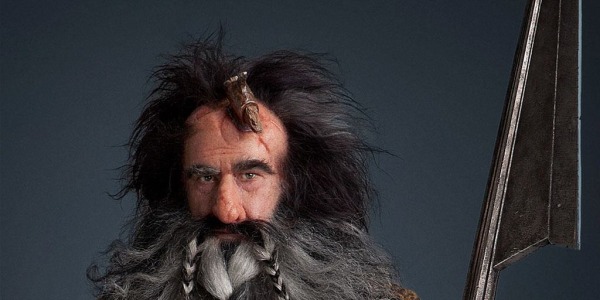
This is one that many will have missed in the original viewing, and only clear photos like the above one demonstrate it entirely. We are of course speaking about the axe lodged into Bifur€™s head. In the book the character doesn€™t suffer from such an injury but it was added into the film as an explanation for the character only speaking in Dwarvish. According to actor William Kircher, who plays the dwarf, his character was €œa reasonable okay guy but unfortunately he's turned into a bit of a maniac. He's a bit mentally challenged €” only because of the axe. He's totally unstable and in a fight he just goes insane, especially with the trolls." We actually get to see that madness in the sequence where the group fight a trio of trolls, with the dwarf taking his head and ramming it into a troll leg axe end first. It€™s not hard to imagine that we€™ll be seeing some more of that instability during The Battle Of The Five Armies in which battling with goblins will be a prevalent issue.

9. More About Axes

Speaking of axes, there€™s a whole load of other interesting details about them in the Hobbit trilogy. You will obviously remember the scene in which the dwarves are captured by Legolas and his gang of elves during The Desolation Of Smaug. In that scene, Gloin takes great insult that the portrait of his bearded wife is mistaken for being his brother, with Legolas making a disparaging remark about Gimli in a neat little nod to The Lord Of The Rings. A similar nod to those films is the fact that Gloin and Gimli wield the exact same axe, making the weapon a kind of family heirloom and linking the two trilogies together. Another character that uses axes in battle is Gloin, and his pair of weapons have their own names. Graham McTavish, who portrays the dwarf, suggested to Peter Jackson that the axes should be named after Emily Bront뀙s dogs "Grasper" and "Keeper" and Jackson went for the idea. If you look closely you can see that Dwalin's axes are engraved with both names in Dwarvish runes. He also named his knuckledusters "Insult" and "Injury" in a similar fashion and it€™s probable that they are likewise inscribed.

8. Interesting Swords

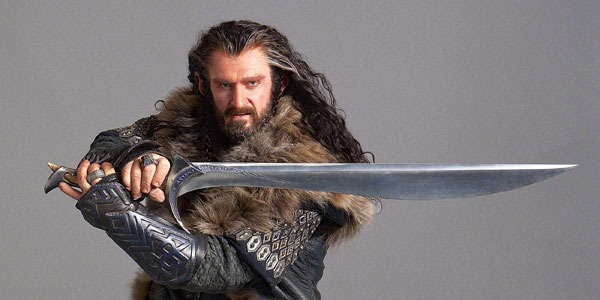
We€™ve already had two points about interesting axes in the films; so let€™s talk about swords. In The Desolation Of Smaug, Legolas and his band of elves capture the Dwarves, stripping them of their weapons at the same time. Later on in the film when Legolas fights against Bolg and the rest of the attacking orcs in Laketown, he is actually seen fighting with Thorin€™s sword. That sword is of course the infamous blade Orcrist, the Goblin-cleaver, and the fact that Legolas uses it is a symbol of its value to the elves. While on the subject of infamous blades, the blade that Gandalf presents to the high Elves and Saruman when they meet at Rivendell is a pretty important one too. You see, that blade actually belongs to the chief Nazgul, the Witch King of Angmar, and is in fact the same one that Frodo is stabbed with during their confrontation at Weathertop. Director Peter Jackson himself has confirmed as much, although how the blade is returned to the Witch King is as yet unknown.

7. Elrond€™s Ring

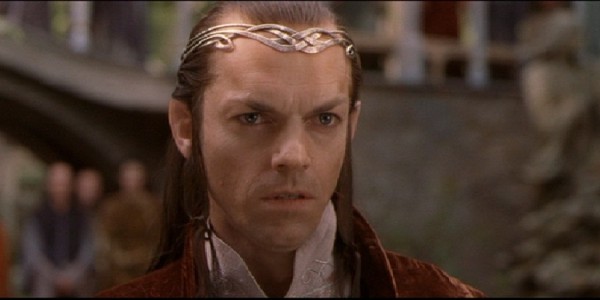
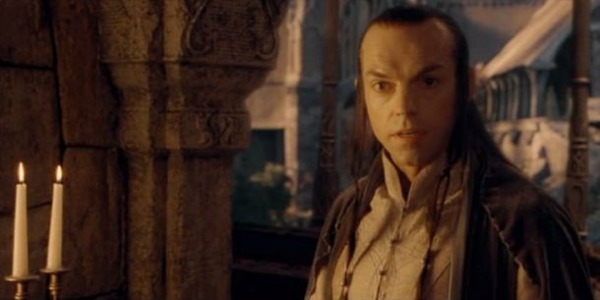
The One Ring obviously plays a big part in both sets of trilogies, but there is another ring that€™s quite important too, and it belongs to Elrond. When the Dwarf party arrives at Rivendell and is later sat down eating, the leader of the elves examines the sword Orcrist, which Thorin had previously found in the troll cave. If you look closely, on one finger is a very important ring. This ring is Vilya, one of the rings of power. The ring was part of a trio of rings given to the Elves at the beginning of the Second Age of Middle-Earth, and is also seen in the prologue of The Fellowship Of The Ring. Vilya is a word in Quenya, a fictional language created by J.R.R. Tolkien, and translates as "air". The ring was originally given by Sauron to Gil-Galad, last King of the Noldor, but passed on to Elrond after Gil-Galad was killed at the Battle of Dagorlad. Gandalf also possesses one of the three rings when The Lord Of The Rings trilogy begins, though he never mentions it.

6. Elrond€™s Brother

This is one that you won€™t notice first time around, and takes a lot of attention to pick up on. When the Dwarves are captured and imprisoned by Thranduil and the elves, Bilbo comes to their rescue by stealing the prison keys from one unfortunate and unwitting elf. If you listen closely you will hear that this elf is addressed as Elros, who is actually a very important character in the grand scheme of things - he is in fact Elrond€™s brother. The siblings had both human and Elvish ancestry on both their mother's and father's side, and as such were perfectly half-Elf and half-Man. While Elrond chose to be an immortal Elf, Elros chose to become a mortal man instead. Why is that significant you might ask? Well, by choosing to become a mortal man, albeit with an extended life span, Elros ended up becoming the progenitor of the Numenorian race. That means he in an ancestor of the future king of Gondor and Lord Of The Rings alumni Aragorn.

5. Familiar Landscapes

Directors often re-use landscapes and settings from their previous films, and Peter Jackson certainly did with his Hobbit films. Following their escape from Goblin Town, Bilbo, Gandalf and the dwarfs arrive to the edge of the cliff just before Azog and his gang of orcs manages to hunt them down. In the background is a landscape that will be very familiar to the fans of the series. This landscape is the same seen by Merry, Pippin and the Ent Treebeard in The Two Towers. Sharp eyed viewers will also have noticed that the meeting between the orcs and Azog happens at Weathertop, the same place where Frodo, Sam, Merry and Pippin are attacked by the Nazguls in The Fellowship Of The Ring. Speaking of landscapes, there€™s also a neat little set up in the previously mentioned scene orc cliff scene - the entire area is shaped to look like that of a frying pan, with the tree hanging over the cliff face resembling a handle.

4. The Lord of the Rings Quotes

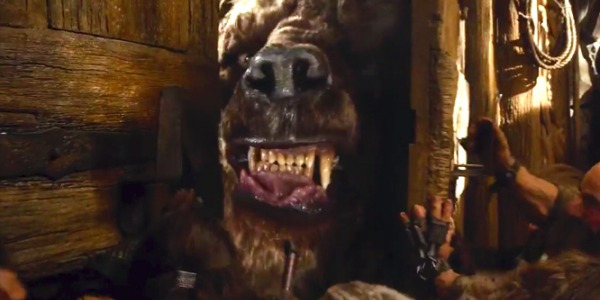
On top of familiar landscapes from The Lord Of The Rings, there are also some familiar quotes as well. When the company of dwarves meets up with Beorn and enters his house, Dori tells Ori to stay away from the door, uttering the phrase: "It's not natural. None of it." That quote will sound very familiar to fans of the original trilogy; it is the exact same quote that Samwise Gamgee says to Frodo Baggins in the beginning of The Two Towers. Similarly, in An Unexpected Journey, Gandalf states "Home is behind you, the world ahead...€ This is a quote from the original The Lord of the Rings books, written by J.R.R. Tolkien, and it is part of the song which Pippin sings to Lord Denethor in The Lord Of The Rings: The Return Of The King. That€™s not the only The Lord Of The Rings quote in the Hobbit films though. After the barrel riding escape from the elves, the pursuing orcs continue to search for the Dwarves and one of them dips his finger into a pool of blood on the ground and tastes it, spitting in disgust and saying, "Dwarf blood!€ This imitates a scene from The Two Towers where Gimli dips his finger into some blood left on several leaves and tastes it, only to spit it out in disgust and say "Orc blood!"

3. Noteworthy Dialogue

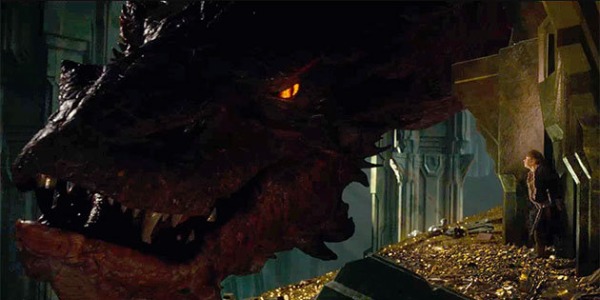
We€™ve already talked about there being Lord Of The Ring€™s quotes throughout the two films, but there€™s also a whole host of foreshadowing for the original trio of films. When Bilbo is in Mirkwood he of course has to fight and kill several spiders in order to save his friends. When he kills one particular spider, it utters the phrase €œit stings, it stings€. Fans of the series will remember that this is the name Bilbo later gives to the sword, with Frodo referencing it when he meets Gollum. Similarly, when Bilbo first comes face to face with the dragon Smaug, he evades revealing who he is by using various nicknames. During this conversation he says that he comes from €œunder hill€, which is the name that Frodo Baggins uses to cover up his true identity in The Fellowship Of The Ring. You may have also missed a short conversation between Gandalf and Bilbo about how many wizards there are in the world. In that conversation Gandalf reveals that there are five, naming himself, Saruman and Radagast then saying he can€™t remember the name of the other two, labeling them €œthe two blues.€ Those wizards are actually called Alatar and Pallando and feature in the book Unfinished Tales, but the filmmakers didn€™t have the rights to use material from that so the wizards have to remain unnamed.

2. Killi€™s Stone

Background items often have interesting stories in Peter Jackson films, and Killi€™s treasured black stone is no different. If you think back to when the dwarves are locked away in the elven cells, you will remember Kili having a conversation with Tauriel while playing with a black stone. According to the dwarf, the stone was a gift from his mother to remind him of his promise to return to her once the adventure to Erebor is done with. If you happen to look very closely at the stone you can see that it is engraved with Dwarfish runes, and these runes translate at €œinihde€. That is a Khuzdul word, the dwarfish language created by J.R.R. Tolkien, and means, €œreturn to me€ in English. That stone is also made of a particular material called Labradorite, named after Labrador in Canada, where it was discovered. The stone is familiar among the Inuit people, and is called the €œfrozen fire of the Aurora Borealis€. They consider it to be magical, which is probably the reasoning behind Kili joking about what might happen where anyone but he to touch it.

1. Cameos

Everyone knows that Peter Jackson had a cameo at the start of The Desolation Of Smaug - it would be impossible to miss his carrot munching appearance - however there are a whole host of other interesting cameos in both films. One of the biggest and most noticeable cameos is Stephen Colbert, who plays an eye patch-wearing Lakewood Spy that knocks on the door with a walking stick. Meanwhile Graham McTavish's daughter Honor plays a young Hobbit in the flashback to Old Took's party in the Extended Edition of the first film and Peter Jackson€™s daughter plays a barmaid in the Prancing Pony. You may have also noticed James Nesbitt€™s daughters, Peggy Nesbitt and Mary Nesbitt, playing children in the city of Dale, although all of the girl€™s roles are unaccredited in the first film's prologue. Interestingly Bret McKenzie, who plays the elf Lindir, previously appeared as a different elf character in The Fellowship Of The Ring and The Return Of The King. His character in The Lord Of The Rings movies was officially unnamed during production, but was informally dubbed "Figwit" by fans. FIGWIT stands for €œFrodo Is Great, Who Is That€ and Peter Jackson has officially adopted the name for the character, such is his popularity with fans and meme creators alike. Are there any more details hidden in The Hobbit? Which of these had you spotted before? Get the discussion started below.

In this post: 
The Hobbit
 
Posted On: 
Contributor
Contributor

Everton fanatic. Comic book reader and Spider-Man idoliser. Film watcher and TV binger. A smorgasbord of interests.