Every War Of The Worlds Adaptation: Ranked Worst To Best
The chances of everyone agreeing with this ranking are a million to one, but here it comes.
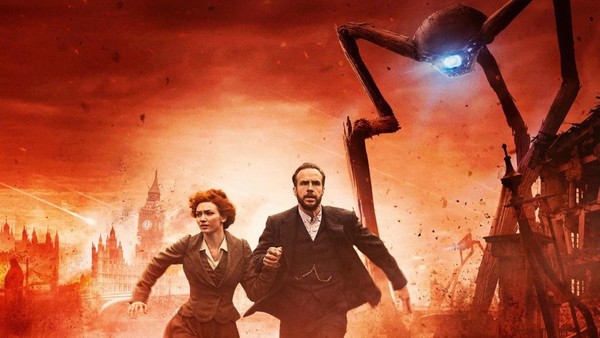
No one would have believed in the last years of the 2010s that one popular novel from over a century ago would still be subject to rival adaptations. Yet across the gulf that exists between us and TV executives, intellects lazy and uncreative regarded the profits of past adaptations with envious eyes, and slowly and surely drew up their own version.
Yes, The War Of The Worlds is back on our screens once again. Twice, actually. Because while the BBC's new three-part adaptation wraps up this Sunday, another version has been airing across Europe.
The latter, a French-American co-production from StudioCanal and Fox which moves the alien invasion action to contemporary Europe, won't air in the UK and US until early next year (possibly to avoid a War Of The War Of The Worlds against its BBC rival). But the presence of two simultaneous adaptations is a testament to the enduring popularity of H.G. Wells's original Martian invasion story.
It also means that there is no better time to look back at the good and bad of all the past attempts to bring the tripod-loving invaders from the Red Planet to our screens. So, let's see how the BBC's current take stacks up against its predecessors.
13. The Sequel Nobody Asked For
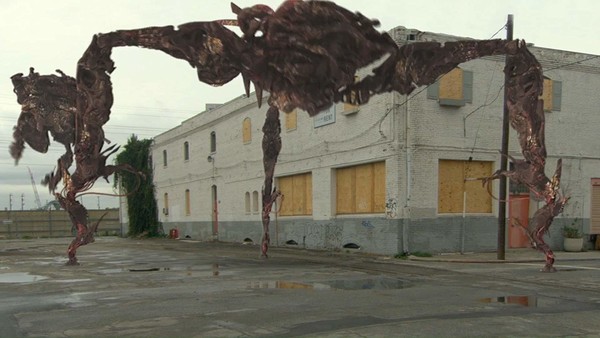
The studio who followed 2-Headed Shark Attack with 3-Headed Shark Attack and 5-Headed Shark Attack (no news on whatever happened to a potential 4-Headed Shark Attack) obviously have no shame about milking what small interest there is in a critically panned product for years afterwards. And so it is with War Of The Worlds 2: The Next Wave.
This 2008 film is nominally the sequel to The Asylum's 2005 Wells adaptation, with C. Thomas Howell returning not only as the astronomer lead character but also in the director's chair. In truth, however, it bears very little similarity to that earlier film and in places seems to actively contradict its predecessor's conception of the Martian invaders (who were never explicitly "Martian" in the earlier film).
Much sillier than its relatively serious predecessor, The Next Wave has The Asylum's usual wooden acting, cardboard sets and cheapskate effects, but with the addition of a confusing mess of a plot that it is hard to keep up with.
12. The "Classic" One
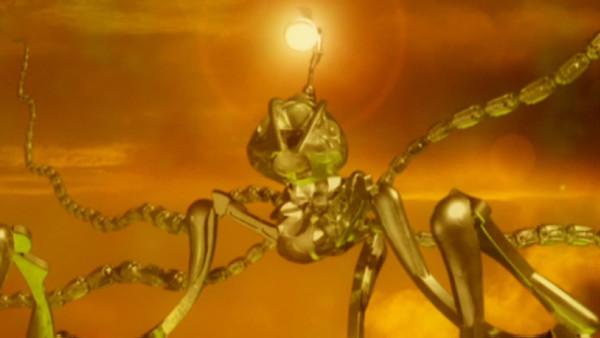
2005 actually had this year's twin War Of The Worlds releases beat by bringing us three different versions. This is the worst of the three.
Variously known as H.G. Wells' The War Of The Worlds or The Classic War Of The Worlds, this film from commercials director Timothy Hines (produced by his own company Pendragon Pictures) wins points for being the first film really to commit to an authentic Victorian South-East England setting.
That's about all that can be said to commend it, though, because the production is ham-fisted, the visual effects so underwhelming that you will really wonder where that reported $25 million budget went, and the three-hour runtime interminable. Even Hines himself later compared it to an Ed Wood feature.
11. The Mockbuster
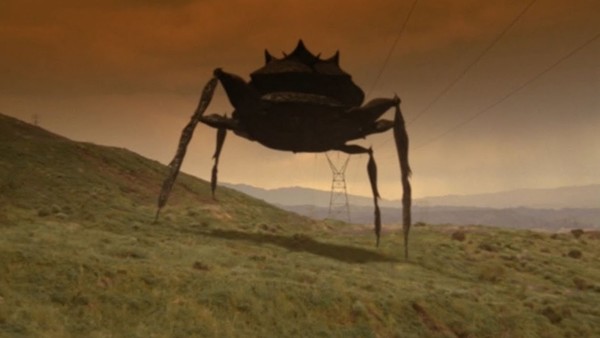
The Asylum are well known for their "mockbuster" knock-off movies designed to ape the currently popular blockbuster hits with titles such as Transmorphers, Atlantic Rim and Independents' Day. It's a lot easier, though, when the source is already in the public domain.
Confusingly also titled H.G. Wells' War Of The Worlds, this mockbuster shared with the same-titled previous entry the desire to piggyback on the attention given to Steven Spielberg's 2005 blockbuster adaptation. It was directed by Asylum founder David Michael Latt, who at least seems to be an admirer of the book.
Although it's set in contemporary America and the iconic tripods have been pointlessly swapped out for six-legged "walkers", the plot is relatively true to the book and Latt takes the events in the movie relatively seriously (arguably too seriously for a crudely-made direct-to-DVD picture). War Of The Worlds still has many of the problems inherent to a cheap Asylum production, but it's one of their more successful and better made movies nevertheless.
10. The Animated Steampunk One
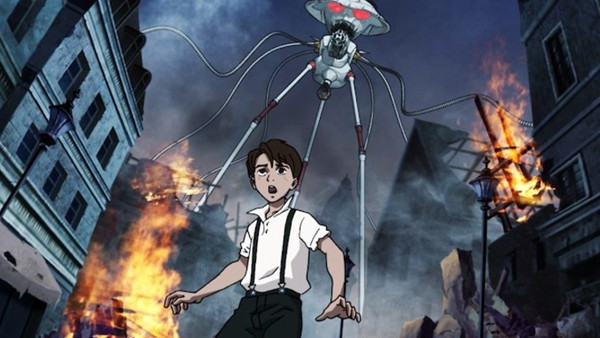
A link between The War Of The Worlds and the real global conflict of the First World War has become an increasingly common way of reinterpreting Wells's book in the twenty-first century, even in something as fantastical as the 2012 Malaysian animated feature War Of The Worlds: Goliath.
Essentially an alternate reality sequel, this film from Joe Pearson (a veteran of the animated King Kong series) kicks off with a prologue that retells the original novel moderately faithfully. It then cuts to fifteen years later on the eve of the Great War, where Nikola Tesla's reverse engineering of the Martian technology has given people giant steam-powered mechs. These they then use to fight off a second invasion of tougher Martians immune to our bacteria.
It's mostly pretty generic (and surprisingly violent) animated mech fight action, done with efficiency rather than excellence, but it definitely has enough style to appeal to anime fans and steampunk lovers even if it doesn't have much crossover potential.
9. The Reworked One
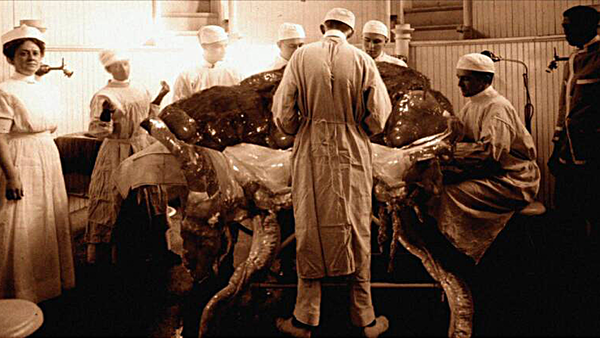
Despite making something truly terrible with The Classic War Of The Worlds, Timothy Hines remained both a dedicated fan of Wells's novel and determined to bring it to life. This led to his second crack at the material with 2012's War Of The Worlds: The True Story.
The True Story takes inspiration from the use of newscasts in the classic Orson Welles radio adaptation to retell The War Of The Worlds in a faux-documentary style. Taking footage from his already released long and tedious adaptation, Hines cut it together with documentary-style talking head recollections, stock footage, and archival stills and images to make out like this was a record of real past events.
The True Story improves vastly on Hines's previous effort and the documentary conceit is creative and engaging, while its 105 minute runtime is a blessed relief compared to its predecessor. Unfortunately, the reliance on the earlier film's footage means that The True Story does also inherit its poorly staged action, cheap-looking effects and melodramatic performances.
8. The TV One
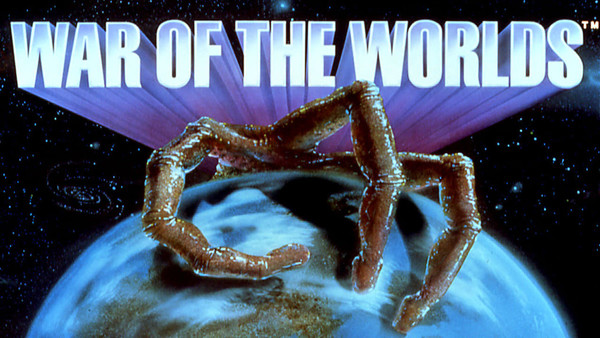
Prior to the two current adaptations, there have been surprisingly few attempts to turn Wells's alien invasion into serialised TV. The Canadian series War Of The Worlds, which began airing in 1988 is the one exception.
Conceived as a sequel to the 1953 film version (albeit with Mars replaced as their homeworld by the fictional Mor-Tax), the series reimagined the aliens' death at the film's end as instead being a form of suspended animation. After this, the government covered up the invasion and stored the alien bodies in toxic waste drums. By the 1980s everyone believes the cover-up until the aliens are accidentally released by a terrorist group.
The show was fairly cheap and cheesy and ran for just two seasons. In the first, the aliens are able to possess human bodies and seek to prepare the Earth for a greater invasion of their kind while the government cover-up continues. In the second, a complete change of creative staff saw the whole thing move into a bleak near-future. The first is considerably better and had enough solid ideas that it is fondly remembered even thirty years later.
7. The Period Drama
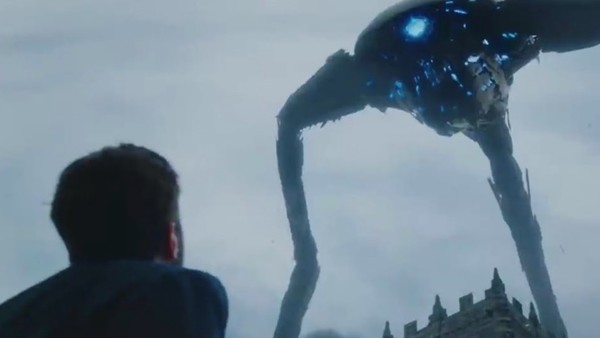
And now we come to the current BBC adaptation, sitting solidly in the unremarkable place of being neither amongst the best nor the worst takes on the Wells novel.
Even though it has shifted forward a few years to take advantage of the international political tensions in 1905, the BBC The War Of The Worlds feels like the strongest visual representation of the British Empire in its turn-of-the-century pomp being torn apart by aliens unimaginably more advanced.
The action and effects are impressive for a BBC TV budget. It really feels like Martian tripods are present in Edwardian Britain, leading to an impressive Dunkirk-esque sequence on a South Coast beach.
Unfortunately, the plot is bitty and disconnected and, while solving the book's lack of any decent female characters by drawing on the women in Wells's own life is a good concept, the interpersonal drama does not mesh brilliantly with the invasion stuff.
6. The Polish Political Satire
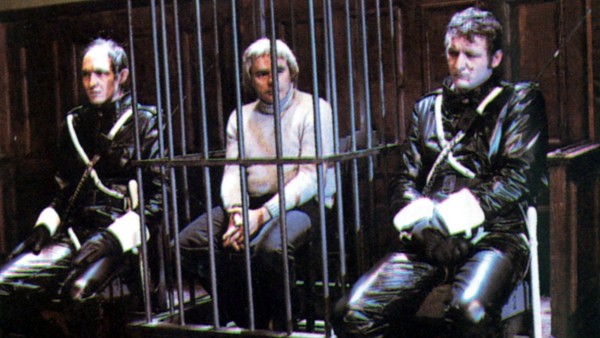
Perhaps the strangest adaptation of The War Of The Worlds, indeed a film so far removed from its credited source that it might even be a bit of a stretch to call it an "adaptation", 1981's The War Of The Worlds: The Next Century from Polish director Piotr Szulkin features Martians arriving in a country which may or may not be Britain in the final years of its century (in this case the twentieth). That's where the similarities end.
In Szulkin's version, the Martians are outwardly friendly but secretly blood-sucking monsters (feeding on human blood is, at least, something that is also true of Wells's Martians) who use their control of the apparatus of the state and the media to force people to donate blood. The movie's hero is a news reporter who goes on a Network-style rant about how the media keeps people in thrall to the Martians.
Szulkin's film was able to get a release in Communist Poland on the assumption that it satirised Western consumerism, but in reality it feels more like a dig at the authoritarianism of his own failing government. As a satire it's more bitter than funny, and it is not really discernibly a version of War Of The Worlds, but it does provide an artistic and interesting counterpoint to similar movies coming out of the West in the '80s, such as Brazil.
5. The Documentary One
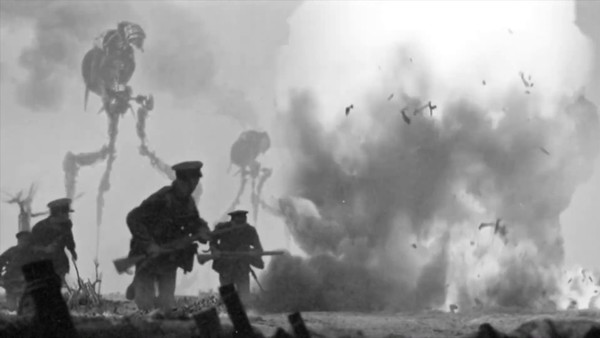
A year after the release of Timothy Hines's War Of The Worlds: The True Story, the History Channel aired The Great Martian War: 1913-1917, which is essentially the same thing only with much better production values.
Directed by Discovery Channel veteran Mike Slee and narrated by Mark Strong, a respected actor with a good track record in documentary narration, The Great Martian War was intended as an alternate history version of the channel's real documentaries and gets that feeling pretty well.
Combining archival footage of the Great War with CGI Martian tripods and interviews with "survivors" and "expert historians", the film plots a parallel course to the real war in which the Martians landed in 1913 Germany and the world united to fight them, including parallel versions of Great War events like the Christmas truce and a post-war "Martian flu".
It may lose a few points for originality in coming after The True Story, but The Great Martian War remains a fresh and engaging way of reworking Wells's ideas in a new format.
4. The Rock Opera
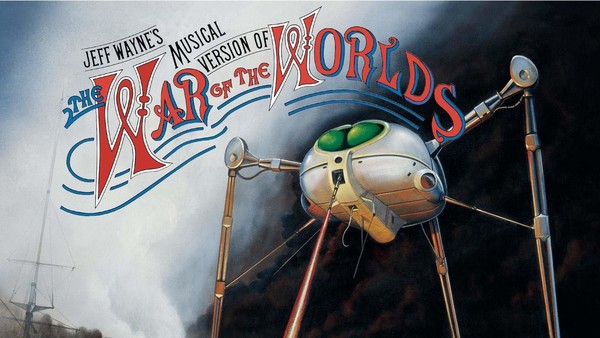
The cumbersomely-titled but musically iconic Jeff Wayne's Musical Version Of The War Of The Worlds presents a difficulty for any list like this one simply because it has existed in so many forms that you could do a list of just different versions of this one adaptation. Since the original 1978 progressive rock concept album, there has been a live show, multiple video games, a reworked "New Generation" album with its own live show, and a multimedia "immersive experience."
As this list is concerned with screen adaptations, how about we just look at the 2006 DVD recording of the live tour of the original album? Even that should be presented with the caveat that a filmed recording of a stage show of an album is not necessarily the most visually dynamic viewing experience (especially as Richard Burton's narrator role is played by a weird, uncanny projection of a "virtual Richard Burton" with the actor's original voice recording).
Wayne's bombastic, if a little cheesy, music remains powerful enough that the opening bars are for many people the thing that first springs to mind at the mention of The War Of The Worlds. Narratively it's a largely faithful and engaging adaptation, but the less musical, more dialogue-heavy sections are a little stilted.
3. The Classic Film
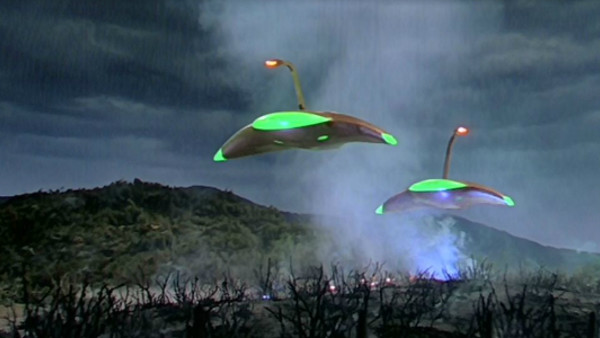
The first version of The War Of The Worlds to come to our screens is perhaps one of the least closely aligned to Wells's original vision (well, except for that weird Polish media satire), but it has nevertheless established itself as an enormously influential classic on its own terms.
The 1953 film, from big name sci-fi producer George Pal and filmed in glorious technicolour, came to define a lot of how 1950s sci-fi alien invasion stories looked, felt and even sounded (the shriek of the Martian death ray became the standard sound for sci-fi blaster weapons for years afterwards). It drops Wells' tripods (too difficult to achieve with the effects technology of 1953), but its eerie hovering manta ray-shaped ships with their green glow became iconic in their own way anyway.
Wells would not have had a lot of time for turning his vision of the clergy as largely ineffectual and cowardly into a "God saved us all" kind of conclusion, which is just one way in which the film's message is a little hokey. Meanwhile, its visual effects may have been Oscar winning at the time, but have not aged brilliantly. Nevertheless the 1950s War Of The Worlds remains a classic of its type.

By far the most expensive and high profile adaptation that The War Of The Worlds has ever been given was the $130 million version made by the world's most famous director back in 2005, the film that all those cash-ins and mockbusters were knocking off.
Steven Spielberg's War Of The Worlds has its fair share of problems. The happy families reunited ending feels out of kilter with the tone of the rest of the movie and Tom Cruise is miscast as a blue collar everyman. But in its standout moments it is very much the work of a master on top of his game.
As far as modernised versions go, 9/11-era America feels a pretty good fit for the arrogant imperialism of late-Victorian Britain and the shock of an unstoppable attack in the heart of the country. More a survival story than anything, this is a darker Spielberg than in many of his other crowd-pleasing blockbusters, but that doesn't mean it lacks his adeptness with thrilling spectacle, action that puts you right in the midst of it, or genuinely scary moments.
1. The Radio Play
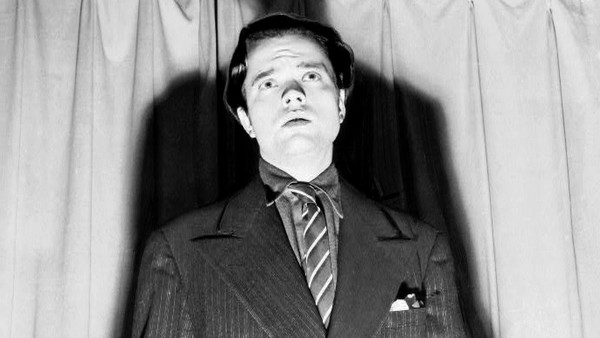
Yes, this is kind of cheating as this is supposed to be a list of screen adaptations and consideration hasn't been given to other versions from the radio or other sources, but you'd be annoyed if this wasn't here.
Besides, Orson Welles' 1938 radio drama produced such an iconic reaction that the audience response in itself inspired multiple movies: the TV films The Night America Trembled in 1957 and The Night That Panicked America in 1975, and the indie comedy Brave New Jersey in 2016.
There will always be debate about the extent to which radio audiences were genuinely fooled by Welles' faux newscasts of a Martian landing in Grover's Mill, New Jersey, but it was certainly a powerful and effective way of conveying the alien invasion concept with the immediacy of contemporary technology. It became hugely influential on anything later that would use a faux-news or documentary style, not just in adapting The War Of The Worlds, but across all stories and media.
The newscasts only make up roughly the first half of the show, though, the rest is a fairly conventional radio drama. And, even stripped of the context of mass panic, it's still an impressively engaging, gripping thrill ride that, eighty years after the fact, also remains a fascinating window into that time and place.