Every Ridley Scott Movie Ranked Worst To Best
15. Body Of Lies (2008)
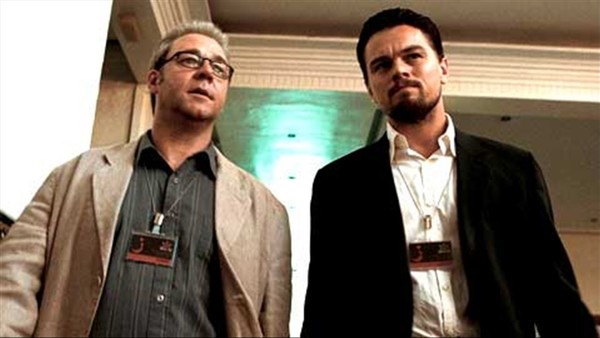
Even though it has a stunningly gifted cast - including Oscar Isaac and Mark Strong before they were really big news - Body Of Lies suffers from the fact that it should probably have been a TV show. There would have been more opportunity to build suspense and flesh out the characters a little more (Homeland style), and a smaller scale project would have forced the director to spend more time on story.
The style is there, as usual, but the substance really doesn't match it, even with heavyweight actors in the leads to the tune of Leonardo DiCaprio and Russell Crowe.
Scott's admirable attempts to elevate not just the material but also the genre are no more than distracting, and you almost wish someone else with less grand aspirations had handled the story. In that context, the cliches and the trite story-telling might have felt less alien and far more welcome, and the performances might have been easier to praise.
14. Kingdom Of Heaven (2005)

Kingdom Of Heaven is a strange creature. On the one hand, it has some great performances - particularly Ed Norton's Baldwin - and it is absolutely gorgeous in all aspects of production. It's an exercise in epic film-making, impeccable observed and gloriously designed, with an authentic historical eye and some truly spectacle scenes.
If a film only needed to look great and feel real, it would be far more cherished than it currently is, because as a museum piece, it's a hell of an achievement. It's not particularly accurate in its details, but that's for documentaries, and it's only really a concern because the entertainment factor just isn't where it ought to be.
The film feels horribly over-edited, removing key story build and character dynamics (hence the director's cut's superiority) and it's all a little too po-faced and too heavy-duty to be purely enjoyable. And once more, it suffers from the all-too-frequent hollowness that distracts from its beauty.
13. Hannibal (2001)

Hannibal gets a lot of grief, mostly because of its inability to stand up next to The Silence Of The Lambs, but it's actually nowhere near as poor as some would have you believe. Sure, it demystifies Hannibal Lecter somewhat after his incredibly creepy role in the preceding film, but it hides some true delights.
The uncredited Gary Oldman is disgustingly watchable as Mason Verger, and his plot to feed Lecter to his pigs is as skin-crawlingly beautiful as it is silly. Ray Liotta adds another strand of fun as corrupt Justice Department man Paul Krendler (and his brain dinner scene is just glorious), and the opera sequence that sees Lecter discover Francesca Neri's foolish attempt to capture him is utterly breath-taking.
The chief mistake was probably focusing on Lecter as the lead character and making him wholly human - even with Clarice Starling back in as his opposite. And perhaps because of that, the film had to rely more on gruesome gore and shock rather than the more satisfying suspense of the original, much to critics' dismay.
12. Matchstick Men (2003)
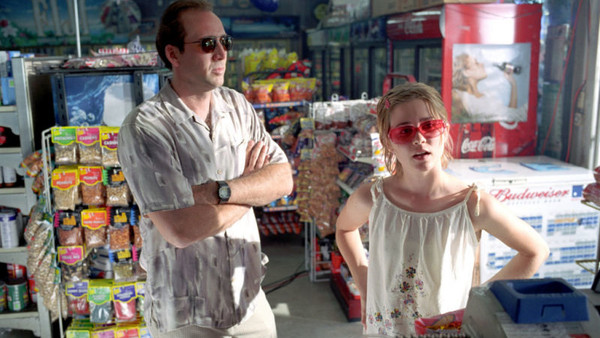
Compared to his more spectacular films, Matchstick Men tends to be over-looked in the wide pantheon of Ridley Scott's work because it's so slight. But it's a great character piece and it's one of the best examples of Scott balancing characters and style, rather than being distracted by a commitment to style.
It has a modern Sting vibe about it, and it thrives on the performances of Nic Cage and Sam Rockwell - as well as newcomer Alison Lohman. It's clever, funny and dark, and the fact that Cage didn't win anything for his performance in it is one of the biggest travesties of his career. Thanks to Scott's restraint and his willingness to put his visual quirks to bed, the actors have much more space to perform and to play off one another.
It barely even feels like a Ridley Scott film, which is the film's strongest selling point, and even when it flirts a little too much with sentimentality, it's saved by smart, occasionally slyly funny writing.
11. The Duellists (1977)

Back before Ripley and Deckard, Ridley scored a victory straight out of the gate with his debut The Duellists, starring Harvey Keitel and Keith Carradine as soldiers who meet periodically to duel throughout the Napoleonic wars. The story's interest is in how their lives converge and how they impact each other.
The visuals are great, particularly for a first time director, with Scott admitting he drew from Stanley Kubrick's Barry Lyndon, and the decision to adapt Joseph Conrad's short story gave the director a strong, intelligent foundation to show off his fledgling flair.
It's ambitious and intelligent, thoroughly detailed in its historical detail but still a little slight in terms of depth and tension, but it improves with multiple viewings as you realise that doesn't so much matter. As an exhibition of what Scott's career would become, it's essential.
10. Prometheus (2012)

In many ways, Ridley Scott's insistence that Prometheus isn't an Alien film was one of its most problematic obstacles. We all knew it was - even when the director still seemed unwilling to acknowledge it - but he seemed way too concerned with layering on psuedo-religious and philosophical imagery that it was impossible to find the appealing brand among the mumbo jumbo.
The story is a good one - of a species racing to the stars to find where they came from and to conquer death (our essential human drive) - and the general ideas are very clever, but there's a lot in there that is confusing and requires clarification outside of the film that rarely comes definitely.
The film purports to answer fundamental questions, but the reality is that it simply ends up positing more complex ones, and while there's a lot to enjoy in there - chiefly the performances of the actors - the plot is too contrived (thanks to everyone being an idiot) and there's not the same commitment to pure thrills as there was in the mainline Alien series.
8. Alien: Covenant

Alien: Covenant could have been a true rival to the excellence of Alien if it had cast off its Promethean foundation and gone about its meshing with the 1979 classic a little more coherently. The marketing seemed to suggest that was the case, positioning the prequel-sequel as a return to sci-fi horror that would be "terrifying" in the same way the originals was.
And while the film feels a lot like a remake of Alien - with some of the finer details changed obviously - there is a problem with pace (or more specifically change in pace), and Scott seems to have forgotten how to build suspense and scare his audience.
Like Prometheus, the general story is great, but there are idiots and their idiotic decisions all over the plot, and there really isn't enough focus on building the characters to a position where you can care about more than a couple of them. That said, the effects are great, the performances very good and Michael Fassbender (and his twin) is hugely watchable.
It doesn't quite provide the promised answers, but that can come further down the line. And the move towards more traditional Alien-style film-making is very welcome.
7. Legend (1985)
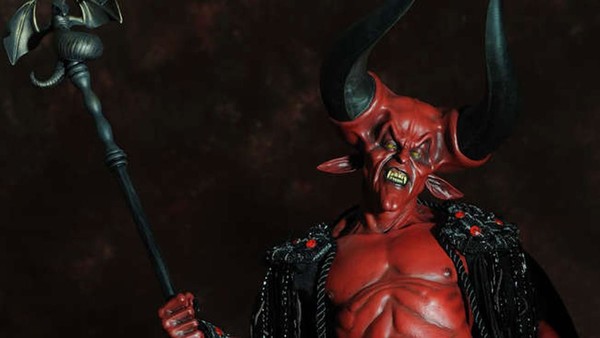
Having just made Alien and Blade Runner, Scott jumped genres again to pure fantasy for beloved cult classic Legend, striding confidently into the realms of elves, unicorns and goblins. And we can thank him now for one of Tim Curry's most gloriously memorable performances.
The story is a pretty stereotypical fantasy, as Curry's Darkness seeks to veil the world in eternal darkness and Tom Cruise's pure hero (along with Mia Sara until she's transformed into a traditional damsel) tries to stop him.
Considering how beautiful Legend is, and how well Scott's appetite for imaginative, spectacular film-making suits fantasy, it's surprising that he's never waded into the genre again. He captures atmosphere and theatricality perfectly in Legend, and his focus on practical effects ensure it doesn't feel outdated even as it feels somewhat dated. It could have enjoyed itself a little more, but it's still enjoyable even today.
7. Black Hawk Down (2001)

Even in Scott's most misplaced historical epics, it tends to be the action sequences that have the most longevity in memory, so it should come as no surprise that his take on the claustrophobic Battle Of Mogadishu made for such compelling viewing.
Black Hawk Down is the archetypal modern war film, positively dripping in tension with an embarrassingly talented cast (some of whom would go on to be major stars, like Tom Hardy) who sell the ordeal of the characters incredibly well. The action is real, the stakes incredibly high and the threat impossible to resist, and there is an unflinching account of the violence involved that is as grim as it is important.
It might have been criticised for its political messages - particularly as close after 9/11 as it came out - but all-told, it's one of the finest modern war films made to date. The huge cast means there's little room for character development, but the whole thing is emotional propaganda, and you're able to emphatically care about the characters even with only a snap-shot of their lives offered through their actions.
6. Gladiator (2000)

Looking back now, you could perhaps be forgiven for thinking there is something a little distasteful in the self-congratulation and the opulence of Gladiator, but it's still an entertaining gem that manages to hold the attention and capture the imagination.
It is a film of moral gods and monsters, with a pinnacle of dutiful virtue, played by Russell Crowe, clashing with an impetuous, lascivious rascal, in Joaquin Phoenix's unnervingly creepy Commodus. Nothing is subtle here and there is a particular fascination with the pomp and circumstance of Rome and the contradiction of its dehumanising blood lust that gives the action real substance.
Gladiator is a sweeping epic of the oldest tradition, with modern conventions and Scott's style bolted on confidently, merging Scott's flair for forging characters through adversity with his eye for spectacular sequences, and while Russell Crowe didn't quite deserve his Oscar, the Film itself probably did, given how many sword and sandal crimes have been committed in its wake. If they offer any lesson, it's that Gladiator could - and probably should - have been a hell of a lot worse.