Enola Holmes: 10 Things From The Books Not Included In The Film
When multiple attempted murders aren't the darkest thing in your story.
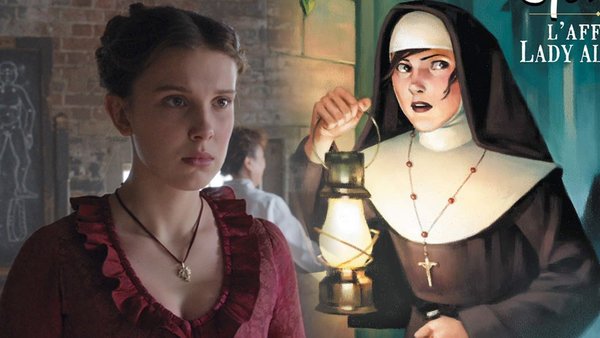
After dazzling Netflix with a solid, slick, and endlessly enjoyable film, it's a good time to recommend the six-book series that inspired the Millie Bobby Brown venture, Enola Holmes. While the film is an excellent addition to Holmes film canon and a worthwhile watch, the books, entitled The Enola Holmes Mysteries, are much more enjoyable, cleverer, and much, much darker.
A timeframe of many months in which the 14-year old Enola dodges her brothers, survives attempted murders, and searches for her mother takes place in a surprisingly gritty Victorian London, arguably grittier than we've seen from most Sherlock Holmes portrayals.
Though the film does a good job portraying its protagonist getting into near-death situations and throwing down like the best of action heroes, it bears many differences from the books, including the aged up Marquess and entirely invented romantic subplot, the fate of Enola's mother, and her many, many cases, which in some ways connect with each other to reach an intriguing conclusion.
Perhaps if there's a sequel planned for the future, we'll see more of the rich content and six different, yet smartly interconnected cases laid out in the books, but for now, here's a list of 10 things you'll find in the books that weren't included in the film.
Major spoilers for the events and mysteries of the books ahead!
10. Crawlers, Feces, And Corpses Frozen To Victorian London's Streets
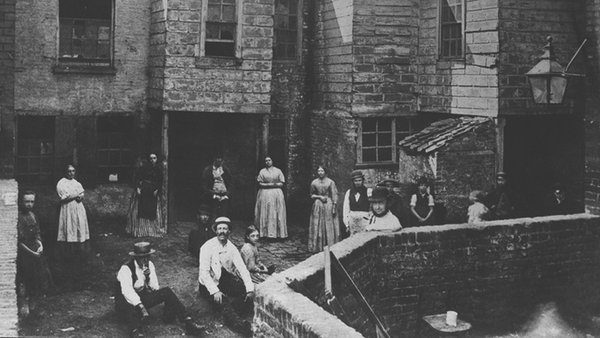
The young adult book series doesn't shy away from the grim realities of Victorian London. More than once, the series shows Enola unsure whether a slumped figure in an alleyway is a drunkard or a corpse, or outright stating that Enola has become uncomfortable with winter due to her seeing the corpse of a beggar frozen to the pavement, not to thaw until spring.
The book also mentions the nastiness that is the overabundance of horse dung caking London's busy streets, largely overlooked in the film.
But the most horrific of Victorian facts in the book are the "Crawlers" - beggars so weak they lie and crawl in the dirt. Historically, Victorian photojournalist John Thomson described them thus:
Huddled together on the workhouse steps in Short’s Gardens, those wrecks of humanity, the Crawlers of St. Giles’s, may be seen both day and night seeking mutual warmth and mutual consolation in their extreme misery. As a rule, they are old women reduced by vice and poverty to that degree of wretchedness which destroys even the energy to beg.
Such facts are not only referenced in the books, but also become major elements in the cases Enola pursues and solves.
9. Enola's Many Disguises
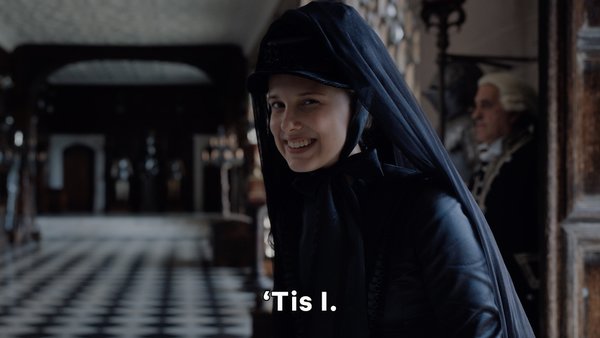
Though somewhat touched on in the film, Enola's disguises in the book go far beyond an exchange of clothes. Like the classic Sherlock, she has many of her own personas to fit different situations. In the books, she makes use of prosthetics, makeup, hairpieces, and other tools to hide or obfuscate her features, at one point even tricking Sherlock himself.
Some of her personas include young secretary Ivy Meshle; the shy child-bride Mrs. Ragostin; as well as Sister of the Streets, a religious sister of charity going out at night to give to the poor. Her disguises as a gentlewoman, to contrast her own gawky, teenage self, were especially effective, at one point even fooling Sherlock himself.
There were many intriguing lessons about how disguises worked that apply even in a real world context, from Enola changing the way she walked and held herself, to the way even small details like beauty marks and makeup emphasising different parts of the face could throw off someone's recognition.
Apart from her skill as a codebreaker, the detail Enola put into her disguises was impressive, especially for someone who was fourteen years old, and entirely alone, in the heart of London.
8. Florence Nightingale
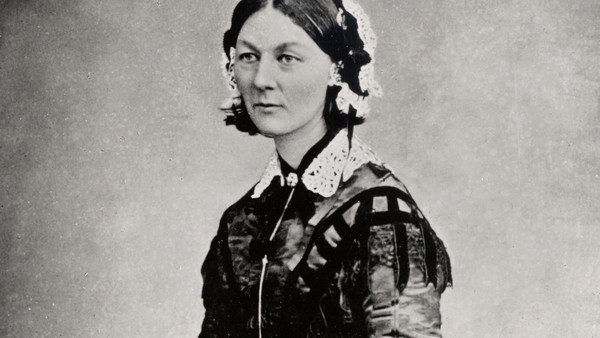
In The Case of the Cryptic Crinoline, Florence Nightingale appears in one of the stories as a seemingly invalid old woman, mentioned in connection to Enola's kidnapped landlady, the deaf war widow, Mrs. Tupper.
Despite largely being remembered as "The Lady with the Lamp", a Victorian figure of healing who ensured that soldiers were tended to during the Crimean War, Florence Nightingale was also a remarkable statistician, detail-oriented and disciplined in her work. Lesser known is her role in history pioneering modern data visualization with the use of infographics to express statistical data.
In the story, while initially introduced as a reclusive invalid, it's later revealed that Nightingale was a spy during her time tending to people in the war, and that she'd asked Mrs. Tupper to smuggle something back to England in her crinoline - which Mrs. Tupper was not aware of, due to her deafness, a message which caused her kidnapping.
Within the story, Nightingale also plays a part in helping Sherlock understand why Enola fears him so much despite her deep respect and adoration of him, and offers to shelter and care for Mrs. Tupper when Enola is forced to relocate after rescuing her from her kidnappers.
7. The Duquessa's Atrophied Corset Spine
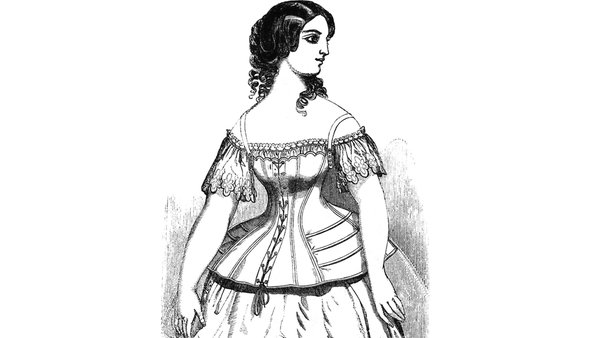
One of the more horrific images in the book that was one of the reasons Enola was so afraid of being found by her brothers is that of the incorrectly bound corset, the effects of which are seen in the Duquessa, who was known for her beauty and her exceptionally tiny waist.
This had an unfortunate side-effect when she disappeared seemingly into thin air, until Enola discovered the truth: she had been robbed of her finery, including her high-quality clothing, and with dangerously over-done corset-training, her spine had become so atrophied that she couldn't even stand straight without help, forced to become a crawler on the streets of London while she recovered from her attack and constantly overlooked and mistaken as a beggar.
Though as a general rule, corsets aren't nearly so morbid in their use, this particular image was an effective fear for Enola Holmes, and one that was so alarming that it even brought Sherlock himself to his senses about what he and Mycroft were forcing Enola into - both literally and figuratively.
6. Violet Eversau (Or The Time Sherlock Missed His Sister Standing Right In Front Of Him)
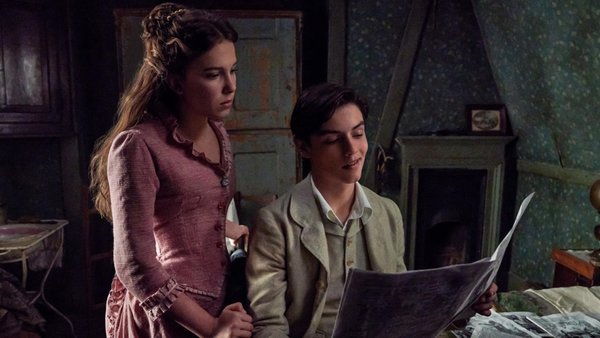
Though her ladylike dress and put-together appearance is shown in the film, the efficacy of Enola's disguises wasn't put on full display like they were in the book.
With just a clever change of clothing, posture, voice, makeup, and hair, pulling from many techniques used in real world espionage, Enola was able to fool Sherlock into overlooking her entirely, even when she was close enough to touch. In one memorable instance, Sherlock very nearly discovered Enola's then unknown whereabouts when she went to visit Mrs. Mary Mornstan Watson, Doctor Watson's wife. Enola was able to escape notice by getting right up in his face and vying for his attention as a fan, her makeup done in such a way as to make her look older.
Her fluttering attentions as young lady "Violet Eversau" were so offensive to Sherlock that he insisted on looking away, not knowing his quarry of some months was right there in front of him. It was a clever tactic not often seen in stories involving disguises and deception - being so offensively noticeable and loud that someone chooses not to pay attention.
5. Sister Of The Streets (Or Enola Giving To Beggars)
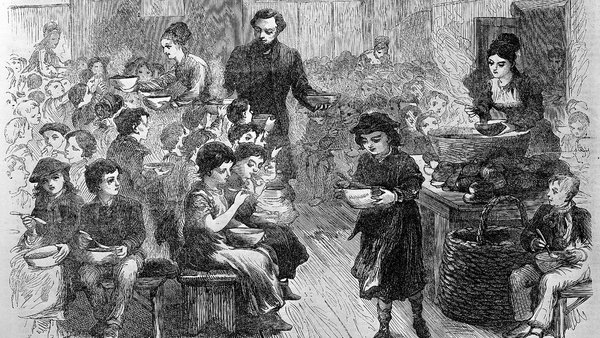
There's a lot about London that horrifies Enola, the most significant of which is the poverty she observes all around her, leading to unfathomable misery and disease and even death. This is why, as one of her many personas, Enola takes on the role of one "Sister of the Streets", a religious figure wandering the streets at night, giving alms to beggars who give her the moniker.
Despite being loved by those she provided for, Victorian London in the evening was still a very dangerous place, which is why Enola often hid a knife in her corset.
At one point, Enola is attacked - garroted - by a strange man, though the high collar of her clothing kept her from being killed. This act of violence shakes the 14-year old to the core, but she doesn't stop chasing down answers, only reconsidering her safety and ability to fight back - the martial arts training in the film something she doesn't actually have in the books.
Enola's deep concern and empathy for the downtrodden is only briefly touched upon in the film, though it's a major driving force of her character, especially in contrast with Sherlock.
4. The Professional Women’s Club, Enola's Home Base
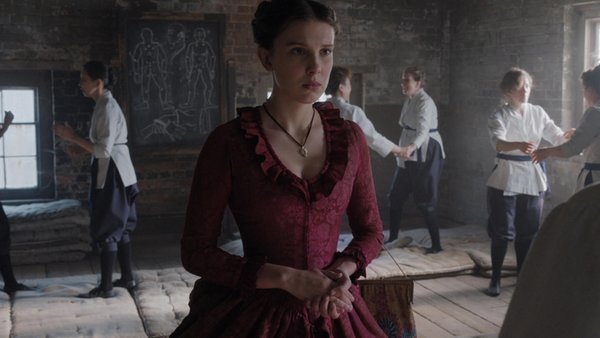
One of the themes of both the film and the books is Enola's independence, and her ability to be self-sufficient while also knowing she doesn't necessarily need to be alone to succeed on her own merit. This is best represented by her eventual settlement in London's Professional Women's Club, a place she can live safely without needing to rely on her brothers.
Though not nearly as grisly or dark as the other entries on this list, the Professional Women's Club is notable not only in the opportunity it gives Enola to forge her own path, but the fact that she's able to afford rooming there. This is in part due to her earnings from being hired to investigate cases in secret, as well as the rent she's able to collect from a building she owns by the end of the series, shows an impressive amount of maturity and self-sufficiency that would be admirable coming from a full-grown adult, let alone the 15-year old Enola is by the end of the last book.
Maybe not as visually impressive as a secret tea-room martial arts club, but just as, if not more so, important, to an independent young woman.
3. John Watson (In An Insane Asylum)
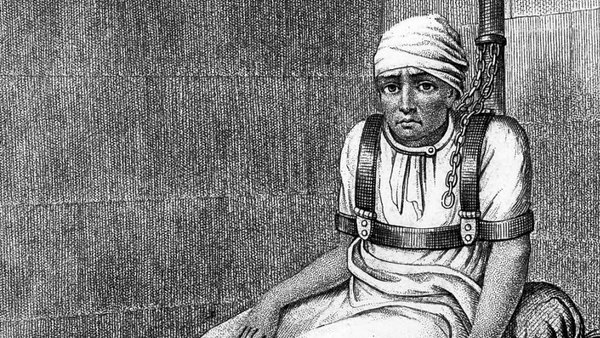
In the chilling opening to the Case Of The Bizarre Bouquets, we see a desperate, terrified John Watson trapped in an insane asylum, with the guards refusing to believe him when he says he doesn't belong there. After visiting his wife and seeing a bizarrely put-together bouquet that was more threat than comfort, Enola is eventually able to track Doctor Watson down, revealing the deception and murders that led to his abduction in the first place - someone having used him to replace an in-patient.
Despite Watson not showing up in the Netflix film, the books have him playing a much bigger role, at one point even visiting Enola's false Dr. Ragostin persona to help Sherlock track her down. Enola's ability to track down more information through her knowledge of flower language and the codes therein highlights Enola's skill in areas Sherlock himself doesn't often venture, especially more traditionally "feminine" pursuits and knowledge.
The flower language prominent in this particular book, however, is referenced in the film, when the coded language of flowers is used to send messages between mother and daughter.
2. The Non-Existent Dr. Ragostin, Enola's Cover And Sherlock's Competition

While in London, and in order to freely solve cases, Enola concocts a fake persona under the guise of a man named Dr. Ragostin, a Scientific Peditorian who specialises in Missing Persons and Items. Though he is never seen or present, Enola takes on the identity of Ivy Meshle, pretending to be Dr. Ragostin's "secretary" and hunting down information and clues under his supposedly trustworthy and well-respected name.
As Enola solves case after case, the reputation of the elusive Dr. Ragostin begins to rival even Sherlock Holmes himself - so much so that even John Watson himself visits the Perditorian's office to hire him to assist in Sherlock's search for Enola.
Later, when her identity as Ivy Meshle is compromised, Enola replaces her with the persona of one Mrs. John Jacobson, Ragostin's new assistant, and even turns his office building into a boarding house, from which she earns by collecting rent. Though it is unclear what becomes of Dr. Ragostin in the aftermath of the book series, it's implied Enola continues her investigations under his name, despite no longer to hide from her brothers.
1. The Fate Of Enola's Mother
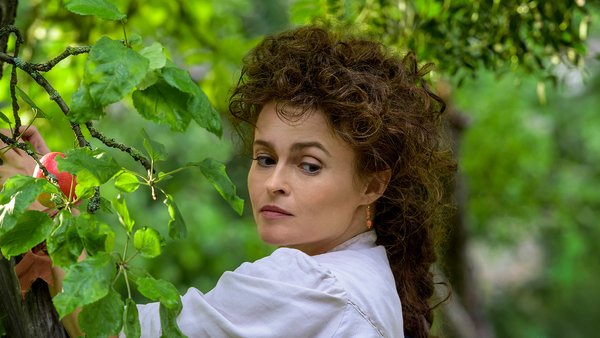
Spoilers ahead for the final book's ending, which reveals the fate of Enola's mother Eudoria.
Though disappeared, Eudoria isn't entirely out of reach, as Enola makes many attempts to communicate with her through codes in newspaper classified ads. At one point, Mycroft attempts to trick her by sending his own codes, though Enola sees right through it, even before Eudoria sends her a real coded a warning.
When Enola eventually reconciles with her brothers, and she receives her mother's last message and decodes it using her bicycle, it begins with:
My dearest Enola, If you have received this communication, it means that I am deceased.
It goes on to recount how she found a cancerous growth and decided to not burden her daughter with her death and its empty formalities, trusting her ability to do and be better than the roles others try to force her into. It's a painful but honest confession, and presents Eudoria's flawed personhood, her love and pride for her strong daughter, and how these two come together.
Enola Eudoria Hadassah Holmes, my daughter of whom I am justifiably proud, I write this to you because I owe you truth. To your brothers I owe nothing.