Doctor Who 101: A Viewer's Guide To The Classic Series - Part 1
 Fifty years. Eleven Doctors. 798 individual episodes, adding up to 239 stories. If youre anything like me, youve seen them all. Repeatedly. You know the production history. Youve flipped through the telesnaps of junked episodes. Youre eagerly awaiting the 50th Anniversary Special with a thorough knowledge of Who mythos, ready to grin knowingly at any and every obscure reference that Moffat and Co. decide to throw at you. You might say that youve got an honorary Doctorate in Doctor Who. And if youre anything like me, this article is not for you. There are a lot of Doctor Who fans out there who started watching when the show came back in 2005. Some of you may have come onboard only as recently as the Tennant or Smith eras. And while youre curious about past Doctors, past episodes, and the long and winding mythos of a series that has become an international phenomenon, the sheer volume of television history you are confronted with can seem a little well daunting. You dont know where to start. This article is for you. An introductory viewers guide to the classic series, here is a list of episodes presented well, we cant really say chronologically, when were talking about time travel, can we? So presented Doctor by Doctor: the essential, the exceptional, the merely expository (as, sadly, the very best episodes and those that are important to the overall series continuity are not always the same), and the execrable. Obviously, such lists cannot transcend an inherent element of subjectivity and, in that respect, the opinions, arguments and alternative suggestions of other seasoned Doctor Who veterans are not only welcome, but encouraged. For the rest of you, I hope this guide can provide a jumping off point: the first few steps on a wild, weird and wonderful, one-of-a-kind, televised journey through time and space, so that you can arrive at the Anniversary special in November armed with an authoritative awareness and ardent appreciation of Doctor Whos rich history. But before we begin A few basics: 1) Classic Doctor Who was not presented in its current format of one hour-long story per week. Stories were broken up and serialized as (usually four, but sometimes more) half-hour episodes. Altogether, one story typically runs the length of your average movie. 2) Like its titular character, Doctor Who regenerates. From Doctor to Doctor, season to season, the series grows, changes, transforms. Fifty years is a long time, after all If you dont like a particular Doctor, or a particular era, dont assume the classic series is not for you. Move on the next season, or the next Doctor, and you might be pleasantly surprised. 3) Remember that this will not be the big-budget, action packed sci-fi spectacle that you have grown accustomed to with the current series. The pace is slower, the presentation is, often, more theatrical, and the production value, by modern standards, is well lets call it quaint. But, at its core, you will find the same exciting, entertaining, groundbreaking series you have grown to love. And at the center of it all will, of course, be The Doctor, who - different as his eleven incarnations may outwardly seem has always been, at his core, the same.
 The most jarring aspect of Doctor Whos first few seasons, for fans of the current series, will probably not be the lower production value, the serialized 25 minute episodes, or even the fact that its shot in black and white. What will be most unsettling (and hopefully intriguing) is the character of the Doctor, himself. Not only is William Hartnells First Doctor significantly older in appearance than Eccleston, Tennant or Smith, there is also precious little about him, initially, that is in any way endearing or heroic. Cold, gruff, impatient, condescending, and even callous, the First Doctor can make Ecclestons battle-scarred Ninth seem warm and cuddly by comparison. And yet If one looks closely, the Doctors fundamental character is already there: Every Doctor, after all, has his moments of impatience, arrogance, and insensitivity. But while these traits may have been more pronounced in Hartnells Doctor, they, in no way, obscure the eccentricity, the analytical brilliance or the gleam of childlike mischief in the eyes that have become the Doctors most consistent and recognizable traits. And as Doctor Who evolved, Hartnell and the series writers allowed the Doctor to evolve with it: learning, softening, growing into a warmer, whimsical, grandfatherly figure, more reminiscent of the Time Lord we know today. Of course, back then, no one knew anything of Time Lords, regenerations, or other Doctors. Hartnell was The Doctor. The only Doctor. And, even more so than today, his true identity was shrouded in mystery
The Essentials:
An Unearthly Child (Season 1, Episode 1) Its hard to imagine what it must been like. Fifty years ago, TV audiences followed schoolteachers Ian Chesterton and Barbara Wright as they pursued an unpleasant and eccentric old man into what appeared to be an ordinary police box, only to find themselves in the console room of an alien craft. Though the impact of that moment will be unavoidably diminished for anyone already familiar with Doctor Who, Unearthly Child still possesses moments of magic and mystery that, back in 1963, let first-time viewers know that this show was going to be something unique. Something special. This is where it all started. The Dalek Invasion Of Earth (Season 2, Episode 2)
 The second appearance of the Daleks in Doctor Who, one can skip their Season 1 debut, appropriately titled The Daleks, in favor of this all-time classic. Recasting the post-war, Skaro-bound mutants of that serial as aggressive interplanetary dominators who have seized control of 22nd Century Earth, The Dalek Invasion of Earth is an epic Doctor Who story that, at its best, often feels less like a TV show than a thoroughly entertaining 1960s sci-fi B movie. Buoyed by extensive location shooting (theres something genuinely chilling about seeing the Daleks roaming the streets of post-apocalyptic London), and featuring some of the Hartnell eras best writing, it also marks the first departure of a companion in the series: a heartbreaking, beautiful moment that has become iconic in Doctor Who history. A landmark episode for more reasons than one, its the perfect reintroduction to these menacing monsters that have become almost as integral to Doctor Who as the Doctor, himself.
The Exceptional
The Time Meddler (Season 2, Episode 9) A trifle of a story, but a thoroughly enjoyable one, The Time Meddler cements its place in the Doctor Who pantheon by being the first episode of the series to feature another Time Lord (Susan, notwithstanding). Slyly setting the viewer up to expect another straight historical serial, when the TARDIS arrives on the coast of England in 1066, it quickly becomes clear that all is not as it should be. Though neither the Doctors race, nor his planet of origin are ever mentioned by name (that was a ways off, yet), the titular time meddlers true nature becomes unquestionably clear when companions Steven and Vicky stumble their way into another TARDIS. Light comedy and clever banter abound, keeping the episodes energy afloat and allowing Hartnell to display his Doctors comic side. Not really essential viewing, but definitely worth your time
The Expository
The Tenth Planet (Season 4, Episode 2) The episode that changed everything. And it would be nice to say that The Tenth Planet, which introduced both the Cybermen and, more importantly, the concept of regeneration to Doctor Who, was a riveting adventure that built to a heartrending climax. But it isnt. Truth be told, its as sterile as the Antarctic wasteland in which it is set, as monotonous as the robotic voices of its antagonists. It doesnt much help that Hartnell, weary with age and illness, was frequently absent during production, meaning the Doctor spends much of his time sleeping it off in a bunk. Even worse, the fourth and final episode i.e. the one that really makes this serial significant exists only in telesnap form (a series of stills with full audio accompaniment). Only the short few minutes that make up the series historical first regeneration scene, as William Hartnells First Doctor transforms into Patrick Troughtons Second, exist on shabby film stock. If you find yourself wanting to just skip ahead to the end, nobody would blame you
The Execrable
The Gunfighters (Season 3, Episode 7) Unless youve got a hankering for wobbly American accents, embarrassing costumes, and quite literally show-stopping performances of awe-inspiringly bad Western ballads, you can leave Doctor Whos cringe worthy take on the American Western collecting dust A Town Called Mercy it aint A Few Extras For those interested in exploring the Hartnell era a little further, you can also check out The Romans, which is good comedic fun, and The War Machines, which embarrassing narrative oversights aside really set up what would become the formula for the classic series. The Crusade and the epic Dalek Masterplan are both considered high watermarks, but the majority of episodes exist only in telesnap form.
 It cant be said enough: If it werent for Patrick Troughton, we probably wouldnt be watching Doctor Who today. By the time William Hartnell left the show, Doctor Who had become a nationwide hit anchored by a much-loved character he helped create. Replacing him as the Doctor was a huge risk that could have resulted in the programs cancellation had audiences refused to accept a new actor in the role. Fortunately, it didnt take long for Troughtons impish, Chaplinesque Second Doctor to win viewers hearts, and he still ranks very highly among the Doctors in popularity polls today. More approachable than Hartnells often prickly curmudgeon, Troughton imbued his Doctor with an innocent warmth and vulnerability, often seeming like an overgrown child with his tousled black hair, oversized coat and askew bowtie. But throughout his tenure, there were also frequent indications that, beneath the surface, this new Doctors rumpled, affable style concealed an alien remove and an icy, almost ruthless, analytical brilliance. Often photographed lurking watchfully in the background as the action plays out around him, this Doctor almost never seized control of events, but instead seemed to quietly manipulate them towards his desired outcome, begging the question: was his easily flustered, clownish persona just a ruse to keep his opponents (and even, sometimes, his companions) underestimating him? Unfortunately, almost two-thirds of Troughtons serials were purged by the BBC (standard practice in the 1960s to conserve storage space) and exist today only in incomplete form, with multiple episodes viewable only as telesnaps. Only his third and final season remains largely intact. Thankfully, some of his most important stories survive
The Essentials
The Invasion (Season 6, Episode 3) It wont take long for fans of the current series to recognize The Invasion, with its story of an amoral industrialist instigating a Cyber-takeover, as the clear inspiration for the 2006 Tenth Doctor two-parter, Age of Steel/Rise of the Cybermen. One of the most exciting serials of the Troughton era, The Invasion also marks the first appearance of UNIT (the United Nations Intelligence Taskforce), and the second appearance of Brigadier Alistair Gordon Lethbridge-Stewart (Nicholas Courtney): UNITs commanding officer, father to Kate Stewart (UNITs scientific advisor in the current series), and one of the Doctors longest serving, if least consistent, companions. As they did with Hartnells Dalek Invasion of Earth, location shoots once again contribute to an overall cinematic feel, and add a level of realism to the threat of a Cyber-invasion. Smart, suspenseful and surprisingly modern (for 1969 classic Doctor Who, anyway), The Invasion would provide the blueprint for what Doctor Who would become in its next few seasons. (Episodes 1 and 4 are, technically, missing, but the DVD release features animated reconstructions, courtesy of Cosgrove Hall.) The War Games (Season 6, Episode 7)
 Arguably the most important classic Doctor Who serial of them all - at least when it comes to the question of who the Doctor is and where he comes from - it is also one of the very best. What, at first, appears to be a historical serial set on the front lines of World War I quickly evolves into something else entirely... And never really stops evolving until the end of its final episode. Though quite long (at ten episodes, perhaps a bit TOO long), The War Games deliberate pace allows each of its numerous narrative reversals to genuinely take viewers by surprise, twisting and turning its way towards an unforeseen, but ultimately unavoidable, denouement. Though anyone who has done even the lightest research on Doctor Who already knows how this one ends, youll find no spoilers here. Suffice it to say, much of what we know about the Doctor today came to light in this serial, and the revelations and resolutions of the final episode change the Doctor, and the series, forever.
The Exceptional
Tomb Of The Cybermen (Season 5, Episode 1)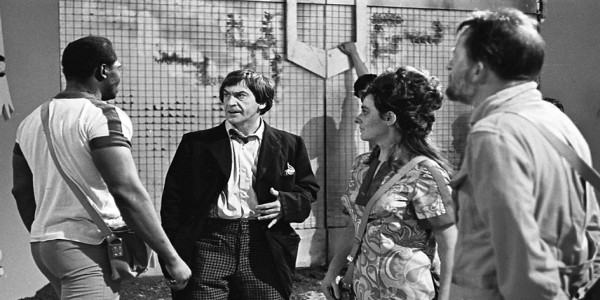 The only serial from Troughtons first two seasons that survives in its entirety, Tomb of the Cybermen is often overhyped. Which is not to say that it isnt good. Its a ton of fun from start to finish, features some iconic moments in Cyber-history, and shows off the creature feature style of the Troughton era to great effect. But the mountains of praise heaped upon it tend to overlook its cartoonish, over-the-top villains, its questionable plot contrivances, and its nearly unintelligible Cybermen who sound like laryngectomy patients at a drive-thru. Tomb of the Cybermen has some major flaws, but what ultimately makes it tremendously worthwhile is that it offers what might be the fullest and most engaging depiction of Troughtons Second Doctor. From his playful banter with companions Jamie and Victoria, to the dryly devastating barbs he casually tosses off to deflate the megalomaniacal antagonists mentioned above; from his subtle, strategic, background manipulation of events, to the warm and sincere words of comfort he offers a troubled Victoria, Troughton is in top form and Tomb of the Cybermen allows him to showcase his one-of-a-kind take on the character, while still remaining true to the essential qualities that make him The Doctor.
The Execrable
 Of the surviving serials, most classic Doctor Who fans are quick to condemn The Krotons as one of the worst, but for all its myriad defects, there are simply too many great Doctor-y moments (especially in his interplay with Zoe) for me to warn people off. Id say, instead, steer clear of The Seeds of Death which, while not appalling, is just interminably dull. A Few Extras: To see a bit more of Troughtons Doctor, the best thing to do is pick up the Doctor Who: Lost in Time DVD set, where you can see the little that survives of his earlier seasons. The Mind Robber is a truly unique and strange story from Season 6 thats worth a look. And for a real glimpse of the Second Doctors dark side, check out Evil of the Daleks, even in its sorry telesnap state.
 Jon Pertwee gave us the Doctor as action hero. In his previous incarnations, the Doctor took on his foes with intelligence and guile, strategizing from the sidelines and usually leaving the physical heroics to his younger male companions. But Pertwees Third Doctor, though no less brilliant or analytical than his predecessors, would often go toe-to-toe with his enemies, himself, as quick to throw a punch as offer a condescending put-down. Exiled to Earth, and employed by UNIT as their scientific advisor, the Doctor became an extra-terrestrial Sherlock Holmes-cum-James Bond-style crusader, defending the planet from a host of alien, as well as homegrown, threats. Pertwees era also brought color to Doctor Who, and marked its first significant step towards darker and more complex content. The prior seasons, for all their horror/sci-fi elements, had always been primarily aimed at children, centering around moral conflicts that were (sorry about this) black and white. Perhaps aware that their audience, and the world around them, was growing up, or perhaps as a result of the show's growing popularity with viewers of all ages, the Doctor Who creative team made a conscious effort to give the series an edgier style, while exploring more complicated, and often socially relevant, ethical dilemmas. Media watchdogs cried foul (though their complaints would be laughable to anyone raised on American television), but the show would continue to grow with its audience over the years, changing and keeping up with the times
The Essentials
The Silurians (Season 7, Episode 2) Though probably a bit of a shock for those viewers coming from Hartnell and Troughton, Doctor Whos seventh season, with its mature tone, modern feel and moral grey areas, might feel surprisingly familiar to fans of the current series. And its second episode, The Silurians, finds that season at its peak. Much more than garden variety monsters of the week, the subterranean reptiles of the title are a far cry from the pure malevolence of the Daleks or Cybermen, and their complex nature allows viewers one of the first, and most significant, insights into the Doctors alien perspective: human life is not the only life worth saving and, sometimes, not even the most deserving. The Doctors relationship with the Brigadier, though always a slightly tense one rooted in genuine affection and respect, is at its most three-dimensional and layered here, highlighting the contrast of military vs. scientific mind that served as an ongoing background conflict throughout the Pertwee era. Some viewers may have trouble overlooking the regrettable rubber costumes and poor production value, and the shocking ending will be undercut by advanced knowledge of the Silurians reappearances in both the classic and current series. Nonetheless, thoroughly enjoyable and engrossing, The Silurians stands out as representing the Pertwee era, and classic Doctor Who, at its finest. The Claws of Axos (Season 8, Episode 3)
 Every Sherlock Holmes must have his Moriarty, so in Doctor Whos eighth season, viewers met The Master: another renegade Time Lord and the Doctors arch-nemesis. While many would contend that Terror of the Autons, the serial that introduced him, is the more essential, The Claws of Axos, in addition to just being a better story, provides deeper insight into the true nature of the Doctor/Master relationship. The reluctant partnership they must enter into to defeat the Axon threat allows them to move beyond their usual adversarial dynamic, revealing their grudging mutual admiration, while also throwing their differences and, perhaps more importantly, their similarities into stark relief. As the Master, Roger Delgado oozes his trademark sociopathic charm, without ever descending into the sort of mustache twirling villainy some of the other serials sometimes required of him. And Pertwee is provided with the dramatic space to give us a rare glimpse of his Doctors darker side. While his desperation to escape his exile on Earth was always apparent, the climactic events of Claws of Axos and Pertwees cool, modulated performance raise uneasy questions about just how far hes willing to go, and how much hes willing to sacrifice, in order to regain his freedom.
The Exceptional
Day of the Daleks (Season 9, Episode 1) Mystifyingly maligned by the majority of classic Doctor Who fans, its true that this taut little tale of temporal paradox contributes nothing to the mythic annals of Dalek lore. And when one considers that this serial marked the Daleks first appearance on the program in four years, its perhaps understandable that, at the time, fans may have been disappointed by their relatively slight return. But strip away any great expectations, and whats left is a tightly wound action-adventure yarn that manages to be, all at once, a ghost story, a sidewinding sci-fi thriller, and a political parable. Day of the Daleks is also vintage Pertwee, giving his Doctor ample opportunity to do the things he does best: dive head first into the action with fists flying and guns blazing, and speak truth to power, whether with smug charm, impatient condescension, or indignant outrage. Fans of Steven Moffats timey-wimey wibbley-wobbley narrative twines will find their roots here. Those that find them irksome (though, if you do, its something of a mystery as to why youre watching a time travel show to begin with) may want to skip this one. The Green Death (Season 10, Episode 5)
 Companions come and companions go. Its commonplace in Doctor Who. On occasion, in the classic series, their departures were momentous events (the poetic and touching final moments of Dalek Invasion of Earth, for example, or the Doctors short, forced farewells to Jamie and Zoe at the end of The War Games, which are warm and heartbreaking despite their brevity), but most of the time they felt a bit rushed, and even in the most dramatic cases, they were almost always sudden. The Green Death is something different. An environmentally conscious, politically pointed techno-fable about exploited coal miners being terrorized by mutant monsters born of industrial pollution, on the face of it, its good, solid Pertwee-era Doctor Who. But underneath the usual sci-fi adventure trappings, it is also the story of the Doctor slowly losing one of his companions. For the first time in the program, we see a companion (Katy Mannings Jo Grant) gradually coming to the decision to part ways with the Doctor and live her own life. And we see the Doctor growing increasingly aware of, and troubled by, her impending and inevitable departure. Giant maggots, hyper-intelligent supercomputers and brainwashed bureaucrats abound, all of which the Doctor takes on with his usual dashing poise. But after a patient, backgrounded dramatic build, Jos announcement of her decision in the last, quiet minutes of the serial, leave him shaken in a way viewers had never seen before. And wouldnt see again for some time
The Expository:
The Three Doctors (Season 10, Episode 1) To mark Doctor Whos tenth anniversary, in 1973, the Doctor Who creative team decided to celebrate with an anniversary special that would finally put an end to the Doctors exile on Earth, throw some light on the dark recesses of the Time Lords shadowy history, and even bring William Hartnell and Patrick Troughton back to reprise their roles, uniting all three Doctors in a fight against a powerful threat to all of time and space! Unfortunately, The Three Doctors is not very good. In fact, its a bit of a chore to sit through. Overly long, meandering and dull, riddled with continuity problems (as all multi-Doctor stories are), and featuring some of the most embarrassing-looking monsters in the series' history (and that's saying a lot!), it is sadly, for such a pivotal story - one of the low-points of Pertwees tenure. While its hard for any Doctor Who fan to not get a bit giddy at the idea of a multi-Doctor adventure, the First and Second Doctors spend most of the serial sidelined, and its disappointing to realize how little the story would suffer were they completely removed. Troughton keeps things buoyant enough, especially when sparring with Pertwee, but hes really little more than comic relief, displaying none of the complexities that made his Doctor so memorable. And Hartnell was, by this time, quite old and very ill, requiring that his role be little more than a brief, suitably grouchy cameo appearance on the TARDIS scanner (i.e. reading his lines off a teleprompter in a pre-recorded studio session). Theres no denying that Three Doctors is a milepost in the series history, but like most mileposts, taken by itself, its not much to look at.
The Execrable
 Throughout his five years in the role, Pertwees Doctor saw quite a few ups and downs. His first year, Season 7, remains one of the series best, but Ill probably incur the wrath of many classic Who fans when I say that his last, Season 11, is probably one of the worst. Despite the always significant regeneration at its end, despite the debut of the Sontarans, despite the introduction of Elisabeth Sladens Sarah Jane Smith, its a weary, dreary run of serials that seems short on both inspiration and investment. The departures of Katy Manning and producer Barry Letts and, more significantly, the death of Roger Delgado (who played The Master) the previous year cast a pall over the program behind the scenes and its palpable on screen. None of the individual serials are as outrageously bad as Hartnells The Gunfighters, but collectively, they make for a sluggish crawl towards the end. A Few Extras The aforementioned Season 7 is worth viewing in its entirety. Season 8s The Daemons was a personal favorite of Pertwees, and feels a bit like Doctor Whos take on Hammer horror. And Season 10s Carnival of Monsters is a popular fan favorite from the masterful mind of one of classic Doctor Whos mainstay writers, Robert Holmes.
 It would be impossible to overstate the importance of Tom Baker to Doctor Who. Prior to the shows rebirth in 2005, the mere mention of Doctor Who, even to someone who had never seen it, would likely evoke images of Baker as the Fourth Doctor, beaming from behind his trademark hat and scarf. Perhaps no other actor has ever been so closely associated with the role. In sharp contrast to Pertwees elegantly dressed, coolly detached, Holmes-ian Third Doctor, Bakers Fourth, with his mop of dark curls, wide-eyed manic grin, and bohemian attire, was startlingly unique and bizarre. A genuine eccentric, Baker imbued the Fourth Doctor with many of his own odd quirks and idiosyncrasies, and the result was a performance that was unpredictable, captivating and very believably alien. Add to that, his commanding, resonant voice, frequent left-field ad-libs and improvisations on set, and his remarkable ability as an actor to perform split-second shifts from deadly serious conviction, to comic glee, to righteous outrage with mercurial grace, and you have a Doctor that is wholly new and original, yet also somehow an essential synthesis of his predecessors. In a perfect synergy of actor and character, Baker became the role in a way no other actor had and, in many ways, it became him, until the two were inextricably intertwined. Propelled by his performance, Doctor Who rocketed from national hit in the U.K. to international cult phenomenon. His episodes were the first to be broadcast in the U.S., creating new legions of devoted fans, most of whom had no idea that he was not the first and only Doctor. At seven years, his tenure is still the longest of any actor to play the role, and even today, the Fourth Doctor remains iconic, regularly topping popularity polls worldwide. To many, he was not just a Doctor, but THE Doctor The definite article, you might say
The Essentials
Genesis of the Daleks (Season 12, Episode 4) Quite possibly the most important Dalek story in Doctor Who, it is also one of the best episodes the classic series has to offer. An uncompromisingly grim war story, it details the origins of Doctor Whos most famous monsters, while providing a dark ethical meditation on the dehumanizing effects of warfare and the dangers of unbridled scientific ambition. The longstanding Dalek/Nazi allegory is used to superlative effect, making this one of the few serials in which the Daleks can seem truly terrifying. Genesis of the Daleks also introduces Davros, the Daleks creator who, though he would become a permanent fixture in future Dalek stories, would never be used more effectively than he is here. Providing a less abrasively mechanical adversary for the Doctor, Davros represents both the source and distillation of the Dalek mindset, enabling a deeper and more focused exploration of the storys inherent philosophical conflicts. If it all sounds pretty heavy and heady, it is. But its also a thoroughly engrossing, atmospheric thrill-ride. Bakers eccentricity and off-handed anti-authoritarianism provide welcome moments of levity, but its the powerful gravitas he brings to the serials weightier scenes that make this one of his finest hours. If, after reading this monolithic guide, you decide that youre only interested in watching one classic Doctor Who serial, this is the one to choose. City of Death (Season 17, Episode 2)
 In 1979, the BBC hired a young, upstart writer named Douglas Adams to serve as script editor for Doctor Whos seventeenth season. Having made brief appearances on Monty Pythons Flying Circus, and more recently, having achieved popular success with a radio show titled The Hitchhikers Guide to the Galaxy (the novels were still in the works), Adams brought his own singular, silly sense of sci-fi to Doctor Who. Certainly, the show had always had comedic elements but, even after only one season, Adams unique brand of wit and whimsy became so firmly embedded in the fabric of the show that, though perhaps slightly toned down, they remain an integral part of the series today. Easily the standout serial of the season he oversaw, City of Death is pure entertainment. Featuring extensive Paris location shoots, a hard-nosed, thick headed detective, a suave, sophisticated alien who wants to steal the Mona Lisa, and a wealth of delightful, screwball interplay between Bakers Fourth Doctor and his Time Lady companion, Romana (Lalla Ward), its not essential viewing because its narrative offers any major contributions to Doctor Who mythos, or because it features any pivotal, character-revealing moments for the Doctor. As light as a soufflé, as expertly crafted, and no less delectable, City of Death is simply Doctor Who at its funniest and most fun.
The Exceptional
The Ark in Space (Season 12, Episode 2) A better introduction to the Fourth Doctor than the uneven and unwieldy season opener, Robot, Tom Bakers second serial plunges headlong into the gothic horror aesthetic that would be the hallmark of his early years in the role. Though set aboard a space station in the distant future, the storys sci-fi elements take a backseat to its macabre monster movie style (one, in fact, cant help but wonder if the creators of Alien took some inspiration from this serials tone and temper). Even the admittedly poor special effects dont really detract from the narratives tragic weight, or the air of creeping dread that permeates the proceedings. The Fourth Doctors mercurial, bohemian style stands in perfect contrast to the stark severity of the story and its sterile setting, and Baker, still fresh in the role, commands the screen with note-perfect wide-eyed enthusiasm and full-throated conviction. An engrossing and sometimes gruesome portrait of an alien hero battling for the human soul, Ark in Space has been named by both Russell T. Davies and Steven Moffat as their favorite episode of classic Doctor Who. Robots of Death (Season 14, Episode 5)
 One of the best variations of the Ten Little Indians in Space formula that has been used time and again in Doctor Who, Robots of Death is also an Asimov-ian science fiction parable and a scathing critique of unbridled capitalism. The second serial to feature the leather-clad, thick-skinned, knife-wielding companion, Leela (Louise Jameson), the story gives the playfully tweaked Henry Higgins/Eliza Doolittle dynamic between her and the Doctor its best showing, as they find themselves accused of murder on an isolated mining ship. The skeleton crew of human pilots, miners and engineers manage to make themselves almost entirely unlikable, yet also somehow compelling, possessed of more layers and complexities than one might expect from this type of story. And the titular robots are a masterpiece of low-budget craftsmanship, their expressionless, almost human faces providing a blank slate that can be read as both pleasantly placid and terrifyingly cold. Bleak and brutal, yet also fun and thoroughly enjoyable, Robots of Death is one of the best displays of how classic Doctor Who could accomplish a great deal with very little.
The Expository
The Invasion of Time (Season 15, Episode 6) An epic adventure that sees the Doctor returning to Galifrey and becoming President in order to pave the way for an alien invasion of his own planet (!), The Invasion of Time offers the most thorough exploration of the Doctors relationship with his own people (especially his former mentor, Borusa), the most exhaustive tour of the TARDIS interior this side of the current series, and one of the most unsettling reminders of the Doctors unpredictability and enigmatic reserve. It is also wearyingly long, inappropriately frivolous, and very often, a thudding bore. The events that transpire over the course of Invasion of Times six episodes (very telling, that I remembered there being nine) have resounding effects that stretch into the rest of the classic series, and even into the Big Finish audioplays. And while theres enough sporadic entertainment to keep you watching if youre feeling especially patient, it may be best to simply content yourself with reading a synopsis. Logopolis (Season 18, Episode 7)
 The end of an era for Doctor Who, and the beginning of a new one, Logopolis is not a bad story. Nor is it an especially great one. Solid enough, it is notable for two things: it marks the departure, after seven years, of Tom Bakers Fourth Doctor, and it has a very different tone and style than the other Fourth Doctor serials listed here. Season 18 saw the arrival of John Nathan-Turner as producer, a role he would occupy until the classic series end. Driven by an ambition to update and modernize Doctor Who, he made several noticeable changes to the shows overall aesthetic. The episode-to-episode continuity was played up, the humor was toned down, the production style was made more (for the BBC) cinematic, and Tom Baker whose lengthy tenure and popularity had given him near carte-blanche on set was reined in. Its hard to say whether its Baker or the Fourth Doctor who seems so weary and withdrawn in his final episodes, but a resigned, funereal tone hangs over all of Season 18 and finds its culmination in Logopolis. A hard sci-fi story (for Doctor Who) dealing with recursion, entropy, a planet of mathematicians, and the potential end of the universe, it pits the Doctor against a newly-regenerated Master, bringing their Holmes/Moriarty antagonism to a climax worthy of Conan-Doyles Final Problem. A decent finale for Tom Baker and the Fourth Doctor, but perhaps equally importantly, an introduction to the shape of Doctor Who to come
The Execrable
 Fortunately, Baker was a strong enough performer, and the overall quality of the writing solid enough during his tenure, that none of his episodes could be described a worthless or unwatchable. That said, unless you REALLY feel impelled as a completist, you can skip The Android Invasion, The Invisible Enemy, Underworld, The Leisure Hive and Meglos. A Few Extras Bakers tenure saw a lot of truly worthwhile episodes and it would be impossible to list them all here, but if youre looking to move on from this list, check out Pyramids of Mars, The Deadly Assassin, Horror of Fang Rock, and State of Decay. STAY TUNED for Part 2, where I'll cover Doctors 5 through 8...