David Lynch’s 22 Strangest ‘Otherworld’ Characters

That gum you like is going to come back in style.
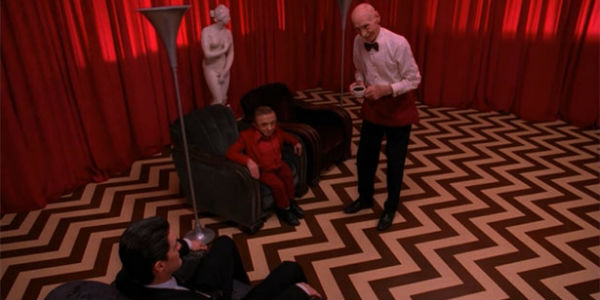
The cinema of David Lynch is notoriously surreal and filled with figures both terrifying and bizarre. Many worlds are portrayed in his work, and these spaces intertwine and feature characters that are clearly not of the physical world. Ethereal places like The Black Lodge in Twin Peaks and the burning hut in Lost Highway are truly strange and daunting, and are often left almost entirely unexplained by Lynch. The director is renowned for letting his audience interpret his work in their own way. There are many characters that seem capable of contacting or seeing the €˜otherworlds€™ that drive Lynch€™s stories, including Twin Peaks€™ Dale Cooper, Gordon Cole (alongside Lil The Dancer) and The Log Lady, On The Air€™s Billy €˜Blinky€™ Watts, the Castigliane brothers of Mulholland Drive and Nikki/Sue in Inland Empire. There are also many larger than life (predominantly monstrous) figures that seem out-of-place in the real world, such as the baby in Eraserhead, Blue Velvet€™s Frank Booth, Dune€™s Baron Harkonnen and Wild At Heart€™s Marietta Fortune and Bobby Peru. However, the characters that really stand out are those ephemeral phantoms that seem to know much more than they ever let on about the events unfolding in Lynch€™s confusing €“ and terrifying €“ narratives. These otherworld characters can be angelic, demonic or even god-like, and they are often portrayed as inhabiting spirits, causing characters to perform actions that they otherwise would not consider. Many of these figures actually seem to be controlling events themselves, and their sequences in Lynch€™s works are among his most evocative and stylised. Here are 22 of them from across Lynch€™s career, with practically every feature film (save 1999€™s more linear The Straight Story) represented.

22. The Man In The Projection Room: Absurda
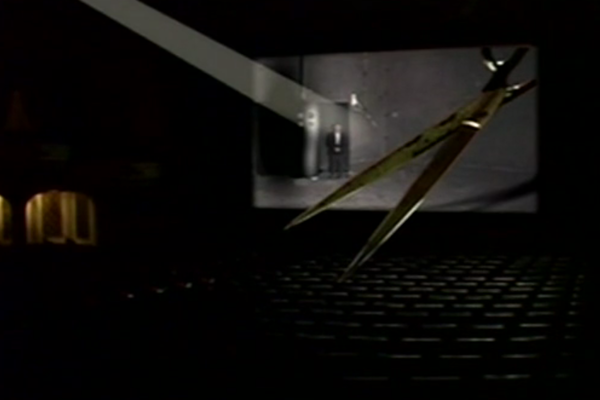
€˜This is the one who did it.€™ Absurda, a short film created for Cannes Film Festival€™s 60th anniversary in 2007, is an excellent condensed version of many themes exhibited in Lynch€™s work as a whole. Its abstract narrative revolves around several characters solely identified by their off-screen voices, but it is the only figure to actually appear in the frame that stands out the most. The Man In The Projection Room, who seems to be a director, is the latest in a long line of directors portrayed in Lynch€™s films. However, where Mulholland Drive€™s Adam Kesher (Justin Theroux) and Bob Brooker (Wayne Grace) and Inland Empire€™s Kingsley Stewart (Jeremy Irons) are inept and easily manipulated figures, Absurda€™s character is completely in control. He terrifyingly recites what appears to be the tale of a murder through a series of apparently unrelated abstract and blurry images on the screen on which he appears. As he speaks the events seem to unfold, as if he himself is willing them into being. Absurda is a tribute to cinema€™s emotive and narrative power, and The Man In The Projection Room seems to be Lynch€™s portrayal of his own role as a cinematic artist controlling the fates of his characters.

21. Visitor #1/Visitor #2: Inland Empire
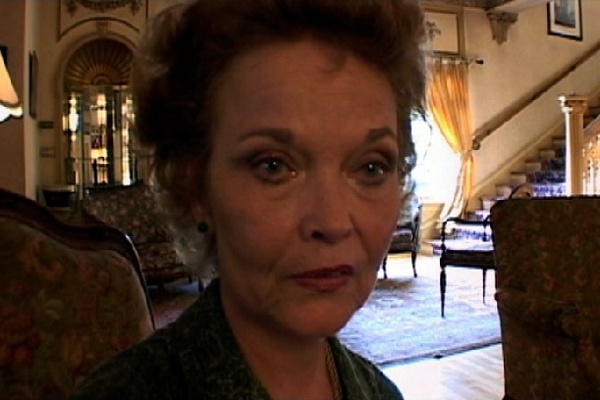
€˜I can€™t seem to remember if it€™s today, two days from now, or yesterday. I suppose if it was 9:45, I€™d think it was after midnight.€™ There is little doubt that Inland Empire is among Lynch€™s most €˜difficult€™ works, and it is notable that (along with Twin Peaks) it contains the most instances of otherworld characters. Nikki/Sue (Laura Dern) is visited by two women during the course of the film (played by Grace Zabriskie and Mary Steenburgen), both of whom seem to know more than she does about the unfolding events. While there is little in their interchanges with Nikki/Sue that makes much conventional sense, both visitors seem to be offering an explanation of her role within the story. They both refer to an €˜unpaid bill€™ that she must pay, while Visitor #1 knows about a future murder long before she possibly could if she was not in some way magical. They also both make odd statements about time and place, as if they understand that there is little concept of either in Inland Empire. Are they controlling the story? While clearer instances of otherworld characters confusing/clarifying what is going on through unclear clues and wilfully bizarre phrases occur later in the list, the visitors provide an extreme €“ and scary €“ example.

20. The Dreamself Of The Heartbroken Woman: Industrial Symphony No. 1

€˜Moving near the edge at night€ Dust is dancing in the space€€™ One aspect that seems to link many of Lynch€™s otherworld characters is their connection to emotionality, as seen in his early 1990s stage musical Industrial Symphony No. 1. A tale of love starring Laura Dern, Nicholas Cage and Michael J. Anderson, it is Julee Cruise€™s performance as Dern€™s vocal muse The Dreamself Of The Heartbroken Woman that stands out. After Cage€™s Heartbreaker ends his relationship with Dern€™s Heartbroken Woman, the play enters into a dream in which Cruise€™s Dreamself vocally embodies the Heartbroken Woman€™s pain. Lynch utilizes music and vocals throughout his films to amplify melodramatic emotion until it becomes almost unbearable, and Industrial Symphony No. 1 is the most extensive example of this. If the otherworld characters in Lynch€™s films seem more aware of the narrative that confines them than other characters, then The Dreamself provides an instance of a character driving the story almost singlehandedly through the emotionality of her songs.

19. The Grandmother: The Grandmother

The motives of otherworld characters are often ambiguous in Lynch€™s films, with their cryptic clues often seeming to hinder, rather than help, the characters that they speak to. However, The Grandmother (from Lynch€™s early short film of the same name) holds no such uncertainties. She is the first in a long line of heroic female Lynch figures that offer guidance and love to those that seek them out. The film€™s story involves a young boy (Richard White), abused and rejected by his parents, who plants seeds in his garden and grows a loving grandmother. While The Grandmother (played by Dorothy McGinnis) seems to encourage him to have some very dark thoughts €“ including executing his parents €“ she is predominantly a caring and comforting character whose presence makes the boy feel cherished and happy. No one else knows about her, and she seems to exist solely for him. When she dies, perhaps indicating the death of the boy€™s infantile imagination, he is devastated. This otherworldly character that had looked out for him for so long is gone, and he must face the unpleasantries of the real world without his angelic saviour.

18. Tremonds/Chalfonts: Twin Peaks/Twin Peaks: Fire Walk With Me

€˜Do you see creamed corn on that plate?€™ With his critically lauded television serial Twin Peaks, Lynch created the clearest images of the €˜otherworld€™ that these surreal characters inhabit: The Black Lodge and The White Lodge. These spaces are never fully explained, although they are generally considered to be worlds of purest evil and purest good, respectively. It has been argued, in fact, that successive films like Lost Highway, Mulholland Drive and Inland Empire are in some way connected to these places. Two of the most fascinating characters to emerge from the Lodges are Mrs. Tremond/Chalfont (Frances Bay) and her grandson Pierre (Austin Jack Lynch/Jonathan J. Leppell). The Tremonds are first introduced during the show€™s second season, when Donna Hayward (Lara Flynn Boyle) delivers their meals-on-wheels. Aside from the fact that Pierre is a €˜magician€™ that makes his grandmother€™s unwanted creamed corn disappear, and that Mrs. Tremond knows their neighbour Harold Smith (Lenny Van Dohlen) has connections to Laura Palmer (Sheryl Lee), little else is revealed about them €“ including why they inexplicably disappear several episodes later. They do not appear again until the film, Fire Walk With Me, when (this time as the Chalfonts) they seem to be trying to rescue Laura Palmer (Sheryl Lee) from her impending doom and Dale Cooper (Kyle MacLachlan) from his entrapment in The Black Lodge. Pierre€™s Pinocchio-esque mask and Mrs. Chalfont€™s gift of a picture that €˜would look nice on your wall€™ do little to clarify their intentions, however. What do the Tremonds/Chalfonts actually know? And what is their motive? Perhaps the returning series of Twin Peaks will explain things further€

17. The Man In The Planet: Eraserhead

An early example of Lynch€™s otherworld characters seemingly controlling events from beyond the realms of the story itself comes in his debut feature film Eraserhead. The Man In The Planet (Jack Fisk), who never speaks but appears in several sequences, is literally €˜at the controls€™ of the story €“ he is shown constantly working levers and making things move at key points in the narrative. He seems to be responsible for the conception of Henry€™s (Jack Nance) baby, as it is his movement of the levers that results in the introduction of an amphibious, sperm-like creature. While The Man In The Planet is typically mysterious, he seems to be a prototype for the controlling roles that many otherworld characters will later maintain throughout Lynch€™s output. Is he the director himself, moving the €˜levers€™ of the story in whichever direction he chooses? Or, as suggested by his inability to keep the levers in check in later scenes, is his narrative control far weaker than that?

16. Ben: Blue Velvet

€˜In dreams I walk with you€ In dreams I talk to you€€™ This is a bit of a €˜cheat€™ entry into the list, because Blue Velvet€™s Ben (Dean Stockwell) is likely a €˜real world€™ figure, but there is no denying the otherworldly quality of his brief scene in arguably Lynch€™s most celebrated film. Ben, a €˜suave fucker€™ according to Dennis Hopper€™s Frank Booth, effectively appears solely to perform a mimed version of Roy Orbison€™s €˜In Dreams€™. It is this performance that shows he possesses the same omniscient knowledge that defines others on the list. He recognises the dreamlike quality of the film, while the overexposed lighting and heavy makeup make him look like a dream figure himself. It is telling that Ben is the only person Frank seems to respect €“ perhaps even fear. He has qualities and knowledge beyond Frank€™s comprehension. Blue Velvet is unusual in that it has very few otherworld characters, but Ben comes close: an ethereal and ambiguous figure whose narrative role remains unclear even after multiple viewings.

15. The Bum: Mulholland Drive

€˜There€™s a man in back of this place. He€™s the one who€™s doing it.€™ If evidence was needed that Lynch€™s otherworld characters have some unexplained role in the development of his stories, Mulholland Drive€™s enigmatic €˜man in back of this place€™ provides it. Mulholland Drive is a master-class in narrative misdirection and confusion, and the creepy sequences with this man €“ named as The Bum in the credits and played by Bonnie Aarons €“ are often referred to as non-sequiturs that serve merely to muddy the waters further. However, this ignores the crucial sentence first used to describe the character in the film, €˜he€™s the one who€™s doing it€™, as well as the fact that Lynch has provided a number of clues over the years that suggest The Bum is the key to solving the mysteries of Mulholland Drive€™s story (including an online €˜treasure hunt€™ that ended with an image of the character). While it is impossible to say whether this is further misdirection on the part of Lynch or a genuine clue as to The Bum€™s role, it is interesting that at the end he is shown holding the box that €“ the film earlier implies €“ contains the answers that the viewer seeks. Is he Lynch himself, pulling the same levers as The Man In The Planet? Or is he the otherworld spirit of the monstrous crime lord Mr. Roque (Michael J. Anderson), who seems similarly in control of events? Regardless, Lynch makes the power difference between Mr. Roque and The Bum clear €“ Mr. Roque may control the characters within the film, but The Bum holds the key to unlocking the entire film itself.

14. The Phantom/Crimp: Inland Empire/More Things That Happened

€˜As he passed through the doorway, he caused a reflection. Evil was born.€™ There are many horrifying characters in Lynch€™s films, and he is a master at creating larger-than-life monsters like Frank Booth, Bobby Peru (Willem Dafoe) and Mr. Eddy (Robert Loggia). His scariest figures tend to be from the otherworld, with one of the most terrifying being The Phantom of Inland Empire (played by Krzysztof Majchrzak). The Phantom, also referred to as Crimp, appears very few times in Inland Empire, which makes his few cameos truly disorienting. In fact, characters refer to him far more frequently than he is actually on screen. What is known is that he is a hypnotist who controls and ensnares women, and that he has €˜passed through the doorway€™ into the real world in order to do so. In one of his most terrifying scenes, Crimp appears at the house of Nikki/Sue with a light bulb in his mouth and just watches her menacingly from a distance. In another, he charges at Nikki/Sue in a corridor and, after she shoots him, his face contorts into a disturbing death mask of her own distorted features. As with so many characters on this list, it is difficult to know exactly who/what The Phantom is €“ particularly given his limited appearances (although the deleted scenes from Inland Empire, named More Things That Happened, shed some light on his character). It is this uncertainty that makes him absolutely terrifying.

In this post: 
David Lynch
 
Posted On: 
Contributor
Contributor

Articles published under the WhatCulture name denote collective efforts of a number of our writers, both past and present.