Captain Marvel: 20 Easter Eggs And References Explained
Just how many outfits does one hero have?!
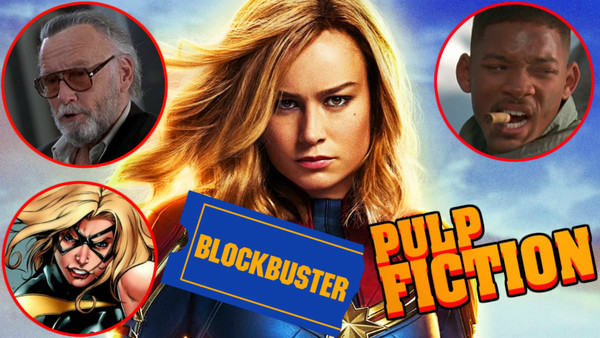
After years of waiting, Captain Marvel finally crashed into theatres last week. It is the second MCU prequel and potentially one of Marvel's most important films to date, spotlighting Brie Larson's Carol Danvers as she rediscovers her past, and the roots of a centuries-old conflict between two alien civilisations.
It is a major milestone in superhero cinema and, despite its relatively few shortcomings, is a truly commendable superhero origin story. It brings to life so many aspects of the Marvel Universe while imbuing them with a modern makeover, which grants the film a whole other (and potentially unexpected) kind of salience.
But, as with pretty much every Marvel movie these days, it also has a whole bunch of Easter Eggs, references and wider allusions to the Marvel canon. Whether it's seeding events that occur later in the MCU or putting a new spin from something from the comics, Captain Marvel is packed to the ceiling with brilliant little nods and winks that are sure to get Marvel fans very excited.
What's more, though, is that there are also several Easter Eggs based around nineties culture in general. The film takes place in 1995 after all, so for audiences who aren't necessarily diehard Marvel fans, there's still plenty there for them to sink their teeth into.
MAJOR SPOILERS AHEAD...
20. Starforce

Let's get the obvious one out of the way first, shall we?
Captain Marvel kicks off immediately with Carol (referred to simply as Veers by her fellow Kree) sparring with Yonn-Rogg, the commander of Starforce played by Jude Law. We're then introduced to the members of Starforce, the elite force of the Kree military. Among their ranks is Minn-Erva, played by Gemma Chan, who is a recurring villain in Captain Marvel's comics.

Also appearing is Atlas, Korath the Pursuer and Bron-Char. They're treated mostly as villains in the comics, just as they are in the third act of the film.
19. Torfa
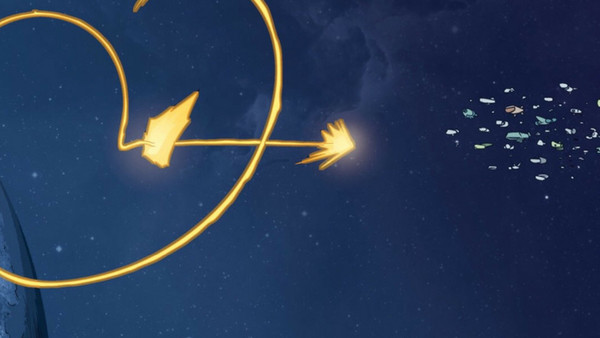
The first mission Starforce are sent on leads the team to the planet known as Torfa. In the film, Torfa is a desolate planet home to members of the Skrull diaspora, but it actually plays a different role in the comics.
Although once again depicted as a refugee planet, those who reside on Torfa have actually been displaced by the war against the Builders, which was depicted in the events of Jonathan Hickman's Infinity. Carol heads toward the system during the events of Higher, Further, Faster, More, where she opposes an enemy fleet from attacking the planet's inhabitants.
18. The Mohawk
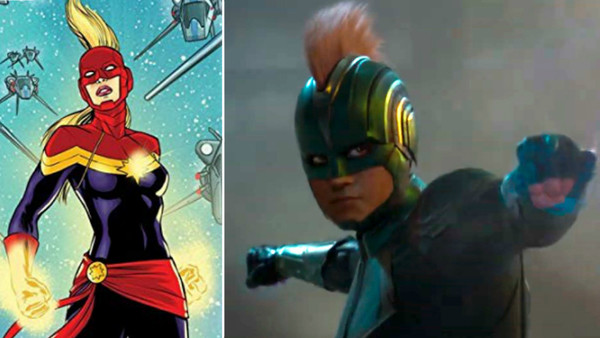
In one of many callbacks to Jamie McKelvie's integral Captain Marvel redesign, when in space - and underwater - Carol's Kree battlesuit adds a mask that pushes her hair into the shape of a mohawk.
This would become a recurring feature during Kelly Sue DeConnick's equally pivotal stint on the Captain Marvel comic, and it's great to see it represented on-screen.
17. Remember Blockbuster?

Although this is less an Easter Egg and more an essential historical element, given Captain Marvel's nineties setting, Carol Danvers arriving on Earth by crashing into a Blockbuster is still perhaps the most nineties entrance ever conceived.
The film itself is set in 1995, and the tapes on display in Blockbuster fit that date too. Carol mistakenly blasts a cardboard cutout for 1994's True Lies, but there's another, potentially more significant interaction that occurs in this scene too.
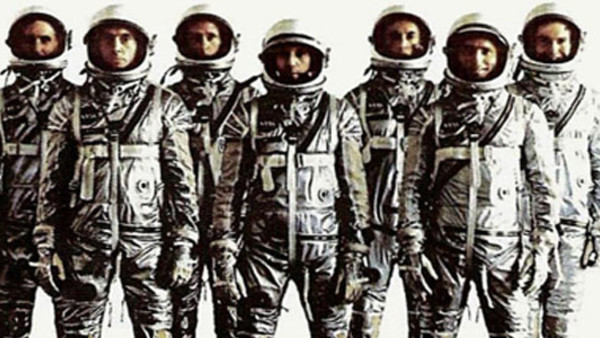
As she's about to exit the store, Danvers pauses and picks up a VHS tape of The Right Stuff, a 1983 movie that told the real-life story of the American Air Force pilots who would go onto become the nation's first astronauts.
Given Carol's history as a test pilot for the USAF, along with the fact she eventually makes it into space, the fact she dwells on the film for as long as she does makes for a pretty fantastic piece of foreshadowing.
16. Stan Lee's Mallrats Cameo
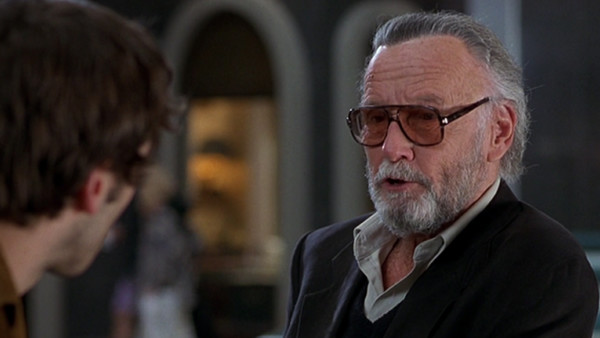
Captain Marvel is the first live action Marvel film to have released since the passing of legendary comics creator Stan Lee back in November, and it made sure to pay tribute to the figure right from the very get go.
The usual Marvel ident was replaced with one that highlighted all of Stan the Man's cameos, before fading to black with a simple message that read "Thank you Stan." It was a touching tribute, but one made even better by the late writer's cameo, which came in the midst of the Skrull chase in the film's opening act.
While Danvers is on the LA subway searching for her Skrull attacker, she scans the carriage from person to person, figuring out who is human and who isn't. There, she finds Stan, who's actually sat reading the script for Kevin Smith's Mallrats, which released in 1995. She gives him a glance and a smile of approval, making this yet another emotional cameo from everyone's favourite Generalissimo.
15. Kelly Sue DeConnick's Cameo
Jamie McKelvie may have changed the game by designing Carol Danvers' now iconic red and blue costume, but it was Kelly Sue DeConnick that brought the character back to the centre of the Marvel Universe.
Without DeConnick's contributions to Carol's journey in print, it's doubtful that there'd even be a Captain Marvel film releasing this year. She pretty much wrote the book on the character's modern mythology, which is why it's so great that Marvel chose to recognise her contributions with a perfectly placed cameo after the aforementioned chase sequence.
When Carol disembarks the subway, she stands somewhat confused on the platform. She gets all sorts of puzzled looks and stares from the LA public, but one of them was actually DeConnick herself, who brushes past Danvers while underground.
14. The French Connection & Men In Black

A LOT happens during Captain Marvel's chase sequence, but it isn't just Danvers who steals all the references. Nick Fury actually gets in on the act too, as he pursues both Danvers and her Skrull target behind the wheel of a black sedan.
There are actually two references in this sequence. First off, Fury's pursuit of the train mirrors the famous car chase from The French Connection, which saw Gene Hackman pursue a suspect fleeing on a subway while in a car underneath. It's one of the best car chases in all of cinema, but Hackman's car doesn't emerge unscathed; it crashes into several other vehicles by driving into oncoming traffic, just as Fury does in Captain Marvel.
However, if the reference to William Friedkin's 1971 classic isn't enough for you, then there may just be another reference in the sequence too. When Fury crashes his vehicle after the Skrull Coulson is outed as an imposter, he emerges just as law enforcement and the viewing public approach the ride. Covering up the alien corpse in his ride, he beckons the crowd closer, declaring the matter to be S.H.I.E.L.D. business by brandishing an ID from his inner coat pocket.
The way the scene is set up, though, makes it almost seem like it's a nod towards 1997's Men in Black. The way the camera pans up to Fury, along with the obvious parallel of him being an agent concealing extraterrestrial activity, just screams Barry Sonnenfeld's film, even if Nick isn't carrying a neuralyzer.
13. Changes To The Kree-Skrull War

The primary inspiration for Captain Marvel (apart from the breadth of material produced by the aforementioned DeConnick since the start of the decade), is the Kree-Skrull War, an Avengers storyline published at the start of the 1970s. Written by Roy Thomas, and with art from the likes of Neal Adams, Sal and John Buscema, the Kree-Skrull War was intended to work as an allegory for the Cold War, with Earth repositioned as a strategic footnote in a wider conflict fought between the Kree and the Skrull, just as plenty of other countries were treated by the USA and USSR following the Second World War.
It was a brilliant story, and one that served a vital purpose at the time, but simply lifting the metaphor and applying it to today's zeitgeist just wouldn't have worked. In recent years, we've seen Marvel modernise their older allegories to fit changing moods and times, such as Tony Stark shifting from being the face of the Military Industrial Complex in the Cold War back when he was created, to one who emerged during the War on Terror in 2008's Iron Man.

Just like with Stark, the Kree-Skrull War takes on a whole different kind of salience in Captain Marvel. Instead of the two alien civilisations fighting for control of the galaxy as equal superpowers, the film repositions the Skrulls as victims of the Kree's desire for hegemony. They're displaced by war and effectively made refugees, mirroring the current crisis caused by armed conflict in the Middle East.
It's a fantastic twist, with the Skrulls recast not as villains, but as victims. It comprises a broader part of the film's anti-war message, and one that was first championed by the original Avengers story when it was published in the early seventies.
12. Higher, Further, Faster

Although already seen in the trailers and brandished across much of the film's marketing, the tagline of 'Higher, Further, Faster' is worth broaching again.
Carol says the words to Maria prior to a test flight, and it's actually a nod towards one of DeConnick's story-arcs. Higher, Further, Faster, More was the name given to the second volume of Captain Marvel, which featured the aforementioned entanglement on Torfa and continued Carol's trailblazing resurgence in the medium.
It's rare that comic book movies actually make explicit reference to past story-arcs, but it was great to see Captain Marvel buck that trend altogether with the exchange between Carol and Maria.