Capone Review: 4 Ups & 5 Downs
A swing and a miss for Josh Trank.
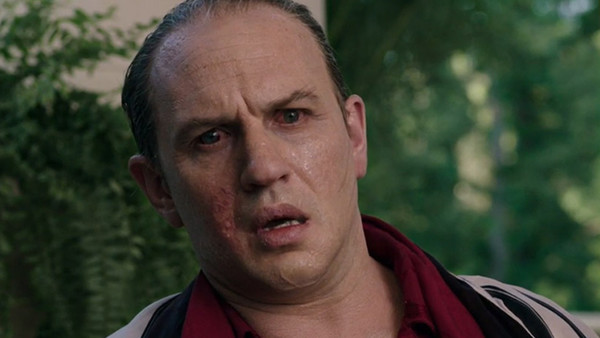
Five years after director Josh Trank suffered through the strained production of his critically-reviled Fantastic Four movie, the filmmaker finally returns with his follow-up: a mid-budget, Tom Hardy-starring Al Capone biopic for which he was reportedly granted complete creative control.
Capone, which completed shooting two years ago, has evidently lingered on the studio shelf awaiting release for quite some time, and has now been made available through VOD platforms per current global circumstances.
While it was tough to know what to expect from Trank's film, the end result is neither as good as you may have hoped nor as bad as you possibly feared - a thoroughly middle-of-the-road biopic that ultimately doesn't really deserve Hardy's presence or commitment to the part.
Though certainly never less than watchable, those intrigued by the inspired pairing of a controversial hotshot filmmaker and electrifying lead star will likely be left underwhelmed at just how oddly forgettable the end result is.
Simply, only the most die-hard Tom Hardy fans need apply...
Downs...
5. Josh Trank's Mediocre Direction
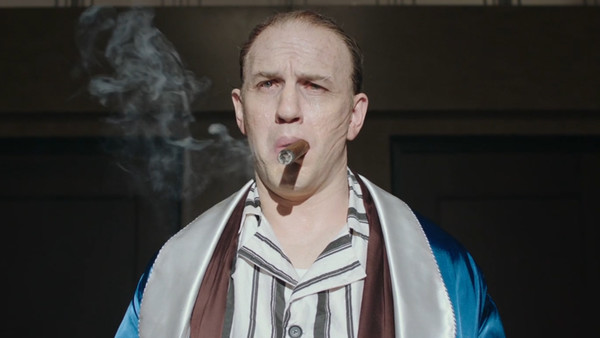
Given that Josh Trank's debut Chronicle demonstrated his sure filmmaking chops at a relatively low budget, there was definite interest in seeing how the director would fare when returning to that level after being thoroughly burned on the huge-scale production of Fantastic Four.
But sadly anyone hoping for a punkrock Capone movie from Trank will likely be disappointed at just how flat and ordinary Trank's approach to the material is, even with some of the script's more surreal flourishes (which we'll get to shortly).
Despite the film's solid technicals, Trank's shot selections more often than not feel totally basic, lacking in the cinematic flair you'd expect from, well, any movie starring Tom Hardy, and suggesting that the film was always better suited for a VOD release rather than a theatrical bow.
There's desperately little personality or passion to the filmmaking on offer here, and even in its weirder moments, it feels oddly generic and run-of-the-mill.
4. The Frustratingly Surreal Storytelling
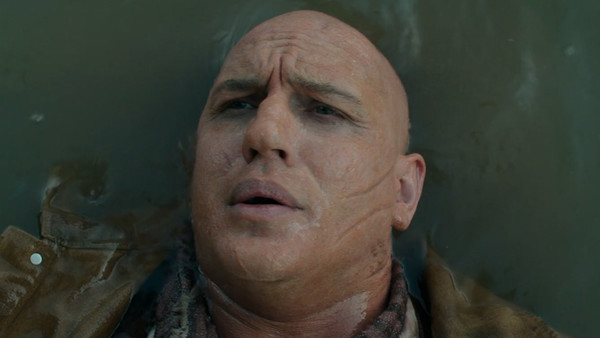
Capone focuses on the final year of Al Capone's life as his syphilitic insanity begins to take hold, and so writer-director Trank takes the opportunity to infuse his film with a multitude of surreal affectations.
This generally involves Capone hallucinating figures from his past as his sanity loosens, yet the shallow and rather corny nature of these interludes ensures they quickly become tiresome in their repetition.
The more theatrically heightened sequences feel like a watered down impression of Hardy's Bronson, and by the time Capone imagines a character cutting out their own eyeballs in the third act, viewers will likely be left rolling their own.
This isn't to say that a trippy Capone biopic depicting his final days couldn't have worked, but simply that the imagery on offer doesn't serve the story or the characters.
It too often feels like pretentious window-dressing intended to cover up for the script's general lack of interest.
3. The Distracting Makeup Effects
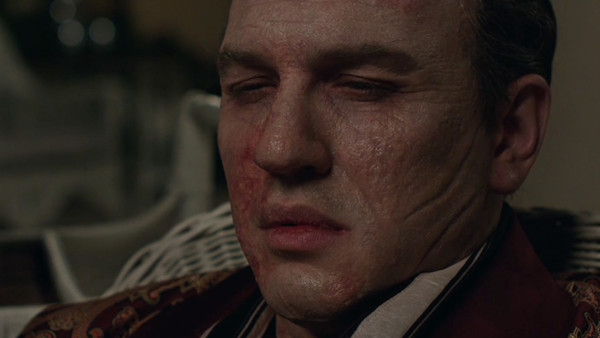
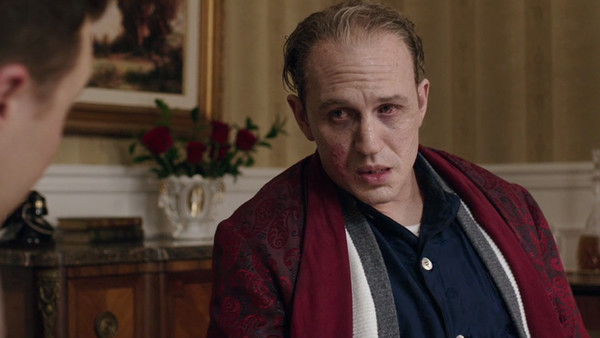
Tom Hardy is no stranger to submitting himself to drastic transformations, and in order to better resemble the syphilis-afflicted Capone at the end of his life, the actor is kitted out in a comprehensive array of facial prosthetics
Yet unfortunately, the result is more of a distraction from Hardy's performance than a compliment to it: even a cursory look at the last images taken of the real Capone don't show him to resemble the disfigured ghoul witnessed here.
The makeup constantly draws attention to itself, especially during close-ups of Hardy's face, and makes it tough to concentrate on Hardy's actual physical performance. Clearly, some subtler facial effects would've served the movie better.
2. It's Terribly Edited
Unlike Trank's two prior movies, he opted to assume editing duties himself this time, and given that he previously edited the terrific 2009 cult film Big Fan, there wasn't much reason to be concerned about that.
But sadly, it shows that Capone wasn't cut by an experienced industry vet, because so many of the film's scenes feel frustratingly choppy and rushed, frantically darting around between camera coverage in order to hold things together.
Yet despite the brief 103 minute runtime, there are also numerous sequences which drag on far too long - especially those aforementioned reality-breaking scenes - and make the film feel decidedly longer than it is.
Though no amount of good editing could likely turn the movie into a genuinely good piece of work, the inconsistent flow and tempo only harms the film further.
1. The Totally Ridiculous Climax
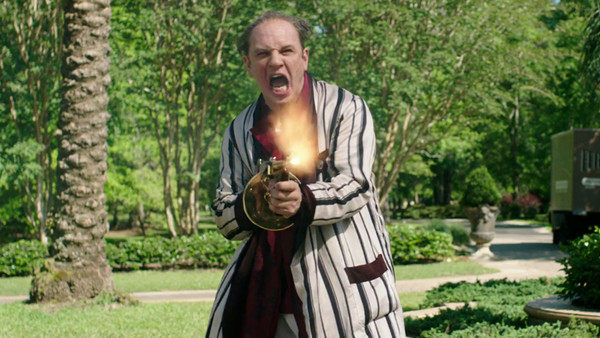
Capone reaches an insufferably over-the-top climax which feels contrived simply in order to have Tom Hardy firing a machine-gun for the movie's trailers.
The film's final passage devolves into an hallucinatory, Scarface-esque shootout sequence as Capone slips into the final throes of his dementia.
But rather than offer up a compelling commentary on Capone's mindset as he nears the end of his life, it simply feels like a cynical attempt to make the movie slightly more marketable.
Ultimately it just undercuts most of the emotion Trank tries to convey in the final scenes, instead evoking a schlocky vibe not dissimilar to John Travolta's recent mob dud Gotti.
Yet as disappointing as Capone might be, it's certainly not all bad. Here's everything the film actually got right...
Ups...
4. Tom Hardy's Manic Performance

Without question the reason to watch Capone is Tom Hardy's compelling central performance, which while hardly among his best turns to date, helps keep the film alive during even its less interesting moments.
While at times Hardy's work here appears to teeter on self-parody, full of animalistic snarling and sneering, it's simply fun to see him turning Trank's film into his own personal acting sandbox and trying to dig into the soul of the man he's inhabiting.
For some it may be too big and cartoonish of a performance to evoke the actual Capone - compounded by the aforementioned makeup issues - but it's a feat of acting that's difficult to look away from regardless.
3. It's A Refreshingly Unflattering Biopic
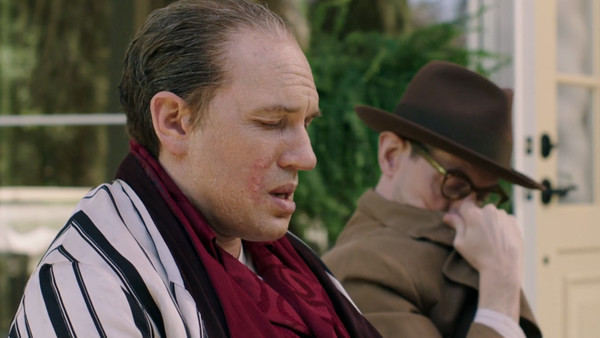
Rather than try to deliver an all-encompassing Al Capone biopic, Trank's film is aggressively focused on the final stretch of his life, which ensures it's an uncommonly warts-and-all, shamelessly ugly depiction of a real-life subject.
Though it rarely makes for pleasant viewing, seeing this mythic figure boiled down to an ill man who spends most of the movie coughing up a lung and soiling himself is a relatively creative way to re-contextualise the man's near-folkloric stature in society.
Trank's refusal to indulge the glitz and the glamour most viewers expect of gangster cinema means it'll instantly turn many viewers off.
After all, seeing a man mentally unravel for 100 minutes rarely qualifies as entertainment, but for all of the film's frustrating concessions to biopic formula, it's at least totally unafraid to get bogged down in the weeds.
2. The Rock Solid Ensemble Cast
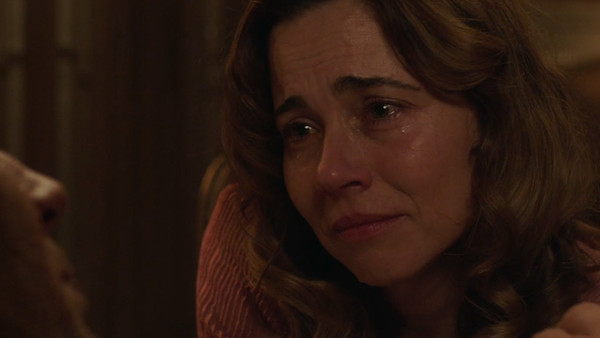
In addition to Hardy's swinging-for-the-fences performance, Capone is also blessed with the talents of an accomplished supporting cast, who make the sure best of the admittedly middling material given to them.
Linda Cardellini proves especially solid as Capone's wife Mae, who while spending most of the movie as a suffering wife archetype, at least manages to bring some undeniable humanity to the part.
Matt Dillon is also effective in his few scenes as Al's former gangster pal Johnny, Kyle MacLachlan brings an amusingly sniveling quality to Capone's embattled doctor Karlock, and rising star Jack Lowden turns in fine work as an FBI agent doggedly surveilling Capone.
Though each of these cast members is at the mercy of the script's inconsistencies, they nevertheless deliver a welcome, grounded compliment to Hardy's more outlandish central work.
1. Peter Deming's Sharp Cinematography
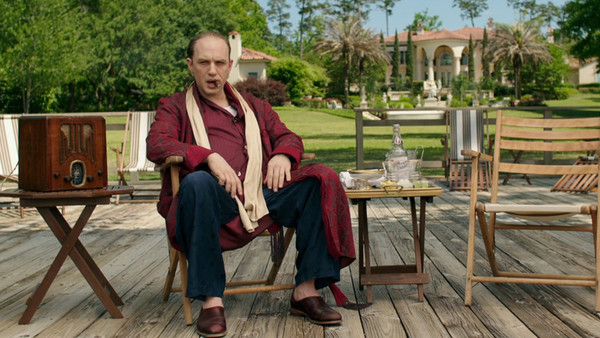
Directing and editorial issues notwithstanding, Capone is a relatively handsome movie in terms of pure cinematography, thanks to the efforts of David Lynch's regular DP Peter Deming.
Deming in particular makes the most of Capone's lush estate, exploiting both its expansive qualities and its more boxed-in, claustrophobic potential as the gangster's grasp on reality begins to falter.
If hamstrung by Trank's rather unimaginative visual approach, it's still a well-mounted film, and if nothing else its more surreal moments allow Deming to stretch himself and experiment to aesthetically startling effect.
Though Deming probably could've leaned on the Lynch vibe much heavier than he did, his work still accentuates the movie's dreamlike style, even if Trank's script and direction don't always provide it with the necessary support.