Bond 24: 10 Skyfall Flaws That Spectre Should Improve Upon

Where Skyfall failed, Spectre will thrive.
There's no use pretending that Skyfall is anything other than one of the best and most relentlessly entertaining James Bond movies ever made. The 23rd 007 entry into this never-ending canon of films was expertly helmed by of Sam Mendes - the man responsible for cinematic gems such as American Beauty and Road To Perdition - and as a result went on to become the highest-grossing film in the UK ever. Brilliantly acted, beautifully shot and crammed with some of cinema's most exciting set-pieces, such achievements aren't to be scoffed at. That said, Skyfall wasn't perfect. In the wake of Skyfall's release, Bond fans were left waiting with baited breathe as Eon Productions pondered over where to take the franchise next. The general consensus seemed to be "wherever Sam Mendes wants to take it," and after originally dispelling myths that he wouldn't return to the world of 007, Mendes signed on to direct his second flick in the series. Kudos. In December, then, the title of the upcoming 24th Bond movie was revealed to be Spectre, set to feature the likes of Christoph Waltz as the villain, and French actress Léa Seydoux - assumedly as a new Bond girl. Spectre, of course, has the potential to be the greatest Bond movie ever made - who can deny the giddy joy associated with images of Daniel Craig going toe to toe with Christoph Waltz in an action flick? Nobody, that's who. Still, if Spectre wants to go down in history as a sequel that turned out "better than Skyfall," - as well as using Skyfall as as a means of inspiration - it needs to use its predecessor as a guide of what not to do. Here, then, are 10 Skyfall flaws that Spectre needs to improve upon if it wants to be the best Bond of all. If not? Well, there's always Casino Royale, right?

10. That Insanely Convoluted Plot

Without a doubt, the one thing that most critics took issue with whilst watching Skyfall was the plot itself. Skyfall is one of those modern movies that presents viewers with a plot that - on the surface - seems so clever and complicated that your brain actually stops trying to work it out as you take it in. You assume the writers know better, and resign yourself to figuring it all out on the second viewing or something - maybe it's confusing because you're just not smart enough? Nope. Because Skyfall is a Bond movie, and not, say, Transformers: Revenge Of The Fallen, audiences automatically assume that it's their fault when the plot seems totally impenetrable. Truth is, there's not a whole lot separating the convoluted nature of both pictures; Skyfall commits just as many narrative faux paus as that much ridiculed Michael Bay flick. You just accept it more because Skyfall presents itself with an air of prestige and class. Sam Mendes, right? Truth is, Skyfall relies so heavily on plot conveniences to function that it's - at times - baffling. The villain's "super complex plan" literally hinges on a bunch of random variables occurring. Only when you go back for seconds does it become apparent that so much of Skyfall is really, really dumb: Casino Royale it ain't. Spectre needs to readjust its need for a "complex" plot - a coherent story with a few twists and turns is fine. But it needs to feel natural and logical.

9. The Unwarranted Running Time

What's wrong with a two-hour movie? Nothing, that's what. Blockbusters nowadays seem incapable of running for less than 140 minutes. "It's only 20 minutes longer," you might say. "Who cares?" But to forgive filmmakers for failing to keep their pictures tight and interesting is to overlook something that is plaguing cinema these days: fact is, there's 20 minutes inherent to Skyfall that you didn't need. 20 minutes that only serve to slow down the pace and kill the fun. Because there are scenes in Skyfall that drag on well beyond their means: the finale, for example, goes on and on until the movie begins to feel exhausted. Then there's the constant reestablishing shots of places that the film has already taken us - how many times do you need to establish that the M16 building is in London? Even more time is wasted reiterating plot points that you've already heard before, with characters attempting to explain overtly intricate points that ultimately make little sense. Spectre, for the sake of modern blockbusters, can you run at under two hours or less?

8. Countless Factual & Continuity Errors
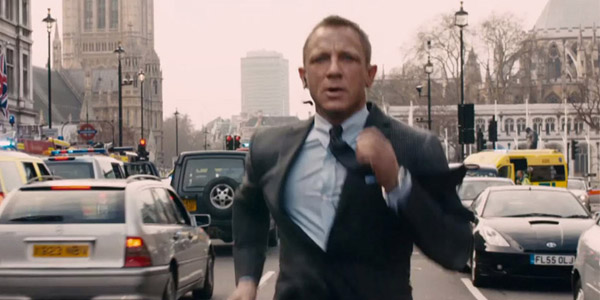
Nobody's perfect, and you expect any large scale blockbuster to have a fair amount of continuity errors scattered throughout, most of which you'd probably never notice. Skyfall, however, has become somewhat notorious for the fact that it's near-on packed out with a countless number of continuity errors. So although Skyfall presents itself as a slick, clinical and effortless filmic exercise, beneath the surface there's actually a whole lot of sloppy filmmaking going on. Skyfall was lambasted in the wake of its release for being "strewn with errors," and although said errors - many of which focus on damaged vehicles suddenly finding themselves repaired or items of clothing morphing randomly - there are a few unforgivable instances, too, many of them factual (Bond gets on the tube at Temple underground station and gets off at Westminster, eradicating Embankment - for shame!). So Sam Mendes and his crew really need to concentrate whilst shooting Spectre; you might be able to be forgive that kind of sloppiness once, but twice? No way.

7. Weak Female Characters

James Bond has never prized itself on presenting audiences with strong female characters, and Skyfall is no different. Women are naturally treated with an air of distain in the Bond universe and always have been, and though Skyfall looked as though it might be attempting to update things, it mostly fails. After all, its female characters spend most of their time either looking hot and being abused, or looking hot and messing things up. Ah, to be a Bond girl. Pure bliss. So you get Naomie Harris' Moneypenny in Skyfall, who is resigned to a life behind a desk at the end of the movie after she fails to get to grips with her job as a field agent. And then you have Berenice Marlohe's Severine, who serves as the movie's primary source of eye candy and is generally forgettable for all of the 20 minutes she's on-screen (although her character actually plays a part in what emerged as Skyfall's most unintentionally disturbing scene; more on that later). Sam Mendes has made the brilliant decision to cast the likes of Léa Seydoux - who you might know from the brilliant indie gem Blue Is The Warmest Colour - in Spectre, which gives the movie a real and genuine opportunity to conjure up one of the strongest female characters in the entire Bond canon. If anyone can imbue the franchise with a much needed and very contemporary Bond girl (with an attitude to boot), it's Seydoux. Please, Spectre: make her count.

6. Giving Bond Too Much Backstory

There's something akin to a sense of betrayal the moment you start giving James Bond anything resembling a backstory: like M tells 007 in Casino Royale, he's a "blunt instrument," and although it's admirable that the filmmakers behind Skyfall felt compelled to shed a little light on Bond's history, for the most part it didn't work. That's not to say that Bond should remain an empty shell forever: purely that any character development should occur as a result of what happens in the movies - Bond should change as a result of what you see has happened, not just for the sake of it. Why did Skyfall go back to explore Bond's past? What did it have to do with the plot? What does ultimately reveal that made the character more interesting? Nothing. Whereas, in Casino Royale, you witness Bond's personality transformation into a far colder human being due to the death of Vesper Lynd, the Skyfall reveal in Skyfall merely succeeded in reducing Bond's mystery. Spectre would do wrong to try to open up on Bond's past in any further capacity. If he has to "change," or if it is necessary for us to perceive 007 differently, let it be on account of the narrative moving forwards: trying to shoehorn in any added details of a past best left alone will only end up making Bond a less desirable hero. You like Bond because he doesn't allow the past to play on his emotions; he's unrivalled in his ability to glide through a situation because he refuses to let "what happened" get in his way. Ultimately, Spectre needs to respect Bond as a man without a past.

5. That Forgettable Musical Score

No, not Adele's very memorable - but slightly annoying - title track which shares its name with the movie itself, but Thomas Newman's very unforgettable and mostly bland score, which features exactly zero memorable musical cues and lingers in your memory in absolutely no way. Think back to the score that David Arnold gave us for Casino Royale, which was clever and made use of leitmotifs and a slow, easing-in of the iconic Bond score over the length of the movie (not to mention the way that it incorporated Chris Cornell's "Your Know My Name"). Now there's a film score. To give Skyfall composer Thomas Newman some credit, his musical score sounds nothing like anything else he's ever done (and everything else he's ever done all sounds kind of the same). Still, you come away from Skyfall having taken nothing at all from the soundtrack but its standing as a bit of background noise; there's no sense of coherency between Bond movies on the musical front, either, which is somewhat jarring. Spectre needs to give a little more in the way of its musical score: you need character themes, you need leitmotifs, and you need musical callbacks to previous Craig flicks.

4. Nowhere Near Enough Q

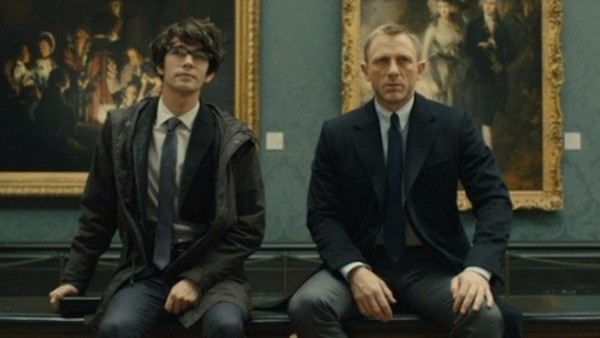
Granted, Q has always been a small part of each Bond movie, but Ben Whishaw made the character so intriguing in Skyfall that - once he'd been introduced - every scene without him thereafter suffered as a result. No, it wouldn't make sense to have too much Q, given his nerdy occupation and the fact that he's anything but a field agent, but Spectre could - and would - thrive if it's willing to open up Q's role somewhat, making him more than just the "gadget guy." The most notable thing about Whishaw's contemporary portrayal of this iconic character could be glimpsed in the actor's chemistry with Daniel Craig. Though the two only shared a few minutes of screen time, there's clearly a lot to be found in their inherent dynamic, what with Bond's concern over Q's age and assumed lack of experience. Could Spectre get these two out in the field together for some reason? You can just imagine the possibilities of such a thing.

3. A Villain Who Was All Over The Place
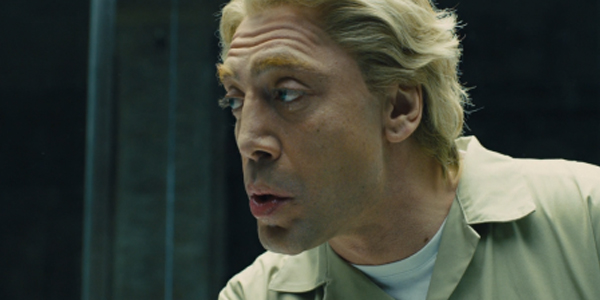
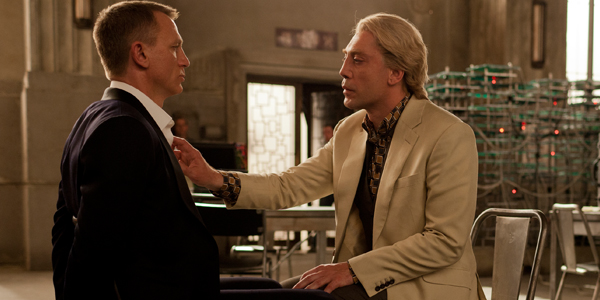
Javier Bardem received lots of praise for his performance as Skyfall's big villain, Raoul Silva, and rightly so: he gave the role his everything, and offered up one of the most memorable cinematic bad guys in recent memory. And yet for all that is good about Bardem's acting, on paper the character is a lot more problematic. In essence, Silvia is a hodgepodge of other Bond villains: theatrical for the sake of theatrical, his motives unclear and entirely muddy. Which is to say, Silva sort of does whatever the plot requires him to do, changing his personality and agenda to fit the situation. What that leaves movie-goers with, essentially, is a villain who sticks in your memory but actually lacks any true depth. For example, the movie implies that Silva is - at least - bisexual simply because that gives him a "quirk." From a story perspective, it adds nothing. Silva "hits" on Bond, and said interaction is forgotten about. It means zilch. Silva's plan - as described previously - also relies on a bunch of coincidences, which only serves to highlight his character as one giant inconsistency. He's apparently a genius who plans out everything extensively, and yet he's also winging it at every turn. But the filmmakers can't have their cake and eat it all at the same time: what is Silva? Is he an unrelenting perfectionist or a crazy anarchist? Let's hope Christoph Waltz' villain is, above all, consistently realised.

2. Bond's Insistence On Acting Dumb

James Bond's biggest talent stems from his ability to get himself out of crazy situations; he can escape from a hundred armed guards if needs be, or outmanoeuvre a helicopter on foot. But usually he ends up doing these things because he has no choice. Skyfall plays the "Bond is good at getting out of scrapes" card differently, in these sense that the movie has Bond acting really stupidly beforehand. In short, he gets himself into dumb situations for no good reason. Seriously: so much of what happens in Skyfall occurs because Bond doesn't think a situation through. He does something that even a shop clerk wouldn't consider and is forced to rescue himself thereafter. This is fun to watch (the first time), but isn't Bond supposed to be the best possible person in these dangerous situations? Isn't it his "thing" to act the opposite of dumb? Apparently not. Take the finale, for example, in which Bond takes M to his old house (where there are little resources) and waits for the bad guy and his army to arrive. Why on Earth would Bond ever do that? Spectre needs to recalibrate the hero's brainpower if fans are to believe that Bond is MI6's best and most reliable agent: he doesn't always play by the rules, but 007's mentality in Skyfall borders the mentally retarded. For the sake of the franchise, it's easier to pretend that - given its standing as a major plot point - Bond wasn't exactly himself over the course of Skyfall. Hopefully Spectre will allow our hero to rediscover the balanced mentality that he embraced throughout Casino Royale. Now there was a perfectly rendered Bond: brains and brawn in equal measure.

1. Those Uncomfortable Bouts Of Sexism

Without a doubt, then, the most questionable moment that occurs in Skyfall occurs mid-way through, after the hero James Bond has joined forces with a sexy and mysterious lady named Severine, who works as bad guy Raoul Silva's assistant. Bond is attracted to this lady, of course, given that she's downright gorgeous. Bond and Severine end up on a boat together, and just when you think things are going to get frisky, Severine reveals that she has endured a horrific past: she was sold into sexual slavery as a younger woman, and is constantly haunted by these ghastly experiences. At this point, you want to admire Skyfall for subverting the cliche: you thought Bond was going to sleep with this girl, but instead of falling over him, she's revealed to be a complex human being. Nice one, Skyfall. Except that it's all incredibly short-lived, isn't it? Not a few minutes after Severine has bared her soul to Bond, he walks in on her - uninvited - when she's taking a shower and initiates sexual intercourse. Granted, she doesn't resist his advances, but c'mon - did the film really need an arbitrary sex scene after just being told about this poor woman's enslavement as a sex worker? No! But there's hope for Spectre. At least, there's hope if the filmmakers can find a way to write in sex scenes that don't feel inherently creepy like the awkward one in Skyfall. There's no need - in the 21st century - for Bond to just have sex for the sake of it. If it serves a genuine story point, then go ahead, but when it's as unnecessary as the shower scene here (which, by the way, adds nothing to the movie at all), it all feels a tad dated and super cringeworthy. With that in mind, Spectre really could be the first James Bond movie to truly rise above sexism once and for all. Just imagine! Like this article? Agree or disagree with the points here? Let us know your thoughts in the comments section below.

Contributor

Sam Hill is an ardent cinephile and has been writing about film professionally since 2008. He harbours a particular fondness for western and sci-fi movies.