Blade Runner 2: 10 Questions That Need Answering
We know Ford is back; what we dont know is everything else.
 Friday was a big news day for Blade Runner fans: not only was it confirmed that Harrison Ford would return as Rick Deckard - the antihero at the centre of Ridley Scott's 1982 sci-fi masterpiece - for a Blade Runner sequel, but it was revealed that Denis Villeneuve, director of Prisoners and Enemy, was coming on board to helm the new film. With this came the announcement that the screenplay - by original Blade Runner co-writer Hampton Fancher, along with Green Lantern screenwriter Michael Green - was ready to go, and that the film would begin shooting some time next year. Now is going to be a time rife with speculation. After fans have first got past the fury they might feel over Blade Runner getting a sequel at all (the questions of "was there any need?" and "why does Ridley Scott keep doing this to his own films?" need to be out of the way first), they can begin to mull over what a new Blade Runner film could bring. Right now, there's very little information to go on at all. What's certain is the original Blade Runner left a lot of questions unanswered, some of which will simply have to be addressed in the new film if it's to have connective tissue with the original movie.
10. When And Where Is It Set?
9. Will Ford Be The Lead?

8. How Will The Old Team Be Involved?
7. What Happened To Rachael?

6. How Will Deckard's Replicant Status Be Addressed?
5. Did They Develop The Nexus-7?
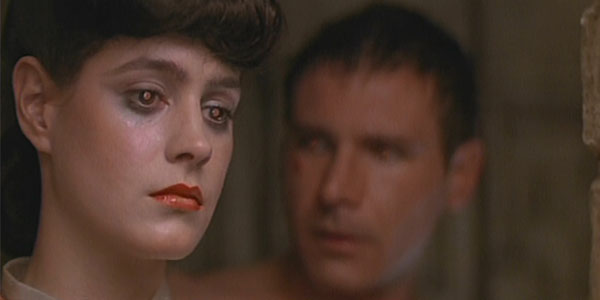
 The Tyrell Corporation's Nexus-6 models are the latest form of replicants they have. The Nexus-6 are the cutting edge in replicant technology, human-like constructs designed to look, think and even feel like people do. Or so the viewer is told. There is a theory that Blade Runner actually features an even more advanced model, the Nexus-7, and that Deckard is part of this new line without even being aware of it. That would explain why he lacks the superhuman strength of Batty and co. and why he seems like just a normal, everyday guy: Nexus-7s are designed to complete the 'human illusion', by thinking and behaving exactly like humans do. If that's the case, it would seem Deckard was a successful experiment in creating a new type of replicant, and that could open up a whole new arena for the Blade Runner sequel. If the Nexus-7 was developed following Blade Runner, the potential for replicants successfully slipping into human society without notice could lead down all kinds of new alleys.
4. Will It Make Reference To The Blade Runner 'Sidequel' Soldier?
Paul WS Anderson's Soldier, a 1998 sci-fi actioner set in a colonised galaxy about a group of orphans raised as super-soldiers, bears some of Blade Runner's DNA, and for good reason: it was produced by the same production company and written by the co-writer of Blade Runner, David Webb Peoples, who considers it a 'sidequel' or 'spiritual predecessor'. There are also plenty of nods to Blade Runner (a spinner here, dialogue references to Philip K. Dick and the film there) within the movie. Will the Blade Runner sequel return the favour and give Soldier a shout-out? Given the film came in for a critical drubbing (also add the fact that it's largely been forgotten since), it's unlikely, though it can't be ruled out - the option to take things off-world, as Soldier does, for the Blade Runner sequel may prove too tempting for the creative team behind the new film...3. Will It Go Off-World?

2. Will It Link To Prometheus?
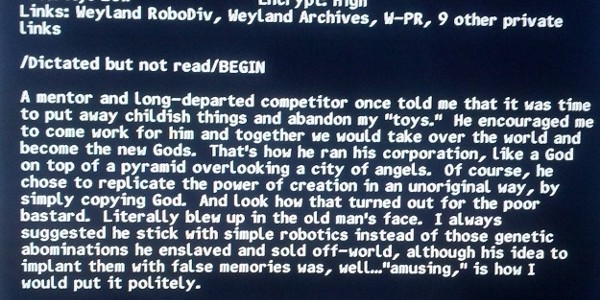

1. What Happened To The Tyrell Corporation?