Black Widow Review: 5 Ups & 5 Downs
A middling big-screen return for the MCU.

Some 14 months after it was originally due to drop in cinemas, Black Widow is finally here, putting an end to a two-year big-screen hiatus for the Marvel Cinematic Universe, since the release of Spider-Man: Far From Home.
Many will simply be happy to be back in cinemas watching a Marvel movie again, and that's certainly fair enough, though it's worth knowing that Scarlett Johansson's apparently final outing as Natasha Romanoff is far from a standout outing for the franchise.
Very much the sort of movie you get when an origin story/solo movie comes at least a few years too late, Black Widow is as competently made and acted as you'd expect from any MCU joint, but lacking the heart, soul, and imagination necessary to rise above.
A lower-tier MCU movie for sure, Black Widow dines out on the audience's general goodwill for this character but ultimately doesn't offer up much here you haven't seen before in either a prior superhero movie or any number of spy blockbusters in the Jason Bourne/Mission: Impossible mold.
Still, for audiences craving some reliably watchable tentpole fare, it'll do the job as long as you keep your expectations in check...
Downs...
5. The Totally Mediocre Villains

Though it seemed like the MCU's much-lamented "villain problem" had gone away in recent years, Black Widow is yet another MCU movie that offers up a totally forgettable duo of antagonists.
First and foremost we have Dreykov (Ray Winstone), the leader of the Red Room who spends almost the entire first two acts of the movie off-screen.
Yet even when he gets a more significant showing in act three, his plan is so spectacularly silly, complete with a laughable attempt at a Russian accent by Winstone, that he ends up resembling a Bond villain parody. Aaptly, we see Natasha watching Moonraker earlier in the film.
But the real bummer here is Taskmaster. Without giving anything away, the character is given the MCU's prototypical secondary villain treatment, showing up periodically when the plot or action calls for it, but ultimately having little in the way of character or personality to make them worthwhile.
Fans of the much-loved comic book character will be disappointed to learn that they mostly feel like a tacked-on afterthought.
4. The Generic Plotting & Dialogue

Easily the most frustrating thing about this movie is the strangely lackluster quality of Eric Pearson's script.
Narratively, it basically co-opts the over-familiar globe-trotting formula of a typical big-budget spy movie yet without much additional flair of its own, as Natasha seeks to rectify her tortured past while dealing with an antagonist who plans to upend the world order.
Yet even generically plotted MCU movies have been elevated by charming character work and fun dialogue, but again, Black Widow falls rather short here too.
Much of the serious-minded dialogue ladles out character backstory and plot information in purely expository terms, and even most of the quips feel relatively tepid and low-effort, more likely to produce mild smirks than uproarious laughs.
This feels like a first draft script that needed a few more passes before going in front of the camera: it just lacks the assurance of most MCU films and comes off a bit flat as a result.
3. Cate Shortland's Uneven Direction
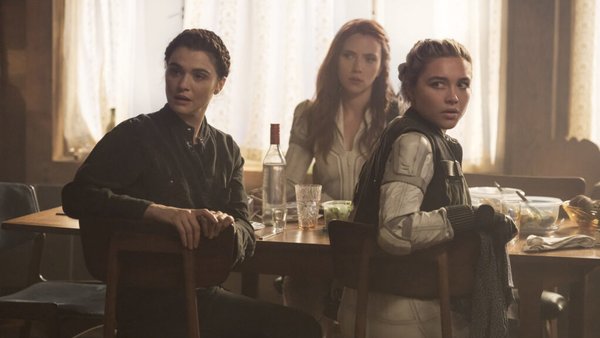
Cate Shortland was certainly an interesting choice to direct a Marvel movie, best known for her historical drama Lore and thriller Berlin Syndrome.
As such it's little surprise that Shortland fares best in the smaller, more intimate character moments - especially those involving Natasha and Yelena (Florence Pugh) - yet one suspects the more high-concept set-pieces were wrestled out of her hands and largely left to the pre-vis team.
Kevin Feige has a tendency to hire filmmakers with limited blockbuster experience, and while that often pays off with the likes of James Gunn and Taika Waititi, in Shortland's case she doesn't really do much to differentiate the film stylistically from feeling just like another overly grey MCU movie.
The action sequences certainly dazzle, but overall there's a lack of cohesion between the quieter character moments and the splashy demands of the set-pieces.
There are also tonal issues which the director wasn't able to iron out during editing: too often the film flings viewers from a deeply serious discussion about, say, female sterilisation, to a goofy comedy scene within a matter of moments.
2. The Wonky Pacing

Pacing is also a major issue here, for though the film clocks in at a fairly beefy 134 minutes, various elements feel extremely rushed while others are the complete opposite.
The first and third act are committed to cramming in so much plot and action, while also introducing us to a host of new characters, that it ends up feeling too hurried for its own good.
The second act, meanwhile, slows down and gives scenes time to breathe, perhaps a bit too much in some cases, when a more judicious edit could've allowed the movie to clip forward a little more consistently.
The final act in particular is a hurried avalanche of reveals and attempts to give Natasha a fitting send-off, leaving one feeling like the script overwhelmed itself with too much.
Perhaps something simpler that was less cluttered with people and apocalyptic villain plots would've allowed the story to unfold in a manner that felt less like completing a checklist - and occasionally, wading through treacle.
1. It's An Underwhelming Solo Movie

When Black Widow comes to an end, it feels so perfunctory and abrupt that audiences might find themselves thinking, "Is that it? We waited 10 years for that?"
Again, this isn't a bad movie by any means, but it is one that should have delivered a triumphant, fist-pumping farewell to Natasha, yet she often ends up feeling like a passenger in her own movie.
As great as Scarlett Johansson is as Nat, she's given strangely little to do here in a dramatic sense, perhaps a result of the writers appreciating there weren't any apparent stakes where the fate of an already-dead character was concerned.
Even so, there's shocking little in the way of emotion when the movie ends, or the feeling that her arc has been satisfactorily tied off.
As such, this is one of the most forgettable MCU movies in quite some time - it's not Thor 2 or anything, but it's tough to imagine many ranking it among their faves.
These issues aside, Black Widow will deliver the basic goods for a lot of fans. Here's what it gets right...
Ups...
5. Florence Pugh & David Harbour Steal The Show

As much as the movie is named after Scarlett Johansson's apparent protagonist, she really ends up taking a bit of a backseat to her co-stars Florence Pugh and David Harbour.
As Natasha's "sister" Yelena Belova, Pugh is a likeable, badass superheroine who bears clear scars from her past, and progressively unfurls her torment over the course of the movie. She's great opposite everyone here, and even has a killer Russian accent to match.
As Nat and Yelena's "father"Alexei Shostakov, Harbour is the film's primary source of comic relief: a goofy but physically intimidating guardian - Red Guardian, in fact - with an inflated sense of his own self-importance, though his heart is basically in the right place.
It's a major profile boost for Harbour, a terrific actor who is clearly having a blast - especially with his delightfully hammy accent.
4. The Strong Opening Sequence
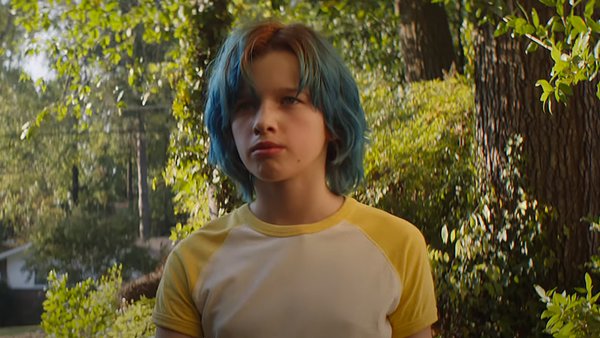
Somewhat regrettably, Black Widow peaks right at the beginning, with a lengthy opening sequence detailing Natasha's youthful upbringing in 1995 Ohio, lending crucial shade to a character who has spent so long in the shadows even while working as a mainline member of the Avengers.
The full context of this sequence isn't known until later in the film, but it feels like a practically radical way to open an MCU movie, with scarcely a scrap of CGI in sight and a focus instead on a family living their lives in the gorgeous sun-kissed American Midwest.
This is followed by a snazzy opening titles sequence set to a dreary cover of Nirvana's "Smells Like Teen Spirit" - an on-the-nose but effective mood-setter as we learn how Natasha and Yelena were whisked away to the mysterious Red Room.
Considering the obvious impetus to open the film with a kickass Scarlett Johansson action scene, this was an uncommonly quiet, character-driven way to get things going.
3. The Refreshingly Low Stakes
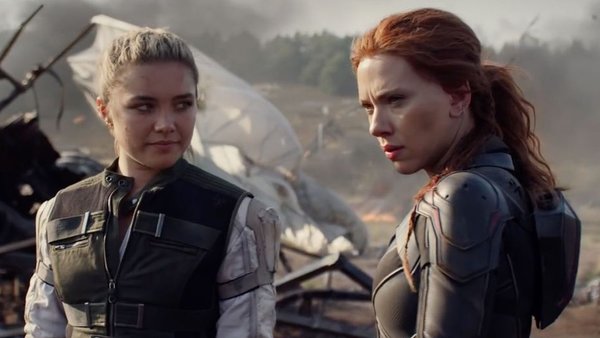
As much as some might complain that a Black Widow movie is low on stakes because we know what happens to Natasha, the flip-side is that the film isn't tirelessly concerned with tethering itself to the ongoing narrative machinations of the MCU.
Of course, there are implications as to what the future may hold for the movie's surviving characters, but for the most part the film is just content to tell its story without getting down in the universal weeds and over-encumbering itself with franchise concerns.
In much the same way that Ant-Man and the Wasp was a welcome palate cleanser between the last two Avengers movies, Black Widow feels like a safe return the big screen for the series after two years away.
Understandably, though, fans might hope for more adventurous storytelling from upcoming MCU movies.
2. The Thrillingly Kinetic Action Sequences

Though Cate Shortland's direction doesn't always measure up, fans of the MCU's electrifying brand of high-wire action are sure to be left satisfied by what's on offer here.
Between the slick hand-to-hand combat, smooth vehicular carnage, and more outrageous CGI-driven action in the third act, Black Widow boasts a solid variety of mayhem for fans to feast their eyes on. Taskmaster's spot-on imitations of various Avenger fighting styles are particularly entertaining.
Does it all rank among the MCU's strongest action? Absolutely not, but for audiences who have felt bereft of huge-scale tentpole thrills over the last year-plus, a big-screen viewing is sure to leave them exhilarated.
For anyone who ever complained that Natasha didn't get to do enough action-wise in the MCU, this solo movie thoroughly rectifies that.
1. The Intriguing Post-Credits Scene
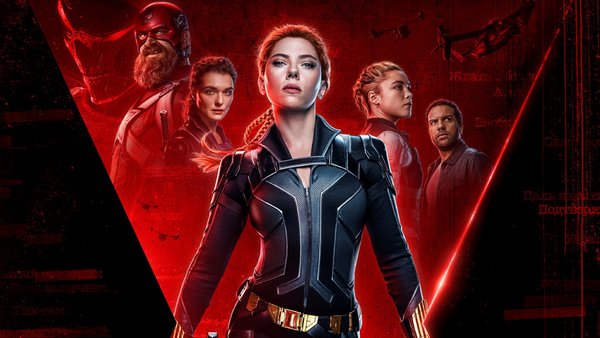
No spoilers here of course, but it's worth sitting through like 10 minutes of white-on-black credits - strangely, there aren't any of the traditionally glossy end titles on offer - for a revealing post-credits scene.
Though the scene in question arguably asks more questions than it answers, it certainly nods towards an intriguing direction for a certain branch of the MCU, and implies how Natasha's legacy will be upheld moving forward.
It remains to be seen exactly how this scene will be picked up in the future - whether by a way of a movie or a Disney+ series, or perhaps a bit of both - but it carves a gentle in-road forward while allowing the main movie to stand on its own two feet.