20 Horror Movie Openings That Are Practically Perfect
Kicking things off with a scream...
Horror films have always had a lovely knack for starting things off with a bang. A good opening scene is a great way to establish a scary tone and immediately get the audience sucked into a horror flick's ghoulish atmosphere.
Thankfully, many horror movies seem to understand this, and as a result, there's an absolute treasure trove of amazing horror openings out there.
The following 20 scenes, though by no means an exhaustive list, are all great examples of this trend. They come from many different decades and countries, ranging from brutal kills to subtler, more atmospheric cold-opens. These sequences all vary heavily in tone and style, providing a lovely reminder of how versatile horror is as a genre. The one thing they all have in common is that they start their movies in the best way imaginable.
Not all of these flicks are all that good, but whether the rest of the film lived up to this early promise or not, all of them delivered dynamite beginnings that blew the roof off and had everyone locked into the experience.
20. Suicide Club - The Mass Suicide
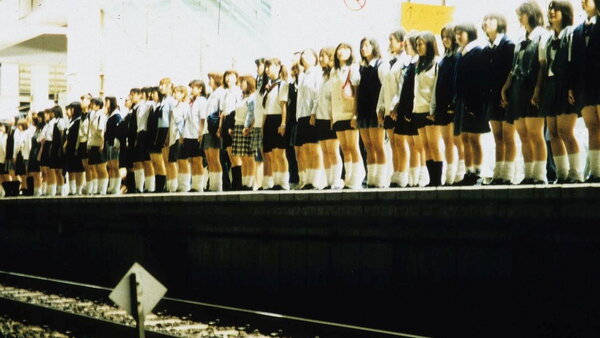
Even before Suicide Club acquired the cult classic status it enjoys today, viewers at the time would've immediately known they were in for one hell of an extreme, controversial, taboo-busting knockout of a movie. The opening scene alone was the strongest statement of intent imaginable.
54 Japanese schoolgirls hold hands and cheerfully jump in front of a subway train with extremely gory results, leaving everyone around them traumatized and completely soaked in their blood. All the way through, jolly music plays dissonantly over the sordid spectacle, giving the entire thing an even nastier edge.
It's harrowing and grotesque, yet you won't be able to look away either. It's mesmerizing in its execution and as a set-up to the movie that follows, it pretty much does everything it needs to do.
It braces viewers for one of the most messed-up horror flicks of the 2000s and it establishes the movie's central mystery - what is driving a wave of inexplicable suicides across the country? - in the most brutal of ways.
It's an elite opening sequence, although it may (understandably!) be too much for the squeamish.
19. The Collection - Nightclub Massacre

The Collection might be a so-so sequel to the so-so The Collector, but greatness can come from anywhere. Its introductory sequence is undeniably spectacular, and it's quite likely to be the only thing you'll remember from the movie - that's just how much it overshadows everything else.
As established in the first film, The Collector is a serial killer who uses traps to kill his victims in his home invasions, yet he levels up here by booby-trapping an entire nightclub. He rigs several traps that kill nearly everyone in the nightclub with extremely gory results. It's a sequence that might leave you feeling pretty queasy, but you'll be in awe all the same.
This sequel was directed by Marcus Dunston and co-written by him and Patrick Melton, both of whom are best known for writing several of the Saw movies. That definitely shows here, for they created a slice of nastiness that rivals that other trap-based horror series.
When taken literally, it doesn't necessarily make all that much sense that the Collector was able to booby-trap a public venue without anyone noticing and honestly... who gives a toss? This set-piece is so brutal and so effective that any logic problems are easy to forgive.
18. Night Of The Living Dead - The Graveyard Attack

Coming up next is one of the most iconic horror movie openings of all time, in which a zombie attacks siblings Johnny (Russell Streiner) and Barbara (Judith O'Dea) in a graveyard, killing Johnny in the process. Night of the Living Dead might be nearly 60 years old, and it's been paid homage to many times, but here's the thing: it absolutely holds up.
It's very much of its time, and yet that actually helps it to hit even harder, for the simple black-and-white camerawork and the documentarian feel of this sequence are remarkably effective. There are no jump scares and no gore, with the sequence instead being executed with an intelligent layer of verisimilitude that makes the whole thing far more believable, and therefore far scarier.
Another great detail is the way it starts out on a comedic note, with Johnny winding his sister up about ghouls coming to get her... right before an actual ghoul comes for them both. The mood then goes from gentle comedy to pure nightmare fuel in mere seconds, and the latter is very much the mood for the rest of this absolute classic of the genre.
17. Suspiria (1977) - Suzy Arrives In Freiburg

There is no other horror film like Dario Argento's Suspiria - not even 2018's remake, which wisely carved out its own style and didn't attempt to copy such a singular work.
Suspiria is a heightened, operatic and gory slice of madness shot in dazzling, expressionistic technicolour and soundtracked by a gloriously unhinged score, courtesy of Argento himself and the Italian Prog Rock band The Goblins.
Once again, it's as unique as horror movies get, and that's established in the very first scene, as American student Suzy (Jessica Harper) arrives in Freiburg to attend a dance school. Nothing especially dramatic happens in the beginning - it's just Suzy getting a taxi in the pouring rain - but viewers will always remember this as the moment where Suspiria first displays its mesmerising style.
From the very start, Suspiria is an assault on your senses, with its vibrant colour palette and crazy music immediately establishing this as one of the most bonkers, unusual horror films you'll ever have the pleasure of seeing. From this point forward, Suspiria only gets better and better, and any horror fan that sleeps on it is robbing themselves of an experience like no other.
16. Cube - The First Trap

Alderson (Julian Richings) wakes up in a strange, cubical room. He climbs through several more, each a different colour but otherwise identical, until he reaches an orange-coloured one. He steps forward and there's a sudden noise... before bloody lines appear all over his body. And then, he collapses into cubes, for he's just been cut into pieces by a hidden wire-trap.
So begins Cube, an awesome death game horror that stands tall as one of the best Western genre films of the 1990s. It was a risky move to deploy the movie's goriest trap so early, but it paid off by immediately establishing just what a terrifying and deadly environment this cube really was.
It's also one of those scenes you wish you could watch for the first time all over again, as it was such a shock. Most probably assumed that this guy would be one of the main characters, especially as Richings himself is a well-established character actor. To see him die so quickly without meeting any of the other characters was a razor-sharp surprise.
15. Thanksgiving - The Black Friday Crush
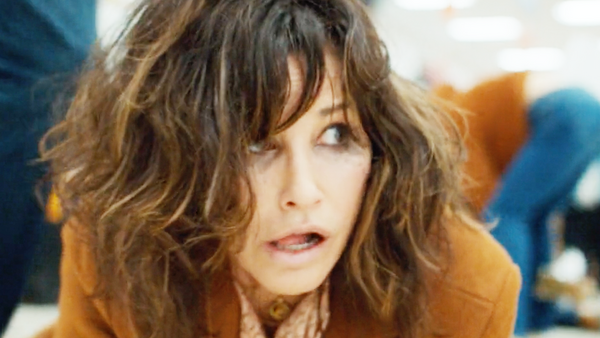
Like so many of the movies it pays homage to, Eli Roth's slasher throwback Thanksgiving kicks off with a tragedy that drives the movie's secret villain to unleash a wave of grisly violence upon the community. Having said this, few similar movies kicked things off as well as this.
Here, a crowd crush unfolds on Black Friday and this leads to the deaths of at least three people, all of whom die with the gory brutality you'd expect from an Eli Roth flick. It's a tragedy that's not only viscerally intense, but also sadly believable. Black Friday sales are notorious for mob hysteria and people getting hurt, so this isn't exactly far-fetched.
This authenticity is further increased by the presence of likeable, down-to-earth characters and a relatable small-town America setting, reinforcing this as a rare example of a film pastiche that actually surpasses most of the movies it's paying homage to.
As viewers might've guessed from this opening alone, Thanksgiving ended up being by far the best movie in Eli Roth's less-than-stellar filmography, and this is one of the decade's finest horror intros thus far.
14. The Shining - Floating Through The Mountains
Not all horror openings need to be elaborate or feature loads of death and mayhem. Take The Shining, for example, whose first moments couldn't be any simpler.
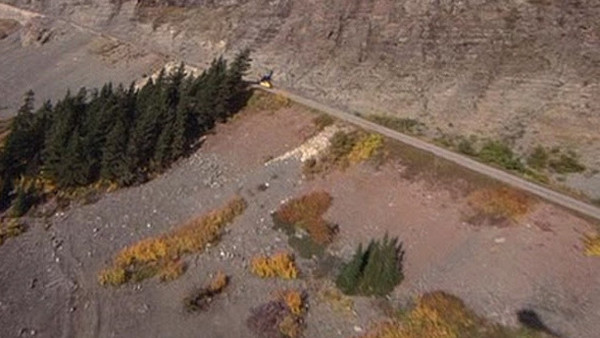
Stanley Kubrick commences his adaptation with a tracking shot of the Torrance family's car as it drives through the mountains towards the Overlook Hotel, all while the opening titles roll up the screen. Such is the beginning of one of the greatest horror movies ever made, one so iconic it's been referenced everywhere you can think of.
If this beginning sounds boring, it absolutely isn't. It doesn't have anything fancy and it doesn't need to, for it's got that absolutely haunting theme music combined with the sinister, omnipotent bird's eye cinematography, which feels like the perspective of a ghost following the family as they are dwarfed by the natural landscape. With these few simple ingredients, this scene builds up a suffocating layer of dread that doesn't dissipate until the end credits roll around two-and-a-half hours later. It validates that common saying: "Less is more."
And sure, you can see the silhouette of the helicopter in some shots but ah well! Even the meticulous Stanley Kubrick makes mistakes sometimes.
13. It Follows - An Invisible Chaser
Back in the mid-2010s, horror hadn't started its more recent revival and truly great horror movies weren't coming out too often. However, as soon as the first scene in It Follows concluded, audiences knew they were in for one of those greats.
The camera remains stationary in a suburban street and pans around to track Annie (Bailey Spry) as she is pursued by an invisible entity, all while a dread-filled electronic score by musician Disasterpeace thumps away in the background.
It's immediately clear that something terrible is going on, but what? It's an opener that teases enough to whet the appetite but doesn't give away any of the movie's secrets.
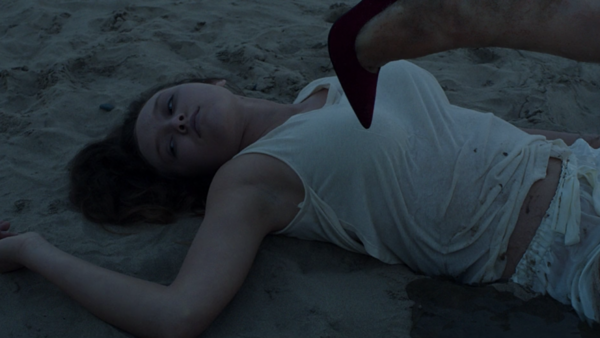
Annie, refusing any offers of help, drives away to a deserted beach, where she makes an emotional phone call to her parents, saying that she loves them. We then abruptly cut to a horrifying and unforgettable image: Annie lying dead on the beach, with her leg almost ripped off. And thus, the stage is set for one of the most terrifying films of the 21st century.
12. 28 Weeks Later - Don Runs For His Life
Perhaps it'd be unfair to call 28 Weeks Later outright bad per se, but it was a disappointing follow-up to a modern horror classic and there's no getting away from that.
That beginning, though.
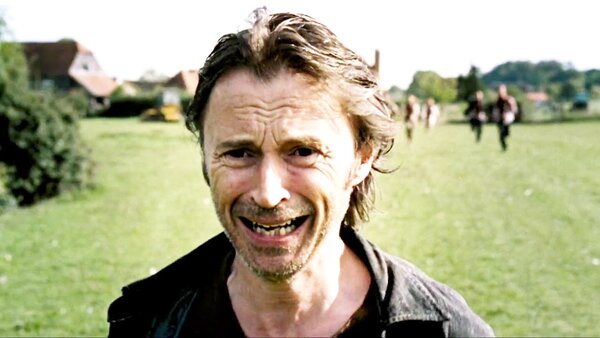
In this sequence, Don (Robert Carlyle) makes the traumatic decision to abandon his own wife and sprints away from a pursuing crowd of infected, all while John Murphy's all-timer of a track 'In the House, in a Heartbeat' thumps frantically over the whole fraught spectacle. The fantastically intense editing and Robert Carlyle's vivid portrayal of terror and guilt make this a sucker-punch of a beginning that hinted at a far better sequel than the one we actually got.
Interestingly, Danny Boyle (who directed 28 Days Later) didn't return as director for this one but he did do a bit of second-unit directing, most notably on this scene. That goes a long way towards explaining why this sequence was so much better than the rest of the movie, which saw director Juan Carlos Fresnadillo try to ape Boyle's frenetic style to inferior, migraine-inducing effect.
11. Ring - The Dreaded Phone Call

Much like with The Shining, Ring's opening scene - which depicts the movie's ghostly antagonist claiming a teenage victim - is a testament to the power of subtlety and suggestion. We don't really see anything and we don't need to, for this sequence has enough atmosphere to carry it for miles.
Tomoko (Yuko Takeuchi) and Masami (Hitoma Sato) are chilling at Tomoko's house when Masami tells her about a sort-of urban legend going around. There's a cursed tape - if you watch it, you get a phone call warning that you will die in seven days and then, seven days later, that's exactly what happens.
Masami is just telling it as a joke, but Tomoko knows it is true, as she watched such a video herself. The two girls fall silent... and then the phone starts to ring.
All the way through this scene, we know how it's going to end. We know poor Tomoko is going to die, but we don't know how or when. Director Hideo Nakata drags this sequence out for as long as possible, building the tension up and up and up with his brilliantly creepy visuals before, at last, something does happen to Tomoko. However, we don't see what - that comes later.
It's a tremendously unsettling beginning - oh, and it's ten times better than the American equivalent.
10. Alien - The S.S. Nostromo

Alien's first few moments are a miniature masterpiece of world-building. In just a few simple moments, it effortlessly sets the scene.
It begins with a pair of establishing shots of the SS Nostromo, showing off some model work that has aged like a fine wine and shames today's CGI. Over these shots, we get title cards explaining what the ship is called, how many crew members it has, what the ship is doing and where it's going.
Then, the camera floats through the ship in a series of superbly crafted shots, beautifully building up the atmosphere to suffocating levels while also showing off the exquisite production design work on the Nostromo, a detailed and claustrophobic environment that feels truly lived-in and authentic.
And finally, the camera floats into a room where the seven crew members are waking up from stasis, and we get an early indicator of Alien's intelligent casting. While many similar films - a great example being Prometheus, this movie's ill-judged quasi-prequel - insist on having a glamorous cast of conventionally beautiful Hollywood stars, this crew was played by character actors who looked and sounded like authentic blue-collar workers who just happened to be working in space.
And thus, the stage is perfectly set for one of the genre's most beloved movies.
9. It - Pennywise Kills Georgie

The start to 2017's It is already one of the most iconic horror movie scenes of the 21st century. This is the kind of thing that'll be parodied in things like The Simpsons or the Scary Movie franchise for years to come; such was its cultural impact, which is hardly surprising. After all, this scene is amazing.
A key question hanging over this eagerly anticipated horror flick was this: would it finally deliver a worthy adaptation of Stephen King's terrifying horror epic? Fine, the 1990 miniseries had its moment in the spotlight but, as anyone who's tried to watch it recently will know all too well, it's aged like milk. The only reason to watch it now is for Tim Curry's iconic performance.
With this opening - in which Georgie (Jackson Robert Scott), the younger brother of the movie's protagonist Bill (Jaeden Martell), is killed by Pennywise the Clown (Bill Skarsgard) - that question was instantly answered in the affirmative. As well as being sublimely creepy, it showcased Skarsgard's outstanding, awards-worthy turn as Pennywise the Clown. If anything, he's even better than Tim Curry, and the scene also ends with Georgie's arm getting gruesomely ripped off, a gnarly visual that saw the (very violent) source material getting the R-rated adaptation it always needed.
It's a fantastic start and thankfully, even if it never quite tops this, the rest of the movie is very good too. The less said about 2019's sequel, though, the better.
8. Antichrist - The Couple Lose Their Child
Lars von Trier's Antichrist, an art-house horror starring Charlotte Gainsbourg and Willem Dafoe, is... it's not bad. It's visually stunning and both leads are excellent, although it is also self-indulgent and takes its sweet-ass time to tell a fairly simple story. The overall movie is a mixed bag, but the opening scene? That's a different matter altogether.
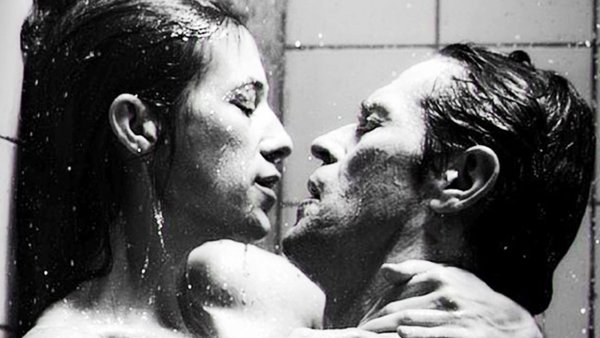
The movie is divided (via title cards) into a prologue, four chapters and an epilogue. In this prologue, the two lead characters passionately make love and while they are distracted, their infant son falls to his death. If this prologue was released separately as a short film, it could easily get nominated for the Best Live-Action Short Oscar - that's just how great it is.
It's a masterpiece of contrasts. The beautiful black-and-white cinematography and ethereal choral music clash hauntingly with the extreme tragedy of the child's death, and the prologue also establishes the juxtaposition between sexuality and violence that the rest of the story hammers home to occasionally grating effect.
There's an arguably unnecessary shot of real sex (using body-doubles), which felt like pointless provocation (albeit typical of Lars von Trier) but other than that? It's a gem of a prologue, and one of the very best sequences the Danish provocateur has ever crafted.
7. Final Destination: Bloodlines - The Sky Tower Disaster
After 2011's surprisingly strong Final Destination 5, which represented a return to form after the risible fourth instalment, it took a shocking 14 years for a sixth Final Destination movie to arrive and when it finally did, its opening set-piece wasted no time in reminding us what we'd been missing.
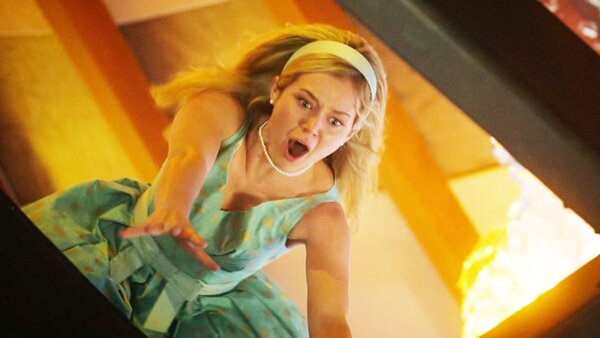
The Final Destination franchise has made a real art form out of making viewers frightened of innocent, everyday things, and it was immediately business as usual. In the first ten minutes, Bloodlines gave its audience a permanent fear of all sorts of things - skyscraper restaurants, lifts, pianos, even coins - it's a single coin that sets the whole chain reaction off. You'll also never again be able to hear the Isley Brothers' Shout without thinking of this.
Final Destination: Bloodlines is not only debatably the best Final Destination movie to date, its main disaster - a skyscraper collapse - is also one of the franchise's greatest achievements ever. It's a nerve-shredding, paranoia-inducing and darkly hilarious tour de force of Rube Goldberg death traps that bombards viewers with one grotesquely gory death after another, and it's all superbly mounted by directing duo Zach Lipovsky and Adam Stein.
Perhaps it doesn't quite outclass the second film's road pile-up (which isn't technically the beginning of the movie and therefore didn't qualify for this list) but it comes damn close nonetheless. To the upcoming Final Destination 7: good luck topping this!
6. Saw II - The Venus Flytrap

The Saw franchise has many awesome introductory traps to its name. Saw III's Classroom Trap, Saw VI's Pound of Flesh game, Saw 3D's Public Execution Trap, Spiral's Subway Trap, but the best one of all? It's Saw II's beginning, which was so horrible but so effective all the same.
Here, a police informant named Michael (Noam Jenkins) is placed in what's called the Venus Flytrap. If he doesn't unlock the device, a nail-covered mask will slam shut on his face and kill him. The key, however, has been placed in the area behind his eye and in order to survive... he'll have to cut his own eye out. Nasty.
Harrowing and superbly directed, this sequence is brilliantly uncomfortable in every sense. Of course, poor Michael is ultimately killed by the trap and it's hard to imagine many people being able to do what he was asked to do in such a short space of time, making the whole thing even more stomach-churning.
Fun fact: this very scene actually made its way into one of the greatest TV shows of all time. In a season six episode of HBO's The Sopranos, Christopher Moltisanti (who's established as a massive horror fan) can be seen watching it on TV.
5. The Substance - Hollywood Boulevard
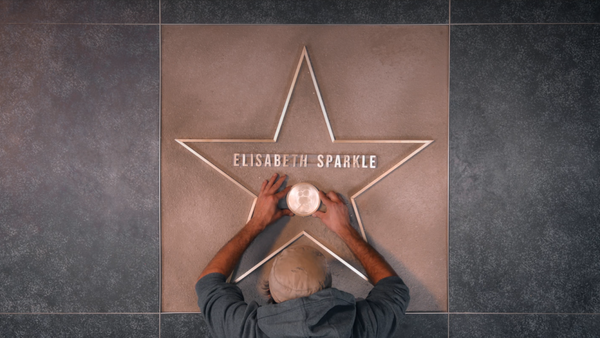
One of the many things that makes The Substance such a horror masterpiece is how well it uses the language of cinema to tell its story and convey its themes, often with minimal dialogue. That was instantly clear from the opening moments alone, which do a remarkable job of setting everything up before we've even properly seen any of the characters.
A montage of bird's-eye shots shows a star on Hollywood's Walk of Fame, that of Elizabeth Sparkle (Demi Moore), the story's protagonist. We see it being created, we see the ceremony, we see it being initially well-attended, before it becomes cracked and falls into neglect, thus conveying the rise and decline of Elizabeth Sparkle's career in less than a minute without a single line of dialogue.
Of course, this sequence is legendarily called back to in the closing shot - following Sparkle's terrible dalliances with a dangerous drug, her body collapses into viscera on the star, which is then cleared up by a sidewalk scrubber. Absolute cinema.
4. Jaws - The Shark Attacks

The death of Chrissie Watkins (Susan Backlinie) never loses its punch, even on the tenth viewing. It is simply flawless.
The unfortunate Chrissie is the first victim of Jaws' villainous shark, and her nightmarish death scene is a testament to the power of suggestion. As has been well-documented, the shark models didn't work and Steven Spielberg instead relied on POV shots and John Williams' ominous score to convey the shark's presence. This couldn't have worked better, as the viewers' imagination will often be more terrifying than anything on-screen.
With Chrissie's death, we don't see anything of the shark, we just see Chrissie being violently dragged around by an underwater force as she screams in terror - the lack of clarity makes it all so much worse, as there's a terrible sense of powerlessness in the face of the unknown. In short, it's a masterful beginning to one of the greatest movies ever made.
It's given further punch by a legitimately terrific performance from the late Susan Backlinie; it's a real shame her acting career never quite took off after this movie. Spielberg did, nevertheless, reunite with her for his regrettable 1979 war comedy 1941, where she cameos in a scene that pays homage to this very scene.
3. Don't Look Now - Christine Drowns

Don't Look Now is one of Britain's all-time great horror masterpieces. It's commonly remembered for having one of horror's best endings, but it mustn't be forgotten that it's also got one of horror's best beginnings, one which cleverly foreshadows the ending.
This sequence depicts what is probably the worst pain anybody can experience: the death of a child. Young Christine (Sharon Williams) drowns in a pond and it all plays like a nightmare, with director Nicholas Roeg deploying surreal, expressionistic visuals to convey the overwhelming horror of the situation.
And then, when Christine's father, John (Donald Sutherland) cradles her lifeless body and screams in anguish, viewers are brought right back down to earth. It's no dream, it's cold reality and it's traumatizing. Watching this back, it seems all the more incredulous that the late, great Sutherland was never nominated for an Oscar.
As aforementioned, this cleverly sets up the remainder of the story. While John is looking over some pictures of the church he's going to be renovating in Venice (which is where the rest of the story occurs), various omens - such as John cutting himself and blood spreading across one of the photos - give John a gut feeling that something is wrong outside, hinting that he's got supernatural second sight himself.
Of course, he doesn't realize this until too late, and a mysterious figure in one of the photos plays into his ultimate fate - if you know, you know.
2. Scream - The Death Of Casey

The Scream franchise has always been great with its opening scenes, yet nothing has quite topped the very beginning of the series. That's no surprise, for this is the kind-of gold that's hard to outdo.
In this beginning, Ghostface phones and torments high school student Casey (Drew Barrymore), forcing her to answer trivia questions about horror movies. If she gets a question wrong, she and her boyfriend (who's tied up outside) will be killed. Unfortunately, in the heat of the moment she forgets that Jason Vorhees isn't the killer in the original Friday the 13th, leading to both her and her boyfriend Steve being gruesomely murdered. Her parents find her disembowelled corpse hanging from a tree.
This is one of those scenes that simply couldn't be better. It sums up everyone we love about Scream by blending dark comedy, witty meta dialogue, gnarly gore and bone-chilling suspense into one delicious package, all of which is further enhanced by Wes Craven's tripwire-tense direction and a fantastic performance from Drew Barrymore, who single-handedly made Casey one of the all-time great horror characters to only appear in one scene. It was also an absolute masterstroke to kill off the biggest name in the cast after just one scene.
It's another horror opener that could be a brilliant, award-winning short film all on its own, although you wouldn't want to miss the rest of what is a really great movie.
1. Halloween - Michael Murders His Sister

And finally, we've got the first scene in John Carpenter's Halloween, which is a strong contender for the greatest horror movie opening ever.
It's the most confronting of beginnings, as it places the viewer in the shoes of a killer - the whole thing is one unbroken-POV shot. A figure voyeuristically spies on a young woman named Judith (Sandy Johnson) as she's intimate with her boyfriend. Once the boyfriend leaves, they get a knife, don a clown mask and then cruelly stab Judith to death.
Chilling enough on its own, this scene is taken to new levels by Carpenter's all-timer of a musical score.
First-time viewers will expect Judith's death to be the crescendo, but it's not. The most shocking moment of all comes when the POV shot finally ends and the killer is unmasked - it's a little boy, Judith's younger brother Michael. Truly, this is one of the most disturbing and haunting beginnings to a movie ever, and none of the sequels or remakes ever came close to the unbridled perfection of Carpenter's original masterpiece.