Avatar: The Way Of Water Review - 7 Ups & 3 Downs
Never bet against James Cameron.

After an agonising 13-year wait, the long-anticipated Avatar: The Way of Water is finally, finally here, years after many fans had basically given up all hope on it ever actually releasing.
But it's out now worldwide, and despite so much pre-release hand-wringing about the franchise's "cultural impact," it's safe to say that doubting James Cameron is mighty foolish, as he's about to dominate the pop-culture conversation all over again.
Though it's certainly not a perfect sequel, Avatar 2 is nevertheless a mesmerising spectacle like rarely comes along - a reminder that mega-budget blockbusters can deliver heartfelt drama alongside technically astonishing thrills.
And of course, this being James Cameron, he's once again delivered an eye-watering VFX landmark that's sure to keep fans coming back for repeat viewings. In short, if you leave your house for one movie over the next few months, it should absolutely be this one.
It has its undeniable issues - and, unsurprisingly, they're almost all script-related - but as impossibly ambitious tentpole films go, Cameron again affirms that he's the unchallenged king.
But before we get into the praise, here's what doesn't quite work...
Downs...
3. The Super Basic Script

Much like the first Avatar, The Way of Water is an almost hilariously simple, straight-forward story, upon which Cameron has hung his visually ground-breaking environmentalist parable.
But while that simplicity made total sense in the first film, which had to spend so much time introducing audiences to its world, given that Cameron promised a richer and more complex narrative this time, it's a shame that things feel, well, puddle deep.
So much of the film feels like a wetter retread of its predecessor, and even when it introduces a host of new characters, their development is largely paper-thin bar a few exceptions.
Likely to be the most divisive aspect of the story is the focus on a new human character, Spider (Jack Champion), whose arc throughout the movie isn't particularly convincing.
Beyond that the dialogue contains some of the corniest one-liners from Cameron's entire filmography, and while all of this might've been tolerable in a shorter film, it's exacerbated by another key problem...
2. The INSANE Runtime
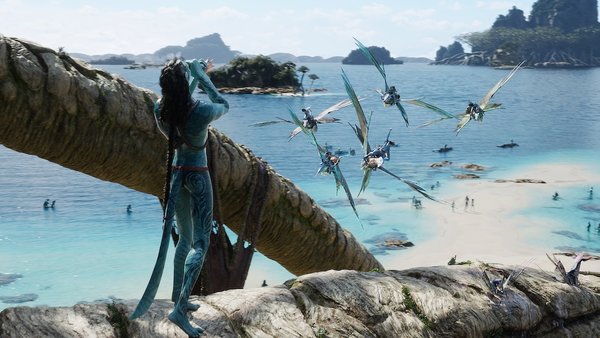
The first Avatar wasn't exactly a short film at 162 minutes in length, but The Way of Water one-ups it by lasting a whole half-hour longer, to the extent that it becomes an experience as exhausting as it is entertaining.
Cameron clearly wanted to give audiences a full-fat meal of a movie with his latest epic sequel, but the result is a blatantly overstuffed film where the elongated runtime only makes the script's deficiencies that much more apparent.
The largely water-free first act takes far too long to move the various chess pieces in place, and it's only really the wild third reel that truly feels like it earns its gigantic canvas.
It's clear to see how Cameron could've nipped and tucked things into a film about as long as the first, but instead we're stuck with a parodically bloated end result that feels like a Director's Cut accidentally released to cinemas.
Love the ambition, JC, but sometimes less is more.
1. Not Enough Neytiri
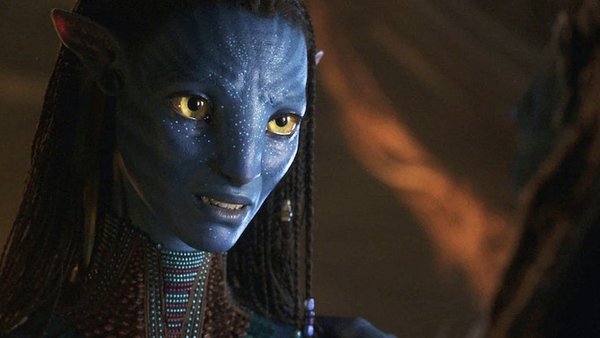
Given that Neytiri (Zoe Saldana) was easily the MVP of the first Avatar, it's pretty disappointing how sidelined she feels throughout most of this movie.
Despite her seemingly prominent presence in the story as the matriarch of the Sully family, Neytiri ends up spending long stretches of the film off-screen and not really doing much of anything.
She certainly gets her time to shine during a pivotal tide-turning moment later on, and Saldana absolutely gives it her all throughout, but considering the popularity of the character and Cameron's prior success with strong heroines, it's a shame she feels like a genuine afterthought at times.
Granted, Cameron has such a huge host of new characters to endear us to, but even so, it doesn't feel like Jake's (Sam Worthington) screen time is especially minimised by comparison.
But if you can forgive these gripes, Avatar 2 has quite the sights to show you...
Ups...
7. The ASTONISHING Visual Effects

To the surprise of not a single living soul, Avatar: The Way of Water is a jaw-dropping feast for the senses, and the greatest VFX showcase Hollywood has produced to date.
Anyone claiming the effects aren't a tectonic leap from the 2009 original might need their eyes checked.
Cameron's smart decision to shift the focus to water gives the film a distinct aesthetic compared to its predecessor, in turn demonstrating that the decade-plus he's spent perfecting underwater performance capture was certainly not wasted.
Beyond that, the Na'vi simply look astonishingly lifelike and expressive, ensuring there are zero uncanny valley issues to speak of.
It all combines to ensure The Way of Water is destined to age as impressively as the first Avatar, and it's of course a dead lock to win the Best Visual Effects Oscar.
6. The Excellent Ensemble Cast

Even though the Avatar movies aren't the deepest, The Way of Water at least benefits from its committed ensemble cast.
The clear highlights among them are Sigourney Weaver, who while rather peculiarly lending her voice to portraying Jake and Neytiri's adopted teenage daughter Kiri, brings endearing sass to the character.
And then there's Stephen Lang, inexplicably returning as Na'vi-Quaritch, the particulars of which won't be spoiled here.
Lang's gravelly voice and snarling facial expressions translate quite superbly through performance capture and ensure he's one of the film's most full-bodied characters.
Elsewhere Kate Winslet and Cliff Curtis are terrific as Ronal and Tonowari, the leaders of the reef people clan, and the various young actors playing Jake and Neytiri's other children are sweet and believable without being precocious or annoying.
In even its silliest, most oddly-scripted moments, at least the cast is swinging for the fences.
5. It's More Emotional Than The First Avatar

One area where The Way of Water assuredly triumphs over its predecessor is on the emotional side of things. The story is surprisingly far smaller-scale than the first film and focused quite intently on the Sully family to unexpectedly affecting ends.
The key advantage of Cameron spending so much of the first act with Jake, Neytiri, and their children is that the stakes when their family unit is threatened feel genuinely palpable rather than throwaway.
Combined with the film's environmentalist focus, particularly on humanity's treatment of our oceans and how this affects the animals living in it - here embodied by the whale-like tulkun creatures - it makes for a story that unapologetically wears its heart on its sleeve.
And after three exhausting hours, Cameron arrives at a conclusion that's genuinely emotionally gratifying in ways that the original wasn't - and, in fairness, wasn't really trying to be.
4. The Incredible Action Sequences

Again surprising no-one, James Cameron has lost none of his knack for staging impeccable action sequences, and takes full advantage of the movie's aquatic setting to show us things we've never seen before.
In a cinematic landscape with so much hand-wringing over sloppy, poorly implemented third act action, it's refreshing to a watch a movie crafted by a filmmaker with absolute control of the project.
Whether or not Cameron outdoes the first film's climactic set-piece is likely to vary wildly among fans, but he certainly at least matches it, while offering up an entertaining homage to his own Titanic.
Mere weeks after Black Panther: Wakanda Forever offered up such disappointingly lackluster action, The Way of Water is a showcase for how to get it done.
3. The Stunning World Building
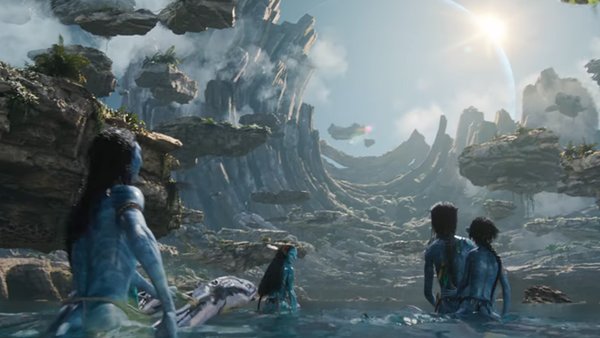
Remember when Avatar came out and audiences were so taken with the world of Pandora that they actually got depressed? It's a strange testament to James Cameron's penchant for world-building, and one that absolutely carries over into this sequel.
Pandora is once again gorgeously presented throughout, and by expanding the scope to reveal the settlement of the reef people and the surrounding underwater wildlife, we're given a sublime window into another corner of this lush world.
While so many franchises struggle to create believable worlds you'll want to lose yourself in, that's absolutely not the case here.
No matter its scripting foibles, The Way of Water offers up one of the most impressively realised fictional locales in cinema history.
2. Simon Franglen's Stellar Musical Score
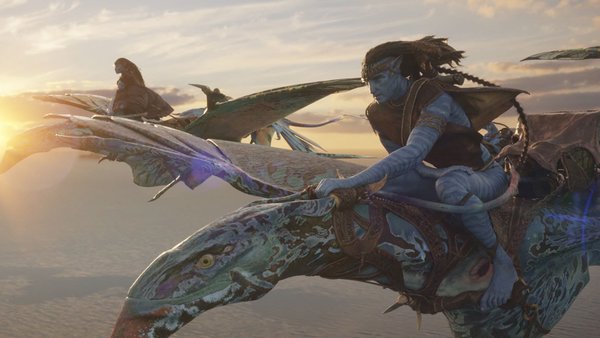
Composer Simon Franglen certainly had some massive shoes to fill following on from the late, great James Horner, whose score for the original Avatar received a Best Original Score Oscar nomination.
And while Franglen's score perhaps doesn't reach the heights of Horner's prior work, it is nevertheless bracingly effective in further immersing us in this impossibly gorgeous world.
By both re-arranging some of Horner's prior compositions and offering up his own sweeping, bombastic soundscape, Franglen delivers a score that, as all good ones do, majorly elevates what we're looking at.
With Franglen already signed up to score the next three Avatar movies, Cameron clearly has a ton of confidence in him moving forward.
1. It Makes A Compelling Argument For More Sequels
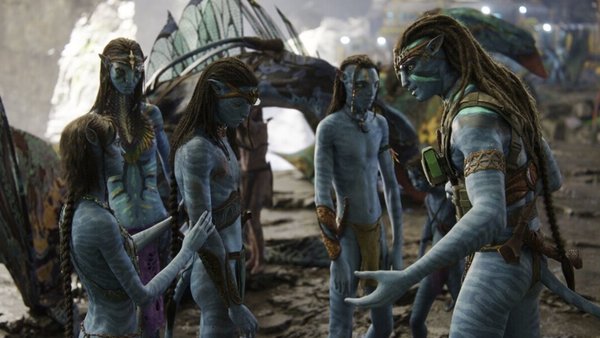
With James Cameron making it abundantly clear that at least three Avatar sequels are on the way, there was a lot of concern over whether audiences would feel truly compelled to return to Pandora time and time again.
By once The Way of Water rolls its credits, it's clear that Cameron has made an incredibly persuasive argument for the ongoing viability of this franchise and the world within it.
Even with the noted issues, Avatar remains a major breath of fresh air in an entertainment landscape dominated by the desperate plundering of dusty IP in the pursuit of lazy, easy profits.
Avatar 3 quite easily sells itself off the back of this movie, and given the intriguing hints Cameron has already laid for the fourth and fifth films, one suspects the franchise will absolutely go the distance.