Alien: Covenant - 20 Easter Eggs & References You Must See
Paradise lost, Easter Eggs found.
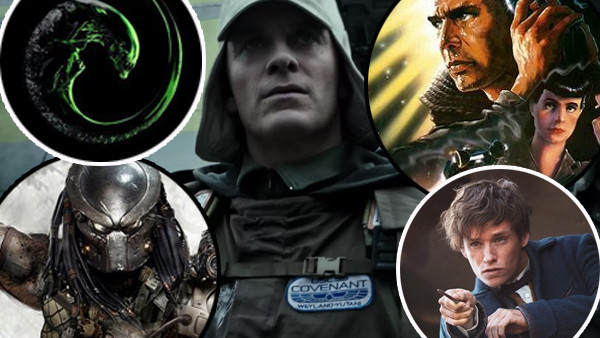
Despite Ridley Scott's now infamous claim that Prometheus was not an Alien film - that it was simply set in the same universe but would not tie up with the 1979 classic - its direct sequel definitely knows its place in the wider Alien franchise.
Scott's agenda here very much feels like he's undoing that distancing, and there's a pretty pertinent claim that Covenant is essentially a direct remake of the original Alien. There are certainly major genetic similarities, and just as Michael Fassbender's David forges the Xenomorph out of familiar, recognisable scraps, so too Ridley Scott grafts the defining elements of Alien back together to make Covenant.
It might not be quite as "terrifying" as the marketing campaign is heavily implying, but in terms of story, it's right up there with Alien and Aliens, and while some might complain that it loses some of its impact when it reverts to type as a monster chase movie that's exactly where Alien fans will enjoy it most.
Scott also makes sure to prove that Covenant knows where it came from, featuring Alien universe Easter Eggs on a spectrum from the obscure to the notorious and obvious as well as other cultural references, and spotting them definitely adds something to the viewing experience.
20. The Tag-Line
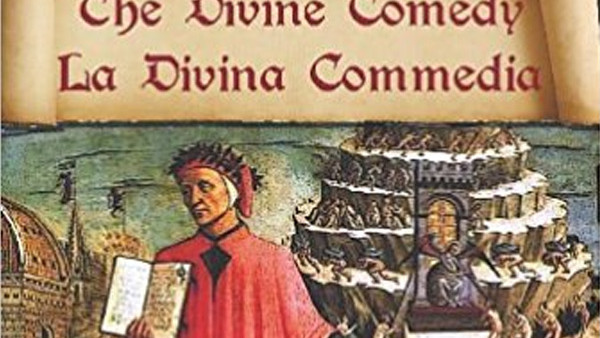
The film's official tag-line reads "the path to paradise begins in Hell," which is a reference to Dante's The Divine Comedy. So what's the significance?
The text charted the soul's progress towards God - or enlightenment in its simplest form - which is precisely what the pseudo-religious undertones of Prometheus and Covenant are also invested in. In both cases, the quest ends in Heaven, and with a close relationship with the creator.
And interestingly, this suggests that things might eventually get better...
19. Guy Pearce's Cameo

The film opens with an uncredited cameo by Guy Pearce, who returns to play a young Peter Weyland after his role in Prometheus. We see him bringing David into the world and a little of the relationship that ultimately seems to have turned David off humanity.
Interestingly, it is revealed that David chose his name because of the statue of Michaelangelo's David in Weyland's quarters. That statue was considered a signifier of beauty and perfection, so it follows that David would recognise his own perfection in it.
Later, it is revealed that David has a flayed Engineer corpse in his makeshift laboratory, horrifyingly posed exactly as David stands.
18. Mother

Just as "she" was in Alien, the computer on board the Covenant is called Mother (MU/TH/UR), which feels even more appropriate her as she's ferrying a belly of embryos (both literal and symbolic) to their new home.
It's interesting to note that the computers are named the same thing after 20 years, but presumably Wu-Yu didn't encounter any problems with them.
In a creepy revelation later, David is asked what his alien eggs are waiting for: he answers "mother", rather sinisterly, confirming not just that they need something else to be born, but also that David is almost supernaturally tuned to the fate of the ship.
17. The Androids

Both of the androids in Covenant are named after important figures in Alien lore. David and Walter owe their names to producers David Giler and Walter Hill, who wrote and produced the first movie in the franchise and have produced the series ever since.
It is on their shoulders that the franchise's successes were built, so it's only fitting that they get their own homage. Unfortunately, it somewhat compromises the established alphabetic naming trope we've seen for android characters in this franchise.
Starting with Ash, we've had Bishop, Bishop, Call, David and now Walter.
16. The Aliens Book Call-Back
Previously, we saw the aliens attacking not just biological characters but their android crew-mates without distinguishing any difference. But in Covenant, David seems to connect with his aliens, particularly when one is born and he manages to get it to mimic his movements - it's almost like he is their mother.
There may be some questions about the ridiculousness of anyone taming Xenomorphs in the same manner as Chris Pratt controlling the raptors in Jurassic World, but it isn't an idea pulled out of thin air.
In the Aliens novelisation, the android Bishop suggests that an android "more bolder" than himself could walk among the aliens unharmed. Clearly, the idea of a lack of fear being the key was seeded back there and it's an idea Ridley Scott rescues here.
15. The Airlock Moment
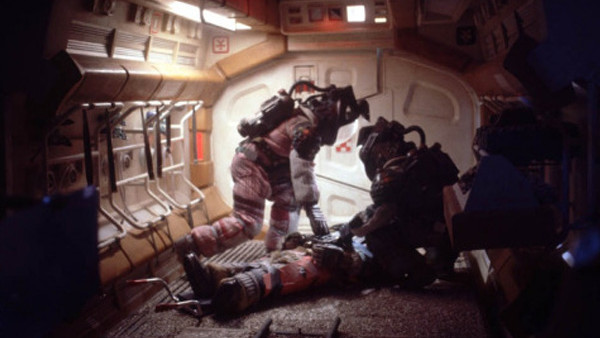
As everything starts to go to Hell, Ledward, Karine Oram and Faris end up in the medical quarters of the ship as Ledward's infection starts to very rapidly kill him. Oram reacts with empathy and without concern for her own potential infection, but Faris is terrified and realises she has to quarantine the pair.
The scene that sees her refuse to allow Oram out of the medical bay even after the neomorph has emerged feels very much like a call-back to Ripley refusing to allow Kane on board when he is infected. Luckily for her, she can't be over-ridden, but she still ends up getting killed for her actions anyway, proving that there's pretty much no escape from the Xenomorph's claws.
14. Tennessee
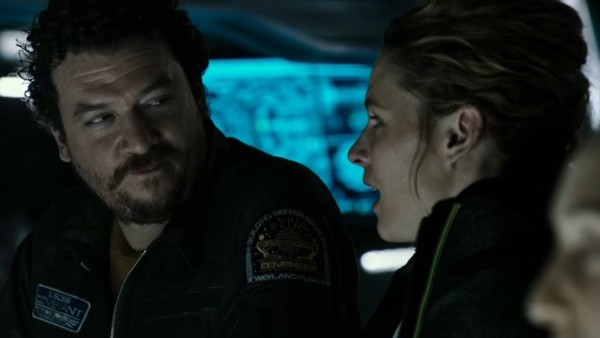
The convention of naming military characters after their hometowns is so cliched that it's passed right through parody and out the other side. But Danny McBride's Tennessee is named in homage to someone else, in a way.
He definitely seems to have named as a sub-conscious nod to Dallas, the captain of the Nostromo from Alien (1979).
It also feels like an inversion of the convention that such-named soldier characters would usually die, and yet Tennessee ends up being one of only two survivors in the end.
13. Ozymandias
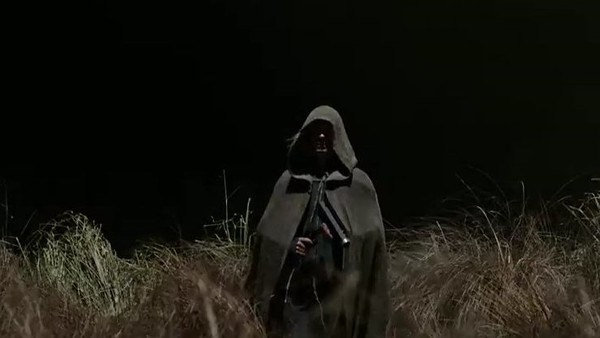
David's apparent obsession with Shelley's poem Ozymandias is a pretty important part of the narrative - particularly as his incorrect assumption that Byron wrote it proves he isn't perfect.
It basically offers foreshadowing for David's eventual fate - as well as mapping out the over-riding narrative of both Prometheus and Covenant. In both cases, the narrative deals with the idea of a creator race with pretensions of greatness (as if their creations confirm their own perfection) inevitably destroying themselves.
By quoting the poem as a sort of celebratory mantra at having destroyed the Engineers - and aiming his target at humanity - David ends up himself being guilty of hubris, and we're immediately reminded that he won't last either, despite his God complex.
12. The Alien 3 Rescued Concept
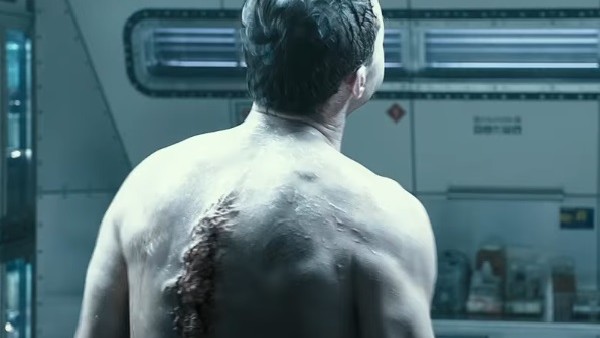
Though they are only a small part of the film, Covenant introduces the new Neomorph aliens that burst out of their host's bodies - one through the spine of Ledward, the other out of the mouth of Hallett - are a good addition to the Alien wider lore.
The new aliens' means of infection - the airborne pathogen that unknowingly invades their bodies through their breath - isn't actually wholly new. It was introduced in William Gibson's abandoned script for Alien 3, which would have been heavily invested in alien experimentation and mutation, just as Covenant is.