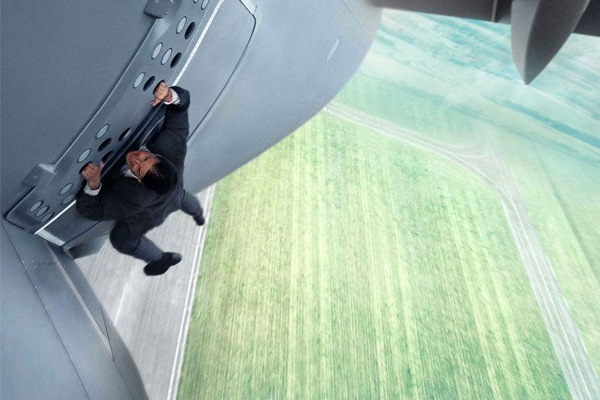
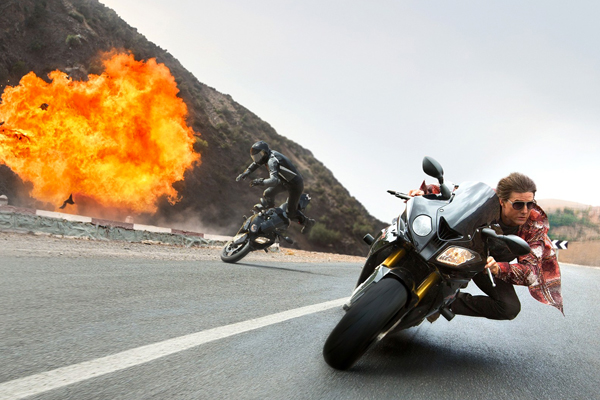
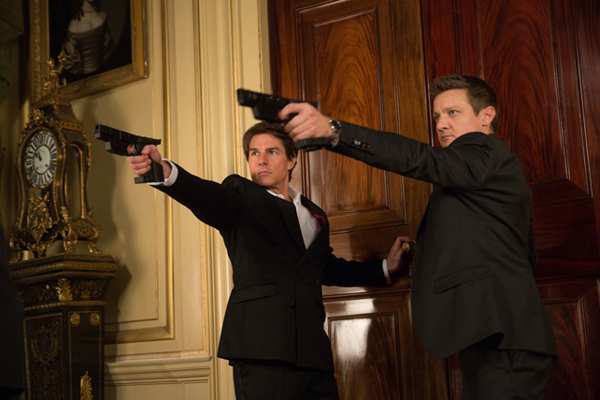
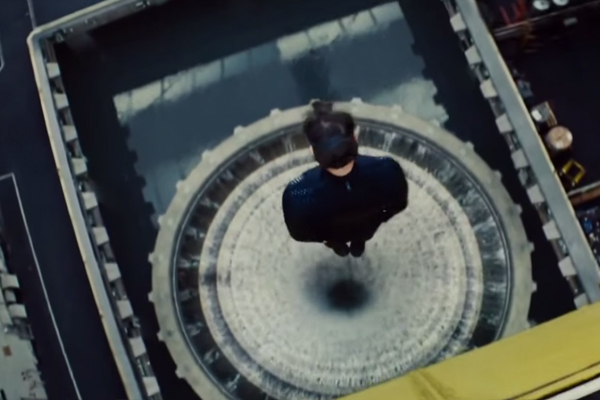
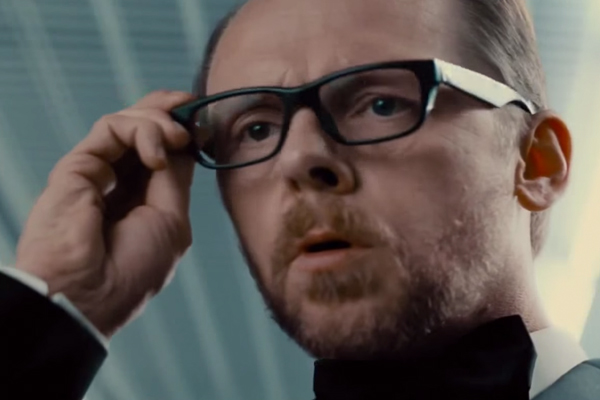
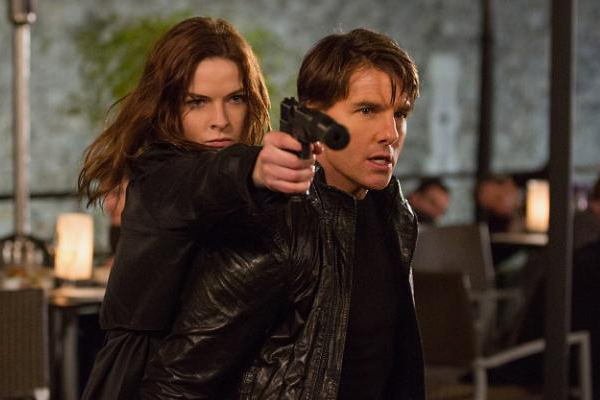
Rating: Mission: Impossible is the series that everyone pretends The Fast And The Furious is. An unstoppable run of adrenaline-pumping thrill rides with increasingly bonkers stunts that fly in the face of the notion of diminishing returns, it would be a guilty pleasure if people weren't so unashamed to show love for Scientology mouthpiece Tom Cruise. And now we've got a fifth entry, subtitle Rogue Nation, which somehow sits as the second best entry so far (behind the 1996 original). Every time a new film comes along to faux-unexpected praise, everyone asks the same question; "How is the franchise still so good?" While it is certainly impressive that five movies in the M:I series has only gone from strength to strength, with only one truly questionable entry (and even then John Woo's first sequel still has its redeemable elements), it's not exactly hard to grasp why it continues to work. Distilled to its core, the franchise is the American version of James Bond. Oh, Ethan Hunt may not be as exciting a hero as MI6's suave seducer/aggressive alcoholic, but it's a series that works on doing the same formula - Tom Cruise runs about and jumps off tall things in a twisty mission involving a rogue agent - in new and different ways. A key part of this is the constant switching up of directors, which not only keeps things fresh but allows a distinct-yet-familiar style each go around; like 007, this franchise seamlessly moves with the times, reflecting leaps in society and technology, without ever losing what made it work in the first place. The real ace for Mission: Impossible as a modern blockbuster force though, and one that sees Rogue Nation fly well above the recent blockbuster crop (Mad Max: Fury Road aside, of course), is its approach to continuity. Namely, there isn't really one. Yes, Ethan Hunt has a wife who everyone thinks is dead and this film's big bad, the Syndicate, was teased at the end of Ghost Protocol, but you can come into any new movie as a first timer and, aside from questioning why Ving Rhames is in it, be immediately up to speed. Instead of having a movie that's obsessed with cameos and foreshadowing, M:I puts its focus entirely on the mission at hand, delivering that worryingly rare thing - a great cinema experience. In a world where series aim to run for as long as possible, splitting source novels in two (or three) and trying to make anything into a Cinematic Universe, there's something decidedly old-fashioned about this stand-alone approach. Which is pretty fitting given how, for all its visual polish, Rogue Nation's closest relation is the original adaptation of the '60s TV series; moreso than any of the other sequels, this film is all about careful tension building. Brian de Palma would be proud. This time it's the turn of Christopher McQuarrie, who worked previously with Cruise on Jack Reacher, to take the reins. We don't really know what makes him tick as a director yet (Reacher was his first gig behind the camera since 2000), but that doesn't stop him from making something totally his own here. Most prominently, he uses that same keen eye for plotting that made The Usual Suspects into the best thriller ever (seriously) to craft the first Mission where the story doesn't feel unnecessarily convoluted (my most consistent complaint with entries one through four). It's the same old rigmarole of rogue agents and Ethan Hunt having to go on the lamb, but at very few points does the plot unwittingly seem ridiculous. Twists are focused on furthering the film, not just wrong-footing the audience for the illusion of a complicated narrative (see: all the previous M:I, even the first). Every double-cross and mask pull comes as a welcome surprise, logical in the established world (none of that endless "This wasn't really Tom Cruise" from M:I II) and pushing us towards the next action scene. Oh, yeah, the action. I could gush indefinitely about McQuarrie's deft plotting, but there's only one real reason you come to a Mission: Impossible film, and Rogue Nation delivers wholeheartedly on that... Click next for the second half of the review. "One of these days you're going to take it too far," says Simon Pegg's Benji to Ethan after one particularly intense life-or-death sequence. While he'll no doubt be proven right eventually, on Movie #5 Mission: Impossible is still managing to offer up action sequences that defy all common-sense in brilliant fashion. The opening sequence is by far the most giddy, a high mark not just of the film, but the franchise as a whole. It'd be accurate to say that the rest of the film lives in its shadow (it even gets a call-back in the end credits), but also incredibly misleading - while nothing can match that clap-inducing (seriously) beginning, everything that follows is a lot of fun and painstakingly choreographed. A maze-like opera sequence offers plenty of opportunity for visual flourish and the middle act (which, in a franchise tradition, is the biggest beat of the lot) is the longest uninterrupted sequence yet, going from location to location at break-neck speed, but never slipping into exhaustion. What's important (and distinguishes M:I from Fast And Furious) is that so much of what's on show real stunt-work. When Ethan Hunt's clinging to a plane, Tom Cruise is actually there. When Ethan Hunt dives into a pressurised water chute, Tom Cruise actually did it. So much of Rogue Nation is real and the film is more engaging as a result. When we move too far into the world of CGI things look a bit more faker by modern blockbuster standards (possibly due to the film's release being pushed forward five months to avoid Star Wars: The Force Awakens), but these are little more than hiccups against a very genuine backdrop. As you'd expect, many of the beats exist to allow Cruise to feed his thrill-seeking lifestyle, and there is some of the actor's typical self-aggrandising schtick hidden in here (one character seriously says "Ethan Hunt is the embodiment of destiny"), but this isn't just a one-man-brand exercise. Despite only getting third billing, Pegg is pretty much Ethan's right-hand man this time around, partaking in several of the eye-popping action sequences and given ample time to banter. His introduction in Mission: Impossible III was as little more than some tech-y comic relief, but now he's an integral part of the series; him and Cruise are a delightful double act, sharing the right level of camaraderie and humour. It is in this relationship where Rogue Nation makes its real stamp on the greater franchise - there's always been some tongue-in-cheek moments in the previous films, but here the jokes are amped up, although not to the point they negate the carefully crafted tension (Marvel could take note here). The other notable improvement comes in the form of Rebecca Ferguson as rogue agent Ilsa. M:I's female characters after Emmanuelle Béart's original double-crosser have struggled in the past due to over-simplification - they're either a love interest or typical badass - but here we have a woman who's plot essential and capable of holding her own without it getting eye-rollingly convenient. The only real takeaway, and the thing that most needs addressing for the already announced sixth film, is length. Like Ghost Protocol before it, Rogue Nation's finale probably goes on a little too long; even thought it's a given these movies are going to peak with the high-risk mid-point set piece, what comes after still needs to entertain. What stops the overrunning from hurting M:I 5 as much as Brad Bird's underwhelming futuristic car park showdown is how this ending ties into a bigger point that's being made here. In a Skyfall-esque development, this film is taking an introverted look at the franchise and the once blank slate of Ethan Hunt. The notion that the IMF's previous victories relied heavily on luck (a complaint many audience members will no doubt have picked up on in the past couple of decades) is brought to the fore, criticised extensively by Alec Baldwin's CIA chief and amplified by Hunt's initial inability to combat Sean Harris' meticulously plotting villain. Thus, as the film hurtles through its exotic locales, there's an added pressure to actually think of a solution to the plot, rather than just hoping it'll work out. Rogue Nation is an introspective Mission: Impossible that rights previous narrative issues and provides some of the series' best action beats. You literally couldn't ask for any more. What did you think of Mission: Impossible - Rogue Nation? Share your thoughts down in the comments.