9 Things From X-Men Comics That Must Happen In The Movies

We've suffered enough - give us the good stuff, and give it to us now...
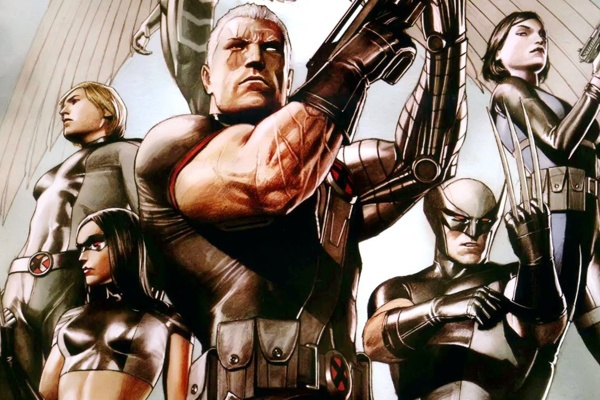
Now that the car crash that was X-3, or X-Men: The Last Stand has been expunged from cinematic history (making it possibly the only example of a movie franchise deliberately redacting its own canon to get rid of the crappy bits), there€™s a real chance that we could get ourselves a mutant movieverse worthy of the letter X. That €˜we€™, of course, means fans of the X-Men comic books. We€™re a hardy breed, having adapted over decades of patient reading to put up with clones, twins, aliens, demons and more time travel shenanigans than anyone should have to deal with who isn€™t being chased by a Terminator. In terms of the films, not only have we endured the indignity of Brett Ratner€™s coarse, inexpert pawing at some of the greatest comics characters of all time, but we€™ve gritted our teeth through the first Wolverine movie and wondered, aloud and at length, how anyone could screw Deadpool up that badly. We€™ve watched X-Men: Days Of Future Past and decided not to try to unravel the film€™s badly cockeyed temporal malarkey in case the whole pullover falls apart in our clutching hands. The point is, we€™ve suffered enough. Give us what we want €“ the most seminal characters and moments from X-Men history, transferred and translated to the big screen for our geeky enjoyment.

9. Angel Must Become Death

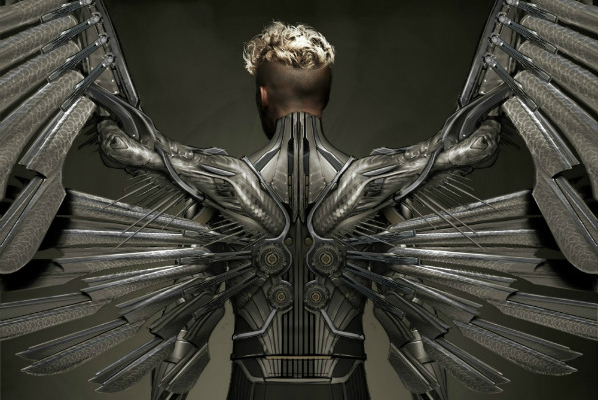
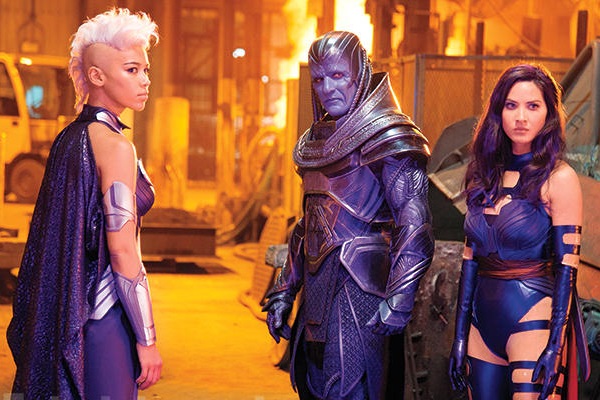
Warren Worthington III, otherwise known as the high-flying, carefree Angel, is one of the five original X-Men along with Marvel Girl, Cyclops, Iceman and Beast. The heir to a staggering fortune, Worthington was depicted as a playboy and dilettante in the initial run of X-Men comics, and acts as a dry run for Wolverine in the sense that he€™s also in love with Jean Grey, and a foil and a spoiler for her relationship with Cyclops. It was during the infamous Mutant Massacre storyline that Worthington would be crucified by the squadron of murderers known as the Marauders, and developed gangrene in his wings that forced their amputation. Growing depressed in the aftermath of the surgery, Angel supposedly killed himself€ in reality, he€™d been kidnapped by the ancient godlike mutant Apocalypse, and offered new wings in exchange for his service as one of his four Horsemen, Death. Worthington would later break free of Apocalypse€™s conditioning and rejoin his friends, renaming himself Archangel but retaining the signature blue skin and mad, screaming metal wings with their poisonous thrown €˜feathers€™. A whole buttload of other stuff would happen to the character to change and mutate him over time, not much of it good, but the Angel/Death/Archangel storyline is still iconic€ and seems set to hit the big screen next year. According to promotional images given to the press, X-Men: Apocalypse will feature Angel as one of Apocalypse€™s Horsemen. There€™s no real information at this stage as to how this happens, but Ben Hardy has been cast in the role€ here€™s hoping we get the most important points of the character realised in the film.

8. The Real Rogue Must Finally Stand Up (Or Fly Up)
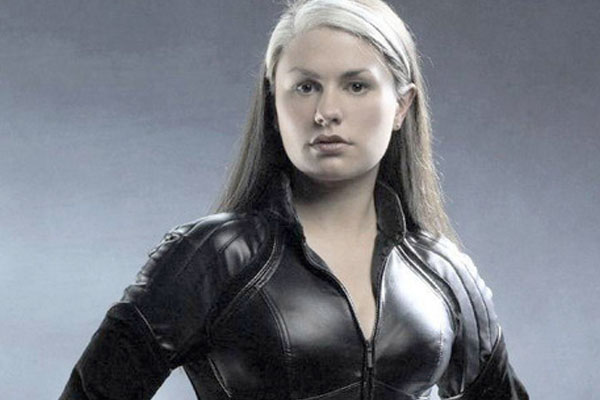
Anna Paquin first appeared in a central role as Rogue in the original X-Men film, and has reprised that performance in X-2, X-3 and X-Men: Days Of Future Past. This version of the character has grown from a young girl to a grown woman, retaining only the skunk-like lock of white hair and the power to absorb the powers of others. She apparently took a cure for the mutant expression of powers in X-3, but screw that headless turkey of a film. As one of the most iconic of the X-Men, the Rogue we all know absorbed the powers and psyche of Miss Marvel, permanently gaining super strength, a virtual invulnerability and the power of flight. That€™s the Rogue that developed a passionate nearly-relationship with master thief Gambit that rivals the Cyclops/Jean Grey pairing for the greatest X-Men relationship in the history of the comics. Paquin has confirmed numerous times that she€™d love to play the character again, but only if she could fly as she does in most of the comics she appears in. She certainly deserves a chance to play her as an adult, and with the character concept that everyone knows: and we deserve to see her on the big screen the way she was always supposed to be.

7. Storm Must Lose Her Powers

The franchise€™s insistence in following a past version of the X-Men team could yet pay serious dividends if we get to see the powerless version of Ororo Munroe, aka Storm. In the comic books, Storm€™s relationship with the unreliable mutant inventor Forge causes her to be shot by one of his weapons, a gun intended to remove mutant powers. Changing from one iconic look (the exotic weather goddess, all flowing hair and billowing costume) to another (the fetish-punk Mohawk, all leather spikes and attitude), she develops and perfects her hand-to-hand combat and street thief skills, learned from when she was a pre-teen orphan abandoned on the streets of Cairo. The comics books see this de-powered version of Storm eventually become the field leader of the X-Men, a central figure in the stories and best friends with Wolverine, her right hand man in the team. When she finally regains her powers (and hair), she integrates her newly formidable assertive attitude and skills with her weather goddess persona to become truly regal, and one of the strongest and most influential female characters in comics history. So far, movie versions of Storm have been limited to her original incarnation, played by Halle Berry. However, a younger version (played by Alexandra Shipp) will be appearing in X-Men: Apocalypse as one of the villain€™s Horsemen€ and she's got a Mohawk. Here€™s hoping they intend to do something special with her at some point.

6. The Mutant Massacre

One of the seminal storylines from six decades of X-Men comic books, the Mutant Massacre (also known as the Morlock Massacre) sees vicious gang of mutant killers the Marauders let loose in the tunnels beneath New York to murder every member of the loose gang of street mutants the Morlocks. Amongst their number, the Marauders ranked Sabretooth, a minor villain in the Iron Fist comics that, following his appearance here, became one of the X-Men€™s most popular and fearsome villains, and a recurring nemesis for Wolverine. You€™ll remember a version of him in the first X-Men movie, played by former wrestler Tyler Mane, and another in the first Wolverine movie, played by Liev Schrieber. The Mutant Massacre is one of the first ever major crossovers between the mutant comic books, and the surprising success of the storyline led to those crossovers becoming a horrifyingly confusing regular occurrence. It€™s still the best of them, however: and the bloody nature of the storyline was the inspiration for the maturation of the X-Men line. Central X-Men characters were seen to be badly hurt and injured here: the consequences of their battles, physical and otherwise, would begin to weigh more heavily upon the characters after the Mutant Massacre. When legendary X-Men writer Chris Claremont (the man responsible for the majority of the greatest €˜classic€™ X-Men characters and storylines from the seventies, eighties and early nineties) left the comic, he left many dangling plot threads: amongst them, the reason for the massacre in the first place. It turned out that the Marauders were the hit team for€

5. Mister Sinister

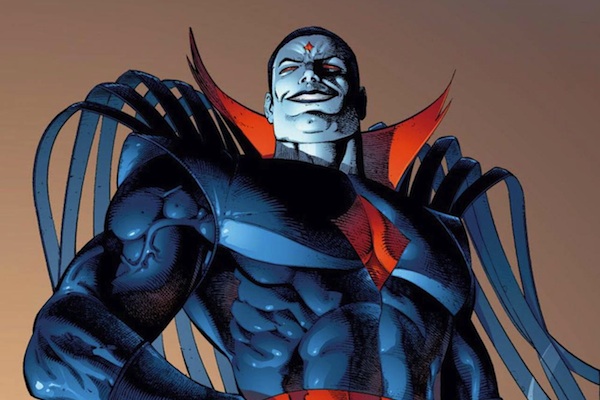
€this guy. X-Men comics€™ greatest mad scientist villain, and one of the most iconic bad guys of all time, Mister Sinister€™s history is inextricably bound together with that of mutantkind and the X-Men in particular. Not actually a mutant himself, Sinister developed many of the abilities he has today via experimentation: as a uniquely talented geneticist in the Victorian era, Nathaniel Essex was the first to notice the genetic codes that would indicate mutation, naming them €˜Essex factors€™€ decades and decades later, scientists would come to refer to them simply as the €˜x-factor€™, and it would be that €˜x€™ that would form the inspiration for the name of the X-Men themselves. Found and mentored by the ancient Apocalypse (the antagonist in the upcoming X-Men movie), for whom the genetic heritage of mutantkind was a source of abiding obsession, Essex was grafted with further experimental abilities which determined his current appearance, that of a white-skinned immortal shapechanger with telepathic, telekinetic and regenerative powers. More than that though, his mastery of cloning and genetic science, specifically as it relates to mutants, renders him a formidable foe€ and did we mention that he€™s obsessed with the Summers bloodline? That€™s right, Sinister believes that Cyclops€™ genetic heritage is the most important in the world, and that, properly cultivated, his children will become the most powerful mutants ever seen and assist him in breaking free of his master Apocalypse and taking his place €“ hence his habit of popping up like a bad penny to mess with the X-Men. We€™re still holding out hope for a version of the character to appear in X-Men: Apocalypse.

4. At Least One Of The Summers Children Must Be Introduced

It€™s a hardy perennial storyline in X-Men comics for decades now: Cyclops€™ genetic heritage is destined for great things, and coupled with the massively powerful psionic heritage of his other half Jean Grey (who€™s also the human host of the horrifically powerful cosmic entity known as the Phoenix force), his kids are essentially incredible badasses to the nth degree. The two most famous Summers children are Nathan and Rachel, both time-lost mutants of massive psychic potential. What does time-lost mean? Well (deep breath), Nathan was the son of Cyclops and a clone of Jean Grey, provided by Sinister in an effort to obtain a natural child from the union who he might use as a weapon against his master Apocalypse. He was sent into the future as a baby to save his life and keep him safe: and returned as a middle-aged man calling himself Cable, a weapons expert and soldier scarred by a lifetime of warfare, with a degree of psychic power that increased exponentially over time. Rachel Summers is the daughter of Cyclops and the real Jean Grey from an awful, dystopian alternate future, the one depicted in the Days Of Future Past storyline. A powerful telepath and telekinetic like her mother, Rachel is used as a mutant-hunting €˜hound€™ by the Sentinels of the future, brainwashed and brutalised into slavery. Like Cable, she also comes to this timeline to join the X-Men, and eventually becomes the host for the Phoenix force just like her mother. Given the appearance of Apocalypse in the upcoming X-Men film and the establishment of time travel as a narrative device in the last X-Men film, the introduction of one or both of Cable and Rachel Summers are a distinct possibility in the future.

3. Genosha

The island nation of Genosha, just off the southeastern coast of Africa and a whisper away from the Seychelles and Madagascar, was one of the richest and most prosperous in the world, with a high standard of living, a thriving economy, and a safe distance from the internal problems that beset other nations. It seemed like a paradise€ until you dug a little beneath the surface. Genosha, you see, was a secret police state, basing its affluence on slavery. Created in 1988 as an allegory for the apartheid of the South African state at the time, children with the genetic x-factor for mutant powers were identified at an early age, stolen from their families and forcibly brainwashed and physically converted into €˜mutate€™ slaves, psychically bonded to their oppressors, their bodies and abilities edited and modified to fit specific labour needs. No emigration was allowed: citizenship was for life, and anyone attempting to leave the island paradise was captured and killed by the Magistrates that were the island government€™s strong right arm. Naturally, the comics see the island falling foul of the X-Men when they get greedy, and begin human trafficking: kidnapping and processing free mutants from outside of their own borders. The island€™s police state is dissolved, the secret police disbanded (right in the face) and the capitol building brought to the ground, because the X-Men, unilateral regime-change merchants that they are, don€™t do anything by halves. In later years, Genosha (like South Africa after it) stands as an example of humans and mutants attempting to peacefully co-exist post-apartheid and slavery€ well, at least until it€™s repeatedly wiped out, over and over, by lazy writers in need of a convenient place to stage a nation-destroying slugfest. Still, as a potent metaphor and allegory for all kinds of political, civil-rights-invoking storylines, Genosha is the perfect point for cinematic storylines to utilise.

2. Charles Xavier Must Go Mad

In one of the most harrowing storylines in X-Men history, the team€™s founder and mentor, Professor Charles Xavier, develops a split personality, developing into a raging genocidal demon-creature named Onslaught who threatens, not just mutantkind, but the whole Marvel Universe. This all comes about when Magneto, attacked by Wolverine, uses his command over metal to rip all of the adamantium from Logan€™s skeleton, nearly killing him in the process. Xavier, appalled, takes it upon himself to telepathically cut off Magneto€™s mind in retaliation, shutting it down and rendering his former best friend a vegetable. However, Xavier traumatises himself in the process of inflicting this massive trauma on Magneto, and the other man€™s rage, grief and desire for revenge psychically infect him, binding to Xavier€™s own worst instincts, kept suppressed and buried for decades. The result was the separate, wholly monstrous and evil personality calling itself Onslaught, a being which somehow combined the powers of both Magneto and Xavier €“ two of the most powerful mutants in recorded history. Hiding in Xavier€™s mind, the monster would secretly engineer events and sabotage matters to his advantage, until eventually being revealed and acting as more of a traditional world-munching super villain, looking like a giant robot anime version of Magneto. Given that we have two versions of Professor Xavier to choose from in this franchise, and two versions of Magneto, it seems that the introduction of Onslaught to the movie franchise in the next few years should be a no-brainer.

1. Joss Whedon Must Write/Direct

It€™s been on the X-fan wishlist for a good ten years, ever since we found out that Bryan Singer wouldn€™t be returning to the franchise for the third instalment. When brainstorming his possible replacement, one name kept returning to the top of the pile again and again and again: the writer/director/producer triple threat and devoted comics fanboy; the nerd made good; the Geek Who Would Be King€ Joss Whedon. Whedon had just released Serenity, the feature-length, biggish budget attempt at the resurrection of his cancelled TV show Firefly. Critically acclaimed, the film had failed at the box office, pretty much scuppering any chance of a sequel or a new TV show. More importantly, at that moment he was knee-deep in a hugely successful two-year run on writing the Astonishing X-Men comic book. So (the thinking went) he€™s free, right? He€™d be up for it, right? Whether the former was true or the latter was accurate, Brett Ratner filled the chair and the rest is, thankfully, no longer part of X-Men history. In all honesty, at the time Whedon might not have even been offered the job, or wanted it if he was. After all, jumping into the hot seat of a tentpole franchise for Fox after they binned his first X-Men script and then screwed up with Firefly, and after Fox, in turn got to check out Serenity€™s box office and go €œwe told you sooooo€€ Yeah, probably a pipe dream. Fast forward a decade, and Whedon is the writer/director of two of the biggest and best received Marvel movies in the studio€™s short history. Despite a little nitpicking about Avengers: Age Of Ultron, it€™s pretty much accepted that the man can run a major motion picture, especially one like this. Singer directed Superman: why shouldn€™t Whedon get a crack on the X-Men now that he€™s bankable and (possibly) available? Fully two thirds of the points on this list are ones Whedon would probably approve of. There€™s also possible source material from his own Astonishing X-Men run, and of course (who knows?) the man may even have original ideas to bring to the table. That€™s what he does, after all.

Contributor
Contributor

Professional writer, punk werewolf and nesting place for starfish. Obsessed with squid, spirals and story. I publish short weird fiction online at desincarne.com, and tweet nonsense under the name Jack The Bodiless. You can follow me all you like, just don't touch my stuff.