9 More Movie Franchises That Said F**k You To The Fans
 Its hard being a fanboy. Not only are you affronted with endless ridicule for the franchise's weaker efforts that even you dont enjoy, but you have to contend with the typical Hollywood suits being in control of your baby, rather than someone who really cares for it. Whereas you can know everything relating to your chosen obsession, the big wigs who decide what gets released tend to put money first and faithfulness second. Often youll get a director who cares jumping in, maintaining the integrity of the concept, but (and Im being brutally honest here) even the greatest director can end up little more than a stooge. A couple of weeks ago I wrote an article listing nine movie franchises that well and truly f**ked the fans over, but theres more than just that handful of examples. To make sure you know which franchises dont respect the fans who made them so big (or in some cases actually realised theyre not always essential to success), heres nine more of these offending series.
9. Indiana Jones And The Kingdom Of The Crystal Skull
 Now what exactly do I pick on with this movie? The entire thing is a disrespect to the classic trilogy we all love that I could do a whole article on it. From Mutt attempting to take on Indys mantle (no), to the aliens (NO) its two hours of George Lucas and Steven Spielberg nuking their legacy. And no, a lead lined fridge couldn't save it, obviously. I think the best thing to focus on is something that may not have been the immediate port of outcry, but is one that had a massive impact on the film. The introduction of a ridiculous level of CGI effects to the fourth Indy is nigh on unforgivable. Opening with a CGI gopher it just goes from there, with action sequences that previously could have been done in the real world replaced with computer models. As the film slowly races towards its finale it only gets worse; CGI monkeys and a massive fake spaceship are not what we go to Indiana Jones movie for. Sure, there were some outrageous effects in the original trilogy, particularly at the climaxes, but these were only at the point when fantasy kicked in. Twenty years after Jurassic Park CGI is still not photo-realistic and Spielberg should have realised it; we forgave the falling from the bridge in Temple Of Doom, but well be damned if we forgive this.
8. Alien Vs. Predator
 Star Wars made three films based off a single twist and Snakes On A Plane kept its schlocky name under the pressure of Samuel L. Jackson, but the award for most contrived movie origin goes to Alien Vs. Predator. Coming from a background in-joke from Predator 2 and developing into a comic book series and series of popular video games, the film was intended as a way to rejuvenate the two failing adult sci-fi series. Instead, it pushed them to the brink of nonexistence. By the time the first film arrived there was already a pre-existing fanbase from all the spin off media (including, surprisingly, action figures), but it seems like 20th Century Fox assumed thered been no new developments in the series since Alien Resurrection in 1997. Ruining Aliens continuity by having Weyland appear two centuries too early and having Predators team up with humans thus making them infinitely less badass, the film wasn't just saying f**k you to fans of AVP, but those of the two original franchises too. The sequel was less destructive to the mythos, but did reduce two of the most formidable cinema monsters to boring slasher killers. Of course there is a happy ending. The two series were eventually by presenting modern spins on their respective first instalments.
7. Blade
 Years before X-Men and Spider-Man changed everything in the superhero genre, Blade had brought one of Marvels other heroes marginally successfully to the big screen. Well, when I say successfully, I'm referring entirely from the point of view of distributor New Line Cinema - the film made a good profit and the mixed reviews were juxtaposed with an audience hit. Those who wouldn't call it successful, however, were the original Blade fans. Along with the likes of Iron Man a relative unknown before the film adaptation, Blade was a human with immunity to vampires. Surviving on skill alone he became a revered vampire hunter. There's a greater backstory, but that element is pretty much all the movie kept. Making the traditionally outgoing character incredibly reserved and gifting him with a plethora of superhuman abilities (something admittedly introduced later in the comics when he was bitten by an artificial vampire), the film was mainly focused with bringing a nineties slant to the character. Blade as a film wasn't terrible - Wesley Snipes was pretty good casting for the character and most of the problems come from mainstream cinema in general during that period - but it was so unfaithful to what fans enjoyed that almost every plaudit it earned came from those new to the character.
6. Star Trek
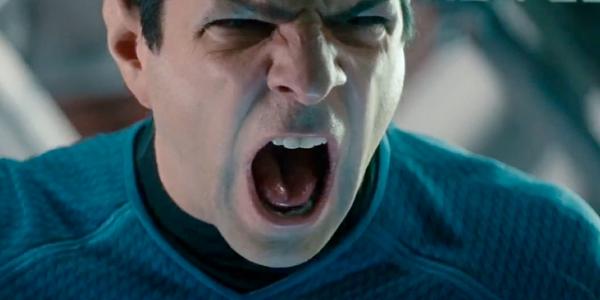
 After so much negative response, I feel we need a case where fan disservice made a film infinitely better. When he came onto the Star Trek project, J.J. Abrams was far from a fan of the cult show, so was more than happy to act liberally with the mythology. Following on from the disappointing Nemesis, Star Trek was left by the general public for superfans to pick over. A reboot needed to get both sides on board, so Abrams did the impossible and worked together a new and old continuity. Although Into Darkness greatly messed with fan favourite Wrath Of Khan, it stayed on the right side of homage, twisting the events of that film to make something both new but still reverential. The first film was less reserved. Erasing most of the previous series with time travel and destroying Spocks home was a risky move, but for the most part it worked. In disregarding the events that Trekkies loved while still keeping focus on the characters and themes (a lot more destructive than some lesser franchises on this list) Stark Trek was different, but still felt like, well, Star Trek. Sadly and predictably, the age old paradox of wanting something new and something exactly the same kicked in and some of the more serious fan boys weren't all too happy. Still, the majority didn't care.
5. Terminator Salvation
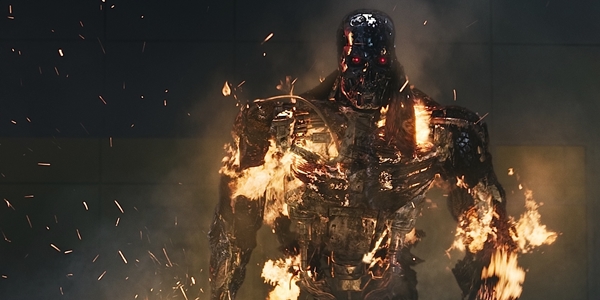 The various versions of The Terminator make it deviously hard to get a lid on what rules of time travel were dealing with. The first was dealing with closed loop/grandfather paradox (something that isn't as hard to understand as people would have you believe), but the second introduced alternate timelines and the third combined the two to create a changeable, but over-ridingly destiny ruled concept. What Terminator Salvation did, however, was plain ridiculous. Directed by McG, a Michael Bay for those who cant deal with more than two syllables, the film attempted to introduce a new concept, despite all the sensical ones being used up. Instead, what we got was a film that thought it was changing everything when it wasn't. Early on in the film Christian Bales John Connor discovers early plans for the T-800 he loved so much and ends up fighting one in the films finale. As Salvation's set in 2018, this is a good decade before theyre meant to be created, throwing off the timeline just to have a young star as Conner. Quite what element of Salvation is the worst offender is hard to say; having John Conner as an Anakin Skywalker style underling rather than a brave leader or completely screwing with the pre-existing rules without doing something interesting. Maybe McG would have expanded upon these for his planned trilogy, but either way, we weren't happy.
4. Spider-Man 3
 While much of the angst that we find synonymous with classic superheroes was injected later on in the comics, Spider-Man has always been about the teenage turmoils. The first comic kicks off showing Peter Parker as a downtrodden nerd before gifting him with superpowers, but the big part was Uncle Bens death. Letting the thief who would go on to kill his uncle escape, Peter finds himself personally responsible for the death and its from there the character's most famous phrase comes from, With great power comes great responsibility. And both origin stories we've had on screen have stuck to that idea faithfully (although The Amazing Spider-Man really stammered in rewording the above quote). But we have to hope that the new reboot doesn't fall into the same trap as Sam Raimis trilogy did and negate the impact. In Spider-Man 3 we discover it wasn't the original punk who killed Ben, rather Flint Marko, aka Sandman. Clearly an easy way to create both a villain related to Peter and the illusion of tying up loose ends, its not only lazy, but incredibly disrespectful to the character. In the end its revealed the killing was an accident, although it seems motivated by making the character redeemed, rather than appease the fans who wronged two hours before.
3. Man Of Steel
 It feels like everything to do with Man Of Steel has been covered since it burst on the scene last month. Another film that divides critics and audiences, it had some good ideas, but ended up just plain boring. Of course, thats not really Zach Snyder and co. saying f**k you to the fans; boring films have been an essential part of the franchise since Superman III. Many people will have given up caring by the time Zods plan failed, but the film still descends into yet another fight. The protracted battle ends in Grand Central Station, with Zod using his newly mastered heat vision to try and kill the dumbest family ever (there was literally so much room for them to escape). With no other option, Clark snaps Zods neck, giving the middle finger to fans for two reasons. Straight up it destroys the tension in all the previous action in the film; why were the Kryptonians throwing each other around, killing countless humans in the process, when they have the same simple weaknesses as us. Whats worse though, is that it betrays two of Kal-Els key characteristics. Not only is he killing in general, but hes dooming himself to be the last of his kind. Yes, it's similar to what happened in Superman II, but that doesn't make it OK. These actions go completely against the traditional morals of the character and while we can live with Lois knowing Clarks secret, this is just unforgivable.
2. The Godfather: Part III
 Very few film series can survive a massive gap between movies - its all too easy to be complacent and lose sight of what first made the series popular - and this is exactly what happened with The Godfather. Put simply Part III just wasn't as good as the first two, making a great duology an OK trilogy. But while it disappointed fans in general, there's one element that had them downright infuriated. Despite what Will Smith thinks, its not OK to make stars of your offspring just because you can. The same goes for Coppola in 1990; quite why he chose to cast his daughter as Michaels son well never know. Sofia Coppola had starred in the series before, as the baby in the baptism scene in the first and an extra in the second, but that did not mean her role needed to be upped in the third instalment. A late replacement for the role of Mary Corleone after original choice Winona Ryder dropped out, her performance was much derided by critics and earned her two Golden Raspberrys. Its not really her fault though. Thus far The Godfather had prided itself in the brilliance of its actors (the first two had an astounding nine acting nominations and two wins at the Academy Awards) and to go back on that with a bit of family showiness was a key part in Part III being the disappointment it was.
1. Toy Story 3
 I've ranted many times about Toy Story 3 and how it unsatisfyingly closed down a previously brilliant film series, but theres plenty more to cover. This is probably the most personal entry for me across both lists on this topic and thats why its number one here; three years on and it still burns. When I saw Toy Story 3, I was incredibly disappointed. As a fan of Pixar, it felt like a step down from Up, trying too hard to repeat the emotional heft that Pete Docters film did so naturally. And as a fan of the Toy Story series, I was just confused. The film had the characters I loved with the voices I knew, but it wasn't the same thing. Toy Story 3 changed the type of humor, creating unbelievable slapstick (I've never seen the humour of Mr. Potato Head as a tortilla) that shouldn't be a part of Pixar, let alone Toy Story. At the same time criminally unoriginal while disregarding much of what defined the series, it wasn't a bad film per se, rather a bad Toy Story film. The real f**k you of Toy Story 3, to both fans of the series and Disney in general, was the lack of songs. Initially instrumental in bridging the gap between the traditional 2D world of Disney and this new computer generated 3D landscape, the Randy Newman gems were some of the most loved parts of the first two films, tragically accompanying Woody, Buzz and Jessies lowest moments. Toy Story 3 reprised You've Got A Friend In Me and had a new song for the end credits, but in reality there was little focus put on this key part of the films. Here's hoping Monsters University is a little more in keeping with it's predecessor's style. So there you have it - nine more franchises that didn't give a toss what the fans think. Did any of the offending changes not bother you? Are there any more we've still not mentioned? Let us know below in the comments.